What language do they speak in Ireland? The answer to this question is not as straightforward as one might think. Ireland has a complex linguistic history, with both Irish and English playing significant roles in the country’s cultural and political landscape.
In this academic presentation, we will explore the fascinating story of language in Ireland, from its earliest origins to the present day.
We will examine the two official languages of Ireland, Irish and English, and discuss their historical significance, legal status, and recognition. We will also identify the major regional dialects of Irish and English spoken in Ireland, describing their geographical distribution and linguistic characteristics.
Official Languages: What Language Do They Speak In Ireland

Ireland has two official languages: Irish and English. Irish, also known as Gaeilge, is the national and first official language, while English is the second official language.
Irish has a long and rich history in Ireland, dating back to the arrival of the Celts in the 5th century BC. It was the primary language of Ireland until the Norman invasion in the 12th century, after which English began to gain prominence.
Despite centuries of English dominance, Irish remained the spoken language of the majority of the Irish population until the 19th century.
Legal Status and Recognition
The legal status of Irish and English in Ireland is governed by the Constitution of Ireland, which was adopted in 1937. Article 8 of the Constitution declares Irish to be the national and first official language, and English to be the second official language.
The Constitution also provides that both languages are to be treated with equal respect and that the State shall take measures to preserve and promote the Irish language.
In practice, English is the dominant language in Ireland, used in government, business, and education. However, Irish is still spoken by a significant minority of the population, and it is taught in schools as a compulsory subject.
Regional Dialects
Ireland is home to a diverse range of regional dialects of both Irish and English. These dialects vary significantly in their pronunciation, grammar, and vocabulary, reflecting the rich cultural and linguistic history of the country.
The major regional dialects of Irish spoken in Ireland today include:
- Munster Irish: Spoken in the southern province of Munster, Munster Irish is characterized by its distinctive pronunciation of certain vowels and consonants.
- Connacht Irish: Spoken in the western province of Connacht, Connacht Irish is known for its use of certain grammatical constructions and its unique intonation patterns.
- Ulster Irish: Spoken in the northern province of Ulster, Ulster Irish has been heavily influenced by the neighboring Scots Gaelic language and features a number of unique vocabulary items.
The major regional dialects of English spoken in Ireland include:
- Hiberno-English: The most widely spoken dialect of English in Ireland, Hiberno-English is characterized by its unique pronunciation, grammar, and vocabulary. It is spoken throughout the country, but is particularly prevalent in urban areas.
- Ulster English: Spoken in the northern province of Ulster, Ulster English is heavily influenced by the neighboring Scots language and features a number of unique vocabulary items and grammatical constructions.
Irish Language Revival

The Irish language revival movement emerged in the late 18th century, motivated by a desire to preserve and promote the Irish language and culture. The movement gained momentum during the 19th century, particularly with the establishment of the Gaelic League in 1893.
The Gaelic League played a crucial role in promoting the Irish language through education, publications, and cultural events.
Government Initiatives
The Irish government has implemented various initiatives to support the Irish language revival. These include:
The Official Languages Act (2003)
This act recognized Irish as an official language of the Republic of Ireland, alongside English.
The Irish Language Broadcasting Act (2009)
This act established TG4, a public service broadcaster dedicated to Irish-language programming.
The Gaeltacht Act (2012)
This act provides funding and support for the Gaeltacht regions, where Irish is the primary spoken language.
English Influence

The English language has had a profound impact on the Irish language. The influence of English on Irish can be seen in the vocabulary, grammar, and pronunciation of the language. The adoption of English in Ireland was a gradual process that began in the 12th century with the Norman invasion and continued through the centuries of British rule.
Categories of English Loanwords
There are several different categories of English loanwords in Irish. Some of the most common include:
- Words that have been adopted into Irish with little or no change in their spelling or pronunciation, such as “computer” and “television”.
- Words that have been adapted to Irish spelling and pronunciation, such as “teach” (teacher) and “oifig” (office).
- Words that have been created in Irish using English roots, such as “ríomhaire” (computer) and ” teilefís” (television).
Factors Contributing to the Adoption of English
There are a number of factors that contributed to the widespread adoption of English in Ireland. These include:
- Historical factors:The Norman invasion of Ireland in the 12th century led to the establishment of English as the language of government and administration. This was followed by centuries of British rule, during which English was the dominant language in all spheres of life.
- Political factors:The Act of Union in 1801 united Ireland with Great Britain and made English the official language of the United Kingdom. This further entrenched the position of English in Ireland.
- Socio-economic factors:The Industrial Revolution in the 19th century led to a decline in the use of Irish in rural areas, as people moved to urban areas where English was the dominant language.
Current Status of the Irish Language
Today, Irish is one of the two official languages of Ireland, along with English. However, English is the dominant language in most parts of the country. Irish is used in education, media, and government, but its use is declining. There are a number of factors that are contributing to the decline of Irish, including the dominance of English in the media and the education system, and the lack of opportunities to use Irish in everyday life.
Key Events and Influences
| Event/Influence | Date | Impact |
|---|---|---|
| Norman Invasion | 1169 | Establishment of English as the language of government and administration. |
| Act of Union | 1801 | English becomes the official language of the United Kingdom, further entrenching its position in Ireland. |
| Industrial Revolution | 19th century | Decline in the use of Irish in rural areas as people move to urban areas where English is the dominant language. |
| Irish Language Revival | Late 19th and early 20th centuries | Efforts to revive the Irish language and promote its use in education, media, and government. |
| Establishment of the Irish Free State | 1922 | Irish becomes one of the two official languages of Ireland, along with English. |
| Decline of Irish | Late 20th and early 21st centuries | Dominance of English in the media and education system, and lack of opportunities to use Irish in everyday life. |
Quote
“The Irish language is the key to our identity. It is the language of our ancestors, and it is the language of our future. We must do everything we can to preserve and promote it.”President Michael D. Higgins
Bilingualism
In Ireland, bilingualism refers to the ability to speak both Irish and English. The extent of bilingualism in Ireland varies, with some areas having higher concentrations of bilingual speakers than others. According to the 2016 census, approximately 1.7 million people in Ireland (38% of the population) reported being able to speak Irish.
However, the level of fluency in Irish varies widely, with many people reporting only a basic level of proficiency.
There are a number of social and economic implications of being bilingual in Ireland. Bilingualism can provide individuals with access to a wider range of employment opportunities, as well as greater social and cultural opportunities. Additionally, research has shown that bilingualism can have cognitive benefits, such as improved memory and attention skills.
Government Support for Bilingualism
The Irish government has a long-standing policy of supporting bilingualism. This support is reflected in a number of initiatives, including the provision of Irish-language education, the establishment of Irish-language media outlets, and the promotion of Irish-language culture. The government’s goal is to increase the number of bilingual speakers in Ireland and to ensure that Irish remains a vibrant and living language.
Challenges to Bilingualism
Despite the government’s support for bilingualism, there are a number of challenges to its widespread adoption. One challenge is the dominance of English in Irish society. English is the language of government, business, and education, and it is the most widely spoken language in Ireland.
This can make it difficult for people to learn and use Irish on a regular basis.
Another challenge to bilingualism is the lack of opportunities to use Irish outside of formal settings. While there are a number of Irish-language media outlets and cultural events, these are often limited to specific regions or communities. This can make it difficult for people to maintain their Irish language skills if they do not have regular opportunities to use the language.
Conclusion
Bilingualism is a valuable asset for individuals and for society as a whole. The Irish government has a long-standing policy of supporting bilingualism, but there are a number of challenges to its widespread adoption. Despite these challenges, bilingualism remains an important part of Irish culture and identity.
The primary language spoken in Ireland is English, with Irish (Gaeilge) also being an official language. For those interested in customizing their streaming experience, instructions on how to change language on Disney Plus are readily available. Despite the prevalence of English in Ireland, Irish remains an integral part of the country’s cultural heritage and is actively promoted in education and government.
Education
Education plays a crucial role in language preservation and promotion in Ireland. The Irish government has implemented various policies and initiatives to encourage the teaching of both Irish and English in schools.
The Irish language is a compulsory subject in primary and secondary schools. Students are required to study Irish for at least two hours per week. In addition, there are a number of Irish-medium schools where all subjects are taught through the medium of Irish.
The primary language spoken in Ireland is English, with Irish (Gaeilge) as the official second language. However, other languages are spoken in Ireland, including Polish, Romanian, and Lithuanian. In contrast to Ireland, the linguistic landscape of India is incredibly diverse, with over 22 officially recognized languages and countless dialects.
The most widely spoken language in India is Hindi, followed by English, which serves as the official language for communication between the central government and other states. To delve deeper into the linguistic tapestry of India, you can explore the article What Language Do They Speak in India.
The teaching of English is also compulsory in Irish schools. Students are required to study English for at least three hours per week. English is the main language of instruction in most schools, although some schools offer bilingual education programs.
Policies and Initiatives
- The Irish government has introduced a number of policies and initiatives to promote the teaching of Irish in schools.
- These include the Gaeltacht Education Scheme, which provides funding for Irish-medium schools in Gaeltacht areas.
- The government has also established a number of Irish-language summer camps and other programs to encourage students to learn Irish.
The Irish government has also taken steps to promote the teaching of English in schools.
- These include the English Language Support Program, which provides funding for schools to provide additional English language support to students who need it.
- The government has also developed a number of English language teaching resources for schools.
The Irish government’s policies and initiatives have helped to increase the number of students who are learning Irish and English in schools.
- In 2016, over 70% of primary school students were studying Irish.
- The number of students studying Irish in secondary schools has also increased in recent years.
Media and Culture
The media, literature, and arts in Ireland are a complex tapestry of Irish and English influences. Irish, the national and first official language of Ireland, has a rich history and cultural significance, while English, the second official language, is widely spoken and used in most aspects of public life.
The presence of both languages in the media reflects the linguistic diversity of Ireland. Irish-language media, including television, radio, and print publications, cater to a dedicated audience of Irish speakers. These platforms play a crucial role in promoting the Irish language and culture, providing news, entertainment, and cultural programming in Irish.
Irish-Language Media
Irish-language media has experienced significant growth in recent decades, thanks to government support and the efforts of dedicated organizations. The national broadcaster, Raidió Teilifís Éireann (RTÉ), operates two Irish-language television channels, TG4 and RTÉ Raidió na Gaeltachta, and several Irish-language radio stations.
These channels offer a wide range of programming, including news, current affairs, documentaries, and entertainment.
In addition to RTÉ, there are several independent Irish-language media outlets, such as the Irish-language newspaper, Foinse, and the online news platform, Tuairisc.ie. These outlets provide a vital source of information and entertainment for Irish speakers, and they play a key role in promoting the use of Irish in everyday life.
English-Language Media
English-language media is the dominant force in Ireland, with most newspapers, magazines, television channels, and radio stations broadcasting in English. The English-language media in Ireland reflects the country’s close ties to the United Kingdom and the wider English-speaking world. It provides a wide range of news, entertainment, and cultural programming that caters to a diverse audience.
The presence of both Irish and English in the media has a significant impact on language usage and cultural identity in Ireland. Irish-language media helps to promote the use of Irish and to preserve Irish culture, while English-language media reflects the country’s international outlook and its close ties to the English-speaking world.
Literature and Arts
The Irish language has a rich literary tradition, dating back to the early Middle Ages. Irish-language literature includes epic poems, such as the Táin Bó Cúailnge, and works of prose, such as the Lebor Gabála Érenn. In the 20th century, Irish-language literature experienced a revival, with the emergence of writers such as Máirtín Ó Cadhain and Seán Ó Riordáin.
English-language literature in Ireland has also flourished, with Irish writers making significant contributions to the English literary canon. Irish writers such as James Joyce, Samuel Beckett, and Seamus Heaney have won international acclaim for their work. Irish-language literature and English-language literature in Ireland are often intertwined, with many writers using both languages in their work.
The arts in Ireland are also influenced by both Irish and English. Irish traditional music, dance, and visual arts are all thriving, and they play an important role in Irish culture. English-language theater, film, and music are also popular in Ireland, and they reflect the country’s international outlook and its close ties to the English-speaking world.
Conclusion
The media, literature, and arts in Ireland are a complex tapestry of Irish and English influences. Irish-language media, literature, and arts play a vital role in promoting the Irish language and culture, while English-language media, literature, and arts reflect the country’s international outlook and its close ties to the English-speaking world.
The presence of both languages in the media, literature, and arts has a significant impact on language usage and cultural identity in Ireland.
Tourism

The tourism industry in Ireland is a major contributor to the country’s economy. In 2019, tourism accounted for over 4% of Ireland’s GDP and employed over 260,000 people. The industry is expected to continue to grow in the coming years, with the number of international visitors expected to reach 11.2 million by 2025.
Language plays a vital role in the tourism industry in Ireland. English is the official language of the country, and it is spoken by the vast majority of the population. However, Irish is also an official language, and it is spoken by a significant minority of the population.
In addition, many other languages are spoken in Ireland, including Polish, Romanian, and French.
Multilingualism is essential for attracting and communicating with international visitors. Tourists from all over the world visit Ireland, and they come from a variety of linguistic backgrounds. By providing information and services in multiple languages, Ireland can make it easier for tourists to plan their trips and enjoy their stay.
Marketing and Promotion
The tourism industry in Ireland uses a variety of marketing and promotion strategies to attract international visitors. These strategies include:
- Advertising campaigns in print, online, and on television
- Public relations campaigns
- Trade shows and exhibitions
- Social media marketing
- Online travel agents
These strategies are all used to reach potential tourists from all over the world. By providing information and services in multiple languages, Ireland can make it easier for tourists to learn about the country and plan their trips.
Visitor Services
Once tourists arrive in Ireland, they need to be able to access information and services in their own language. This includes:
- Tourist information centers
- Signage
- Maps and brochures
- Hotel and restaurant menus
- Transportation services
By providing these services in multiple languages, Ireland can make it easier for tourists to get around and enjoy their stay.
Conclusion
Multilingualism is essential for the tourism industry in Ireland. By providing information and services in multiple languages, Ireland can attract and communicate with international visitors from all over the world.
Immigrant Languages
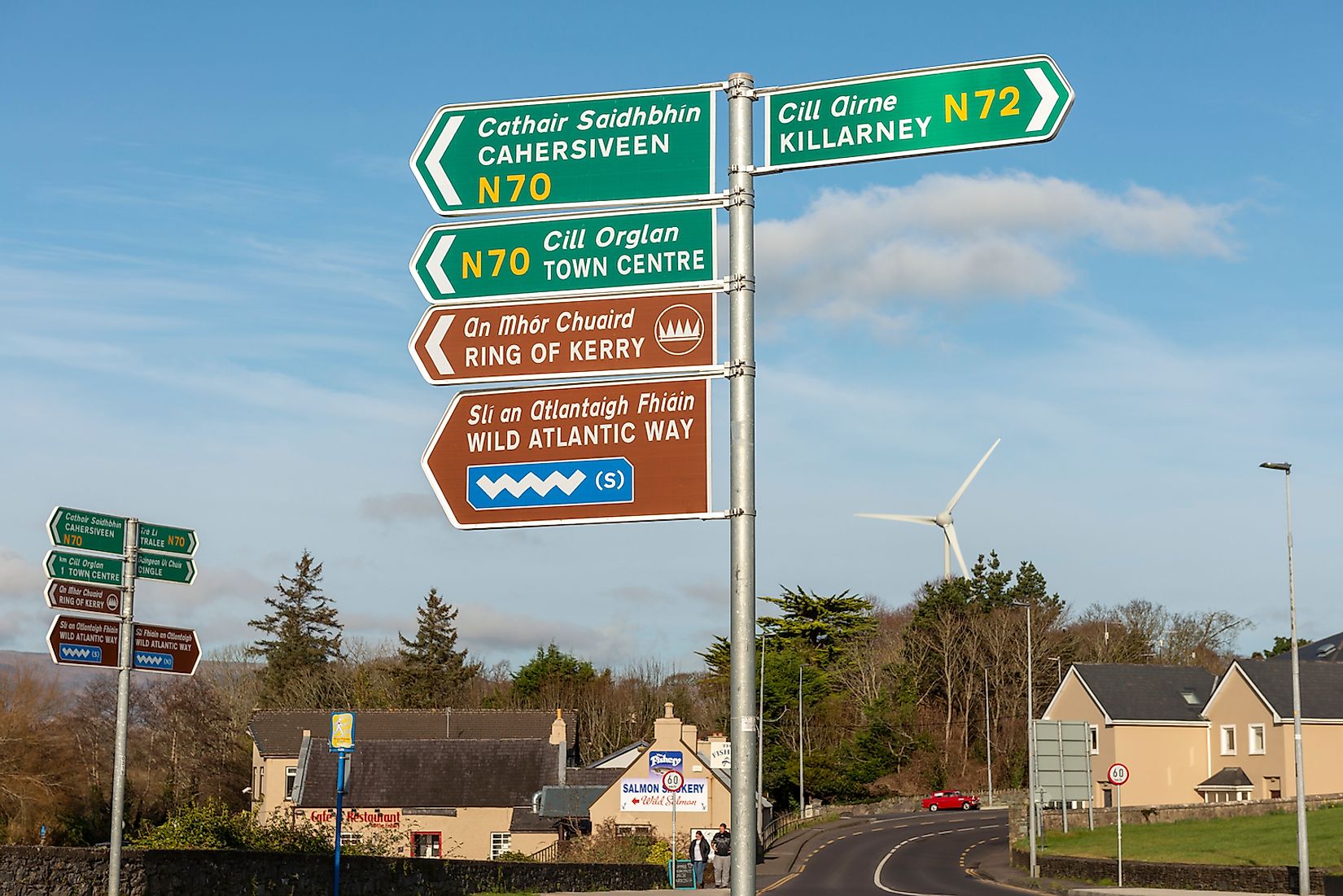
Ireland has experienced significant immigration in recent decades, leading to a diversification of languages spoken in the country. Immigrant communities have brought their native languages, enriching the linguistic landscape of Ireland.
The presence of immigrant languages presents both challenges and opportunities. On the one hand, language barriers can hinder communication, access to services, and social integration. On the other hand, language diversity can foster cultural exchange, promote tolerance, and create a more vibrant and inclusive society.
Languages Spoken by Immigrant Communities
- Polish
- Romanian
- Lithuanian
- Mandarin Chinese
- Cantonese Chinese
- Arabic
- Portuguese
- Spanish
- French
- Italian
These languages represent a diverse range of linguistic backgrounds and reflect the growing multiculturalism of Ireland.
– Analyze the government’s language policy and its impact on language usage in Ireland, including the use of Irish, English, and other languages.
The Irish government’s language policy has had a significant impact on language usage in Ireland. The policy, which was first introduced in the 1920s, aims to promote the use of Irish as the national language of Ireland and to protect it from the encroachment of English.
The policy has been successful in some respects, as Irish is now widely used in education, government, and the media. However, it has also been controversial, as some people argue that it has led to a decline in the use of English in Ireland.
One of the most significant impacts of the government’s language policy has been the decline of Irish in certain regions of the country. In the early 20th century, Irish was the majority language in most of Ireland. However, due to a number of factors, including the emigration of Irish speakers to English-speaking countries and the increasing dominance of English in education and the media, the use of Irish has declined significantly in recent decades.
Today, Irish is only spoken as a first language by a minority of the population, and it is no longer the majority language in any region of the country.
The government’s language policy has also had a significant impact on the use of English in Ireland. English is now the majority language in Ireland, and it is used in all aspects of public life. The government’s language policy has helped to ensure that English is widely available in Ireland, and it has also helped to promote the use of English as a lingua franca in Ireland.
The government’s language policy has been controversial, and there are ongoing debates about the status of Irish as an official language, the use of English in education and the media, and the rights of minority language speakers. Some people argue that the government’s language policy has been too successful, and that it has led to a decline in the use of English in Ireland.
Others argue that the government’s language policy is necessary to protect Irish from extinction.
Impact of the Government’s Language Policy on the Irish Language
- The government’s language policy has helped to increase the use of Irish in education, government, and the media.
- The government’s language policy has also helped to promote the use of Irish as a lingua franca in Ireland.
- However, the government’s language policy has also been criticized for leading to a decline in the use of Irish in certain regions of the country.
Impact of the Government’s Language Policy on the English Language
- The government’s language policy has helped to ensure that English is widely available in Ireland.
- The government’s language policy has also helped to promote the use of English as a lingua franca in Ireland.
- However, the government’s language policy has also been criticized for leading to a decline in the use of English in certain regions of the country.
Ongoing Debates about the Government’s Language Policy
- There are ongoing debates about the status of Irish as an official language.
- There are ongoing debates about the use of English in education and the media.
- There are ongoing debates about the rights of minority language speakers.
Sociolinguistic Variation

The sociolinguistic landscape of Ireland is complex and multifaceted, shaped by a range of social factors that influence language use and variation. These factors include regional variation, urban-rural differences, age and generational factors, and gender and socio-economic status.
Regional Variation
Regional variation in language use is a prominent feature of Ireland. The Irish language has traditionally been strongest in the Gaeltacht regions, which are located primarily in the west and northwest of the country. In these areas, Irish is the dominant language in many aspects of life, including education, media, and daily communication.
However, the use of Irish has declined in recent decades, particularly in urban areas and among younger generations.
In contrast, English is the dominant language in most other parts of Ireland, including Dublin and other major cities. However, even in these areas, there are pockets of Irish-speaking communities, and many people have some degree of proficiency in both languages.
Urban vs. Rural Differences
There are also significant differences in language use between urban and rural areas in Ireland. In urban areas, English is the dominant language, while Irish is more commonly used in rural areas. This is due to a number of factors, including the higher concentration of Irish speakers in rural areas and the greater availability of Irish-language services and resources in these areas.
Age and Generational Factors
Age and generational factors also play a role in language use in Ireland. Older generations are more likely to be fluent in Irish than younger generations, who have grown up in a more English-dominated society. This is due to a number of factors, including the decline of Irish in the education system and the increasing popularity of English-language media and culture.
Gender and Socio-economic Status
Gender and socio-economic status also have an impact on language use in Ireland. Women are more likely to be fluent in Irish than men, and people from higher socio-economic backgrounds are more likely to be able to speak both Irish and English fluently.
Language, Social Class, and Identity
Language is closely tied to social class and identity in Ireland. The ability to speak Irish has traditionally been seen as a mark of cultural authenticity and belonging, and many Irish people take pride in their ability to speak the language.
However, the decline of Irish in recent decades has led to some concerns about the loss of Irish identity and culture.
The relationship between language, social class, and identity is complex and multifaceted. On the one hand, language can be used to reinforce social stratification, with those who speak the dominant language (English) having more power and prestige than those who speak the minority language (Irish).
On the other hand, language can also be used to construct and maintain group identities, with those who speak the same language feeling a sense of belonging and solidarity.
The impact of language on social mobility and inclusion is also significant. In Ireland, those who are fluent in both Irish and English have a greater range of opportunities for education, employment, and social advancement. This is because they are able to communicate effectively with both Irish- and English-speaking communities.
Examples of Sociolinguistic Variation in Ireland
There are many examples of sociolinguistic variation in Ireland. One example is the use of the Irish language in the Gaeltacht regions. In these areas, Irish is the dominant language in all aspects of life, from education to media to daily communication.
This is in contrast to the rest of Ireland, where English is the dominant language.
Another example of sociolinguistic variation in Ireland is the use of different dialects of English. There are a number of different dialects of English spoken in Ireland, each with its own unique pronunciation, grammar, and vocabulary. These dialects are often associated with particular regions or social groups.
The sociolinguistic diversity of Ireland is a reflection of the country’s complex history and culture. The use of different languages and dialects in Ireland is a testament to the country’s rich linguistic heritage and the diversity of its people.
Social Significance of Sociolinguistic Variation
The sociolinguistic diversity of Ireland has a number of social implications. On the one hand, it can contribute to social cohesion and cultural identity. The ability to speak Irish is seen as a mark of cultural authenticity and belonging, and many Irish people take pride in their ability to speak the language.
On the other hand, sociolinguistic diversity can also lead to social division and inequality. Those who are fluent in both Irish and English have a greater range of opportunities for education, employment, and social advancement than those who are not.
The government’s language policy has a significant impact on sociolinguistic variation in Ireland. The policy of promoting Irish as the national language has helped to preserve the language and to increase its use in education and the media. However, the policy has also been criticized for neglecting the rights of English speakers and for contributing to social division.
Historical Perspectives
The evolution of language in Ireland has been shaped by a complex interplay of linguistic, cultural, and historical factors. From its earliest origins to the present day, the Irish language has undergone significant changes, reflecting the island’s rich and tumultuous history.
Celtic Origins and Gaelic Influence
The earliest known inhabitants of Ireland, the Celts, spoke a language known as Primitive Irish. Over time, Primitive Irish evolved into Old Irish, which became the dominant language of Ireland from the 5th to the 10th centuries. During this period, Irish was heavily influenced by Gaelic, a language spoken by the Gaels who migrated to Ireland from Scotland and northern England.
The influence of Gaelic on Irish is evident in the adoption of many Gaelic words and grammatical structures. The modern Irish language is a direct descendant of Old Irish, and it retains many features that originated during the Gaelic period.
Viking Invasions and Norse Influence
In the 8th century, Ireland began to experience raids by Vikings from Scandinavia. These raids had a significant impact on the Irish language, as the Vikings introduced new words and phrases related to warfare, trade, and shipbuilding. Some of these words, such as “Viking” and “fjord,” have become part of the modern Irish vocabulary.
Norman Conquest and Anglo-Norman Influence
In the 12th century, Ireland was invaded by the Normans, who brought with them the Anglo-Norman language. Anglo-Norman, a dialect of French, became the language of the ruling class in Ireland and had a significant impact on the Irish language.
Many Anglo-Norman words were adopted into Irish, and the Irish language began to lose its status as the dominant language of the country.
English Colonization and Language Suppression, What language do they speak in ireland
In the 16th century, Ireland was colonized by England. The English government sought to suppress the Irish language and culture, and English became the official language of Ireland. The Irish language was banned from schools and government offices, and its use was discouraged in public life.
Despite the efforts of the English government, the Irish language survived in the countryside and among the lower classes. In the 19th century, there was a revival of interest in the Irish language, and the Gaelic League was founded to promote its use.
The Gaelic League played a key role in the preservation and revitalization of the Irish language.
Independence and Language Policy
Ireland gained independence from England in 1922, and the Irish language was given official status in the new Irish Free State. The government adopted a policy of bilingualism, with both Irish and English being used in government, education, and the media.
However, the policy of bilingualism has not been fully implemented, and English remains the dominant language in Ireland today. The Irish language is spoken by a minority of the population, and its use is declining in some areas.
Language Attitudes
Attitudes towards Irish and English in Ireland are complex and have been shaped by historical, social, and political factors. In general, there is a positive attitude towards both languages, with Irish being seen as a symbol of national identity and English as the language of international communication.
However, there are also some negative attitudes towards Irish, particularly among younger people. These attitudes are often based on perceptions that Irish is difficult to learn and not as useful as English in the modern world. As a result, there has been a decline in the use of Irish in recent years.
Factors Shaping Attitudes
There are a number of factors that shape attitudes towards Irish and English in Ireland. These include:
- History:The history of Ireland has had a significant impact on attitudes towards Irish and English. The English language was introduced to Ireland during the Norman invasion in the 12th century and was used as the language of government and education for centuries.
- Politics:The Irish language has been a symbol of Irish nationalism since the 19th century. The Irish language revival movement began in the late 19th century and has been successful in promoting the use of Irish in education, government, and the media.
- Social factors:Social factors also play a role in shaping attitudes towards Irish and English. For example, people who live in rural areas are more likely to speak Irish than those who live in urban areas.
- Economic factors:Economic factors can also influence attitudes towards Irish and English. For example, people who work in international business are more likely to speak English than those who work in local businesses.
Impact on Language Usage
The attitudes towards Irish and English in Ireland have a significant impact on language usage. For example, the decline in the use of Irish in recent years is due in part to the negative attitudes towards the language among younger people.
Additionally, the positive attitudes towards English have led to the widespread use of English in all areas of Irish society.
Future Trends

The future of language in Ireland is uncertain, but there are a number of factors that will likely influence its evolution. These include the increasing globalization of the world, the rise of technology, and the changing demographics of Ireland.One of the biggest challenges facing the Irish language is the increasing dominance of English as a global language.
English is the language of business, education, and media, and it is increasingly being used in everyday conversation in Ireland. This has led to a decline in the use of Irish, particularly among younger generations.However, there are also a number of factors that could help to preserve and promote the Irish language.
These include the government’s commitment to the Irish language, the growing popularity of Irish-language media, and the increasing number of people who are learning Irish as a second language.The future of English in Ireland is also uncertain. English is the dominant language in Ireland, but it is also facing challenges from other languages, such as Polish and Mandarin.
These languages are being spoken by increasing numbers of people in Ireland, and they could eventually have a significant impact on the linguistic landscape of the country.The following table Artikels some of the potential challenges and opportunities for Irish and English in the years to come:| Challenges | Opportunities ||—|—|| Declining use of Irish among younger generations | Growing popularity of Irish-language media || Dominance of English as a global language | Increasing number of people learning Irish as a second language || Competition from other languages, such as Polish and Mandarin | Government’s commitment to the Irish language |Overall, the future of language in Ireland is uncertain.
However, there are a number of factors that could help to preserve and promote the Irish language, while also ensuring that English remains the dominant language in the country.
Essential Questionnaire
What is the official language of Ireland?
Both Irish and English are the official languages of Ireland.
What is the most commonly spoken language in Ireland?
English is the most commonly spoken language in Ireland, with over 99% of the population reporting fluency.
Is Irish a dying language?
While the number of native Irish speakers has declined in recent decades, the language is experiencing a revival, with increasing numbers of people learning and using it.
