Larger language models do in-context learning differently, leveraging context to enhance their understanding and generate responses. This innovative approach has revolutionized natural language processing, opening up new possibilities for NLP tasks like text summarization, machine translation, and question answering.
In-context learning empowers LLMs to adapt to specific contexts, making their responses more relevant and informative. By understanding the nuances of the input, LLMs can generate tailored outputs that are both accurate and insightful.
In-Context Learning in LLMs
In-context learning is a fundamental capability of large language models (LLMs) that enables them to adapt their understanding and response generation to the specific context provided. Unlike traditional machine learning models that are trained on static datasets, LLMs can leverage the context provided in a given prompt or conversation to enhance their performance.
LLMs achieve in-context learning by utilizing their massive training datasets and advanced neural network architectures. During training, these models are exposed to vast amounts of text and code, allowing them to learn the relationships between words, phrases, and concepts. This enables them to understand the meaning and intent behind the context provided, even if it contains novel or unfamiliar information.
Advantages of In-Context Learning in LLMs
- Enhanced understanding:In-context learning allows LLMs to develop a deeper understanding of the specific context, leading to more accurate and relevant responses.
- Adaptability:LLMs can adapt their understanding and response generation to different contexts, making them suitable for a wide range of tasks, such as question answering, dialogue generation, and text summarization.
- Personalized responses:In-context learning enables LLMs to tailor their responses to the user’s specific needs and preferences, resulting in more personalized and engaging interactions.
Limitations of In-Context Learning in LLMs
- Context dependency:The performance of LLMs is heavily dependent on the quality and relevance of the context provided. Poor or incomplete context can lead to inaccurate or irrelevant responses.
- Memory limitations:LLMs have limited memory capacity, which can restrict their ability to retain and utilize information from previous contexts in long conversations or complex tasks.
- Bias and fairness:LLMs can inherit biases and unfairness from their training data, which can impact the accuracy and fairness of their responses.
Methods for In-Context Learning

In-context learning enables LLMs to adapt their responses based on the specific context provided in a prompt. This section explores the various methods employed by LLMs to achieve in-context learning.
Attention Mechanisms
Attention mechanisms allow LLMs to focus on specific parts of the input sequence, assigning different weights to different elements. This enables the model to learn the relative importance of different words or phrases in the context, enhancing its ability to generate contextually relevant responses.
Self-Attention
Self-attention is a type of attention mechanism where the model attends to different parts of its own output sequence. This allows the model to capture long-range dependencies and relationships within the generated text, improving coherence and context-awareness.
Transformers, Larger language models do in-context learning differently
Transformers are neural network architectures that utilize attention mechanisms extensively. They consist of encoder-decoder pairs, where the encoder converts the input sequence into a fixed-length representation, and the decoder generates the output sequence based on the encoder’s representation and the attention weights computed over the input sequence.
Training Data and Pre-Training
The training data used for pre-training LLMs plays a crucial role in shaping their in-context learning capabilities. Large and diverse training datasets expose the models to a wide range of language patterns and contexts, enabling them to learn generalizable representations.
Pre-training involves training the LLM on massive datasets using unsupervised learning objectives, such as language modeling or masked language modeling. This pre-training provides the model with a strong foundation in language understanding and allows it to adapt more effectively to different contexts during in-context learning.
Impact on Natural Language Processing
In-context learning has a profound impact on various natural language processing (NLP) tasks. LLMs leverage this technique to enhance their performance in text summarization, machine translation, and question answering.
Larger language models (LLMs) approach in-context learning differently, enabling them to adapt to specific tasks and contexts. This flexibility aligns with the principles of multimedia-assisted language learning ( multimedia-assisted language learning ), which leverages diverse media to enhance language acquisition.
By incorporating multimedia elements, LLMs can provide a more immersive and interactive learning experience, mirroring the natural language learning process and fostering deeper comprehension and retention. Moreover, LLMs’ ability to learn in context allows them to tailor their responses to individual learners, offering personalized guidance and feedback.
Text Summarization
- LLMs can utilize in-context learning to generate concise and informative summaries.
- By conditioning on the provided text, they extract key information and identify important phrases.
- This enables them to produce summaries that are both relevant and comprehensive.
Machine Translation
- In-context learning allows LLMs to translate text more accurately and fluently.
- They can learn the context-specific meaning of words and phrases, improving translation quality.
- Additionally, they can adapt to different domains and languages, enhancing translation performance.
Question Answering
- LLMs employ in-context learning to answer questions precisely and comprehensively.
- They can extract relevant information from the provided context and generate answers that are both accurate and informative.
- This enables them to serve as effective question-answering systems in various domains.
While in-context learning presents significant opportunities for NLP, it also poses challenges. LLMs may suffer from hallucinations, generating inaccurate or irrelevant information. Additionally, they require substantial computational resources, which can limit their practical applications.
Limitations and Future Directions
In-context learning in LLMs offers remarkable capabilities, but it is not without limitations. Memory management, catastrophic forgetting, and bias pose challenges that require careful consideration and future research.
Memory Management:LLMs have limited memory capacity, which can hinder their ability to retain and utilize past information during in-context learning. Managing memory effectively is crucial to ensure LLMs can leverage previous knowledge while adapting to new contexts.
Catastrophic Forgetting:In-context learning can lead to catastrophic forgetting, where LLMs may lose previously acquired knowledge when adapting to new tasks or contexts. This challenge requires techniques to mitigate forgetting and preserve valuable information.
Bias:LLMs are susceptible to biases present in their training data, which can perpetuate or amplify these biases during in-context learning. Addressing bias is essential to ensure fair and equitable outcomes.
Future Research Directions
Overcoming the limitations of in-context learning in LLMs requires ongoing research and advancements. Several promising directions include:
- Improved Memory Management Techniques:Developing more efficient memory management strategies to enhance the retention and utilization of past information.
- Mitigation of Catastrophic Forgetting:Exploring methods to minimize catastrophic forgetting by preserving acquired knowledge while adapting to new contexts.
- Bias Mitigation Techniques:Investigating techniques to identify and mitigate biases in LLMs, ensuring fair and equitable outcomes.
- New In-Context Learning Algorithms:Designing novel in-context learning algorithms that optimize performance, reduce limitations, and enhance capabilities.
- Applications in Real-World Tasks:Exploring practical applications of in-context learning in LLMs for real-world tasks, such as personalized recommendations, intelligent assistants, and knowledge-based systems.
Final Review: Larger Language Models Do In-context Learning Differently
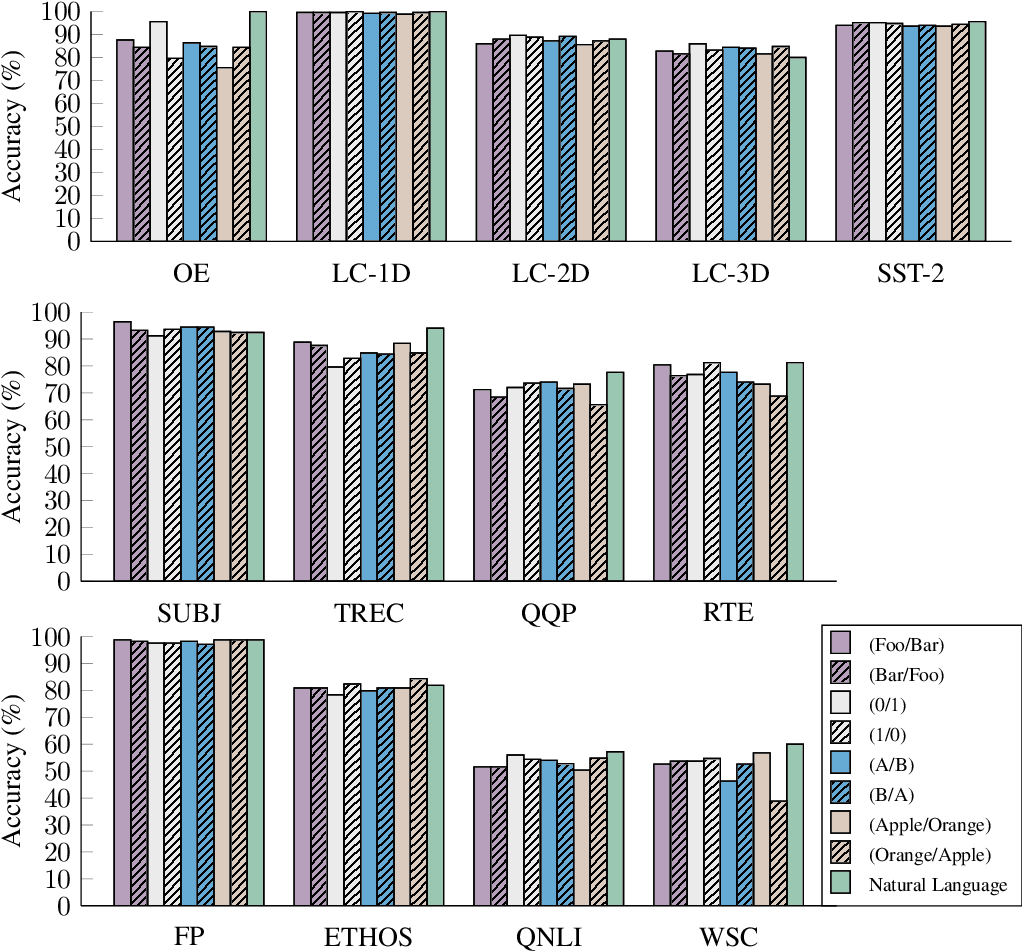
In conclusion, larger language models have transformed in-context learning, enabling them to perform NLP tasks with greater accuracy and efficiency. As research continues to advance, we can expect even more groundbreaking applications of this technology in the future.
FAQ Explained
What is the significance of in-context learning in LLMs?
In-context learning allows LLMs to adapt to specific contexts, enhancing the relevance and informativeness of their responses.
How do LLMs leverage context to enhance their understanding?
LLMs use context to identify key concepts, relationships, and patterns, enabling them to generate more accurate and insightful responses.
What are the limitations of in-context learning in LLMs?
In-context learning can be computationally expensive and may be limited by the availability of training data and the model’s memory capacity.
