What language did Vikings speak? This captivating inquiry delves into the fascinating world of Old Norse, the language spoken by the formidable Vikings during their era of exploration, conquest, and cultural influence. From the icy fjords of Scandinavia to the sun-drenched shores of distant lands, the Vikings left an indelible mark on history, and their language played a pivotal role in shaping their identity and legacy.
Old Norse, the precursor to modern Scandinavian languages, was a rich and vibrant tongue that reflected the Vikings’ unique culture, beliefs, and way of life. Through its intricate grammar, expressive vocabulary, and captivating literature, Old Norse offers a window into the minds and hearts of these enigmatic seafaring warriors.
Historical Context
The Vikings emerged from Scandinavia, a region encompassing present-day Denmark, Norway, and Sweden. Their origins can be traced to the Iron Age, around 500 BC, when Germanic tribes settled in the region.
The Viking Age, a period of significant expansion and influence, spanned from the late 8th to the mid-11th centuries. During this time, the Vikings embarked on extensive raids and explorations, leaving an indelible mark on European history.
Cultural and Linguistic Influences
The Vikings interacted with diverse civilizations, including the Celts, Anglo-Saxons, and Slavs. These interactions influenced their language, culture, and technology. For instance, they adopted the Latin alphabet from the Anglo-Saxons and incorporated Celtic motifs into their art.
Motivations for Viking Raids and Explorations
The Vikings were driven by various factors, including the search for new lands, wealth, and adventure. Overpopulation, limited resources, and a desire for glory also contributed to their expansionist endeavors.
Old Norse Language
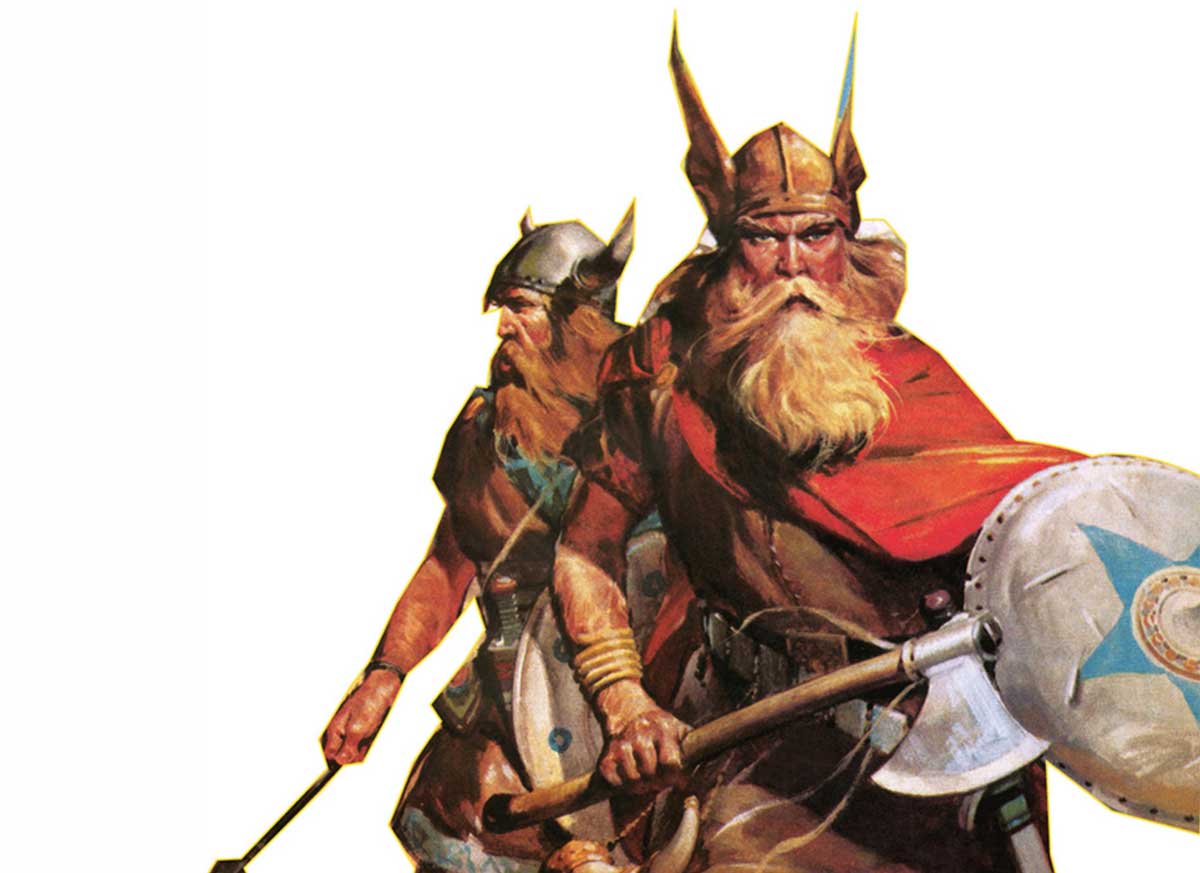
Old Norse, a North Germanic language spoken by the Vikings from the 9th to the 13th centuries, is the ancestor of the modern Scandinavian languages: Danish, Norwegian, Swedish, Icelandic, and Faroese. It played a significant role in shaping the languages and cultures of Scandinavia and beyond.
Key Characteristics of Old Norse
Old Norse grammar and vocabulary exhibit distinct features that differentiate it from modern Scandinavian languages. Its grammar, characterized by complex case systems, verb conjugations, and a rich inflectional system, reflects its Indo-European roots. The vocabulary, influenced by Germanic and Scandinavian dialects, contains numerous words related to seafaring, warfare, and daily life.
Old Norse Texts and Inscriptions
Old Norse literature and inscriptions provide valuable insights into the language and culture of the Vikings. Notable texts include the Eddas, collections of myths and legends, and the Sagas, historical accounts of Viking expeditions and adventures. Runestones, carved with Old Norse inscriptions, serve as linguistic and historical artifacts, offering glimpses into the language’s usage.
Role of Old Norse in Modern Scandinavian Languages and Culture
Old Norse continues to influence modern Scandinavian languages and culture. Many words and phrases from Old Norse have survived in modern Scandinavian languages, particularly in the areas of law, literature, and religion. Additionally, Old Norse mythology and literature inspire contemporary Scandinavian art, literature, and music, preserving the cultural heritage of the Vikings.
Table: Old Norse vs. Modern Scandinavian Languages
The following table highlights the similarities and differences between Old Norse and its modern descendants:
| Feature | Old Norse | Modern Scandinavian Languages |
|---|---|---|
| Grammar | Complex case systems, verb conjugations, inflectional system | Simplified case systems, reduced verb conjugations, less inflection |
| Vocabulary | Seafaring, warfare, daily life terms | Modernized vocabulary, influenced by external languages |
| Pronunciation | Distinct vowel and consonant sounds | Vowel and consonant shifts, variations in pronunciation |
| Influence | Ancestor of modern Scandinavian languages | Basis for modern Scandinavian languages, cultural and linguistic influence |
Timeline: Development of Old Norse
- 8th century: Emergence of Old Norse from Proto-Norse
- 9th-13th centuries: Viking Age, spread of Old Norse throughout Scandinavia
- 13th century: Gradual transition to Middle Norse, ancestor of modern Scandinavian languages
- 15th-16th centuries: Reformation, influence of written Old Norse on modern Scandinavian languages
Glossary of Common Old Norse Terms
- berserk: warrior in a trance-like state
- drakkar: Viking ship
- goði: pagan priest
- rune: character used in the Old Norse alphabet
- skald: poet
Old Norse in Modern Literature, Music, and Film
Old Norse continues to inspire contemporary artistic expression. Authors like J.R.R. Tolkien and Neil Gaiman draw upon Old Norse mythology and language in their works. Musicians like Wardruna and Heilung incorporate Old Norse chants and instruments into their music. Films such as “The Northman” and “Valhalla Rising” explore Viking culture and history through the lens of Old Norse language and customs.
Old Norse Loanwords in English and Other Languages
Old Norse loanwords have found their way into English and other languages, particularly due to Viking raids and settlements. Examples include words like berserk, skull, and window. These loanwords reflect the historical interactions between Viking culture and other European languages.
Bibliography
- Faulkes, Anthony (ed.). Edda. Everyman’s Library, 1987.
- Haugen, Einar. The Scandinavian Languages: An Introduction to Their History. Harvard University Press, 1976.
- Larrington, Carolyne (trans.). The Poetic Edda. Oxford University Press, 1996.
- Näsström, Britt-Mari. Old Norse: An Introduction. Routledge, 2015.
Runes and Writing Systems

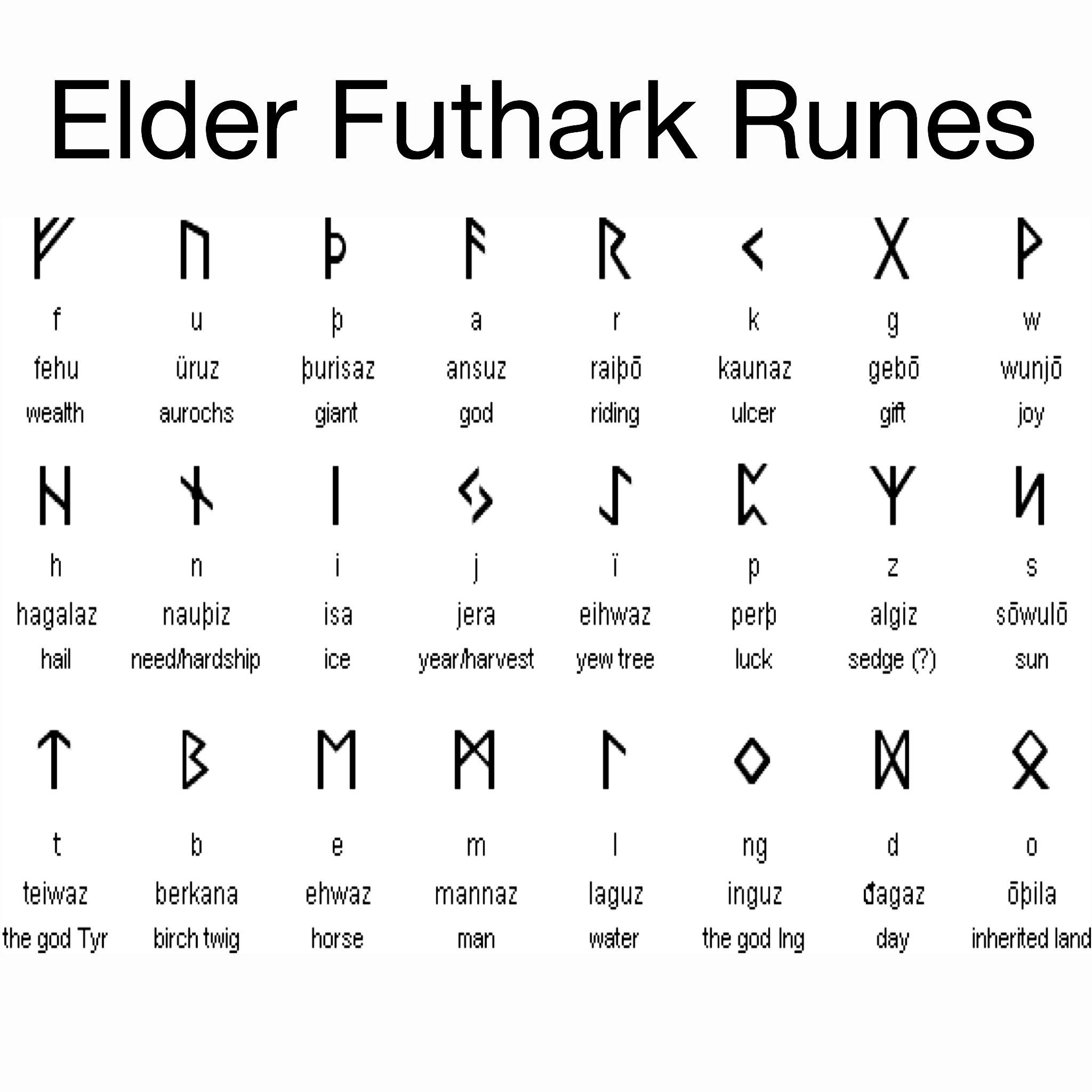
The Vikings developed a unique writing system known as runes. The runic alphabet, known as the Futhark, was composed of 24 characters and was used for both writing and divination.
Development of the Runic Alphabet
The runic alphabet evolved from the Elder Futhark, which was used by the Germanic peoples from the 2nd to 8th centuries CE. The Elder Futhark consisted of 24 runes, each representing a different sound. Over time, the runes evolved into the Younger Futhark, which was used by the Vikings from the 8th to 12th centuries CE.
The Younger Futhark consisted of 16 runes, and it was used for a variety of purposes, including writing, communication, and magic.
Types of Runes and Their Uses
There were two main types of runes: bind runes and single runes. Bind runes were created by combining two or more runes together, and they were often used for magical purposes. Single runes were used for writing and communication, and they were often carved into wood, stone, or metal.
Examples of Runic Inscriptions
Runic inscriptions have been found on a variety of Viking artifacts, including weapons, jewelry, and runestones. One of the most famous runic inscriptions is the Rök Stone, which was erected in Sweden in the 9th century CE. The Rök Stone contains a long runic inscription that tells the story of a Viking warrior named Varin.
Linguistic Variation

Old Norse, like any other widely spoken language, exhibited regional variations that gave rise to distinct dialects. These dialects varied in terms of vocabulary, grammar, and pronunciation, reflecting the diverse geographical and cultural landscapes of the Viking world.
The primary factors that contributed to these variations were geography, trade, and cultural interactions. The mountainous and rugged terrain of Scandinavia, with its numerous fjords and islands, acted as natural barriers that limited communication and fostered the development of isolated dialects.
Geographical Distribution
The main dialectal divisions of Old Norse corresponded to the geographical regions where it was spoken:
- Western Old Norse:Spoken in Norway, Iceland, the Faroe Islands, and parts of the British Isles, it was characterized by the preservation of certain archaic features and the development of innovative sound changes.
- Eastern Old Norse:Spoken in Denmark, Sweden, and parts of Finland, it was influenced by contact with other Germanic languages, such as Old English and Old High German, and exhibited a more conservative sound system.
Dialectal Differences
The dialectal variations in Old Norse can be observed in various aspects of the language:
- Vocabulary:Different dialects had their own unique words and expressions for certain concepts. For example, the Western Old Norse word “hestur” (horse) corresponds to the Eastern Old Norse “hross.”
- Grammar:Dialectal differences can be seen in the use of grammatical forms. For instance, the Western Old Norse past tense suffix “-ði” corresponds to the Eastern Old Norse “-te.”
- Pronunciation:The pronunciation of certain sounds varied across dialects. For example, the Western Old Norse diphthong “ei” was pronounced as [ei], while in Eastern Old Norse it was pronounced as [e:].
Implications
The dialectal variations in Old Norse have significant implications for understanding the history and development of the language. They provide insights into the linguistic diversity of the Viking world and the cultural and geographical factors that shaped the language’s evolution.
Moreover, the study of Old Norse dialects contributes to our understanding of the relationship between Old Norse and other Germanic languages. By comparing the dialectal variations, linguists can trace the common origins of these languages and reconstruct their historical development.
Influence on Modern Languages
Old Norse, the language spoken by the Vikings, played a significant role in shaping the development of modern Scandinavian languages. Its influence is evident in the phonology, morphology, syntax, vocabulary, and literary traditions of these languages.
The Scandinavian languages that evolved from Old Norse include Swedish, Norwegian, Danish, Icelandic, and Faroese. These languages share many common features, including a similar sound system, grammatical structure, and vocabulary. However, they have also developed their own unique characteristics over time.
Phonology, What language did vikings speak
Old Norse had a relatively complex sound system, with a wide range of vowels and consonants. Many of these sounds have been preserved in modern Scandinavian languages, although some have undergone changes over time.
- For example, the Old Norse diphthong /ei/ has become /e/ in Swedish and Norwegian, but it has remained /ei/ in Danish and Icelandic.
- Another example is the Old Norse consonant /ð/, which has become /d/ in Swedish and Norwegian, but it has remained /ð/ in Danish and Icelandic.
Morphology
Old Norse had a complex morphological system, with a rich system of noun and verb inflections. Many of these inflections have been preserved in modern Scandinavian languages, although some have been simplified or lost over time.
- For example, the Old Norse noun declension system had four cases (nominative, accusative, genitive, and dative), but this system has been reduced to two cases (nominative and accusative) in Swedish and Norwegian.
- Another example is the Old Norse verb conjugation system, which had a complex system of tenses and moods, but this system has been simplified in modern Scandinavian languages.
Syntax
Old Norse had a relatively free word order, but it also had a number of fixed word order patterns. These patterns have been largely preserved in modern Scandinavian languages, although some changes have occurred over time.
- For example, the Old Norse verb-second rule, which required the verb to be placed in the second position in a sentence, has been preserved in Swedish and Norwegian, but it has been relaxed in Danish and Icelandic.
- Another example is the Old Norse use of the passive voice, which has been preserved in modern Scandinavian languages, although it is less common than in Old Norse.
Vocabulary
Old Norse had a rich vocabulary, which included many words that are still used in modern Scandinavian languages. These words include basic vocabulary items, such as nouns, verbs, and adjectives, as well as more specialized vocabulary, such as terms for farming, fishing, and warfare.
- For example, the Old Norse word for “house” (hús) is still used in Swedish, Norwegian, Danish, and Icelandic.
- Another example is the Old Norse word for “ship” (skip), which is still used in Swedish, Norwegian, Danish, and Icelandic.
Literary Traditions
Old Norse literature is a rich and varied body of work, which includes sagas, poems, and plays. This literature has had a profound influence on the development of modern Scandinavian literature.
- For example, the Old Norse sagas have inspired many modern Scandinavian novels and plays.
- Another example is the Old Norse poetry, which has influenced the development of modern Scandinavian poetry.
– Discuss the role of skalds in Viking society, including their responsibilities, social status, and the impact of their work on Viking culture.

In Viking society, skalds held a revered position as poets, historians, and entertainers. They were responsible for composing and reciting epic poems that celebrated the deeds of great warriors, kings, and gods. These poems served as a form of oral history, preserving the sagas and legends of the Viking Age.
Skaldic poetry was highly complex and sophisticated, employing intricate rhyme schemes, kennings (metaphorical phrases), and alliteration. Skalds were masters of language, using their skills to craft verses that were both beautiful and memorable. Their performances were often accompanied by music, adding to the impact and emotional resonance of their words.
Responsibilities of Skalds
- Composing and reciting poems in praise of patrons or to commemorate important events
- Preserving historical accounts and genealogies through their poetry
- Providing entertainment and amusement at feasts and gatherings
- Advising kings and chieftains on matters of politics and warfare
Social Status of Skalds
Skalds enjoyed a high social status within Viking society. They were often attached to the courts of kings and chieftains, where they were treated with respect and given privileges. Their skills were highly valued, and they were often rewarded with gifts and patronage.
Impact of Skaldic Poetry on Viking Culture
Skaldic poetry played a vital role in shaping Viking culture. It provided a means of preserving and transmitting history, values, and beliefs. The poems celebrated the heroic ideals of the Vikings, inspiring courage, loyalty, and a sense of shared identity.
Skaldic poetry also served as a form of entertainment, bringing joy and amusement to Viking gatherings.
Linguistic Legacy
Old Norse, the language of the Vikings, continues to influence modern Scandinavian cultures in various ways. Its impact can be seen in literature, music, art, and even in the cultural identity of Scandinavia.
Influence on Modern Literature, Music, and Art
Old Norse mythology and sagas have inspired numerous works of modern literature, music, and art. Authors such as J.R.R. Tolkien and Neil Gaiman have drawn inspiration from Old Norse sources for their fantasy works. In music, bands like Led Zeppelin and Amon Amarth have incorporated Old Norse themes and lyrics into their songs.
Role in Shaping Scandinavian Identity
Old Norse has played a significant role in shaping the cultural identity of Scandinavia. The language and its literature have contributed to a shared sense of history and heritage among Scandinavian countries. This shared heritage is reflected in the use of Old Norse runes and symbols in modern Scandinavian art and design.
Revitalization Efforts
In recent years, there have been efforts to revitalize Old Norse. These efforts include the teaching of Old Norse in schools and the publication of new works in the language. The revitalization of Old Norse has contributed to a renewed interest in Viking culture and history.
Linguistic Similarities and Differences
Old Norse is closely related to modern Scandinavian languages such as Swedish, Norwegian, and Danish. However, there are also some key differences between Old Norse and these modern languages. For example, Old Norse has a more complex system of verb conjugations and a richer vocabulary.
Table: Key Influences of Old Norse on Modern Scandinavian Culture
| Area | Influence | Examples ||—|—|—|| Literature | Inspiration for fantasy works | J.R.R. Tolkien’s “The Lord of the Rings” || Music | Incorporation of Old Norse themes and lyrics | Led Zeppelin’s “Immigrant Song” || Art | Use of Old Norse runes and symbols | Scandinavian jewelry and tattoos || Identity | Shared sense of history and heritage | Use of Old Norse flags and symbols || Language | Linguistic similarities and differences | Swedish, Norwegian, and Danish |
Contemporary Works Demonstrating Old Norse Influence
* Films:The Northman (2022)
TV shows
Vikings (2013-2020)
Video games
Assassin’s Creed Valhalla (2020)
Short Story Incorporating Old Norse Mythology
In the realm of Asgard, where the gods of Norse mythology reside, a young warrior named Thorbjorn embarked on a perilous quest. He sought the legendary hammer Mjolnir, stolen by the cunning giant Thrym.Thorbjorn traveled through treacherous forests and across raging rivers, guided by the whispers of ancient runes.
He faced formidable creatures and overcame cunning challenges, his resolve unwavering. Finally, he reached Thrym’s lair, where Mjolnir lay hidden.A fierce battle ensued, Thorbjorn’s sword clashing against Thrym’s massive axe. With each blow, Thorbjorn invoked the strength of Odin and the wisdom of Frigg.
In the end, Thorbjorn emerged victorious, reclaiming Mjolnir and restoring balance to Asgard.
The Vikings, known for their seafaring and raids, primarily spoke Old Norse, a North Germanic language. While Old Norse is no longer spoken, its influence can still be seen in modern Scandinavian languages. In contrast, Singapore, a vibrant and cosmopolitan city-state in Southeast Asia, is a melting pot of cultures and languages.
The official languages of Singapore include English, Mandarin, Malay, and Tamil. What language is spoken in Singapore is a fascinating topic that reflects the country’s rich linguistic heritage and its role as a global hub. Despite the vast differences in time and geography, the study of Old Norse and the languages spoken in Singapore provides insights into the evolution and diversity of human communication.
– Compare Old Norse to other Germanic languages, including Old English, Old Saxon, and Gothic.

Old Norse, the language spoken by the Vikings, belongs to the North Germanic branch of the Indo-European language family. It shares many similarities with other Germanic languages, such as Old English, Old Saxon, and Gothic, but also has some unique features that set it apart.
In terms of grammar, Old Norse is similar to other Germanic languages in that it has a relatively simple verb system, with only two tenses (present and past) and two moods (indicative and subjunctive). However, Old Norse has a more complex noun system than other Germanic languages, with four grammatical cases (nominative, accusative, genitive, and dative) and three genders (masculine, feminine, and neuter).
In terms of vocabulary, Old Norse shares many words with other Germanic languages, but it also has a number of unique words that are not found in other languages. For example, the Old Norse word for “ship” is “skip,” while the Old English word is “scip” and the Old Saxon word is “scip.”
In terms of pronunciation, Old Norse is similar to other Germanic languages in that it has a stress accent, with the stress usually falling on the first syllable of a word. However, Old Norse has a number of unique sound changes that are not found in other languages.
For example, the Old Norse word for “house” is “hús,” while the Old English word is “hūs” and the Old Saxon word is “hūs.”
Similarities between Old Norse and other Germanic languages
- Simple verb system with two tenses (present and past) and two moods (indicative and subjunctive)
- Complex noun system with four grammatical cases (nominative, accusative, genitive, and dative) and three genders (masculine, feminine, and neuter)
- Stress accent, with the stress usually falling on the first syllable of a word
- Many shared words
Differences between Old Norse and other Germanic languages
- More complex noun system with four grammatical cases and three genders
- A number of unique words that are not found in other languages
- A number of unique sound changes
– Provide specific examples of how language was used to shape Viking identity, such as the use of kennings and skaldic poetry.
Language played a crucial role in shaping Viking identity, serving as a means of expressing cultural values, beliefs, and experiences. One striking example is the use of kennings, a type of poetic metaphor prevalent in Old Norse literature. Kennings combined two or more words to create vivid and often enigmatic images, such as “wave-steed” for ship or “battle-storm” for war.
These kennings not only enriched the poetic language but also reflected the Vikings’ close connection to the sea and their warrior culture.
Skaldic poetry, another significant aspect of Viking literature, further showcased the power of language in shaping identity. Skalds were professional poets who composed and recited elaborate verse, often praising the deeds of kings and warriors. Their work not only entertained but also served as a means of preserving historical events and cultural traditions.
Through skaldic poetry, Vikings celebrated their victories, mourned their losses, and passed down their stories to future generations.
Kennings
- Kennings were a unique feature of Old Norse poetry, combining two or more words to create a metaphorical image.
- Examples of kennings include “wave-steed” for ship, “battle-storm” for war, and “serpent of the sea” for dragon.
- Kennings reflected the Vikings’ close connection to the sea and their warrior culture.
Skaldic Poetry
- Skaldic poetry was a complex and sophisticated form of verse composed by professional poets called skalds.
- Skaldic poetry was used to praise the deeds of kings and warriors, preserve historical events, and pass down cultural traditions.
- Skaldic poetry played a vital role in shaping Viking identity and celebrating their victories and losses.
Language and Social Structure: What Language Did Vikings Speak
In Viking society, language played a crucial role in distinguishing between different social classes and reflecting the hierarchical structure. The use of specific vocabulary, grammar, and speech patterns was closely tied to one’s position within the social hierarchy.
Linguistic Features Associated with Social Groups
- Royal and Noble Classes:Used elaborate and archaic language, employed complex kennings and skaldic poetry, and possessed a vast vocabulary.
- Warriors and Chieftains:Spoke in a more direct and forceful manner, using terms related to warfare and honor.
- Freemen and Farmers:Employed everyday language with a focus on practical matters and agricultural terms.
- Thralls (Slaves):Had limited vocabulary and speech patterns, often using deferential language and avoiding direct address.
Language thus served as a powerful tool for maintaining social order and reinforcing the distinctions between different groups within Viking society.
Language and Warfare
Language played a crucial role in Viking warfare, facilitating communication and coordination during battles. Vikings used a rich vocabulary of military terms and phrases to convey battle plans, maneuvers, and commands.
Communication in Battle
- Battle cries: Vikings employed distinctive battle cries, known as “hersir,” to rally their troops and intimidate opponents.
- Horn signals: Horns were used to transmit signals across long distances, conveying commands such as “advance,” “retreat,” or “form a shield wall.”
- Verbal commands: Viking leaders issued verbal commands to their warriors, directing their movements and strategies.
Military Terminology
- Weapons: Vikings had specific terms for their weapons, including swords (“sax”), axes (“øx”), and spears (“spjót”).
- Armor: The Vikings’ protective gear also had specialized names, such as helmets (“hjálmr”), chainmail (“brynja”), and shields (“skjaldr”).
- Tactics: Viking military tactics had their own terminology, such as “skjaldmær” (shield maiden) and “berserker” (a frenzied warrior).
Impact on Viking Culture
The language of warfare reinforced Viking identity and values. Military terms and phrases became embedded in their sagas and poetry, reflecting the importance of warfare in Viking society.
Language and Trade
Language played a vital role in Viking trade and commerce, facilitating communication between merchants from diverse regions. Viking traders developed a shared language that incorporated elements from various dialects and languages spoken across their trading routes. This common tongue, often referred to as “Norse trade language,” enabled merchants to negotiate, exchange goods, and establish commercial relationships.
Trading Terms and Phrases
The Norse trade language included a specific vocabulary of trading terms and phrases used to facilitate communication. These terms included:
- Kaup(trade)
- Kaupmaðr(merchant)
- Skip(ship)
- Vara(goods)
- Byrð(cargo)
- Markaðr(marketplace)
These terms and phrases allowed merchants to discuss trade deals, negotiate prices, and describe the goods they were trading. The use of a shared language helped to streamline communication and foster cooperation among merchants from different backgrounds.
Language and Religion

Language played a vital role in Viking religion and mythology, serving as a means to express beliefs, practices, and the divine.
The Vikings, a seafaring people who raided and traded throughout Europe, spoke Old Norse. This language evolved into the modern Scandinavian languages, including Swedish, Norwegian, Danish, and Icelandic. If you are interested in learning more about language settings, you may find this guide on changing the language on Patreon helpful.
Returning to the topic of Viking language, Old Norse was a complex and nuanced language with a rich vocabulary and grammar. It was used in literature, law, and everyday life.
The Vikings possessed a rich vocabulary of religious terms and phrases, including:
Deities and Supernatural Beings
- Óðinn (Odin): The chief god, associated with wisdom, war, and death.
- Þórr (Thor): The god of thunder, lightning, and strength.
- Freyja (Freyja): The goddess of love, fertility, and magic.
- Loki: A trickster god known for his cunning and deceit.
Religious Practices and Beliefs
- Blót: Ritual sacrifices offered to the gods.
- Seiðr: A form of shamanism practiced by both men and women.
- Valhalla: The afterlife for fallen warriors, where they feast and prepare for Ragnarok.
- Ragnarok: The prophesied end of the world, when the gods and giants will battle.
Language and Exploration

During the Viking Age, language played a vital role in exploration and discovery. As the Vikings traveled far and wide, they encountered new peoples and cultures, and language served as a bridge for communication and exchange.
Communication with New Peoples
The Vikings’ ability to communicate with the people they encountered was crucial for successful exploration. They learned new languages and adopted words and phrases from other cultures. For example, the Vikings adopted the word “knarr” from the Old English language, which referred to a type of merchant ship.
Language and Legacy
Old Norse left an enduring mark on Scandinavian culture and society, shaping the development of modern Scandinavian languages and traditions.
In present-day Scandinavia, Old Norse words and phrases continue to be used in everyday language, particularly in rural areas. For example, the word “berserk” (derived from Old Norse “berserkr”), meaning “a fierce warrior,” is still used to describe someone who is extremely aggressive or violent.
Norse Mythology and Sagas
Old Norse literature, including sagas and Eddas, has had a profound influence on Scandinavian culture. The stories of Norse gods and heroes, such as Thor, Odin, and Beowulf, continue to be told and retold, inspiring works of art, literature, and music.
Place Names
Many place names in Scandinavia have Old Norse origins, reflecting the language’s enduring presence in the region. For example, the city of Oslo in Norway is derived from the Old Norse word “Ósló,” meaning “meadow at the foot of a hill.”
Runes
The runic alphabet, used by the Vikings for writing, has also left a lasting legacy. Runes are still used today in some contexts, such as in jewelry and decorative arts.
Commonly Asked Questions
What is Old Norse?
Old Norse is the ancestral language of the Scandinavian languages, spoken by the Vikings during the Viking Age (8th-11th centuries).
How did Old Norse differ from modern Scandinavian languages?
Old Norse featured a more complex grammatical structure, a richer vocabulary, and a distinct sound system compared to its modern descendants.
What are some examples of Old Norse literature?
Notable Old Norse literary works include the Poetic Edda, the Prose Edda, and the Icelandic sagas, which provide valuable insights into Viking mythology, history, and culture.
