What language do Singapore speak? This fascinating question unveils a vibrant linguistic landscape where multiple tongues intertwine, shaping the cultural tapestry of this Southeast Asian nation. From the official languages to the myriad dialects and minority tongues, Singapore’s linguistic diversity is a testament to its rich heritage and cosmopolitan spirit.
Delve into the heart of Singapore’s linguistic tapestry as we explore the official languages, the lingua franca, the Chinese dialects, the national language, and the presence of Tamil and other minority languages. Discover how language policy and education shape language use, and witness the interplay between language and cultural identity.
Official Languages of Singapore
Singapore has four official languages: English, Malay, Mandarin, and Tamil. These languages reflect the country’s diverse cultural heritage and serve important roles in different aspects of society.
Historical Significance
English is the primary language of government, business, and education, a legacy of Singapore’s colonial past under British rule. Malay is the national language, symbolizing the country’s Malay heritage and cultural identity. Mandarin and Tamil are recognized as official languages due to the significant Chinese and Indian populations in Singapore.
Usage in Society
English is widely used in official communication, including government documents, court proceedings, and business transactions. Malay is used in national ceremonies, the national anthem, and some official documents. Mandarin is the primary language in Chinese-medium schools and is widely spoken within the Chinese community.
Tamil is used in Tamil-medium schools and is spoken by the Indian community.
English as the Lingua Franca

English plays a pivotal role as the lingua franca in Singapore, facilitating communication and understanding among its diverse population. It serves as the primary language of government, education, business, and media, enabling seamless interactions across different ethnic and linguistic groups.
English has significantly influenced other languages spoken in Singapore, particularly Singlish, a colloquial form of English that incorporates elements from various local languages. Singlish has become widely used in informal settings, reflecting the vibrant linguistic landscape of the country.
Prevalence of English Proficiency
According to a 2020 survey by the Ministry of Education, 93% of Singaporeans aged 15 and above are proficient in English. This high level of proficiency is attributed to the emphasis on English education in schools and its widespread use in daily life.
Chinese Dialects
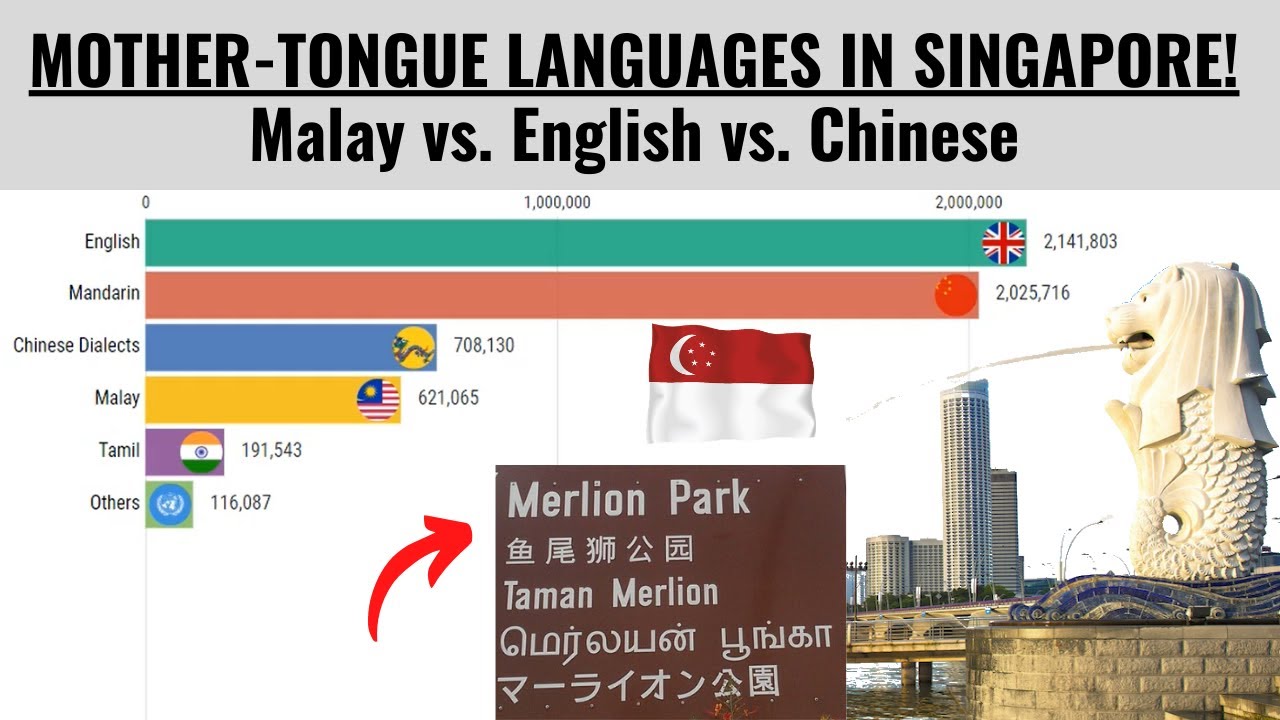
Singapore is a melting pot of diverse cultures and languages, and the Chinese community plays a significant role in shaping the linguistic landscape of the country. Several Chinese dialects are spoken in Singapore, each carrying its own historical and cultural significance.
The presence of these dialects in Singapore can be attributed to the waves of Chinese immigration that occurred during the 19th and 20th centuries. Immigrants from different regions of China brought their native dialects with them, which have continued to be spoken by their descendants in Singapore.
Hokkien
Hokkien is the most widely spoken Chinese dialect in Singapore. It originated in the Fujian province of China and was brought to Singapore by early Chinese immigrants from that region. Hokkien is characterized by its distinctive nasal tones and its use of the “ah” sound at the end of words.
In Singapore, Hokkien is commonly used in informal settings, such as among family and friends. It is also used in some traditional cultural practices, such as Hokkien opera and religious ceremonies.
Teochew
Teochew is another major Chinese dialect spoken in Singapore. It originated in the Chaoshan region of Guangdong province in China. Teochew is known for its clear and distinct pronunciation, and its use of the “ng” sound at the end of words.
In Singapore, Teochew is commonly used in business and commercial settings. It is also used in some traditional cultural practices, such as Teochew opera and cuisine.
Cantonese
Cantonese is a Chinese dialect that originated in the Guangdong province of China. It is spoken by a significant minority of the Chinese population in Singapore. Cantonese is characterized by its use of tones and its distinctive “yue” sound at the end of words.
Singapore is a multilingual country with English, Mandarin, Malay, and Tamil as its official languages. English is the most widely spoken language in Singapore, and it is used in government, business, and education. If you’re curious about learning a new language, you might be wondering what’s the easiest language to learn . The answer depends on your native language and learning style.
However, some languages are generally considered easier to learn than others. For example, Spanish is often considered one of the easiest languages for English speakers to learn.
In Singapore, Cantonese is commonly used in the media, such as in television shows and movies. It is also used in some traditional cultural practices, such as Cantonese opera and cuisine.
Hainanese, What language do singapore speak
Hainanese is a Chinese dialect that originated in the Hainan province of China. It is spoken by a small but significant minority of the Chinese population in Singapore. Hainanese is characterized by its use of the “ah” sound at the end of words, similar to Hokkien.
In Singapore, Hainanese is commonly used in informal settings, such as among family and friends. It is also used in some traditional cultural practices, such as Hainanese opera and cuisine.
Other Chinese Dialects
In addition to the four main Chinese dialects mentioned above, there are also a number of other Chinese dialects spoken in Singapore, including Hakka, Shanghainese, and Foochow. These dialects are spoken by smaller communities of Chinese immigrants and their descendants.
Malay as the National Language
Malay holds a significant position as the national language of Singapore. Its designation serves as a symbol of the country’s Malay heritage and cultural diversity. The Malay language plays a crucial role in fostering a sense of national identity and unity among Singaporeans.
To preserve and promote the Malay language, the Singapore government has implemented various initiatives. These include establishing the Malay Language Council, which is responsible for developing and implementing policies related to the language. Additionally, Malay is taught as a compulsory subject in all primary and secondary schools, ensuring that future generations of Singaporeans are proficient in the national language.
Official Settings
Malay is widely used in official settings in Singapore. It is the language of the national anthem, “Majulah Singapura,” and is used in parliamentary proceedings, government documents, and official announcements. The use of Malay in these contexts reinforces its status as the national language and ensures that all citizens have access to important information in their native tongue.
Cultural Events
Malay is also an integral part of Singapore’s cultural landscape. It is used in traditional Malay performing arts, such as wayang kulit(shadow puppet theater) and mak yong(dance-drama). Additionally, Malay literature, music, and film play a significant role in showcasing the richness and diversity of Singapore’s Malay culture.
Tamil and Other Languages

Beyond the official languages, Singapore is home to a vibrant tapestry of minority languages, including Tamil, Punjabi, Bengali, and Hokkien. These languages reflect the diverse cultural heritage of the nation and contribute to its linguistic richness.
Tamil, in particular, holds a significant place in Singapore’s linguistic landscape. It is the third most widely spoken language in the country, with a significant population of Tamil-speaking Indians. The government actively supports the preservation and promotion of Tamil through various initiatives.
Support for Tamil and Other Minority Languages
The Singapore government recognizes the importance of minority languages in preserving cultural identity and fostering social cohesion. Several measures have been implemented to support these languages:
- Education:Tamil is offered as a subject in schools, and there are dedicated Tamil-medium schools to cater to the educational needs of the Tamil-speaking community.
- Media:Tamil-language newspapers, magazines, and television channels are available to ensure access to information and entertainment in the native language.
- Arts and Culture:The government supports Tamil cultural events, such as festivals, dance performances, and literary gatherings, to promote the language and its associated traditions.
Language Policy and Education
Singapore’s language policy aims to promote multilingualism and preserve the country’s linguistic diversity. The policy emphasizes the importance of English as the common language, while also encouraging the use of Mandarin, Malay, and Tamil as official languages.
Education plays a crucial role in promoting multilingualism in Singapore. The government has implemented various programs and initiatives in schools and universities to encourage students to learn multiple languages.
Language-Related Programs and Initiatives
- Mother Tongue Language Program:Students are required to study their mother tongue language, which is either Mandarin, Malay, or Tamil, from primary school to pre-university.
- English Language Proficiency Program:All students are required to study English as a first language and take English proficiency tests at various levels of education.
- Bilingual Education Program:Some schools offer bilingual education programs where students learn both English and their mother tongue language as medium of instruction.
- Language Immersion Programs:Schools and universities offer language immersion programs to provide students with opportunities to practice and improve their language skills in real-world settings.
Language and Cultural Identity
Language plays a pivotal role in shaping and reflecting the cultural identity of Singapore. It serves as a medium through which cultural values, traditions, and beliefs are transmitted and preserved.
Singapore’s multilingual society has fostered a unique cultural landscape where different languages contribute to the country’s rich heritage. Each language carries its own distinct set of cultural norms, values, and practices.
English, Chinese, Malay, and Tamil are the official languages of Singapore. Want to know more about what language do singapore speak? Check out what is the language in singapore to learn more about the languages spoken in Singapore and their history.
Chinese Dialects
Chinese dialects, such as Mandarin, Hokkien, Cantonese, and Teochew, have played a significant role in shaping Singapore’s cultural identity. These dialects are spoken by a large proportion of the population and have influenced various aspects of Singaporean culture, including cuisine, festivals, and customs.
- For example, the Hokkien dialect has left an imprint on Singaporean cuisine with dishes like Hokkien mee and bak kut teh.
- The Cantonese dialect has contributed to the popularity of Cantonese opera and dim sum.
Malay as the National Language
Malay is Singapore’s national language and holds a special place in the country’s cultural identity. It is the language of the Malay community, which has been an integral part of Singapore since its founding.
- Malay is used in official ceremonies and events, and it is also the language of instruction in some schools.
- The Malay language has influenced Singapore’s national anthem, “Majulah Singapura,” which means “Onward Singapore.”
Tamil and Other Languages
Tamil, spoken by the Indian community, and other languages such as Punjabi, Gujarati, and Bengali have also contributed to Singapore’s cultural diversity.
- Tamil is the language of instruction in some schools and is used in religious ceremonies and festivals.
- Indian languages have influenced Singapore’s music, dance, and cuisine.
Language in the Media and Arts

Singapore’s media landscape reflects the country’s multilingualism. English, Mandarin, Malay, and Tamil are the primary languages used in print, broadcast, and online media. The choice of language often influences cultural representation and storytelling.
Language in Films and Television Shows
Singaporean films and television shows often feature a mix of languages, reflecting the country’s diverse linguistic heritage. For example, the popular film “Crazy Rich Asians” (2018) features characters speaking English, Mandarin, and Hokkien, showcasing the linguistic diversity of Singapore’s high society.
Language in Literature
Singaporean literature is also multilingual, with works written in English, Chinese, Malay, and Tamil. The choice of language often shapes the themes and perspectives explored in the work. For instance, works written in English by Singaporean authors often focus on themes of identity, belonging, and the experience of living in a multicultural society.
FAQ Guide: What Language Do Singapore Speak
What are the official languages of Singapore?
Singapore has four official languages: English, Malay, Mandarin Chinese, and Tamil.
Which language is the most widely spoken in Singapore?
English is the most widely spoken language in Singapore, serving as the lingua franca for communication across different ethnic groups.
What are the main Chinese dialects spoken in Singapore?
The main Chinese dialects spoken in Singapore are Hokkien, Teochew, Cantonese, and Hainanese.
Why is Malay the national language of Singapore?
Malay is the national language of Singapore due to its historical significance as the language of the indigenous Malay population and its role in fostering a sense of national identity.
