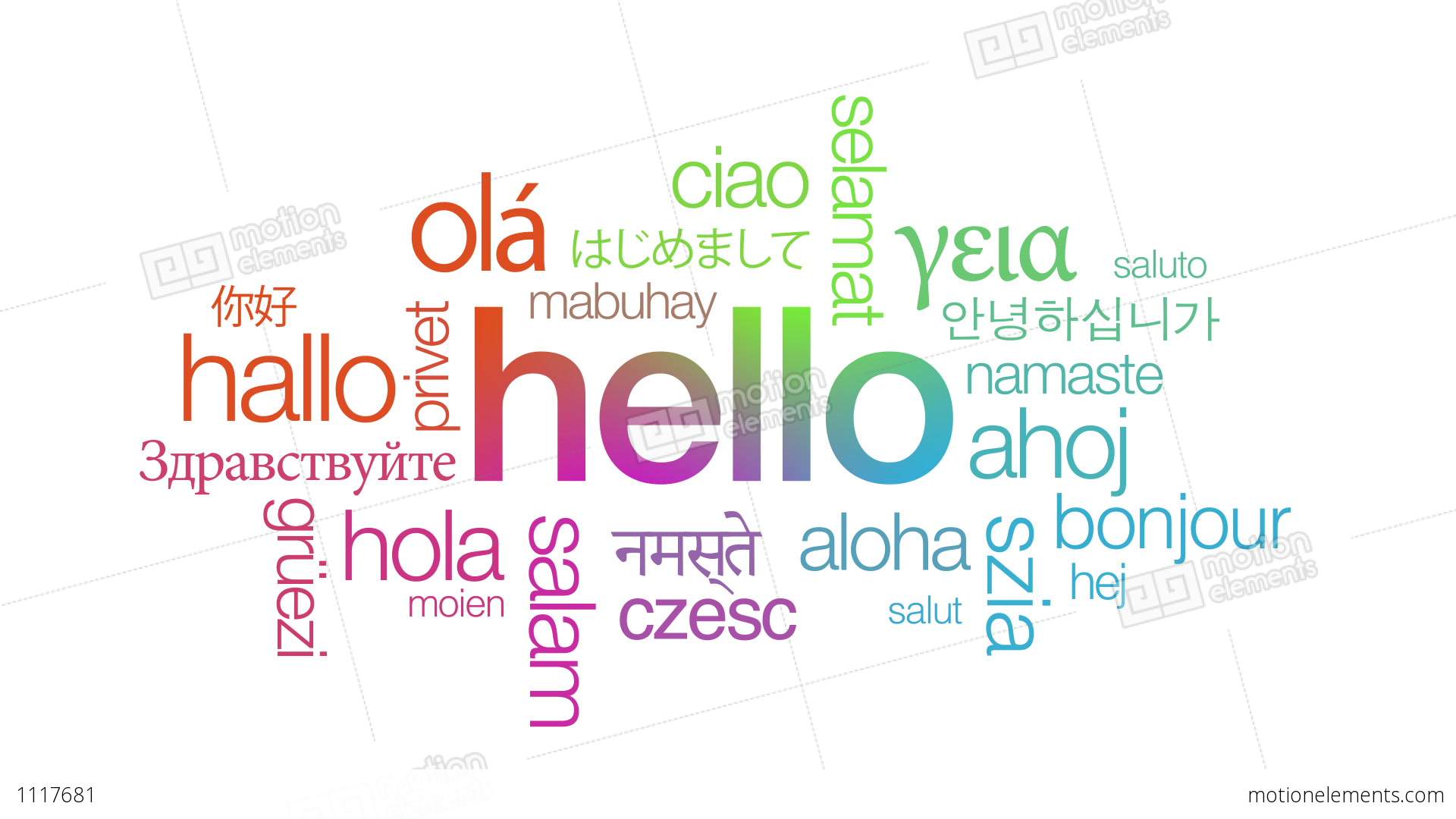
How to say hello in a different language – Exploring the nuances of greeting customs across cultures, this guide delves into the fascinating world of verbal and non-verbal communication, providing insights into the significance of greetings in shaping social interactions and cultural identity.
From the warmth of a heartfelt “bonjour” in French to the respectful bow in Japanese, greetings serve as a gateway to understanding diverse cultures, bridging linguistic barriers, and fostering meaningful connections.
Greetings in Different Languages
Greetings are an important part of human communication, and they can vary significantly from one language to another. In this section, we will explore some of the most common greetings in different languages around the world.
Greetings by Language Family
One way to organize greetings is by language family. Language families are groups of languages that share a common ancestor. The following are some of the major language families, along with some common greetings in each family:
- Indo-European: This is the largest language family in the world, and it includes languages such as English, Spanish, French, German, and Russian. Some common greetings in Indo-European languages include “Hello,” “Bonjour,” “Hola,” “Guten Tag,” and “Zdravstvuyte.”
- Sino-Tibetan: This language family includes Chinese, Tibetan, and Burmese. Some common greetings in Sino-Tibetan languages include “Ni hao,” “Tashi Delek,” and “Mingalarbar.”
- Austronesian: This language family includes Indonesian, Malay, and Tagalog. Some common greetings in Austronesian languages include “Selamat pagi,” “Selamat siang,” and “Magandang umaga.”
- Afro-Asiatic: This language family includes Arabic, Hebrew, and Berber. Some common greetings in Afro-Asiatic languages include “As-salamu alaykum,” “Shalom,” and “Azul.”
- Niger-Congo: This language family includes Swahili, Yoruba, and Zulu. Some common greetings in Niger-Congo languages include “Jambo,” “E kaabo,” and “Sawubona.”
Greetings by Region
Another way to organize greetings is by region. The following are some of the most common greetings in different regions of the world:
- Europe: In Europe, the most common greeting is “Hello.” However, there are also many other greetings used in different countries, such as “Bonjour” in France, “Hola” in Spain, and “Guten Tag” in Germany.
- Asia: In Asia, the most common greeting is “Ni hao.” However, there are also many other greetings used in different countries, such as “Tashi Delek” in Tibet, “Mingalarbar” in Myanmar, and “Namaste” in India.
- Africa: In Africa, the most common greeting is “Jambo.” However, there are also many other greetings used in different countries, such as “E kaabo” in Ghana, “Sawubona” in South Africa, and “As-salamu alaykum” in many Muslim countries.
- North America: In North America, the most common greeting is “Hello.” However, there are also many other greetings used in different countries, such as “Bonjour” in Canada, “Hola” in Mexico, and “Aloha” in Hawaii.
- South America: In South America, the most common greeting is “Hola.” However, there are also many other greetings used in different countries, such as “Bom dia” in Brazil, “Buenos días” in Argentina, and “Hola” in Peru.
Cultural Context of Greetings
Greetings are an essential part of human communication and play a significant role in shaping social interactions. They reflect cultural norms, values, and beliefs, and vary greatly across different societies. Understanding the cultural significance of greetings is crucial for effective cross-cultural communication.
When greeting people from different cultures, it’s polite to address them in their native language. For instance, in Dutch, you would say “Goedemorgen” (good morning). To learn more about the language spoken in the Netherlands, visit what language netherlands.
Understanding the local language not only enhances communication but also shows respect for the culture.
Cultural Norms and Values
Greetings serve as a means of expressing respect, establishing social hierarchies, and maintaining social cohesion. In some cultures, elaborate greetings may be expected, while in others, a simple nod or handshake may suffice. The choice of greeting and the manner in which it is delivered can indicate the speaker’s social status, age, gender, and relationship to the recipient.
Specific Examples
* In Japan, bowing is a common form of greeting, with the depth of the bow indicating the level of respect.
- In Thailand, the traditional greeting involves placing the palms together in a prayer-like gesture called a “wai.”
- In Maori culture, the “hongi” is a greeting that involves pressing noses together.
Cross-Cultural Comparison
The following table compares greetings across different cultures:| Culture | Common Greeting | Cultural Significance ||—|—|—|| Japan | Bowing | Expressing respect and humility || Thailand | Wai | Greeting with reverence and politeness || Maori | Hongi | Sharing breath and strengthening bonds || United States | Handshake | Establishing a connection and trust || France | Kiss on the cheek | Showing familiarity and affection |
Cultural Significance in Storytelling
In literature and storytelling, greetings can serve as a window into the cultural context of the story. They can reveal the characters’ social status, relationships, and values. For example, in the novel “To Kill a Mockingbird,” the greeting “Miss Maudie” indicates the respect and affection the community has for the elderly neighbor.
– Formal and Informal Greetings
Greetings can be classified into two main categories: formal and informal. Formal greetings are used in situations where there is a need to maintain a certain level of formality, such as in business settings or when meeting someone for the first time in a professional context.
Informal greetings, on the other hand, are used in more casual settings, such as among friends and family.
Differences between Formal and Informal Greetings
The main difference between formal and informal greetings lies in the level of respect and politeness conveyed. Formal greetings typically involve using respectful titles, such as “Mr.”, “Ms.”, or “Dr.”, and avoiding the use of slang or colloquialisms. Informal greetings, on the other hand, are more relaxed and often involve the use of first names or nicknames.
Additionally, formal greetings may require specific gestures, such as a handshake or a bow, while informal greetings may be more casual, such as a wave or a hug.
Examples of Formal and Informal Greetings
Here are some examples of formal and informal greetings:
- Formal:“Good morning, Mr. Smith. It’s a pleasure to meet you.”
- Informal:“Hey, John! How’s it going?”
- Formal:“Good afternoon, Ms. Jones. Thank you for taking the time to meet with me.”
- Informal:“Hi, Sarah! What’s up?”
Dialogue in a Formal Setting
Here is an example of a dialogue between two people meeting for the first time in a formal setting:
Person A:“Good morning, Mr. Smith. It’s a pleasure to meet you.”
Person B:“Likewise, Mr. Jones. Please, have a seat.”
Dialogue in an Informal Setting
Here is an example of a dialogue between two friends meeting in an informal setting:
Person A:“Hey, John! How’s it going?”
Person B:“Hey, Sarah! I’m doing great. What about you?”
Non-Verbal Cues in Greetings
Non-verbal cues are essential aspects of greetings, conveying subtle meanings that words alone cannot express. These cues include body language, facial expressions, and even the physical distance between individuals.
Body language plays a significant role in greetings. A firm handshake, for instance, conveys confidence and respect, while a limp handshake may indicate disinterest or lack of assertiveness. Similarly, the posture adopted during a greeting can signal power or submission.
An upright stance with shoulders back suggests confidence, while a hunched posture with averted gaze may indicate insecurity.
Facial Expressions
Facial expressions are equally important in conveying emotions during greetings. A warm smile can create a positive and inviting atmosphere, while a frown or neutral expression can convey indifference or even hostility. The direction of gaze is also crucial. Direct eye contact during a greeting indicates sincerity and engagement, while averted eyes may suggest shyness or lack of confidence.
Physical Distance
The physical distance maintained during a greeting can also convey different meanings. In some cultures, close proximity during a greeting is considered respectful and intimate, while in others, it may be perceived as intrusive or aggressive. Understanding the cultural norms surrounding physical distance is essential to avoid misinterpretations.
Greetings in Specific Situations
Greetings vary depending on the specific situation, such as meeting someone for the first time, greeting a colleague, or addressing a superior. It is important to use the appropriate greeting to show respect and avoid misunderstandings.
Formal Greetings
Formal greetings are used in professional settings, when meeting someone for the first time, or when addressing someone in a position of authority. Common formal greetings include:
- “Good morning/afternoon/evening, [person’s name]”
- “Hello, [person’s name]. It’s a pleasure to meet you.”
- “How do you do, [person’s name]?”
Informal Greetings
Informal greetings are used in casual settings, such as when greeting friends or family. Common informal greetings include:
- “Hi, [person’s name]”
- “Hello, [person’s name]. How are you?”
- “What’s up, [person’s name]?”
Table: Appropriate Greetings for Different Situations
| Situation | Level of Formality | Relationship between Individuals | Setting | Greeting ||—|—|—|—|—|| Meeting someone for the first time | Formal | Strangers | Professional or social event | “Good morning/afternoon/evening, [person’s name]” || Greeting a colleague | Informal | Coworkers | Office | “Hi, [person’s name]” || Addressing a superior | Formal | Employee and manager | Workplace | “Good morning/afternoon/evening, [person’s name]” |
Dialogue
Scenario:Two colleagues, Sarah and John, meet in the office. Sarah:“Good morning, John. How are you?” John:“Good morning, Sarah. I’m well, thank you. And you?” Sarah:“I’m doing well, thanks.” Role-playing ExerciseDivide students into pairs and assign each pair a specific situation.
Have them practice using appropriate greetings in the given situation. Encourage them to consider the level of formality, the relationship between the individuals, and the setting.
Regional Variations in Greetings
Regional variations in greetings within the same language are influenced by a range of factors, including geographical, cultural, and historical influences.
Geographical Factors
Geographical factors such as climate, terrain, and geographical isolation can shape greeting customs. For example, in cold climates, physical contact greetings such as handshakes or hugs may be more common as a way to generate warmth. In contrast, in warmer climates, non-contact greetings such as bowing or waving may be more prevalent.
Cultural Exchange and Migration
Cultural exchange and migration can also play a role in shaping regional greeting practices. When people from different cultures come into contact, they often adopt and adapt each other’s greeting customs. For example, in the United States, the handshake is a common greeting, but in many Asian cultures, a bow is more appropriate.
Specific Examples
The following table summarizes some key regional variations in greetings within the English language:| Region | Common Greetings | Non-Verbal Cues | Cultural Significance ||—|—|—|—|| United States | Handshake, Hug, Wave | Firm handshake, direct eye contact | Friendly, open, and approachable || United Kingdom | Handshake, Nod, Smile | Firm handshake, brief eye contact | Polite, reserved, and respectful || Australia | Handshake, Wave, Nod | Relaxed handshake, casual eye contact | Friendly, laid-back, and egalitarian || India | Namaste (bow with hands together) | Hands together at chest level, slight bow | Respectful, humble, and spiritual || China | Bow | Deep bow with hands at sides | Respectful, hierarchical, and formal |
Impact on Communication
Regional variations in greetings can have a significant impact on communication and social interactions. It is important to be aware of the different greeting customs in different regions in order to avoid misunderstandings or offense. For example, a handshake may be seen as friendly and welcoming in one culture, but as aggressive or disrespectful in another.
Historical Evolution of Greetings
Greetings, as a form of social interaction, have undergone significant evolution throughout history, shaped by cultural, social, and technological factors. Tracing the historical evolution of greetings offers insights into the dynamic nature of human communication and the ways in which societies have adapted to changing circumstances.
In ancient times, greetings often served practical purposes. For instance, in tribal societies, specific gestures or vocalizations might signal intentions of peace or hostility. As civilizations developed, greetings became more elaborate and formalized, reflecting social hierarchies and cultural norms.
Religious Influences, How to say hello in a different language
Religions have played a profound role in shaping greetings. In many cultures, religious beliefs and practices have influenced the development of specific greetings, such as the “Namaste” gesture in Hinduism or the “Peace be upon you” greeting in Islam. These greetings often convey spiritual well-being and respect.
Social and Cultural Changes
Social and cultural changes have also influenced the evolution of greetings. For example, the rise of urban societies led to the development of more impersonal and standardized greetings, such as the handshake. Industrialization and globalization further transformed greetings, as people from different cultures interacted more frequently.
Technological Advancements
Technological advancements have significantly impacted greetings in recent times. The invention of the telephone and the internet has led to the emergence of new forms of greeting, such as the “hello” used in phone calls or the “hi” used in text messages.
These greetings are often less formal and more immediate than traditional face-to-face greetings.
Common Patterns and Trends
Despite the diverse nature of greetings across cultures, some common patterns and trends can be observed. One notable trend is the increasing informality of greetings, as societies become more casual and egalitarian. Additionally, the influence of technology is evident in the widespread adoption of new forms of greeting that reflect the fast-paced and interconnected nature of modern life.
Greetings in Literature and Art
Greetings have been a prevalent theme in literature and art throughout history, serving as a window into the cultural norms and character traits of the time. They provide insights into the social dynamics, customs, and values of different societies.Greetings can reveal a character’s personality, background, and intentions.
For instance, in Shakespeare’s “Romeo and Juliet,” the elaborate and flowery language used by Romeo in his greeting to Juliet reflects his romantic and passionate nature. In contrast, the more formal and respectful greeting used by Juliet’s father, Capulet, highlights his authority and social status.
Portrayal in Art
In art, greetings have been captured in various forms, from paintings to sculptures. Paintings like “The Kiss” by Gustav Klimt depict intimate and affectionate greetings, while sculptures such as “The Thinker” by Auguste Rodin portray more contemplative and solitary greetings.
These artworks offer a visual representation of the different ways in which greetings can be expressed and interpreted.
Greetings in the Digital Age
The advent of the digital age has significantly transformed the way people communicate, including how they greet each other. With the rise of social media, instant messaging, and other digital platforms, greetings have evolved to adapt to the virtual realm.
One notable adaptation is the use of emojis, which are small digital images that convey emotions or ideas. Emojis have become a ubiquitous form of greeting in online communication, allowing users to express their feelings or intentions in a concise and visually appealing way.
Digital Forms of Greeting
In addition to emojis, other digital forms of greeting have emerged, such as GIFs (Graphics Interchange Format) and stickers. GIFs are animated images that can be used to convey a wide range of emotions and actions, while stickers are static images that can be added to messages to add a personal touch.
- Emojis:Small digital images that convey emotions or ideas.
- GIFs:Animated images that can be used to convey a wide range of emotions and actions.
- Stickers:Static images that can be added to messages to add a personal touch.
Cross-Cultural Greetings
When interacting with people from different cultures, it’s crucial to approach greetings with respect and sensitivity. Cultural norms and expectations vary widely, and understanding these differences can help avoid misunderstandings or失礼.
Here are some general guidelines to consider:
Research the Culture
Before meeting someone from a different culture, take some time to research their customs and traditions. This will help you understand appropriate greetings, body language, and other nonverbal cues.
Be Respectful
Always approach greetings with respect, regardless of the cultural background. Avoid interrupting, talking over someone, or making assumptions. Listen attentively and show interest in what the other person has to say.
Be Patient
Greetings can vary in length and formality depending on the culture. Be patient and allow the other person to greet you in their own way. Avoid rushing the process or interrupting.
Avoid Stereotypes
It’s important to avoid making assumptions or stereotypes based on someone’s culture. Every individual is unique, and greetings can vary within a culture.
Be Aware of Nonverbal Cues
Nonverbal cues, such as eye contact, body language, and facial expressions, can convey important messages during greetings. Be aware of the cultural norms for these cues and adjust your behavior accordingly.
Be Flexible
Be prepared to adapt your greeting style based on the situation and the other person’s preferences. If you’re unsure about the appropriate greeting, it’s always safe to err on the side of formality.
Greetings in the Workplace: How To Say Hello In A Different Language
In the professional realm, greetings hold immense significance in shaping interpersonal dynamics and fostering a positive work environment. Appropriate greetings can create a welcoming and respectful atmosphere, facilitate effective communication, and establish a foundation for successful collaboration.
To make a positive impression through greetings, consider the following tips:
Verbal Cues
- Use appropriate salutations: “Good morning/afternoon/evening” or “Hello” followed by the person’s name or title.
- Maintain a friendly and professional tone of voice.
- Speak clearly and at an appropriate volume.
Nonverbal Cues
- Make eye contact to convey attention and respect.
- Offer a firm handshake or a respectful nod.
- Maintain an open and approachable body posture.
Greetings for Different Occasions
Greetings vary depending on the occasion, whether it’s a holiday, birthday, or special event. Cultural and regional contexts also influence appropriate greetings. The following table Artikels common greetings for different occasions, along with their formal and informal variations:
Table of Greetings for Different Occasions
| Occasion | Formal Greeting | Informal Greeting | Cultural Context | Nuances ||—|—|—|—|—|| New Year’s Day | Happy New Year! | Happy New Year! | Worldwide | Wishing someone a prosperous and happy new year || Birthday | Happy Birthday! | Happy Birthday! | Worldwide | Wishing someone a happy and memorable birthday || Wedding | Congratulations on your wedding! | Congrats on your big day! | Worldwide | Expressing joy and well wishes for the newlyweds || Anniversary | Happy Anniversary! | Happy Anniversary! | Worldwide | Celebrating a couple’s years of marriage || Graduation | Congratulations on your graduation! | Congrats on graduating! | Worldwide | Recognizing someone’s academic achievement || Religious Holidays | [Insert religious holiday greeting] | [Insert informal religious holiday greeting] | Varies by religion | May include specific blessings or well wishes || Special Events | [Insert special event greeting] | [Insert informal special event greeting] | Varies by event | Tailored to the specific occasion, such as “Happy Mother’s Day” or “Happy Father’s Day” | Cultural and Linguistic Nuances:Greetings may vary based on cultural and linguistic factors.
For example, in some cultures, it is customary to bow or kiss on the cheek as a greeting. In others, a simple handshake or verbal greeting is sufficient. It’s important to be aware of these cultural nuances to avoid misunderstandings or失礼.
Appropriate Greetings for Written and Verbal Communication:When choosing a greeting, consider whether it will be used in written or verbal communication. Formal greetings are typically used in written correspondence, such as letters or emails, while informal greetings are more appropriate for verbal communication, such as face-to-face conversations or phone calls.
Additional Examples:* Chinese New Year: 新年快乐 (Xīnnián kuàilè) | 过年好 (Guònián hǎo)
Learning how to say hello in a different language can be a fun way to connect with other cultures. If you’re interested in watching foreign films or TV shows on Netflix, you may need to know how to change the language.
Here’s a helpful guide that will show you how to do it. Once you’ve changed the language, you can start enjoying your favorite shows in their original language. Learning how to say hello in a different language is a great way to immerse yourself in a new culture.
Diwali (Hindu festival of lights)
Diwali Mubarak | Shubh Diwali
Christmas
Merry Christmas! | Happy Holidays!
Hanukkah (Jewish festival of lights)
Happy Hanukkah! | Hanukkah Sameach
Greetings in Educational Settings

Greetings play a vital role in educational settings by establishing a positive and respectful atmosphere conducive to learning. They help foster a sense of community and belonging, setting the tone for productive interactions between students, teachers, and administrators.
Greetings for Students
- Encourage students to greet their teachers and classmates with respect and enthusiasm.
- Establish clear expectations for greetings, such as making eye contact, using appropriate language, and being punctual.
- Create opportunities for students to practice greetings in different contexts, such as during class introductions or group work.
Greetings for Teachers
- Teachers should greet students warmly and enthusiastically, creating a welcoming and inclusive classroom environment.
- Use greetings to establish a personal connection with students, showing interest in their well-being and academic progress.
- Encourage students to ask questions and engage in discussions, fostering a sense of respect and collaboration.
Greetings for Administrators
- Administrators should greet students, teachers, and parents with professionalism and warmth.
- Use greetings to build relationships and foster a positive school climate.
- Be approachable and responsive to concerns, demonstrating a commitment to student success and staff well-being.
Greetings in Tourism and Hospitality
Greetings play a pivotal role in tourism and hospitality, setting the tone for guest experiences and creating a welcoming atmosphere. Warm and inviting greetings can make guests feel valued and comfortable, enhancing their overall stay.
Importance of Greetings
Effective greetings are crucial in tourism and hospitality for several reasons:
- They create a positive first impression and set the tone for the guest’s experience.
- They demonstrate respect and appreciation for the guest.
- They help establish a connection between the guest and the hospitality provider.
- They can help to resolve any initial concerns or anxieties the guest may have.
Types of Greetings
The type of greeting used in tourism and hospitality depends on various factors, including the cultural background of the guest, the formality of the setting, and the purpose of the interaction. Some common types of greetings include:
- Verbal greetings:These are spoken greetings, such as “Hello,” “Welcome,” or “Good morning.”
- Nonverbal greetings:These are greetings that are communicated through body language, such as a smile, a handshake, or a bow.
- Written greetings:These are greetings that are written, such as a welcome note or a thank-you card.
Cultural Significance
The cultural significance of greetings varies widely around the world. In some cultures, it is considered impolite to make eye contact with strangers, while in other cultures, it is considered a sign of respect. It is important to be aware of the cultural norms of the guests you are greeting to ensure that your greeting is appropriate.
Appropriateness
The appropriateness of a greeting depends on the setting and the purpose of the interaction. For example, a warm and friendly greeting would be appropriate in a casual setting, such as a restaurant or a bar. A more formal greeting would be appropriate in a business setting, such as a conference or a meeting.
Common Greeting Phrases
Here are some common greeting phrases used in the tourism and hospitality industry:
- “Hello” or “Welcome”
- “Good morning,” “Good afternoon,” or “Good evening”
- “How are you?” or “How is your day going?”
- “May I help you?” or “Can I assist you?”
- “Thank you for choosing our hotel” or “Welcome to our restaurant”
Effective Greeting Practices
Here are some tips for delivering exceptional greetings in the tourism and hospitality industry:
- Be genuine and sincere.
- Make eye contact and smile.
- Use the guest’s name if you know it.
- Be respectful of the guest’s culture.
- Adapt your greeting to the setting and the purpose of the interaction.
Dialogue
Here is a dialogue between a guest and a hotel receptionist that demonstrates effective greeting practices: Guest:Hello, I’m here to check in. Receptionist:Hello, welcome to our hotel. My name is Maria. How can I help you? Guest:I have a reservation under the name Smith.
Receptionist:Yes, I see it here. Thank you for choosing our hotel. Guest:You’re welcome.
Role-Play Scenario
Here is a role-play scenario for practicing different types of greetings in a hospitality environment: Scenario:You are a receptionist at a hotel. A guest walks up to the front desk. Role-play:Greet the guest using a warm and friendly greeting. Ask the guest how they are doing.
If the guest has a reservation, ask for their name and look it up in the system. If the guest does not have a reservation, ask them if they would like to make one.
Additional Tips
Here are some additional tips for delivering exceptional greetings in the tourism and hospitality industry:
- Be aware of your body language. Make sure you are standing up straight and making eye contact.
- Speak clearly and at a moderate pace.
- Be patient and answer any questions the guest may have.
- Go the extra mile to make the guest feel welcome.
Question & Answer Hub
Why is it important to learn how to greet people in different languages?
Greeting people appropriately in their native language demonstrates respect, builds rapport, and facilitates effective communication.
What are some common mistakes to avoid when greeting people from other cultures?
Assuming that all cultures greet each other in the same way can lead to misunderstandings. It’s crucial to research cultural norms and avoid gestures or phrases that may be offensive.
How can learning about greetings in different languages enhance our understanding of the world?
Greetings offer a glimpse into cultural values, beliefs, and social hierarchies. By studying greetings, we gain a deeper appreciation for the diversity of human expression and communication.
