What are the languages of South Africa? This question delves into the heart of a nation where linguistic diversity weaves a rich tapestry, reflecting a complex history and vibrant cultural heritage.
South Africa boasts 11 official languages, each carrying its own significance and story. From the melodious clicks of Nguni languages to the lilting tones of Afrikaans, the languages of South Africa are a testament to the nation’s multicultural fabric.
Official Languages of South Africa
South Africa is a multilingual nation with eleven official languages, reflecting its diverse cultural and linguistic heritage. The recognition of multiple official languages is a significant aspect of the country’s post-apartheid constitution, which seeks to promote social cohesion and inclusivity.
Significance and Legal Status
The eleven official languages of South Africa are enshrined in the Constitution of the Republic of South Africa, 1996, and enjoy equal legal status. This means that all official government communications, documents, and services must be available in all eleven languages.
Historical and Cultural Factors
The selection of the official languages was influenced by several historical and cultural factors. These include the legacy of colonialism, the country’s diverse ethnic groups, and the need to foster unity and nation-building.
Demographics of Language Speakers
The distribution of language speakers in South Africa is complex, reflecting the country’s diverse population. The most widely spoken official languages are Zulu (23%), Xhosa (16%), and Afrikaans (14%).
Challenges and Opportunities
The recognition of multiple official languages presents both challenges and opportunities for South Africa. Challenges include the cost of providing services in multiple languages and the potential for language-based divisions. However, the recognition of diverse languages also promotes cultural preservation, inclusivity, and a sense of national identity.
Indigenous Languages of South Africa
South Africa is a multilingual country with 11 official languages, including nine indigenous languages. These indigenous languages belong to various language families and are spoken by diverse communities across the country. They hold significant cultural, historical, and educational value and play a vital role in shaping the linguistic landscape of South Africa.
The indigenous languages of South Africa can be classified into three main language families: Nguni, Sotho-Tswana, and Venda-Tsonga. The Nguni languages, including Zulu, Xhosa, Swati, and Ndebele, are spoken by over 20 million people in the eastern and southeastern parts of the country.
The Sotho-Tswana languages, including Sotho, Tswana, and Southern Sotho, are spoken by over 10 million people in the central and northern parts of the country. The Venda-Tsonga languages, including Venda and Tsonga, are spoken by over 2 million people in the northeastern parts of the country.
Each indigenous language has its unique cultural significance and is associated with specific ethnic groups and communities. They are used in traditional ceremonies, rituals, and storytelling, and they serve as a means of cultural transmission and identity formation. Many indigenous languages also have rich oral traditions, including folktales, proverbs, and songs.
Efforts to Preserve and Revitalize Indigenous Languages
Recognizing the importance of indigenous languages, the South African government has taken steps to preserve and revitalize them. The 1996 constitution recognizes 11 official languages, including nine indigenous languages. In 2003, the Pan South African Language Board (PanSALB) was established to promote and develop indigenous languages.
The Indigenous Languages Policy Framework, adopted in 2012, provides a comprehensive framework for the preservation and revitalization of indigenous languages. The Indigenous Languages in Education Policy Framework, adopted in 2018, promotes the use of indigenous languages in education and community development.
These efforts have led to the development of educational materials, teacher training programs, and community-based initiatives aimed at promoting the use of indigenous languages. However, challenges remain, including the influence of globalization, modernization, and the dominance of English as a lingua franca.
Despite these challenges, the preservation and revitalization of indigenous languages are essential for maintaining cultural diversity, fostering social cohesion, and ensuring the linguistic rights of all South Africans.
South Africa is a multilingual country with eleven official languages. These languages are Afrikaans, English, isiNdebele, isiXhosa, isiZulu, Sepedi, Sesotho, Setswana, Swati, Tshivenda, and Xitsonga. If you want to change the language on Netflix on TV, you can follow the steps provided here.
This will allow you to enjoy Netflix in your preferred language. Once you have changed the language on Netflix, you can continue exploring the diverse languages of South Africa.
English as a Lingua Franca
English plays a pivotal role as a lingua franca in South Africa, facilitating communication and fostering unity amidst the country’s diverse linguistic landscape. Its widespread use can be attributed to historical and economic factors that have shaped the nation’s past and present.
Historically, English was introduced to South Africa during British colonization, establishing it as the language of administration, education, and commerce. This legacy has persisted, with English continuing to hold a prominent position in these domains.
Economic Factors
Economically, South Africa’s position as a global player has necessitated the adoption of a common language for international trade and communication. English serves this purpose, enabling the country to participate effectively in the global economy and attract foreign investment.
Impact on Other Languages
The widespread use of English has inevitably influenced other languages spoken in South Africa. Code-switching and borrowing from English are common, particularly in urban areas. While this can enrich local languages, it also raises concerns about potential language loss and the erosion of linguistic diversity.
Language Distribution and Demographics
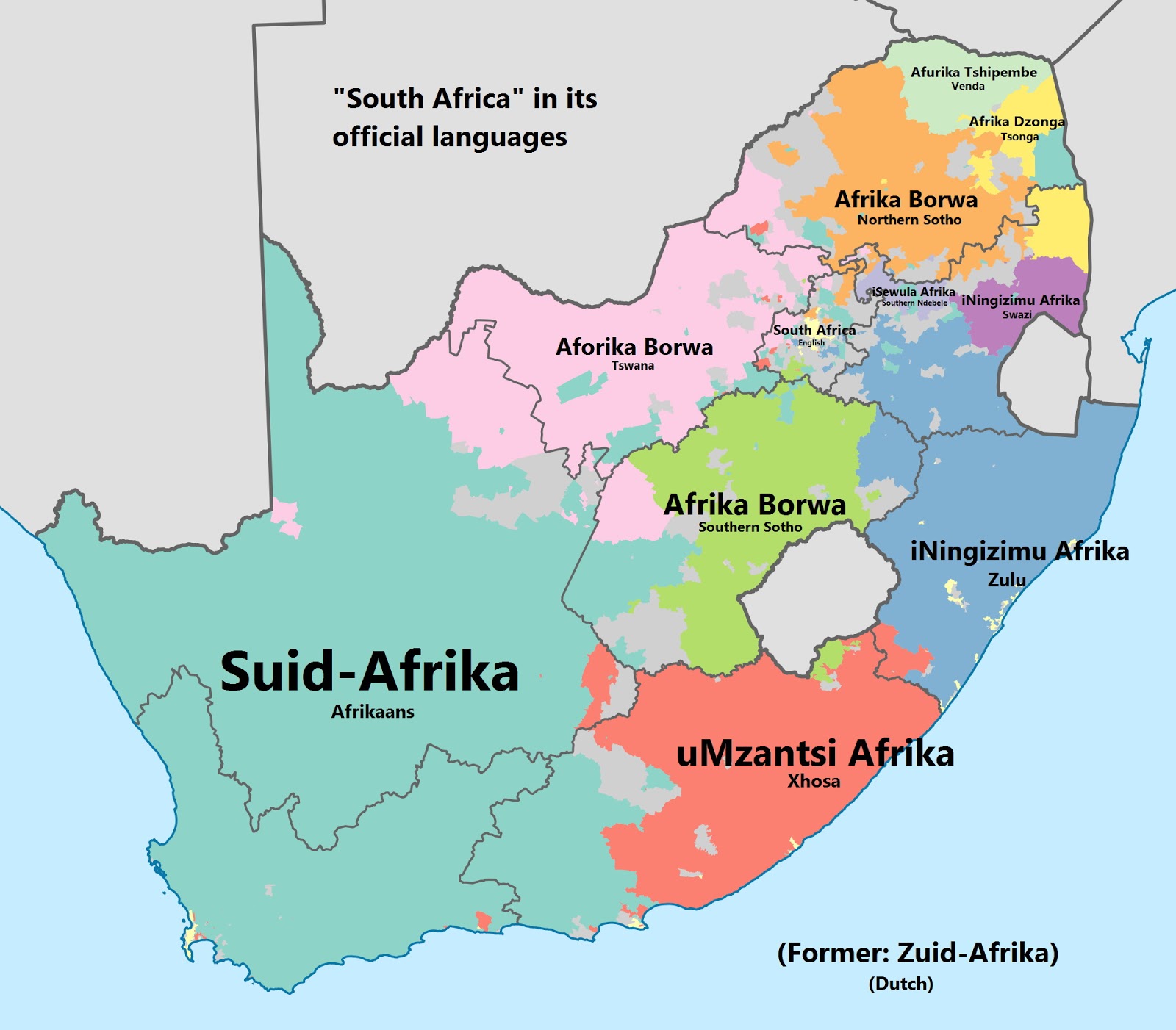
South Africa is a multilingual country with 11 official languages. The distribution of these languages across the country is complex and influenced by a variety of factors, including ethnicity, migration, urbanization, and historical events.
The most widely spoken language in South Africa is Zulu, with over 12 million first-language speakers. Zulu is primarily spoken in the province of KwaZulu-Natal, but it is also spoken by significant populations in Gauteng and Mpumalanga.
Other major languages in South Africa include Xhosa, Afrikaans, English, Sesotho, Setswana, and Tswana. These languages are spoken by millions of people across the country, and they are all recognized as official languages of South Africa.
The distribution of languages in South Africa is also influenced by urbanization. The major urban centers of Johannesburg, Cape Town, and Durban are home to a diverse population of people from all over the country. As a result, these cities are home to a wide variety of languages.
The language distribution in South Africa has a significant impact on social cohesion and national identity. The use of multiple languages in the country can be a source of both unity and division. On the one hand, the use of multiple languages can help to promote cultural diversity and understanding.
On the other hand, the use of multiple languages can also lead to misunderstandings and conflict.
The South African government has adopted a number of policies to promote language equality and social cohesion. These policies include the recognition of 11 official languages, the promotion of multilingual education, and the establishment of a national language body.
Language Map
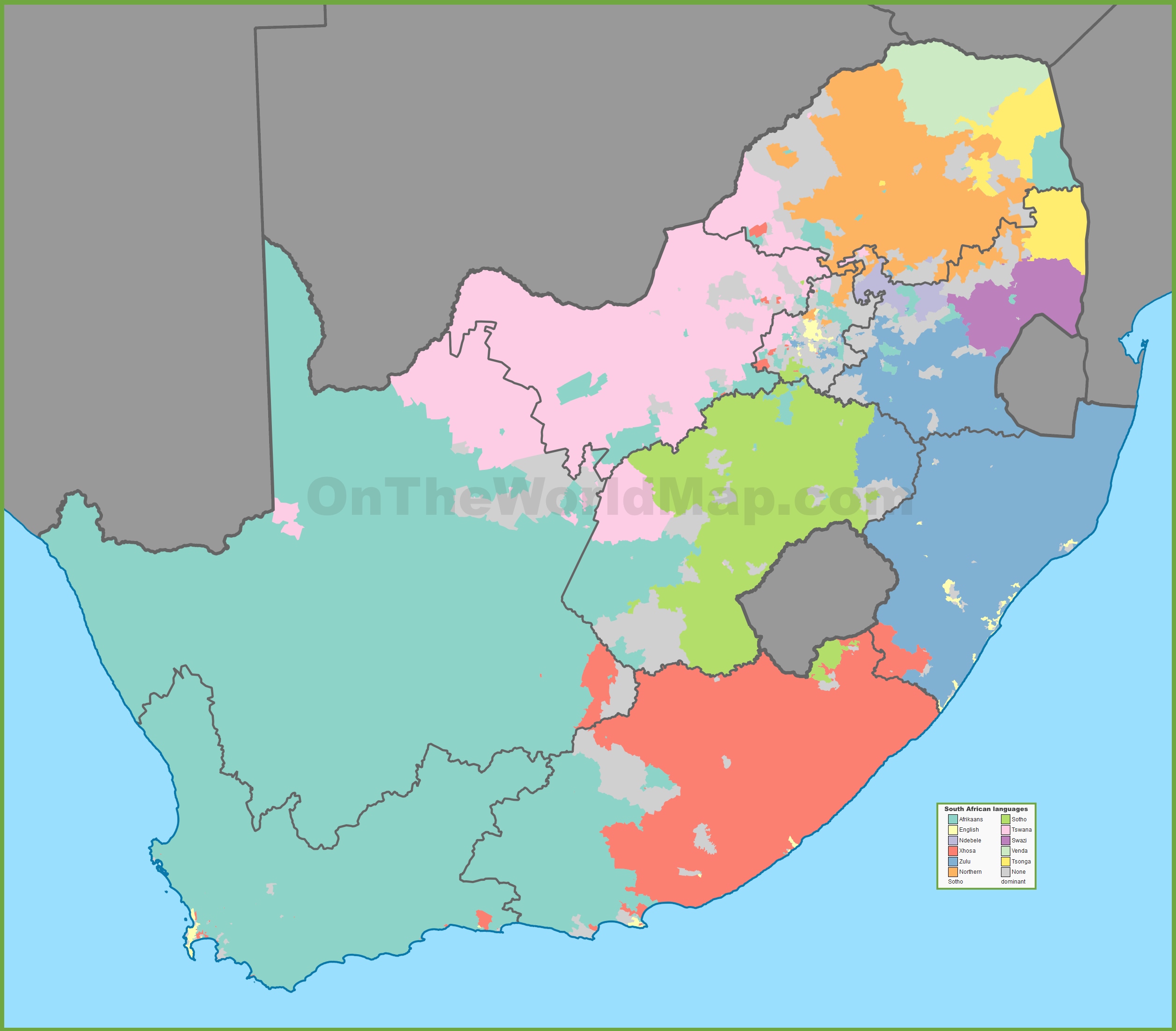
The following map shows the distribution of languages in South Africa. The map shows the major urban centers and rural areas, and it highlights the areas where each language is spoken.
[Image of a map of South Africa showing the distribution of languages]
Language Statistics
The following table provides statistics on the number of speakers for each language in South Africa. The table includes both first and second language speakers.
| Language | First Language Speakers | Second Language Speakers | Total Speakers |
|---|---|---|---|
| Zulu | 12,210,554 | 4,622,486 | 16,833,040 |
| Xhosa | 8,154,049 | 4,987,575 | 13,141,624 |
| Afrikaans | 6,435,302 | 3,922,746 | 10,358,048 |
| English | 4,892,614 | 14,080,752 | 18,973,366 |
| Sesotho | 4,674,492 | 2,514,281 | 7,188,773 |
| Setswana | 4,024,734 | 2,345,748 | 6,370,482 |
| Tswana | 3,885,929 | 2,058,521 | 5,944,450 |
| Tsonga | 2,301,790 | 1,133,462 | 3,435,252 |
| Swati | 1,292,465 | 692,614 | 1,985,079 |
| Venda | 1,017,189 | 546,179 | 1,563,368 |
| Ndebele | 1,090,223 | 273,425 | 1,363,648 |
Language Policy and Education
The South African government has implemented a series of language policies since the end of apartheid, aimed at promoting multilingualism and fostering social cohesion. The Official Languages Act of 1994 recognizes 11 official languages, including English, Afrikaans, Zulu, Xhosa, and Sotho.
The National Language Policy Framework of 2003 further promotes the development and use of all official languages, while the Medium of Instruction Policy of 2009 specifies the languages that may be used as the medium of instruction in schools.
Challenges in Promoting Multilingualism
Despite these policies, there are significant challenges in promoting multilingualism in South African education. One major challenge is the lack of qualified teachers who are proficient in multiple languages. This shortage is particularly acute in rural areas and schools serving disadvantaged communities.
Impact on Language Attitudes
The implementation of language policy in South Africa has had a significant impact on the attitudes of citizens towards different languages and their willingness to learn and use them. Research has shown that language policies have led to increased awareness and appreciation of the country’s linguistic diversity, as well as a greater willingness to learn and use multiple languages.
However, there are still challenges in changing deep-seated attitudes towards certain languages, particularly those associated with historical power imbalances.
Role in Social Cohesion
Language policy plays a crucial role in fostering social cohesion and nation-building. By promoting the use of multiple languages, language policy helps to create a sense of inclusiveness and belonging among all South Africans, regardless of their linguistic background. This can help to reduce intergroup tensions and promote a shared national identity.
Effectiveness and Recommendations
The effectiveness of language policy implementation in South Africa has been mixed. While there have been some successes in promoting multilingualism, there are still significant challenges to overcome. To improve the effectiveness of language policy, it is important to invest in teacher training, develop high-quality multilingual educational materials, and raise awareness about the importance of multilingualism.
It is also important to draw on best practices from other countries and consider the unique challenges and opportunities presented by South Africa’s linguistic diversity.
Language and Culture
Language and culture are inextricably linked in South Africa, where the diversity of languages reflects the country’s rich cultural heritage. Each language embodies the values, beliefs, and traditions of the communities that speak it, serving as a vehicle for cultural expression and transmission.
Preservation and Transmission of Cultural Heritage
Language plays a pivotal role in preserving and transmitting cultural heritage. Through oral traditions, storytelling, and written literature, languages pass down cultural knowledge, customs, and practices from generation to generation. For example, the Zulu language contains numerous idioms, proverbs, and folktales that convey the community’s values, history, and worldview.
Cultural Values Reflected in Language
Languages often reflect the cultural values of their speakers. For instance, the isiXhosa language emphasizes the importance of community and respect for elders through its use of honorifics and collective pronouns. Similarly, the Afrikaans language reflects the influence of Dutch and Malay cultures, incorporating words and phrases that showcase its unique heritage.
Language and Identity
Language is closely tied to identity and sense of belonging. Speaking a particular language can evoke a sense of pride, cultural connection, and shared experiences. In South Africa, the promotion of indigenous languages has played a significant role in fostering national unity and recognizing the cultural diversity of the country.
Cultural Exchange and Intercultural Communication
In a multilingual society like South Africa, language also serves as a bridge for cultural exchange and intercultural communication. Individuals who speak multiple languages can act as cultural brokers, facilitating understanding and cooperation between different communities. This can contribute to the preservation of cultural diversity and the promotion of harmonious relationships.
Language and Identity
In South Africa, the intricate relationship between language and identity is shaped by a tapestry of historical, political, and cultural factors. Language profoundly influences personal and collective identities, serving as a medium for self-perception, cultural norms, and social interactions.
Historically, the imposition of colonial languages, such as English and Afrikaans, marginalized indigenous languages, contributing to linguistic inequality and social stratification. However, post-apartheid South Africa has witnessed a resurgence of indigenous languages, reflecting a growing sense of cultural pride and the recognition of their significance in shaping national identity.
Role of Language in Shaping Identity
- Self-Perception:Language shapes self-perception by providing a framework for understanding the world and one’s place within it. Proficiency in a particular language often correlates with a sense of belonging to a specific cultural or linguistic group.
- Cultural Norms:Language embodies cultural norms and values, influencing behavior, beliefs, and social interactions. It transmits cultural knowledge, traditions, and practices from one generation to the next.
- Social Interactions:Language is the primary means of communication, facilitating social interactions and shaping interpersonal relationships. It influences the way individuals interact with each other, negotiate meaning, and establish social hierarchies.
Language as a Source of Pride, Unity, and Social Cohesion
Language can be a powerful source of pride and unity, fostering a sense of belonging and shared history. The use of indigenous languages in education, media, and government institutions promotes inclusivity and recognition of diverse cultural heritage.
Moreover, language can contribute to social movements and nation-building efforts. By providing a common ground for communication and understanding, language enables collective action and the mobilization of people towards shared goals.
Challenges and Opportunities of Multiple Language Identities
In a multilingual society like South Africa, individuals often navigate multiple language identities, presenting both challenges and opportunities.
- Cognitive and Emotional Challenges:Acquiring and maintaining proficiency in multiple languages can pose cognitive and emotional challenges, including code-switching, interference, and the need for constant adaptation.
- Opportunities for Bridging Cultural Divides:Proficiency in multiple languages enables individuals to bridge cultural divides and foster intercultural understanding. They can communicate with diverse communities, appreciate different perspectives, and contribute to social harmony.
Language and Media
The South African media landscape is multilingual, reflecting the country’s diverse linguistic makeup. Print, broadcast, and online platforms cater to audiences in various languages, with English and Afrikaans serving as the dominant media languages.
Media plays a significant role in promoting or marginalizing certain languages. Major news outlets and broadcasters tend to favor English and Afrikaans, while smaller, community-based media outlets cater to audiences in indigenous languages. This can lead to the marginalization of indigenous languages in the mainstream media landscape.
Role of Media in Language Use and Attitudes
Media consumption can influence language use and attitudes. Exposure to English-dominated media, for instance, can lead to increased use of English in everyday communication, particularly among younger generations. Conversely, limited representation of indigenous languages in the media can contribute to language loss and negative attitudes towards these languages.
Language and Technology
Technology has significantly influenced language use in South Africa, shaping communication patterns and facilitating the dissemination of information and ideas.
Social media platforms, mobile devices, and the internet have played a pivotal role in this transformation. Social media has created virtual spaces where individuals interact and share content, leading to the emergence of new language practices and the evolution of existing ones.
Role of Social Media, Mobile Devices, and the Internet
- Social media:Social media platforms like Facebook, Twitter, and Instagram have become primary channels for communication, particularly among younger generations. These platforms facilitate the sharing of text, images, videos, and other multimedia content, fostering the development of informal language styles and the adoption of new vocabulary and slang.
- Mobile devices:The widespread use of mobile devices, such as smartphones and tablets, has made communication more accessible and convenient. Mobile messaging applications like WhatsApp and Telegram have become popular alternatives to traditional SMS, enabling users to send text, voice, and video messages, as well as share images and documents.
- Internet:The internet has provided access to a vast array of information and resources, including online dictionaries, translation tools, and language learning platforms. This has facilitated the acquisition of new languages and the exploration of different cultures.
Furthermore, technology has the potential to promote multilingualism and preserve endangered languages. Language learning apps and online platforms offer interactive and engaging ways to learn new languages, making them more accessible to a wider audience.
Additionally, digital archives and online repositories can be used to document and preserve endangered languages, ensuring their survival for future generations.
Language and Literature
South Africa boasts a rich and diverse literary tradition that reflects the country’s complex history, cultural heritage, and linguistic diversity. South African literature has been shaped by a multitude of influences, including indigenous oral traditions, European colonialism, and the anti-apartheid movement.
South African literature is renowned for its powerful storytelling, evocative language, and exploration of themes such as identity, race, class, and social justice. It has produced a wealth of acclaimed authors, including Nobel laureates Nadine Gordimer and J.M. Coetzee, who have gained international recognition for their insightful and thought-provoking works.
Literary Traditions
South Africa’s literary traditions are rooted in the oral storytelling practices of its indigenous communities. These traditions have been passed down through generations and continue to play a vital role in preserving cultural heritage and transmitting knowledge.
With the arrival of European settlers, South African literature began to incorporate elements of Western literary forms. However, indigenous influences remained strong, resulting in a unique blend of African and European literary traditions.
Themes and Styles
South African literature is characterized by its exploration of complex themes that reflect the country’s social and political landscape. These themes include:
- Identity and belonging
- Race and racism
- Class and inequality
- Social justice
- The search for meaning in a post-apartheid society
South African literature also exhibits a wide range of styles, from traditional storytelling to experimental forms. Some of the most notable styles include:
- Realism
- Modernism
- Postmodernism
- Afrofuturism
Role of Literature
Literature plays a crucial role in promoting language awareness and appreciation in South Africa. By showcasing the beauty and expressive power of different languages, literature helps to foster a sense of pride and belonging among speakers of those languages.
Furthermore, literature provides a platform for writers to explore and challenge social issues, thus raising awareness and stimulating dialogue. In this way, literature contributes to the development of a more informed and engaged citizenry.
Language and the Arts
Language plays a vital role in various art forms in South Africa, contributing to the expression of cultural identity and artistic creativity. Different languages are incorporated into music, dance, and theater, reflecting the country’s linguistic diversity.
Music is a powerful medium for expressing emotions, and language enhances its impact. South African music incorporates diverse languages, including indigenous languages like Zulu, Xhosa, and Sotho, as well as Afrikaans and English. Lyrics convey stories, cultural values, and personal experiences, connecting audiences with the emotions and messages of the music.
Dance
Dance is another art form where language and movement intertwine. Traditional South African dances often have specific meanings and rituals associated with them. The Zulu “ingoma” dance, for example, is performed to celebrate weddings and other special occasions. The movements and rhythms of the dance are synchronized with the lyrics of the accompanying songs, creating a captivating spectacle.
Theater
Theater is a powerful platform for storytelling and cultural expression. In South Africa, plays are performed in a variety of languages, including English, Afrikaans, and indigenous languages. Language choices reflect the diversity of the country and allow audiences to connect with the characters and stories on a deeper level.
– Analyze the economic implications of language diversity in South Africa.
South Africa’s diverse linguistic landscape has profound economic implications. The country’s 11 official languages and numerous indigenous languages influence various economic sectors, including job creation, trade, and investment.
Relationship between Language Diversity and Economic Growth
Language diversity can both positively and negatively impact economic growth. On the one hand, it can foster innovation and creativity by exposing individuals to multiple perspectives and ideas. On the other hand, language barriers can hinder communication and cooperation, leading to economic inefficiencies.
Impact on Job Creation and Unemployment
Language skills play a crucial role in job opportunities. Individuals proficient in multiple languages have a competitive advantage in the job market. However, language barriers can limit access to employment for non-native speakers, leading to higher unemployment rates.
Role in Promoting Trade and Investment
Language diversity can facilitate trade and investment by enabling businesses to communicate effectively with customers and partners from diverse linguistic backgrounds. This can expand market reach and attract foreign investment.
Role in Job Opportunities, Trade, and Tourism
Sectors with High Demand for Language Skills
Industries such as tourism, hospitality, and international business require multilingual employees to cater to diverse clientele.
Impact of Language Barriers on Job Opportunities
Language barriers can limit career advancement opportunities for non-native speakers, especially in sectors that prioritize language proficiency.
Role in Facilitating Trade and Tourism
Multilingual individuals can bridge communication gaps between businesses and international clients, boosting trade and tourism revenue.
Challenges and Opportunities for Businesses, What are the languages of south africa
Challenges of Communicating in a Multilingual Environment
Businesses face challenges in communicating with customers and employees who speak different languages, leading to potential misunderstandings and inefficiencies.
Opportunities for Leveraging Language Diversity
Businesses can leverage language diversity to reach new markets and cater to diverse customer bases, expanding their revenue streams.
Best Practices for Businesses
Effective communication strategies, language training for employees, and translation services can help businesses navigate multilingual environments successfully.
– Describe the role of language in promoting tourism in South Africa, including the use of local languages and their significance in cultural immersion.
Language plays a pivotal role in promoting tourism in South Africa, a country renowned for its cultural diversity. The use of local languages, such as Zulu, Xhosa, and Afrikaans, adds authenticity and depth to the tourist experience, fostering a sense of cultural immersion and connection.
Significance of Local Languages in Cultural Immersion
- Local languages provide insights into the history, traditions, and beliefs of South African communities.
- They facilitate interactions with locals, enabling tourists to engage with the culture on a personal level.
- Learning a few basic phrases in local languages demonstrates respect for the host community and enhances the overall travel experience.
Speculate on the future of languages in South Africa.: What Are The Languages Of South Africa
The future of languages in South Africa is uncertain. On the one hand, globalization, technology, and demographic changes are all putting pressure on indigenous languages. On the other hand, there is a growing awareness of the importance of linguistic diversity, and there are a number of initiatives underway to preserve and promote indigenous languages.
Potential impact of globalization, technology, and demographic changes on language use in South Africa
Globalization is leading to increased use of English as a lingua franca, which is having a negative impact on the use of indigenous languages. This is because English is the language of international business, trade, and communication, and it is increasingly being used in education and the media.
Technology is also having a significant impact on language use in South Africa. The development of new communication technologies, such as social media and instant messaging, is making it easier for people to communicate with each other across linguistic barriers.
This is leading to increased exposure to different languages and cultures, which can have a positive impact on linguistic diversity.
South Africa is a multilingual country with eleven official languages. These languages include Afrikaans, English, isiNdebele, isiXhosa, isiZulu, Sesotho, Setswana, siSwati, Tshivenda, Xitsonga, and isiNdebele. To view Google Maps in any of these languages, you can follow the steps outlined in how to change the Google Maps language.
Once you have changed the language, you can explore the various languages spoken in South Africa and discover the rich cultural diversity of the country.
Demographic changes are also having an impact on language use in South Africa. Urbanization, migration, and intermarriage are all leading to increased contact between different language groups. This is leading to the emergence of new languages and dialects, as well as the decline of some indigenous languages.
Challenges and opportunities for preserving and promoting linguistic diversity in South Africa
There are a number of challenges to preserving and promoting linguistic diversity in South Africa. These include:
- Language loss and language shift: Many indigenous languages are facing extinction due to language loss and language shift. This is happening because people are increasingly using English and other dominant languages in their daily lives.
- Language endangerment: Some indigenous languages are also facing endangerment. This means that they are at risk of disappearing completely if they are not actively preserved and promoted.
Despite these challenges, there are also a number of opportunities for preserving and promoting linguistic diversity in South Africa. These include:
- Language revitalization: There are a number of initiatives underway to revitalize indigenous languages. These initiatives include language classes, language immersion programs, and the development of language materials.
- Language education: The government of South Africa is also committed to promoting linguistic diversity through language education. The government has made it a priority to ensure that all South Africans have access to education in their mother tongue.
- Language policy: The government of South Africa has also developed a number of language policies to promote linguistic diversity. These policies include the Official Languages Act, which recognizes 11 official languages in South Africa, and the National Language Policy Framework, which provides a framework for the development and implementation of language policies in South Africa.
Language and Social Justice
Language plays a pivotal role in promoting social justice and equity in South Africa. Access to education and resources in different languages is crucial for empowering marginalized communities and fostering inclusivity.
Access to Education and Resources
In a multilingual society like South Africa, access to education in one’s mother tongue is essential for academic success and personal development. However, historical and socio-economic factors have resulted in disparities in access to quality education in different languages. Addressing these disparities is vital for promoting educational equity and social mobility.Furthermore, access to resources, such as government services, healthcare information, and employment opportunities, in diverse languages ensures that all citizens can fully participate in society.
Providing translations and multilingual support empowers marginalized communities and promotes inclusivity.
Challenges and Opportunities
Language barriers can present challenges in fostering social justice. Miscommunication and misunderstandings can hinder access to services, justice, and opportunities. Overcoming these challenges requires proactive measures to address language diversity.Opportunities exist to leverage language diversity for social justice. Multilingualism can be seen as a valuable asset, fostering cultural understanding, promoting intercultural dialogue, and breaking down communication barriers.
Recognizing and celebrating language diversity can contribute to social cohesion and a more inclusive society.
FAQ Summary
What are the most commonly spoken languages in South Africa?
Zulu, Xhosa, and Afrikaans are the most widely spoken languages in South Africa.
How many indigenous languages are there in South Africa?
There are 11 official indigenous languages in South Africa.
What is the significance of English in South Africa?
English serves as the lingua franca and is used in government, education, and business.
