What is no in spanish language – In the tapestry of Spanish language, “no” emerges as a versatile word that transcends mere negation, embodying a spectrum of meanings and applications. Its usage extends beyond simple denial, encompassing prohibition, emphasis, and even doubt, making it an indispensable tool for effective communication.
This comprehensive guide delves into the intricacies of “no” in Spanish, exploring its diverse forms, cultural variations, and the subtle nuances that distinguish its usage in various contexts. By unraveling the complexities of this seemingly straightforward word, we gain a deeper understanding of the richness and expressiveness of the Spanish language.
Spanish Word “No”

In the Spanish language, the word “no” is a negative adverb used to negate a statement or to express denial or disagreement.
The word “no” is commonly used in Spanish to express the following:
- Negation of a statement: “No es verdad.” (It is not true.)
- Denial of something: “No tengo dinero.” (I don’t have money.)
- Disagreement with something: “No estoy de acuerdo.” (I don’t agree.)
Grammatical Rules for Using “No”
In Spanish, the word “no” is typically placed before the verb it negates.
When “no” is used with a conjugated verb, it is placed before the conjugated form of the verb.
For example:
“No hablo español.” (I don’t speak Spanish.) “No comí nada.” (I didn’t eat anything.)
When “no” is used with an infinitive, it is placed before the infinitive.
For example:
“No quiero ir.” (I don’t want to go.) “No puedo hacerlo.” (I can’t do it.)
Negation in Spanish
Negation in Spanish is expressed in a variety of ways, including the use of negative words such as “no,” “nada,” “nunca,” and “jamás.” The choice of negative word depends on the type of negation being expressed and the context of the sentence.
Use of “No”
“No” is the most common negative word in Spanish and can be used to negate verbs, adjectives, and adverbs. It is typically placed before the verb it negates, as in the following examples:
- No hablo español. (I don’t speak Spanish.)
- La comida no está buena. (The food is not good.)
- No corre rápido. (He doesn’t run fast.)
Use of “Nada”
“Nada” means “nothing” and is used to negate nouns. It can be used on its own or in conjunction with “no,” as in the following examples:
- No tengo nada. (I have nothing.)
- No sé nada. (I don’t know anything.)
- No hay nada que hacer. (There is nothing to do.)
Use of “Nunca” and “Jamás”
“Nunca” and “jamás” both mean “never” and are used to negate verbs. “Nunca” is more common in everyday speech, while “jamás” is more formal. They are typically placed before the verb they negate, as in the following examples:
- Nunca he estado en España. (I have never been to Spain.)
- Jamás olvidaré ese día. (I will never forget that day.)
Double Negation
Double negation is a common feature of Spanish grammar. It involves using two negative words in the same sentence, as in the following examples:
- No tengo nada que decir. (I have nothing to say.)
- Nunca he visto nada tan hermoso. (I have never seen anything so beautiful.)
Double negation can be used to emphasize the negation or to create a more formal tone.
Use of “No” and “No Hay”
“No” and “no hay” both mean “no” but are used in different contexts. “No” is used to negate verbs, adjectives, and adverbs, while “no hay” is used to negate nouns. Here are some examples:
- No tengo tiempo. (I don’t have time.)
- No es verdad. (It’s not true.)
- No hay leche en la nevera. (There is no milk in the fridge.)
- No hay nadie en casa. (There is no one at home.)
Table of Negative Words
The following table summarizes the different ways to express negation in Spanish:
| Negative Word | Meaning | Usage |
|---|---|---|
| No | No | Negates verbs, adjectives, and adverbs |
| Nada | Nothing | Negates nouns |
| Nunca | Never | Negates verbs (more common in everyday speech) |
| Jamás | Never | Negates verbs (more formal) |
| No hay | There is no | Negates nouns |
Examples of Negation in Spanish Sentences
Here are some examples of how negation is used in different types of Spanish sentences:
- Declarative sentences:No tengo dinero. (I have no money.)
- Interrogative sentences:¿No tienes hambre? (Aren’t you hungry?)
- Imperative sentences:No fumes. (Don’t smoke.)
Common Negative Phrases
Here is a list of some common negative phrases in Spanish:
- No lo sé. (I don’t know.)
- No me gusta. (I don’t like it.)
- No puedo. (I can’t.)
- No quiero. (I don’t want to.)
- No hay problema. (No problem.)
Types of “No” in Spanish
In Spanish, the word “no” can be used in a variety of ways, each with its own specific meaning and usage. These different types of “no” can be classified into four main categories: negation, prohibition, emphasis, and doubt.
Negation
The most common use of “no” is for negation, meaning to deny or contradict something. In this sense, “no” is typically used after a negative verb, such as “no quiero” (I don’t want) or “no puedo” (I can’t).
Prohibition
Another use of “no” is for prohibition, meaning to forbid or prevent something. In this sense, “no” is typically used before a verb, such as “no fumes” (don’t smoke) or “no entres” (don’t enter).
Emphasis
The third use of “no” is for emphasis, meaning to stress or reinforce a statement. In this sense, “no” is typically used before a noun or adjective, such as “no es fácil” (it’s not easy) or “no estoy seguro” (I’m not sure).
Doubt
The final use of “no” is for doubt, meaning to express uncertainty or disbelief. In this sense, “no” is typically used after a question, such as “¿no vendrás?” (won’t you come?) or “¿no lo sabías?” (didn’t you know?).
Formal and Informal Usage of “No”
In Spanish, the word “no” can be used both formally and informally. The formal usage of “no” is typically used in written communication, such as letters, emails, and reports. It is also used in more formal settings, such as business meetings and presentations.
The informal usage of “no” is typically used in spoken communication, such as conversations with friends and family. It is also used in less formal settings, such as social media posts and text messages.There are some key differences between the formal and informal usage of “no.” The formal usage of “no” is typically more polite and respectful.
It is also more precise and unambiguous. The informal usage of “no” is typically more casual and conversational. It can also be more ambiguous, as it can be used to express a range of meanings, from simple disagreement to strong disapproval.Here are some examples of the formal and informal usage of “no”:* Formal:“No estoy de acuerdo con su propuesta.” (I do not agree with your proposal.)
Informal
“No me gusta esa película.” (I don’t like that movie.)* Formal:“No es posible hacer eso.” (It is not possible to do that.)
Informal
“No puedo hacerlo.” (I can’t do it.)* Formal:“No lo creo.” (I don’t believe it.)
Informal
“No lo sé.” (I don’t know.)It is important to use the correct form of “no” in the appropriate context. Using the formal usage of “no” in an informal setting can make you sound stiff and formal. Using the informal usage of “no” in a formal setting can make you sound rude and disrespectful.
Cultural and Regional Variations
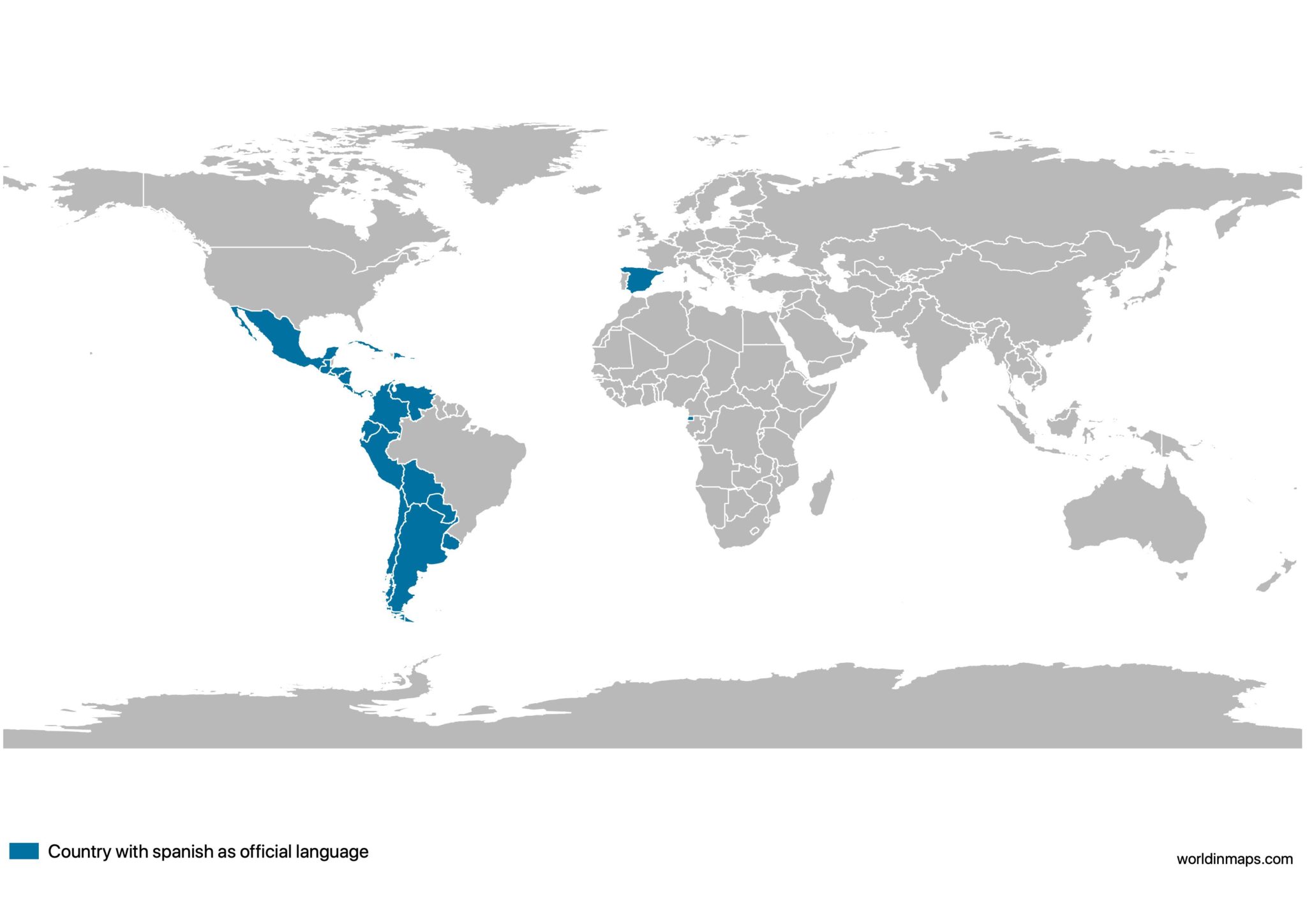
The usage of “no” in Spanish exhibits cultural and regional variations, leading to differences in meaning and usage depending on the region. These variations stem from the diverse cultural influences and historical contexts that have shaped the language across different regions.
One notable variation is the use of “no” as a form of politeness or deference in certain regions. For example, in some parts of Spain, it is considered more polite to use “no” in response to a request or offer, even if the intention is to accept.
This usage conveys a sense of modesty and respect, as it implies that the speaker is not assuming or demanding anything.
Regional Differences in Meaning
In some regions, “no” may carry a stronger or more emphatic meaning than in others. For instance, in Mexico, “no” is often used to express a firm denial or refusal, while in Argentina, it may be used more casually to indicate disagreement or objection.
Variations in Usage, What is no in spanish language
The usage of “no” can also vary depending on the formality of the situation. In formal settings, such as business or academic contexts, “no” is typically used in a more direct and assertive manner. However, in informal settings, such as conversations with friends or family, “no” may be softened with other expressions, such as “no creo” (I don’t think so) or “no estoy seguro” (I’m not sure).
Understanding these cultural and regional variations is essential for effective communication in Spanish, as it allows speakers to adapt their language usage to the specific context and audience.
– Analyze the differences in the usage of “no” in formal and informal contexts in Spanish.

In formal Spanish, “no” is typically used to express negation in a direct and unambiguous way. It is often used in conjunction with other negative words, such as “nunca” (never), “nada” (nothing), and “ningún” (no one). For example:
- No tengo tiempo. (I don’t have time.)
- Nunca he estado en España. (I have never been to Spain.)
- No hay nada que hacer. (There is nothing to do.)
- No conozco a nadie aquí. (I don’t know anyone here.)
In informal Spanish, “no” can be used in a more nuanced way. It can be used to express a range of meanings, from simple negation to disagreement or refusal. For example:
- No, gracias. (No, thank you.)
- No me gusta el fútbol. (I don’t like soccer.)
- No creo que sea una buena idea. (I don’t think it’s a good idea.)
- No lo sé. (I don’t know.)
The choice of whether to use “no” in a formal or informal context depends on a number of factors, including the speaker’s relationship with the listener, the setting, and the tone of the conversation.
Historical Evolution of “No”
The Spanish word “no” has a rich and complex history. Its origins can be traced back to the Latin word “non,” which was used to negate verbs and adjectives. Over time, “non” evolved into “no” in Spanish, and its meaning and usage have changed significantly.
Early Usage
In Old Spanish, “no” was primarily used to negate verbs. It was also used to negate adjectives, but this usage was less common. For example, in the Old Spanish text “Cantar de Mio Cid,” we find the following line: “Non quiero batalla con vos, mas quiero paz e amor.” (I do not want battle with you, but I want peace and love.)
In Spanish, “no” means “no” and is used to negate statements or questions. It is a common word in Spanish and is used in a variety of contexts. Arabic is another language that has a word for “no”. How old is Arabic language?
It is one of the oldest languages in the world, with a history that spans over 2,500 years. Like Spanish, Arabic is a widely spoken language with over 300 million native speakers.
Modern Usage
In Modern Spanish, “no” is used to negate both verbs and adjectives. It is also used to negate nouns, adverbs, and even entire sentences. For example, we can say “No quiero ir al cine.” (I do not want to go to the movies.) or “No es verdad.” (It is not true.)
Semantic Changes
Over time, the meaning of “no” has also changed. In Old Spanish, “no” was often used to express a strong negation. However, in Modern Spanish, “no” can also be used to express a weaker negation. For example, in the sentence “No creo que sea verdad,” the speaker is not expressing a strong belief that something is not true.
Rather, they are simply expressing a doubt.
Conclusion
The Spanish word “no” has undergone a significant evolution over time. Its meaning and usage have changed dramatically, and it is now one of the most versatile words in the Spanish language.
Body Language and Nonverbal Cues
In Spanish, body language and nonverbal cues play a crucial role in expressing negation, often complementing or even replacing verbal communication. Gestures, facial expressions, and other physical signals can convey the meaning of “no” in a variety of contexts.
Gestures
Gestures are a common way to express negation in Spanish. The most common gesture is shaking the head from side to side. This gesture is typically used to indicate a general refusal or disagreement. Other gestures that can convey negation include:
- Waving the hand in front of the body
- Making a fist and shaking it
- Pointing the finger at someone or something
Facial Expressions
Facial expressions can also be used to express negation in Spanish. The most common facial expression is a frown or a furrowed brow. This expression typically indicates disapproval or disagreement. Other facial expressions that can convey negation include:
- Raising the eyebrows
- Pursuing the lips
- Narrowing the eyes
Other Nonverbal Cues
In addition to gestures and facial expressions, other nonverbal cues can also be used to express negation in Spanish. These cues include:
- Tone of voice
- Body posture
- Eye contact
The use of body language and nonverbal cues to express negation in Spanish is often influenced by cultural and regional factors. In some cultures, it is considered more polite to use nonverbal cues to express negation than to say the word “no” directly.
In other cultures, nonverbal cues may be used to reinforce or emphasize a verbal negation.
The following table summarizes the common nonverbal cues used to express negation in Spanish, including descriptions and examples:
| Nonverbal Cue | Description | Example |
|---|---|---|
| Shaking the head | A general refusal or disagreement | “No, I don’t want to go.” |
| Waving the hand in front of the body | A refusal or rejection | “No, I don’t need your help.” |
| Making a fist and shaking it | A strong refusal or disagreement | “No, I will not do it.” |
| Pointing the finger at someone or something | A specific refusal or rejection | “No, I don’t want that one.” |
| Frowning or furrowing the brow | Disapproval or disagreement | “No, I don’t like that.” |
| Raising the eyebrows | Surprise or disbelief | “No, I can’t believe it.” |
| Pursuing the lips | Disapproval or disagreement | “No, I don’t agree with you.” |
| Narrowing the eyes | Anger or disapproval | “No, I’m not happy about this.” |
In a specific situation, nonverbal cues can be used to convey negation in Spanish without saying the word “no” directly. For example, in a business meeting, a person may shake their head or frown to indicate that they do not agree with a proposal.
In Spanish, the word “no” is a negative adverb that means “not.” It is used to negate verbs, adjectives, and other adverbs. For example, “no tengo dinero” means “I do not have money.” Similarly, “no es bonito” means “it is not beautiful.” In Sri Lanka, the official languages are Sinhala and Tamil.
What language speak in sri lanka Sinhala is spoken by the majority of the population, while Tamil is spoken by a significant minority. However, English is also widely used in Sri Lanka, especially in business and government.
This nonverbal cue can be used to avoid a direct confrontation and to maintain a polite and respectful atmosphere.
Intonation and Emphasis
Intonation and emphasis play a crucial role in conveying the meaning and nuances of “no” in Spanish. By varying the intonation and emphasizing different syllables, speakers can express a wide range of emotions and attitudes.
One way to emphasize “no” is to raise the pitch of the voice on the final syllable. This conveys a sense of firmness and assertiveness. For example, saying “NO” with a rising intonation would indicate a strong refusal.
Another way to emphasize “no” is to lengthen the vowel sound in the first syllable. This creates a more drawn-out and emphatic pronunciation, which can convey a sense of frustration or exasperation. For example, saying “nooo” with a long vowel sound would indicate a more emotional refusal.
The placement of emphasis can also change the meaning of “no.” For example, emphasizing the first syllable of “no” (NO) conveys a more definitive refusal, while emphasizing the second syllable (no) conveys a more hesitant or conditional refusal.
Cultural and regional variations exist in the use of intonation and emphasis with “no.” In some Spanish-speaking cultures, a rising intonation is more common, while in others, a falling intonation is preferred. Additionally, the placement of emphasis may vary depending on the region.
Intonation and emphasis can be used to convey different emotions or attitudes when saying “no.” For example, a rising intonation can convey a sense of surprise or disbelief, while a falling intonation can convey a sense of finality or resignation.
Syntax and Word Order: What Is No In Spanish Language
The syntax of “no” in Spanish follows specific rules that determine its placement and usage within a sentence. Understanding these rules is crucial for effectively negating statements and conveying the intended meaning.
In Spanish, “no” is typically placed before the verb it negates. This placement is consistent across different sentence structures and verb tenses.
Word Order and Meaning
The word order of “no” and the verb can affect the meaning of the sentence. In general, there are two main word orders:
- “No” before the subject:This order emphasizes the negation and typically conveys a strong denial.
- “No” after the subject:This order is more common in informal speech and places less emphasis on the negation.
Here are some examples to illustrate the different word orders:
- No hablo español.(I do not speak Spanish.)
- Yo no hablo español.(I do not speak Spanish.)
In the first example, “no” precedes the subject “yo” and emphasizes the negation. In the second example, “no” follows the subject and conveys a less emphatic negation.
Collocations and Idioms
In Spanish, the word “no” is used in a variety of collocations and idioms, each with its own specific meaning and usage.
Some of the most common collocations and idioms that use “no” in Spanish include:
- No tener ni idea: to have no idea
- No tener nada que ver: to have nothing to do with
- No tener más remedio: to have no choice but
- No ser para tanto: not to be that bad
- No estar en sus cabales: not to be in one’s right mind
These collocations and idioms are used in a variety of contexts to express a wide range of meanings. For example, “no tener ni idea” can be used to express ignorance, while “no tener nada que ver” can be used to deny involvement or connection.
“No tener más remedio” is used to express necessity or obligation, while “no ser para tanto” is used to downplay the importance or seriousness of something. Finally, “no estar en sus cabales” is used to describe someone who is behaving irrationally.
Here is a short paragraph that uses some of these collocations and idioms to demonstrate their usage in context:
No tengo ni idea de lo que está pasando. No tiene nada que ver conmigo. No tengo más remedio que hacerlo. No es para tanto, no te preocupes. No está en sus cabales, no le hagas caso.
In this paragraph, the collocation “no tener ni idea” is used to express ignorance about what is happening. The idiom “no tener nada que ver” is used to deny involvement or connection with the situation. The collocation “no tener más remedio” is used to express the necessity of doing something.
The idiom “no ser para tanto” is used to downplay the importance or seriousness of the situation. Finally, the idiom “no estar en sus cabales” is used to describe someone who is behaving irrationally.
– Synonyms and Antonyms
In Spanish, there are several words that can be used to express negation, each with its own subtle differences in meaning and usage. Some of the most common synonyms for “no” include:
- nada(nothing)
- nunca(never)
- jamás(never)
- tampoco(neither)
- ni(nor)
Antonyms for “no” include:
- sí(yes)
- claro(of course)
- por supuesto(of course)
- vale(okay)
- de acuerdo(okay)
The table below summarizes the differences in meaning and usage between these words:
| Word | Meaning | Usage |
|---|---|---|
| no | no | General negation |
| nada | nothing | Negation of quantity or existence |
| nunca | never | Negation of time |
| jamás | never | Emphatic negation of time |
| tampoco | neither | Negation of a previous statement |
| ni | nor | Negation of a following statement |
| sí | yes | Affirmation |
| claro | of course | Emphatic affirmation |
| por supuesto | of course | Polite affirmation |
| vale | okay | Informal affirmation |
| de acuerdo | okay | Formal affirmation |
“No es lo mismo decir ‘no’ que ‘nada’. ‘No’ es una negación general, mientras que ‘nada’ es una negación de cantidad o existencia.”- Native Spanish speaker
Exercises and Practice

To master the usage of “no” in Spanish, a variety of exercises and practice activities can be employed. These exercises can range from fill-in-the-blank tasks to translation and conversation practice.
Fill-in-the-Blank Exercises
Fill-in-the-blank exercises require learners to complete sentences or phrases by choosing the correct form of “no.” This helps them to develop a strong understanding of the different types of “no” and their appropriate usage.
- Complete the following sentence: “No ____ puedo ir a la fiesta.” (formal)
- Translate the following sentence into Spanish: “I can’t go to the party.” (informal)
Translation Exercises
Translation exercises involve translating sentences or paragraphs from Spanish to English or vice versa. This helps learners to improve their comprehension of “no” in context and to practice using it correctly in their own writing and speaking.
- Translate the following sentence into English: “No me gusta el café.” (formal)
- Translate the following sentence into Spanish: “I don’t like coffee.” (informal)
Conversation Practice
Conversation practice allows learners to apply their knowledge of “no” in real-life situations. This can be done through role-playing, simulations, or guided conversations with a native speaker or instructor.
- Role-play a conversation between a customer and a store clerk, where the customer wants to return an item.
- Simulate a phone call between two friends, where one friend invites the other to a party and the other friend declines.
Answer Keys
To facilitate self-study and provide feedback, answer keys or solutions should be provided for the exercises. This will allow learners to check their understanding and identify areas where they need further practice.
- Fill-in-the-Blank Exercise Answer Key:
- lo
- No puedo ir a la fiesta.
- Translation Exercise Answer Key:
- I don’t like coffee.
- No me gusta el café.
Table of Examples
The following table provides examples of the different types of “no” in Spanish, along with their usage and example sentences:
| Type of “No” | Usage | Example Sentence |
|---|---|---|
| Negation | To negate a statement | No es verdad. (It is not true.) |
| Prohibition | To prohibit something | No fumar. (No smoking.) |
| Refusal | To refuse something | No quiero. (I don’t want it.) |
| Doubt | To express doubt or uncertainty | No sé. (I don’t know.) |
| Emphasis | To emphasize a statement | No lo haré. (I will not do it.) |
| Irony | To express irony or sarcasm | No es para tanto. (It’s not that big of a deal.) |
Bullet Point Summary

Key Points about the Spanish Word “No”
The Spanish word “no” is a negative adverb used to express negation or refusal. It is one of the most common words in the Spanish language and has various types and variations depending on the context in which it is used.
- Meaning:“No” in Spanish means “not” or “no.” It is used to negate a statement, action, or idea.
- Usage:“No” is used in both formal and informal contexts. In formal contexts, it is typically used with the verb “ser” (to be) or “estar” (to be). In informal contexts, it can be used with any verb.
- Types:There are several types of “no” in Spanish, including “no” (not), “nunca” (never), “jamás” (never), and “ningún” (no one, none).
- Variations:“No” can also be used in various ways, such as in negative questions, negative commands, and negative exclamations.
- Examples:
- “No tengo dinero.” (I don’t have money.)
- “Nunca he estado en España.” (I have never been to Spain.)
- “¡No lo hagas!” (Don’t do it!)
Essential Questionnaire
What are the different types of “no” in Spanish?
Spanish employs various types of “no,” including negation, prohibition, emphasis, and doubt, each with its distinct usage and context.
How does the placement of emphasis change the meaning of “no”?
The placement of emphasis on “no” can significantly alter its meaning, ranging from negation to affirmation or even sarcasm, depending on the context.
Are there any cultural or regional variations in the use of “no” in Spanish?
Yes, the usage of “no” can vary across different Spanish-speaking regions, reflecting cultural nuances and regional dialects.
