What language is namaste – The term “Namaste” holds a profound significance in Indian culture, transcending linguistic boundaries to embody a rich tapestry of spiritual, cultural, and social meanings. This exploration delves into the origins, usage, and multifaceted implications of “Namaste,” unraveling its essence as a sacred greeting that encapsulates the essence of Indian values and beliefs.
Namaste, a Sanskrit term deeply rooted in ancient Indian traditions, has evolved over centuries, carrying with it a wealth of historical, cultural, and spiritual significance. Its usage extends beyond mere salutation, serving as a symbol of respect, humility, and the recognition of the divine within each individual.
This multifaceted greeting embodies the essence of Indian culture, reflecting its emphasis on harmony, compassion, and the interconnectedness of all beings.
Language Origin
The term “Namaste” originated in ancient India, with its roots in the Sanskrit language. It is derived from the combination of two Sanskrit words: “namas,” meaning “to bow,” and “te,” meaning “to you.” Historically, Namaste held significant cultural and religious importance in Indian society, symbolizing respect, humility, and the recognition of the divine within each individual.
Evolution of Usage
Over time, the usage of Namaste evolved, becoming a common form of greeting and salutation in India. It is typically accompanied by a slight bow of the head and a gesture of bringing the palms together in front of the chest.
The pronunciation of Namaste may vary slightly depending on regional dialects, with variations in the emphasis on the syllables.
Sanskrit Roots

The word “Namaste” has its roots in the ancient Sanskrit language, which is the liturgical language of Hinduism and Buddhism. It is composed of two Sanskrit words: “namas” and “te.”
Namas
The word “namas” is derived from the Sanskrit root “nam,” which means “to bow” or “to pay homage.” It is a noun that refers to the act of bowing or paying respect.
Te
The word “te” is a second-person singular pronoun that means “to you.” It is used to indicate that the speaker is addressing the person they are greeting.
Combined Meaning
When combined, the words “namas” and “te” form the phrase “namaste,” which literally means “I bow to you.” This phrase expresses a sense of respect, humility, and gratitude towards the person being greeted.
Cultural Significance
The cultural significance of “Namaste” in India and beyond is profound. It embodies the essence of Indian culture, reflecting the values of respect, humility, and spiritual connection.
In India, “Namaste” is used as a traditional greeting in various social and religious contexts. It is commonly exchanged during meetings, conversations, and religious ceremonies. By uttering “Namaste,” individuals acknowledge the divine presence within each other, recognizing the inherent unity and interconnectedness of all beings.
Social Contexts
- As a respectful greeting when meeting someone, expressing warmth and friendliness.
- As a way to show gratitude or appreciation for a favor or kindness.
- As a form of farewell, conveying good wishes and a sense of connection.
Religious Contexts
- In Hinduism, “Namaste” is considered a sacred mantra, often used during prayers and meditation.
- In Buddhism, “Namaste” is used as a greeting among practitioners, acknowledging the Buddha nature within each other.
- In Jainism, “Namaste” is employed as a way to show respect for the divine and the interconnectedness of all living beings.
Gesture and Symbolism
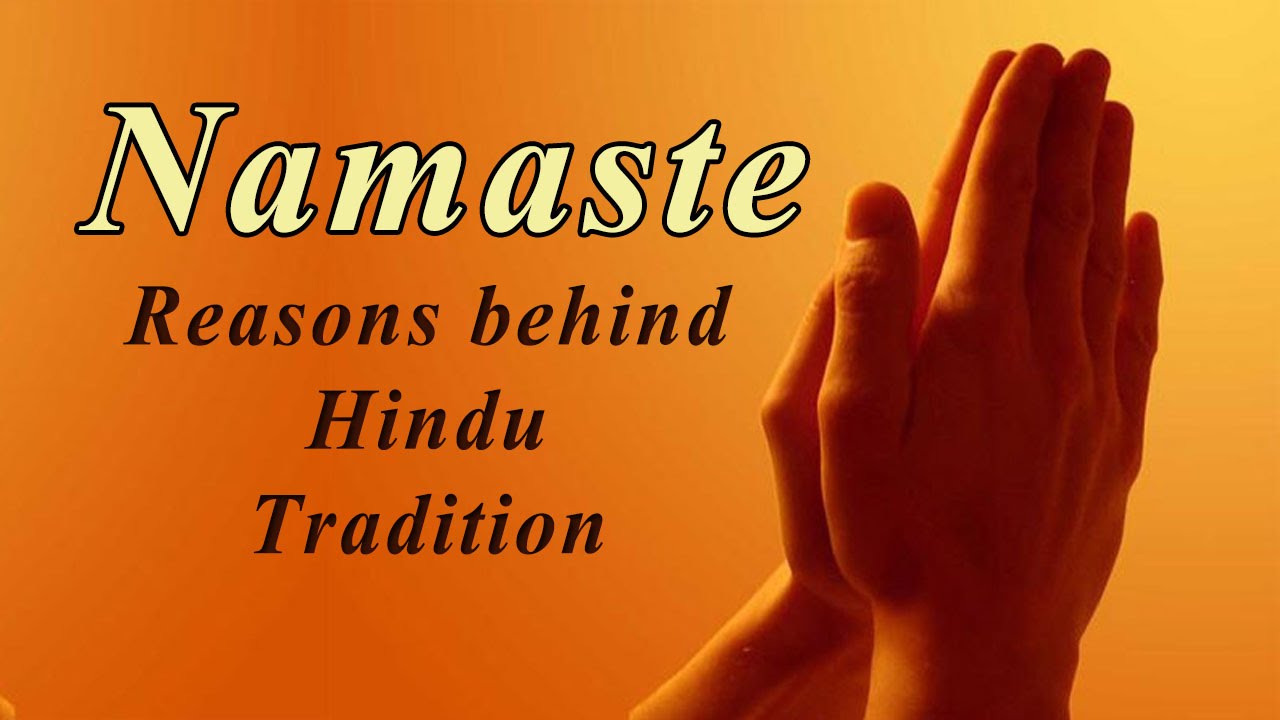
Namaste is a gesture of greeting and farewell in India. It is performed by bringing the palms together in front of the chest and bowing the head slightly.
The gesture is symbolic of respect and humility. It is a way of showing that you are approaching the other person with an open heart and that you are not a threat. Namaste is also a way of acknowledging the divine within the other person.
Hand Position
The hands are held together in front of the chest, with the fingers pointing upwards. The palms are touching each other, and the thumbs are extended.
The position of the hands is said to represent the union of the individual soul with the universal soul. The thumbs represent the ego, and the fingers represent the five senses. By bringing the hands together, we are symbolically surrendering our ego and our senses to the divine.
Bowing the Head
The bowing of the head is a sign of respect. It is a way of showing that we are not above the other person and that we are approaching them with humility.
The depth of the bow can vary depending on the level of respect that is being shown. A slight bow is appropriate for a casual greeting, while a deeper bow is appropriate for a more formal setting.
Regional Variations
The use of “Namaste” varies across different regions of India. Pronunciation, gestures, and cultural significance may differ depending on the region.
Pronunciation
- In Northern India, “Namaste” is pronounced with a short “a” sound, as in “nam-uh-stay.”
- In Southern India, the “a” sound is elongated, as in “naa-muh-stay.”
- In Eastern India, the “s” sound is pronounced more softly, as in “nam-uh-tay.”
Gestures
- In North India, “Namaste” is typically accompanied by a slight bow of the head and a bringing together of the palms at chest level.
- In South India, the bow is more pronounced, and the palms are held slightly higher, at eye level.
- In East India, the palms are often held together in a prayer-like position.
Cultural Significance
- In North India, “Namaste” is used as a formal greeting and a sign of respect.
- In South India, it is also used as a way to express gratitude or farewell.
- In East India, “Namaste” is often used in religious contexts, as a way to pay homage to a deity.
| Region | Pronunciation | Gesture | Cultural Significance |
|---|---|---|---|
| North India | nam-uh-stay | Slight bow, palms at chest level | Formal greeting, sign of respect |
| South India | naa-muh-stay | Pronounced bow, palms at eye level | Greeting, gratitude, farewell |
| East India | nam-uh-tay | Palms held together in prayer-like position | Religious contexts, homage to deities |
Examples of Usage
- In a formal setting in North India, one might say “Namaste” to a respected elder or a colleague.
- In a temple in South India, one might say “Namaste” to the deity before offering prayers.
- In a village in East India, one might say “Namaste” to a holy person or a religious leader.
Usage in Other Languages
The adoption of “Namaste” into other languages reflects its growing global recognition as a symbol of respect and spiritual connection. In various cultures, “Namaste” has been adapted to convey similar meanings and is often used in formal and informal settings.
English
- “Namaste” has entered the English language as a respectful greeting, particularly in yoga and meditation communities.
- It is often used to express gratitude, acknowledge presence, and promote a sense of unity.
- In English, “Namaste” is typically accompanied by a slight bow or the gesture of joining palms together.
German
- “Namaste” has been adopted into German as “Namasté” and is used in similar contexts as in English.
- It is often used in yoga and meditation practices, as well as in formal greetings to convey respect and gratitude.
- The German pronunciation of “Namasté” is slightly different from the Sanskrit pronunciation, with emphasis on the second syllable.
French
- “Namaste” has entered the French language as “Namasté” and is primarily used in spiritual and yoga communities.
- It is often used as a greeting to express respect, gratitude, and a sense of connection.
- In French, “Namasté” is typically accompanied by a slight bow or the gesture of joining palms together.
– Share examples of “Namaste” being used in popular culture.

The use of “Namaste” has become increasingly prevalent in popular culture, particularly in Western societies. This is due in part to the growing popularity of yoga and meditation practices, which often incorporate “Namaste” as a greeting or closing. Here are a few examples of how “Namaste” is being used in popular culture:
- In the popular TV show “The Big Bang Theory,” the character Raj Koothrappali often uses “Namaste” as a greeting.
- The pop singer Katy Perry used “Namaste” in her song “Dark Horse” (2013).
- The clothing brand “Namaste” sells yoga-inspired clothing and accessories.
- The greeting card company “Hallmark” sells greeting cards with “Namaste” on them.
These examples demonstrate how “Namaste” has become a recognizable and widely used term in popular culture.
Spiritual Significance
Namaste holds immense spiritual significance in Hinduism, particularly in the tradition of Advaita Vedanta. It reflects the belief that the divine resides within every individual, and by acknowledging the presence of the divine in others, one recognizes the divinity within themselves.
Namaste is a Sanskrit word that is used as a greeting in many parts of the world. It is typically translated as “I bow to you” or “I honor you.” The word is derived from the Sanskrit root nam, which means “to bow.” Namaste is a respectful way to greet someone, and it is often used in conjunction with a slight bow of the head.
While namaste is most commonly associated with India, it is also used in other parts of South Asia, such as Nepal and Sri Lanka. Interestingly, the language spoken in Aruba, a Dutch Caribbean island, is Papiamento, a creole language that is based on Portuguese, Spanish, and Dutch.
Despite the geographical distance between India and Aruba, the use of the word namaste in both cultures highlights the interconnectedness of the world’s languages and traditions.
In Hinduism, the practice of Namaste is an integral part of daily life, used as a respectful greeting and as a symbol of reverence and humility. It is also used in meditation and spiritual practices, where it is believed to foster a sense of connection with the divine and promote inner peace and self-awareness.
Use in Meditation
In meditation, Namaste is used as a mudra, or hand gesture, that is accompanied by the chanting of the mantra “Om Namah Shivaya.” This mantra invokes the divine energy of Lord Shiva, the Hindu deity associated with consciousness and transformation.
The Namaste mudra involves bringing the palms together in front of the chest, with the fingers pointing upwards. This gesture symbolizes the union of the individual self with the universal self, promoting a sense of oneness and spiritual awakening.
Etiquette and Protocol

Namaste is a sacred greeting that should be used with respect and sincerity. It is typically used in formal and informal settings, and it is considered impolite to use it in a disrespectful or sarcastic manner.
When using Namaste, it is important to maintain proper etiquette. This includes:
- Making eye contact with the person you are greeting.
- Saying the word “Namaste” in a clear and respectful tone of voice.
- Placing your hands together in the prayer position, with your fingers pointing upwards.
- Bowing your head slightly.
It is also important to be aware of cultural nuances and regional variations in the use of Namaste. For example, in some cultures, it is considered disrespectful to use Namaste with someone who is of a lower social status. In other cultures, it is considered impolite to use Namaste with someone who is not a Hindu.
Comparative Analysis
Greetings hold significant cultural and social importance, expressing respect, acknowledgment, and goodwill. Across various cultures, unique gestures and phrases convey these sentiments. “Namaste,” originating from India, is one such greeting that has gained recognition worldwide. This section compares “Namaste” to similar greetings in other cultures, exploring their similarities and differences.
Namaste is a Sanskrit word that is used as a greeting in India and Nepal. It is a combination of the words “namas” and “te”, which mean “I bow to you”. Namaste is typically spoken with the hands pressed together in front of the chest, and it is considered a respectful way to greet someone.
If you are interested in learning how to say hello in other languages, there are many resources available online, such as this article.
To conduct this comparative analysis, five cultures with distinct greetings were selected: Thai, Japanese, Maori, Arabic, and Zulu. A table summarizing the similarities and differences is presented below:
| Culture | Greeting | Meaning | Usage |
|---|---|---|---|
| Indian | Namaste | “I bow to the divine in you.” | Formal and respectful greeting, typically accompanied by a slight bow and hands pressed together at the chest. |
| Thai | Sawasdee | “Hello” or “Greetings.” | General greeting used in most situations, accompanied by a slight bow and hands pressed together at the chest. |
| Japanese | Konnichiwa | “Good day” or “Hello.” | General greeting used in most situations, accompanied by a slight bow. |
| Maori | Kia ora | “Be well” or “Greetings.” | Formal and respectful greeting, typically accompanied by a hongi (pressing noses together). |
| Arabic | As-salamu alaykum | “Peace be upon you.” | Formal and religious greeting, typically accompanied by a handshake. |
| Zulu | Sawubona | “Hello” or “Greetings.” | General greeting used in most situations, accompanied by a handshake. |
Key Findings:
The comparative analysis reveals several similarities and differences among these greetings. All greetings convey respect and goodwill, but their specific meanings vary. “Namaste” and “Sawasdee” share a similar gesture of pressing hands together at the chest, symbolizing a connection between the individuals.
In contrast, greetings like “Konnichiwa” and “Sawubona” are more general and lack a specific religious or spiritual connotation. Additionally, some greetings, such as “Kia ora” and “As-salamu alaykum,” are influenced by cultural and religious practices, involving unique gestures like the hongi or the handshake.
Literary References
The term “Namaste” has found its way into the realm of literature, appearing in various works of poetry, prose, and other literary forms. These references serve to convey cultural and historical contexts, adding depth and significance to the works.
In poetry, “Namaste” often evokes a sense of reverence and connection. For instance, in Rabindranath Tagore’s poem “Gitanjali,” the speaker uses “Namaste” as a salutation, expressing gratitude and humility toward the divine.
Poetry, What language is namaste
- In his poem “A Litany for Survival,” Audre Lorde employs “Namaste” to symbolize unity and solidarity among oppressed peoples.
- In the poem “Namaste” by John Ashbery, the term is used as a meditative reflection on the interconnectedness of all beings.
Prose
In prose, “Namaste” can serve as a narrative device that introduces or concludes a story. For example, in Jhumpa Lahiri’s novel “The Namesake,” the term is used to mark the beginning of a new chapter, signifying a transition in the protagonist’s life.
- In Salman Rushdie’s novel “Midnight’s Children,” “Namaste” is used to evoke a sense of cultural identity and belonging.
- In Amitav Ghosh’s novel “The Hungry Tide,” the term is employed to explore themes of spirituality and connection to nature.
Evolution and Impact
The usage of “Namaste” in literature has evolved over time, reflecting changing cultural attitudes and societal norms. In contemporary literature, “Namaste” is often used as a symbol of peace, respect, and mindfulness.
The literary references to “Namaste” have influenced popular culture and societal discourse. By incorporating the term into their works, authors have helped to raise awareness of its cultural significance and promote its values of peace and unity.
Artistic Depictions
Namaste has been represented in various forms of art, serving as a symbol of respect, greeting, and spiritual connection.
In paintings, it is commonly depicted as two hands joined together at the chest or forehead, often with the fingers extended upwards. This gesture signifies the union of the divine within oneself and the divine in others. One notable example is the painting “Namaste” by Raja Ravi Varma, which portrays a woman with her hands joined in namaste, symbolizing her reverence for the divine.
Sculptures
In sculptures, namaste is often portrayed as a standalone gesture or as part of larger compositions. The iconic statue of Lord Buddha at the Wat Pho temple in Bangkok, Thailand, depicts him in the namaste pose, representing his compassion and connection with all beings.
Other Forms of Art
Beyond paintings and sculptures, namaste has also been incorporated into other art forms such as dance, music, and literature. In Indian classical dance, for instance, the namaste mudra (hand gesture) is used to express respect and gratitude to the audience and fellow performers.
Modern Interpretations

In contemporary society, the interpretation and usage of “Namaste” have undergone significant evolution. While its traditional spiritual and cultural significance remains intact, the term has also been embraced in modern contexts, acquiring new meanings and applications.
One notable modern interpretation of “Namaste” is its adoption as a universal greeting. In many parts of the world, particularly in the West, “Namaste” has become a popular way to acknowledge and respect others, regardless of their cultural or religious background.
This usage reflects a growing appreciation for diversity and a desire for inclusivity.
Usage in Popular Culture
The widespread adoption of “Namaste” in popular culture has further contributed to its modern interpretation. The term has appeared in numerous films, television shows, and music, often as a symbol of peace, harmony, and interconnectedness.
- In the 1997 film “Kundun,” the Dalai Lama uses “Namaste” as a greeting to symbolize his compassion and respect for all beings.
- In the popular TV series “Lost,” the character of Desmond Hume greets others with “Namaste,” reflecting his spiritual journey and search for enlightenment.
- The band Coldplay incorporated “Namaste” into the lyrics of their song “Fix You,” conveying a message of hope and healing.
These examples illustrate how “Namaste” has transcended its traditional context and become a widely recognized symbol of peace and goodwill in contemporary society.
Q&A: What Language Is Namaste
What is the origin of the term “Namaste”?
Namaste originated from the Sanskrit language, where “nama” means “to bow” and “te” means “to you.” It has been used as a traditional greeting in India for centuries.
What is the cultural significance of Namaste?
Namaste holds great cultural significance in India, representing respect, humility, and the recognition of the divine within each individual. It is used in various social and religious contexts to convey warmth, gratitude, and a sense of connection.
How is Namaste used in different contexts?
Namaste is used as a greeting upon meeting someone, as a farewell, and in religious ceremonies and meditations. It is also used to express gratitude, respect, and humility towards elders, teachers, and guests.
What is the spiritual meaning of Namaste?
In Hinduism and other Indian religions, Namaste symbolizes the belief that there is a divine spark within each individual. By saying Namaste, one acknowledges the divinity within themselves and others, fostering a sense of unity and compassion.
How has Namaste influenced Western culture?
Namaste has gained popularity in Western culture in recent years, being adopted as a symbol of peace, mindfulness, and spiritual connection. It is often used in yoga classes, meditation practices, and as a general expression of respect and gratitude.
