India, a land of vibrant cultures and rich linguistic tapestry, boasts a remarkable diversity of languages that has fascinated linguists and scholars for centuries. How many indian languages are there? The answer to this intriguing question unveils a fascinating panorama of linguistic heritage, historical evolution, and socio-cultural significance.
From the ancient roots of Sanskrit to the vibrant dialects spoken across the subcontinent, Indian languages embody the cultural mosaic that defines India. This exploration delves into the complexities of language classification, the impact of globalization, and the challenges of language preservation in a rapidly changing world.
Overview of Indian Languages

India is a linguistically diverse country, with a rich tapestry of languages spoken across its vast expanse. The country is home to over 780 languages, making it one of the most linguistically diverse regions in the world.
The proliferation of languages in India can be attributed to several factors, including the country’s geographical diversity, its long history of cultural exchange, and the influence of different ruling dynasties.
Geographical Distribution of Languages
The geographical distribution of languages in India is complex, with different language families and language groups concentrated in different regions. The major language families spoken in India include Indo-Aryan, Dravidian, Tibeto-Burman, and Austroasiatic.
The Indo-Aryan languages are spoken in northern and central India, and include languages such as Hindi, Bengali, Punjabi, and Marathi. The Dravidian languages are spoken in southern India, and include languages such as Tamil, Telugu, Kannada, and Malayalam.
Historical Evolution of Indian Languages
The Indian languages have a long and complex history, with their origins dating back to the ancient Indus Valley Civilization. The arrival of the Aryans in India around 1500 BC had a profound impact on the development of Indian languages, with Sanskrit emerging as the dominant literary language.
Over the centuries, Sanskrit influenced the development of many Indian languages, particularly the Indo-Aryan languages. However, the Dravidian languages retained their distinct identity, and continue to be spoken by a large number of people in southern India.
Socio-Cultural Significance of Languages
Languages play a vital role in Indian society, serving as a means of communication, cultural expression, and identity. Each language carries with it a unique cultural heritage and worldview, reflecting the experiences and perspectives of the people who speak it.
The Indian Constitution recognizes 22 official languages, including Hindi and English. However, there are many other languages that are spoken by significant populations throughout the country.
| Characteristic | Value |
|---|---|
| Number of Languages Spoken | 780+ |
| Language Families | Indo-Aryan, Dravidian, Tibeto-Burman, Austroasiatic |
| Geographical Distribution | Complex, with different language families concentrated in different regions |
| Historical Evolution | Influenced by Sanskrit, Dravidian languages retained their distinct identity |
| Socio-Cultural Significance | Vital role in communication, cultural expression, and identity |
| Official Languages | 22, including Hindi and English |
Historical Evolution of Indian Languages
Indian languages have a rich and diverse history, spanning several millennia and influenced by various factors. From ancient roots to modern-day developments, the evolution of Indian languages has been a complex and fascinating journey.
The earliest known languages of India belong to the Austroasiatic family, spoken by tribes in eastern and central India. Around 2500 BCE, Indo-Aryan languages, a branch of the Indo-European family, entered India from the northwest, eventually becoming the dominant languages in the north.
Major Language Families and Influences
Indian languages belong to several major language families, each with its own unique characteristics and historical influences:
- Indo-Aryan:The largest language family in India, spoken by over 70% of the population. Includes Hindi, Bengali, Marathi, Gujarati, and Punjabi.
- Dravidian:Spoken in southern India, includes Tamil, Telugu, Kannada, and Malayalam.
- Austroasiatic:Spoken by tribal communities in eastern and central India, includes Munda, Santhali, and Khasi.
- Sino-Tibetan:Spoken in the northeast, includes Tibetan, Burmese, and Bodo.
- Kra-Dai:Spoken in the extreme northeast, includes Tai and Shan.
Over time, these languages have influenced each other, resulting in the development of numerous dialects and regional variations.
Classification of Indian Languages
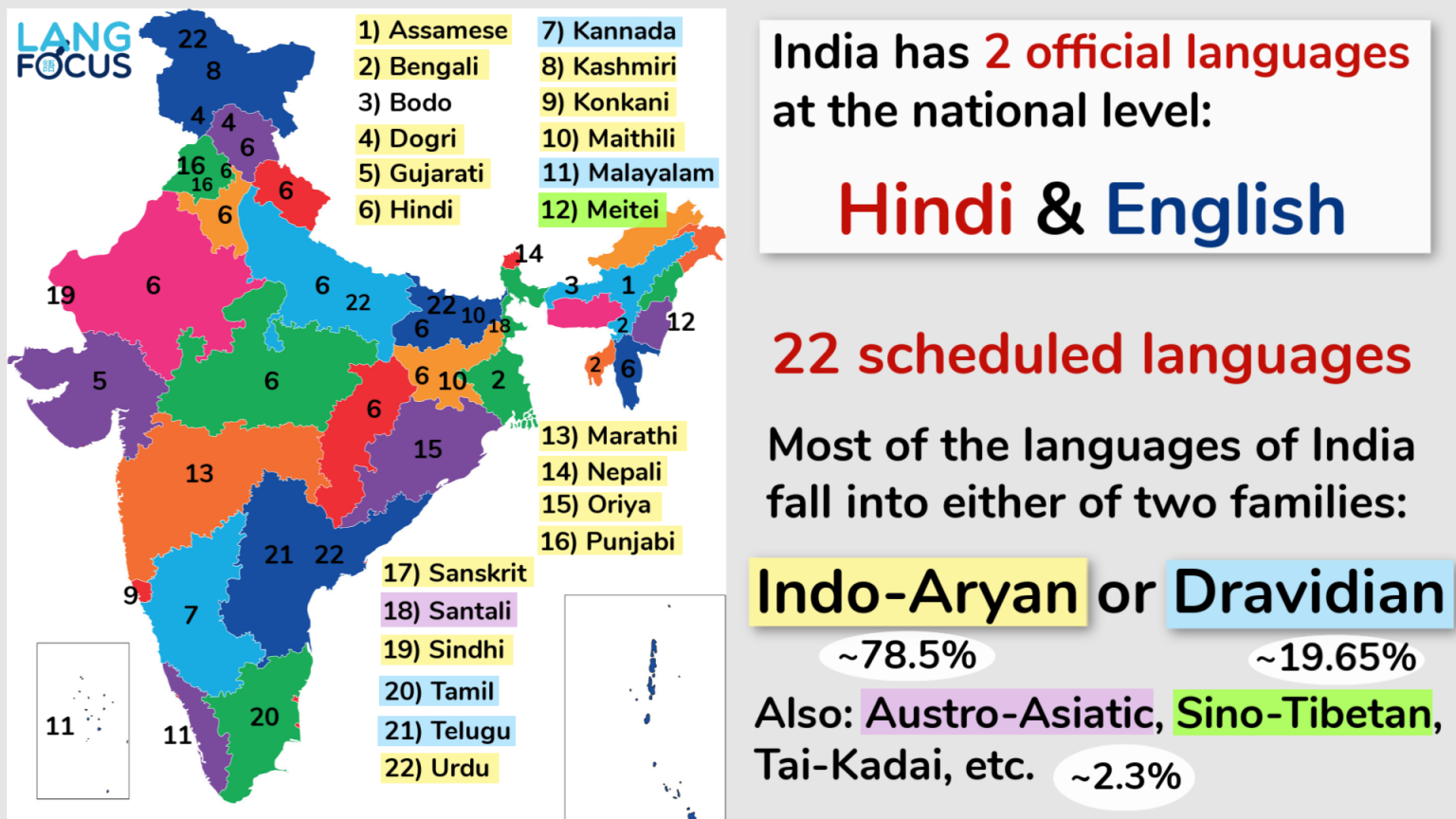
Indian languages are classified into various families based on linguistic criteria, primarily their grammar and vocabulary. The two major language families in India are Indo-Aryan and Dravidian, with several other smaller families and isolates also present.
Indo-Aryan Languages
Indo-Aryan languages form the largest language family in India, spoken by over 70% of the population. They are descended from Sanskrit, the ancient liturgical language of Hinduism, and are primarily found in northern, central, and western India. Some prominent Indo-Aryan languages include Hindi, Bengali, Marathi, Gujarati, Punjabi, and Urdu.
Dravidian Languages
Dravidian languages are the second largest language family in India, spoken by around 25% of the population. They are unrelated to Indo-Aryan languages and are primarily found in southern India. Some major Dravidian languages include Tamil, Telugu, Kannada, Malayalam, and Tulu.
Other Language Families
Besides Indo-Aryan and Dravidian, India is home to several other language families, including Sino-Tibetan, Austroasiatic, and Tai-Kadai. Sino-Tibetan languages are spoken in the Himalayan regions and include Tibetan, Nepali, and Bodo. Austroasiatic languages are found in eastern India and include Santali, Munda, and Khasi.
Tai-Kadai languages are spoken in northeastern India and include Ahom and Khamti.
Geographical Distribution
The geographical distribution of language families in India is largely determined by historical factors and migrations. Indo-Aryan languages dominate the northern and central regions, while Dravidian languages are concentrated in the south. Sino-Tibetan languages are spoken in the Himalayan regions, while Austroasiatic and Tai-Kadai languages are found in the east and northeast, respectively.
Official Languages of India

India has a rich linguistic diversity, with over 22 official languages and hundreds of regional languages and dialects. The Constitution of India recognizes Hindi and English as the official languages of the Union Government. Hindi is the most widely spoken language in India, while English is used extensively in government, business, and education.
Role of Regional Languages, How many indian languages are there
In addition to Hindi and English, regional languages play a significant role in government and education in India. Many states have adopted their own official languages, which are used in local administration, education, and judicial proceedings. The use of regional languages helps to promote cultural diversity and preserve local traditions.
Table of Official Languages
The following table summarizes the official languages of India, their regions of use, and their constitutional status:
| Language | Regions of Use | Constitutional Status |
|---|---|---|
| Hindi | Official language of the Union Government | Article 343 of the Constitution of India |
| English | Official language of the Union Government | Article 343 of the Constitution of India |
| Assamese | Official language of Assam | Article 345 of the Constitution of India |
| Bengali | Official language of West Bengal and Tripura | Article 345 of the Constitution of India |
| Gujarati | Official language of Gujarat | Article 345 of the Constitution of India |
| Hindi | Official language of Bihar, Chhattisgarh, Haryana, Himachal Pradesh, Jharkhand, Madhya Pradesh, Rajasthan, Uttarakhand, and Uttar Pradesh | Article 345 of the Constitution of India |
| Kannada | Official language of Karnataka | Article 345 of the Constitution of India |
| Kashmiri | Official language of Jammu and Kashmir | Article 345 of the Constitution of India |
| Konkani | Official language of Goa | Article 345 of the Constitution of India |
| Malayalam | Official language of Kerala | Article 345 of the Constitution of India |
| Manipuri | Official language of Manipur | Article 345 of the Constitution of India |
| Marathi | Official language of Maharashtra | Article 345 of the Constitution of India |
| Nepali | Official language of Sikkim | Article 345 of the Constitution of India |
| Odia | Official language of Odisha | Article 345 of the Constitution of India |
| Punjabi | Official language of Punjab | Article 345 of the Constitution of India |
| Sanskrit | Official language of India for liturgical purposes | Article 343 of the Constitution of India |
| Santali | Official language of Jharkhand | Article 345 of the Constitution of India |
| Sindhi | Official language of Sindh | Article 345 of the Constitution of India |
| Tamil | Official language of Tamil Nadu and Puducherry | Article 345 of the Constitution of India |
| Telugu | Official language of Andhra Pradesh and Telangana | Article 345 of the Constitution of India |
| Urdu | Official language of Jammu and Kashmir and Uttar Pradesh | Article 345 of the Constitution of India |
“The State shall endeavour to promote the spread of the Hindi language, to develop it so that it may serve as a medium of expression for all the elements of the composite culture of India and to secure its enrichment by assimilating without interfering with its genius, the forms, style and expressions used in Hindustani and in the other languages of India specified in the Eighth Schedule, and by drawing, wherever necessary or desirable, for its vocabulary, primarily on Sanskrit and secondarily on other languages.”
– Article 351 of the Constitution of India
Challenges and Opportunities
Having multiple official languages in India presents both challenges and opportunities. One challenge is the need to ensure that all citizens have access to government services and education in their own language. Another challenge is the potential for language-based discrimination and conflict.
However, the use of multiple official languages also provides opportunities for cultural exchange and the preservation of linguistic diversity.
Major Indian Language Groups
India is a linguistically diverse country with over 122 major languages and 1500 dialects. The major language groups in India are Indo-Aryan, Dravidian, and Sino-Tibetan.
The Indo-Aryan languages are spoken by about 74% of the Indian population and are descended from Sanskrit. They are spoken in the northern, central, and western parts of India.
The Dravidian languages are spoken by about 24% of the Indian population and are not related to the Indo-Aryan languages. They are spoken in the southern part of India.
The Sino-Tibetan languages are spoken by about 2% of the Indian population and are related to the Chinese and Tibetan languages. They are spoken in the northeastern part of India.
Indo-Aryan Languages
The Indo-Aryan languages are a branch of the Indo-European language family. They are spoken by about 74% of the Indian population and are descended from Sanskrit.
The major Indo-Aryan languages include Hindi, Urdu, Bengali, Marathi, Gujarati, Punjabi, and Oriya.
Hindi is the official language of India and is spoken by about 44% of the population. Urdu is closely related to Hindi and is spoken by about 5% of the population.
Bengali is spoken by about 8% of the population and is the official language of West Bengal.
With the multitude of languages spoken in India, it is no surprise that the language landscape of other regions is also diverse. Argentina, for instance, has Spanish as its official language. However, it is not the only language spoken in the country.
What is the language of Argentina explores the various languages spoken in the region, providing insights into the linguistic diversity of this South American nation. Returning to the topic of Indian languages, the number of distinct languages spoken in India is vast, with estimates ranging from 22 to 400, depending on the criteria used for classification.
Marathi is spoken by about 7% of the population and is the official language of Maharashtra.
Gujarati is spoken by about 5% of the population and is the official language of Gujarat.
Punjabi is spoken by about 3% of the population and is the official language of Punjab.
Oriya is spoken by about 3% of the population and is the official language of Odisha.
Dravidian Languages
The Dravidian languages are a family of languages that are not related to the Indo-Aryan languages. They are spoken by about 24% of the Indian population and are spoken in the southern part of India.
The major Dravidian languages include Tamil, Telugu, Kannada, and Malayalam.
Tamil is spoken by about 6% of the Indian population and is the official language of Tamil Nadu.
Telugu is spoken by about 8% of the Indian population and is the official language of Andhra Pradesh and Telangana.
Kannada is spoken by about 4% of the Indian population and is the official language of Karnataka.
Malayalam is spoken by about 3% of the Indian population and is the official language of Kerala.
Sino-Tibetan Languages
The Sino-Tibetan languages are a family of languages that are related to the Chinese and Tibetan languages. They are spoken by about 2% of the Indian population and are spoken in the northeastern part of India.
The major Sino-Tibetan languages spoken in India include Tibetan, Nepali, and Manipuri.
Tibetan is spoken by about 0.5% of the Indian population and is the official language of Sikkim.
Nepali is spoken by about 1% of the Indian population and is the official language of Nepal.
Manipuri is spoken by about 0.5% of the Indian population and is the official language of Manipur.
Endangered Indian Languages

India is home to a vast linguistic diversity, with over 780 languages spoken across the country. However, many of these languages are facing a decline, with some even facing extinction. Languages are considered endangered when they have a small number of speakers and are no longer being passed down to younger generations.
There are several factors contributing to the decline of Indian languages. One major factor is the lack of speakers. As older generations pass away, there are fewer people to speak the language. Another factor is the loss of cultural practices.
When people abandon traditional cultural practices, the language associated with those practices is also lost.
Education also plays a role in the decline of Indian languages. When children are educated in a language other than their native language, they may lose the ability to speak their native language. The dominance of mainstream media in major languages can also lead to the decline of minority languages.
Efforts to Preserve and Revitalize Endangered Languages
There are a number of efforts underway to preserve and revitalize endangered Indian languages. One such effort is language revitalization programs. These programs aim to teach endangered languages to new speakers. Another effort is language documentation. This involves recording and preserving endangered languages for future generations.
Language advocacy is also important in the preservation of endangered languages. This involves raising awareness of endangered languages and promoting their use. Language technology can also play a role in the preservation of endangered languages. This involves developing tools and resources to help people learn and use endangered languages.
Importance of Preserving Endangered Indian Languages
It is important to preserve endangered Indian languages for a number of reasons. First, endangered languages are a valuable part of India’s cultural heritage. They represent the unique history and culture of the people who speak them. Second, endangered languages can provide insights into the history of India and the development of human language.
Third, preserving endangered languages can help to promote linguistic diversity. Linguistic diversity is important for a number of reasons. It allows people to express themselves in their own unique way. It also helps to promote understanding and tolerance between different cultures.
Technology can play a vital role in the preservation of endangered Indian languages. Technology can be used to develop tools and resources that can help people learn and use endangered languages. Technology can also be used to document endangered languages and to raise awareness of them.
– Analyze the historical evolution of the language policy in India, including the role of the Constitution and various language movements.
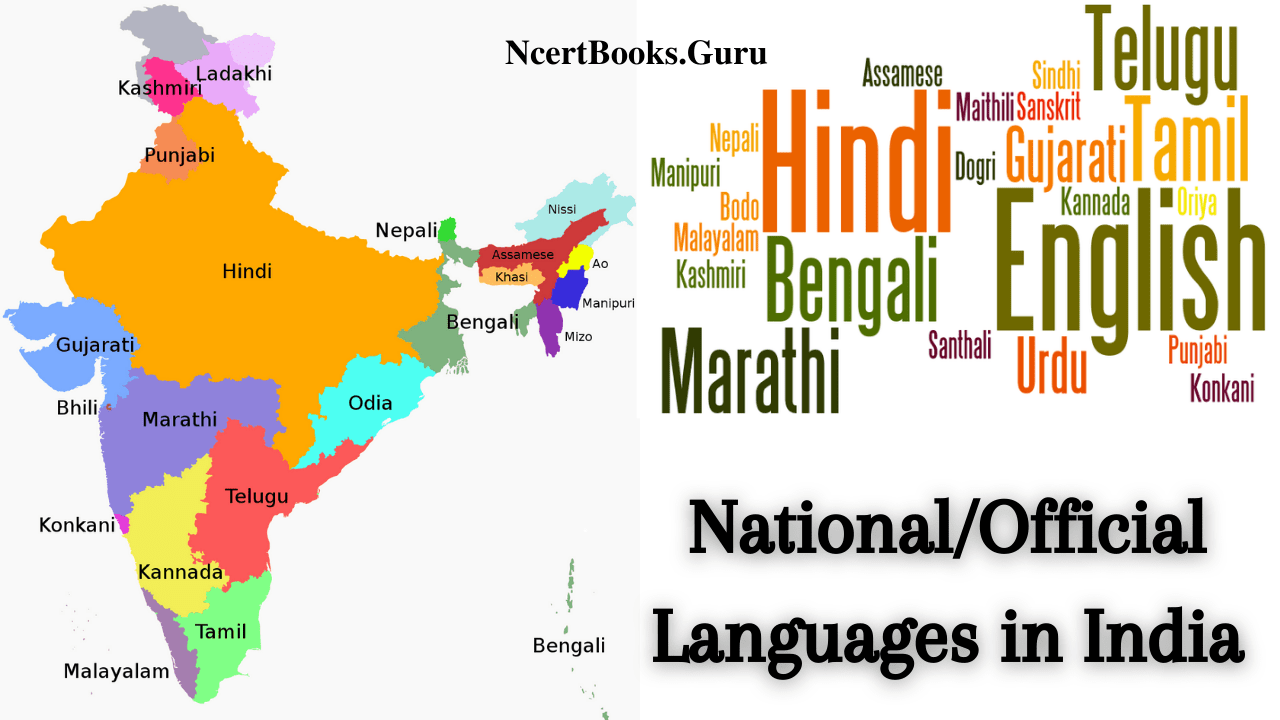
The language policy in India has undergone significant evolution since the country’s independence in 1947. The Constitution of India, adopted in 1950, plays a crucial role in shaping the language policy. Article 343 of the Constitution designates Hindi as the official language of the Union, while English is to be used for all official purposes until Hindi is adopted for such use.
The Constitution also recognizes 22 regional languages as scheduled languages, which are to be used for official purposes within their respective states.
Various language movements have also influenced the evolution of the language policy. The most notable of these was the anti-Hindi agitation in Tamil Nadu in the 1960s, which led to the inclusion of Tamil as a scheduled language in the Constitution.
Other language movements have also played a significant role in shaping the language policy, such as the Marathi movement in Maharashtra and the Bengali movement in West Bengal.
Role of the Constitution
The Constitution of India has played a crucial role in shaping the language policy of the country. Article 343 of the Constitution designates Hindi as the official language of the Union, while English is to be used for all official purposes until Hindi is adopted for such use.
The Constitution also recognizes 22 regional languages as scheduled languages, which are to be used for official purposes within their respective states.
The Constitution’s provisions on language have been the subject of much debate and controversy. Some argue that the dominance of Hindi as the official language has led to the marginalization of other regional languages. Others argue that the recognition of 22 scheduled languages has helped to promote linguistic diversity and foster national unity.
Role of Language Movements
Various language movements have also played a significant role in shaping the language policy of India. The most notable of these was the anti-Hindi agitation in Tamil Nadu in the 1960s, which led to the inclusion of Tamil as a scheduled language in the Constitution.
Other language movements have also played a significant role in shaping the language policy, such as the Marathi movement in Maharashtra and the Bengali movement in West Bengal.
These language movements have helped to raise awareness of the importance of linguistic diversity and have led to the recognition of a wider range of languages in the Constitution.
Impact of Globalization on Indian Languages
Globalization has significantly impacted the use and preservation of Indian languages. With increased interconnectedness and cross-cultural exchange, there has been a growing influence of global languages, particularly English, on Indian linguistic landscapes.
Role of Technology in Language Learning and Communication
Technological advancements have played a crucial role in facilitating language learning and communication. Online platforms, language learning apps, and social media have made it easier for individuals to access and engage with different languages, including those from India. This has contributed to the spread and preservation of minority and endangered languages, providing opportunities for people to connect with their linguistic heritage.
Language and Identity in India
Language plays a pivotal role in shaping cultural and social identities in India. The country’s linguistic diversity has fostered a complex relationship between language and identity, where language serves as a marker of cultural heritage, regional affiliation, and social status.
The use of language in India is closely intertwined with the concept of “mother tongue,” which refers to the language spoken at home and in early childhood. Mother tongue is often seen as a fundamental aspect of personal and cultural identity, connecting individuals to their linguistic heritage and cultural roots.
Role of Language in Cultural Identity
Language is a powerful force in shaping cultural identity. It influences the way individuals perceive themselves and the world around them. In India, different languages are associated with distinct cultural traditions, customs, and beliefs. For example, Tamil is closely linked to the Dravidian culture of South India, while Hindi is associated with the Indo-Aryan culture of North India.
Language also plays a crucial role in the preservation and transmission of cultural heritage. Through language, cultural knowledge, stories, and traditions are passed down from generation to generation. It serves as a repository of cultural memory and a means of connecting individuals to their cultural roots.
Language and Social Identity
Language is also an important marker of social identity in India. It can indicate an individual’s social status, regional affiliation, and membership in particular social groups. For example, the use of certain dialects or accents can signal a person’s socioeconomic background or geographical origin.
In some cases, language can also be a source of social conflict and discrimination. Linguistic differences have historically been used to justify social hierarchies and marginalize certain linguistic groups. However, the Indian Constitution recognizes the importance of linguistic diversity and promotes the equal status of all languages.
In the diverse landscape of India, a staggering number of languages are spoken, each carrying its unique cultural and historical significance. With over 780 distinct languages, India is a linguistic tapestry woven with a myriad of expressions. If you find yourself navigating the settings of your Chromebook, you can effortlessly switch between languages to suit your preference.
Refer to the comprehensive guide on how to change the language on a Chromebook to seamlessly transition between the vibrant linguistic expressions of India and the global digital realm.
Linguistic Landscape of India
India is a linguistically diverse country with a rich tapestry of languages. The Indian subcontinent has been a melting pot of cultures and civilizations, resulting in a complex linguistic landscape. The country is home to hundreds of languages, each with its unique history, grammar, and vocabulary.
The linguistic landscape of India can be visually represented using a table or map. The following table provides information on the distribution and number of speakers of major languages in India:
Major Languages of India
| Language | Number of Speakers (millions) | Distribution |
|---|---|---|
| Hindi | 550 | Northern and Central India |
| Bengali | 265 | Eastern India |
| Marathi | 83 | Western India |
| Telugu | 81 | Southern India |
| Tamil | 78 | Southern India |
| Gujarati | 56 | Western India |
| Kannada | 44 | Southern India |
| Malayalam | 38 | Southern India |
| Odia | 38 | Eastern India |
| Punjabi | 33 | Northern India |
As the table shows, Hindi is the most widely spoken language in India, with over 550 million speakers. It is the official language of the Indian government and is used in education, administration, and media. Other major languages in India include Bengali, Marathi, Telugu, Tamil, Gujarati, Kannada, Malayalam, Odia, and Punjabi.
Sociolinguistic Aspects of Indian Languages
Indian languages are deeply intertwined with the social and cultural fabric of the country. The choice of language used in different situations is influenced by factors such as region, religion, caste, social status, and education.
In communication, language serves as a bridge between individuals and communities. It enables the exchange of ideas, information, and emotions. The use of a particular language in a conversation can convey social and cultural cues, indicating the speaker’s background and intentions.
Language in Education
Language plays a crucial role in education, serving as a medium of instruction and a tool for cognitive development. The choice of language in education can have a significant impact on student achievement and access to knowledge.
In India, there has been a long-standing debate over the use of English versus regional languages as the medium of instruction. While English is often seen as the language of higher education and international communication, regional languages are important for preserving cultural identity and promoting inclusivity.
Language in Media
Language is also a powerful force in the media landscape. Newspapers, magazines, television channels, and radio stations cater to different linguistic groups, shaping public opinion and cultural perceptions.
The use of multiple languages in the media reflects the linguistic diversity of India and allows for the dissemination of information to a wider audience. However, it can also lead to language barriers and limit access to information for those who do not speak the dominant language.
Language and Literature in India

India boasts a rich tapestry of languages and a vibrant literary heritage. Indian literature has significantly influenced global culture and thought, showcasing the country’s diverse cultural and linguistic landscape.
Literary Traditions Associated with Indian Languages
Indian languages have given birth to a plethora of literary traditions, each with its unique characteristics and contributions. Sanskrit, the ancient language of India, has a rich literary history dating back thousands of years. The Vedas, Upanishads, and epics like the Ramayana and Mahabharata are foundational texts of Indian literature and have profoundly shaped Indian culture and thought.
Impact of Indian Literature on Global Culture and Thought
Indian literature has left an indelible mark on global culture and thought. The Panchatantra, a collection of fables and animal stories, has been translated into numerous languages and has influenced storytelling traditions worldwide. The works of Rabindranath Tagore, the Nobel laureate poet, have been widely translated and have resonated with readers across cultures.
Influential Indian Literary Works and Authors
- Ramayanaby Valmiki: An epic poem narrating the journey of Lord Rama, an incarnation of Vishnu.
- Mahabharataby Vyasa: An epic poem depicting the war between the Pandavas and Kauravas, and the philosophical teachings of the Bhagavad Gita.
- Gitanjaliby Rabindranath Tagore: A collection of poems that explores themes of love, loss, and spirituality.
- Midnight’s Childrenby Salman Rushdie: A magical realist novel that weaves together the history of India with the lives of its citizens born at the stroke of midnight on India’s independence day.
- The God of Small Thingsby Arundhati Roy: A novel that explores the complexities of family, caste, and social injustice in rural India.
Role of Indian Literature in Shaping Cultural Identity and National Consciousness
Indian literature has played a pivotal role in shaping India’s cultural identity and national consciousness. It has preserved and transmitted cultural values, traditions, and beliefs across generations. The works of authors like Premchand, Munshi Premchand, and Bankim Chandra Chatterjee have contributed to the development of a national consciousness and a sense of unity among Indians.
Influence of Indian Mythology and Religious Traditions on Literary Expression
Indian mythology and religious traditions have profoundly influenced literary expression in India. Many literary works are inspired by or incorporate mythological characters, stories, and themes. The Ramayana, Mahabharata, and Puranas have served as sources of inspiration for countless writers and poets throughout history.
Contemporary Literary Scene in India and Emerging Trends in Indian Literature
The contemporary literary scene in India is vibrant and diverse, with a wide range of authors writing in different languages and styles. There is a growing trend towards experimental and innovative forms of writing, as well as a renewed interest in traditional storytelling techniques.
Indian authors are also increasingly gaining international recognition and acclaim.
Translation of Indian Literature into Other Languages and Its Impact on Global Readership
The translation of Indian literature into other languages has played a significant role in expanding its global readership. Works by Indian authors have been translated into numerous languages, making them accessible to readers worldwide. This has contributed to a greater appreciation of Indian culture and literature on a global scale.
Use of Literary Devices in Indian Literature
Indian literature is known for its rich use of literary devices, such as allegory, symbolism, and metaphor. These devices allow writers to convey complex ideas and emotions in a vivid and imaginative manner. The use of allegory, for example, can be seen in the Ramayana, where the journey of Lord Rama symbolizes the journey of the soul towards enlightenment.
Role of Literary Criticism in Shaping the Understanding and Appreciation of Indian Literature
Literary criticism has played a crucial role in shaping the understanding and appreciation of Indian literature. Critics have analyzed and interpreted literary works, providing insights into their themes, characters, and literary techniques. This has helped readers to gain a deeper understanding and appreciation of Indian literature’s richness and complexity.
– Speculate on the future of Indian languages in the face of globalization and technological advancements.

The future of Indian languages is a subject of much debate, with some arguing that globalization and technological advancements will lead to their decline, while others believe that these forces can also be harnessed to promote their preservation and revitalization.
There are a number of factors that could contribute to the decline of Indian languages. Globalization has led to increased exposure to English, which is now the lingua franca of international communication. This has resulted in a decline in the use of Indian languages in education, business, and government.
Technological advancements have also made it easier for people to communicate with each other in English, which could further reduce the use of Indian languages.
However, there are also a number of factors that could contribute to the preservation and revitalization of Indian languages. Globalization has also led to increased awareness of the importance of cultural diversity, which has resulted in a growing interest in learning and preserving Indian languages.
Technological advancements have also made it easier for people to access resources for learning and using Indian languages.
The future of Indian languages is ultimately uncertain. However, there are a number of factors that could contribute to their decline or preservation. It is important to be aware of these factors and to take steps to promote the preservation and revitalization of Indian languages.
Potential for language preservation and revitalization efforts
There are a number of potential language preservation and revitalization efforts that could be undertaken. These include:
- Increasing the use of Indian languages in education, business, and government.
- Developing and distributing resources for learning and using Indian languages.
- Supporting community-based language preservation and revitalization efforts.
These efforts can help to ensure that Indian languages continue to be used and valued in the future.
Question & Answer Hub: How Many Indian Languages Are There
How many official languages does India have?
India has two official languages: Hindi and English.
What is the most widely spoken language in India?
Hindi is the most widely spoken language in India, with over 500 million native speakers.
How many endangered languages are there in India?
There are an estimated 197 endangered languages in India, according to UNESCO.
