What is objective language – In the realm of communication, the concept of objective language holds immense significance. It is a form of expression that strives to convey information accurately and impartially, devoid of personal biases or subjective interpretations. Understanding and effectively employing objective language is crucial for fostering clear and effective communication in various contexts.
Objective language plays a pivotal role in scientific research, journalism, legal proceedings, and other domains where accuracy and precision are paramount. By minimizing subjective elements, it allows for the dissemination of information in a manner that is universally comprehensible and verifiable.
Define objective language
Objective language is a type of language that is free from personal opinions, emotions, or biases. It is based on facts and evidence, and it is used to communicate information in a clear and concise way.
The purpose of objective language is to convey information without influencing the reader’s opinion. It is used in a variety of contexts, including scientific writing, journalism, and legal documents.
Characteristics of objective language
- Factual:Objective language is based on facts and evidence. It does not contain opinions or speculation.
- Clear:Objective language is clear and concise. It is easy to understand and does not contain any ambiguous or confusing language.
- Precise:Objective language is precise. It uses specific words and phrases to convey meaning. It does not use vague or general language.
- Neutral:Objective language is neutral. It does not favor one side of an argument over the other. It presents both sides of an argument fairly and without bias.
Importance of objective language
- Accuracy:Objective language helps to ensure that information is accurate and reliable. It is based on facts and evidence, so it is not influenced by personal opinions or biases.
- Clarity:Objective language helps to make information clear and easy to understand. It uses clear and concise language, so it is not ambiguous or confusing.
- Objectivity:Objective language helps to ensure that information is objective and unbiased. It does not favor one side of an argument over the other, so it presents both sides fairly and without bias.
Challenges of using objective language
- Complexity:Objective language can be complex and difficult to write. It requires careful attention to detail and a deep understanding of the subject matter.
- Time-consuming:Writing in objective language can be time-consuming. It requires careful research and fact-checking to ensure that the information is accurate and reliable.
- Difficult to maintain:Objective language can be difficult to maintain over time. As new information becomes available, it may be necessary to revise or update the language to reflect the new information.
Distinguish objective language from subjective language: What Is Objective Language
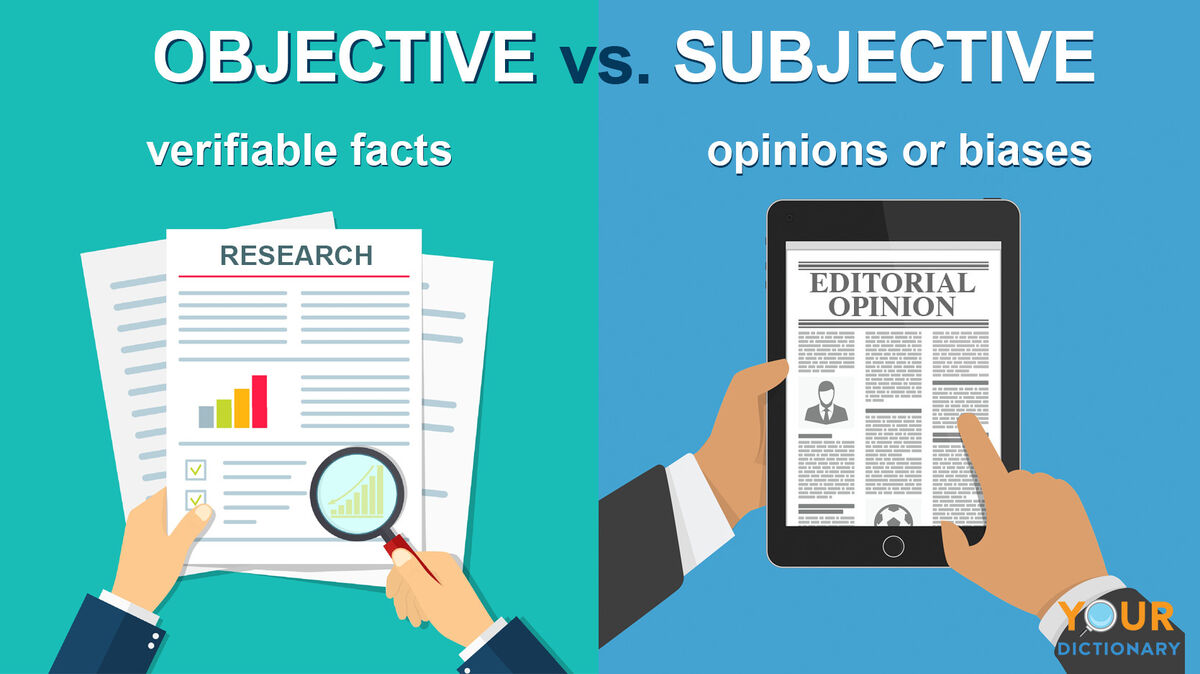
Objective language presents facts and information without personal opinions or biases. It uses precise and verifiable language, focusing on measurable and observable data. Subjective language, on the other hand, expresses personal opinions, feelings, and interpretations. It often relies on vague or ambiguous language, making it difficult to verify or measure.
Key Differences
- Factuality:Objective language is based on facts and evidence, while subjective language is based on personal opinions and beliefs.
- Precision:Objective language uses precise and specific language, while subjective language often uses vague and ambiguous language.
- Verifiability:Objective statements can be verified through observation or measurement, while subjective statements cannot be objectively verified.
- Bias:Objective language is free from personal bias, while subjective language reflects the writer’s personal perspective.
Examples
Objective Statements:
- The temperature today is 25 degrees Celsius.
- The population of the United States is approximately 330 million.
- The Earth is the third planet from the Sun.
Subjective Statements:
- This movie is the best movie I’ve ever seen.
- The politician’s speech was very inspiring.
- I think that this product is a waste of money.
Importance of objective language in communication

Objective language is crucial for effective communication because it allows for clear and precise information exchange. It minimizes misunderstandings and ensures that messages are interpreted as intended. By using objective language, communicators can focus on facts, data, and evidence rather than personal opinions or biases.
Objective language, devoid of personal opinions and biases, serves as a precise means of communication. For instance, in the context of discussing the language spoken by Italians, an objective approach would focus on the predominant language in Italy, which is Italian.
This emphasis on factual information and neutrality allows for clear and unbiased communication.
Benefits of using objective language in various contexts
- Professional communication:Objective language is essential in professional settings, such as business meetings, presentations, and written reports. It helps convey information accurately and avoids misunderstandings.
- Scientific research:In scientific writing, objective language is used to present findings, data, and conclusions without bias. This ensures the validity and reliability of research.
- Legal proceedings:Objective language is vital in legal documents and courtroom communication to ensure clarity and prevent misinterpretations.
- News reporting:Objective language is crucial in journalism to present unbiased news and information to the public.
Impact of using subjective language on communication
Subjective language, which expresses personal opinions or emotions, can lead to misunderstandings and misinterpretations. It can create confusion and hinder effective communication.
How to use objective language effectively
- Focus on facts and data:Present information based on verifiable facts, data, and evidence.
- Use precise and specific language:Avoid vague or ambiguous terms and use specific language to convey precise meanings.
- Avoid emotional language:Subjective language often contains emotional words or phrases. Use neutral and unemotional language instead.
- Use passive voice:Passive voice can help reduce the use of personal pronouns and make language more objective.
Tips for avoiding subjective language and using more objective language in everyday communication
- Be aware of your biases:Recognize your own biases and try to avoid letting them influence your communication.
- Use “I” statements:When expressing personal opinions, use “I” statements to indicate that the views are subjective.
- Seek feedback:Ask others for feedback on your communication to ensure that it is objective and clear.
Challenges in using objective language
Using objective language can present several challenges, especially in situations where personal opinions or biases may influence communication. Here are some common challenges and strategies for overcoming them:
Identifying common challenges
- Subjectivity:Personal opinions, beliefs, and experiences can influence language, making it difficult to maintain objectivity.
- Emotional language:Strong emotions can lead to the use of exaggerated or biased language.
- Lack of clarity:Vague or ambiguous language can lead to misunderstandings and misinterpretations.
- Cultural differences:Cultural norms and values can influence the way language is used and interpreted.
- Power dynamics:Power imbalances can affect the way language is used, with those in positions of power potentially using more subjective language.
Strategies for overcoming challenges
- Be aware of your own biases:Recognize and acknowledge your own personal biases and perspectives.
- Use specific and concrete language:Avoid generalizations and vague terms; instead, use specific examples and data to support your statements.
- Avoid emotional language:Use neutral and unemotional language, even when discussing sensitive topics.
- Be clear and concise:Use clear and concise language to avoid confusion or misinterpretation.
- Consider your audience:Tailor your language to the specific audience you are communicating with, considering their cultural background and level of understanding.
Table summarizing challenges and strategies
| Challenge | Strategy |
|---|---|
| Subjectivity | Be aware of your own biases |
| Emotional language | Use neutral and unemotional language |
| Lack of clarity | Use specific and concrete language |
| Cultural differences | Consider your audience |
| Power dynamics | Be aware of the power dynamics in the communication situation |
– Share practical techniques for writing in objective language.
Writing in objective language is a crucial skill in various communication contexts. It involves using precise, unbiased, and factual language to convey information clearly and effectively. Here are some practical techniques to help you write in objective language:
1. Use specific and concrete language: Avoid vague or general terms and instead use specific and concrete words that convey precise meanings. For example, instead of saying “the project was successful,” say “the project exceeded its sales target by 15%.”
2. Avoid emotional language: Objective language should be free from emotional or subjective expressions. Avoid using words that convey personal opinions, feelings, or judgments. For example, instead of saying “the new policy is terrible,” say “the new policy has several potential drawbacks that need to be considered.”
3. Use active voice: Active voice makes your writing more direct and concise. Instead of saying “the report was written by me,” say “I wrote the report.”
4. Use third person: Objective language typically uses third person pronouns (he, she, they, it) instead of first person (I, we) or second person (you). This helps maintain a neutral and impersonal tone.
5. Cite sources: When presenting facts or data, always cite your sources to ensure credibility and objectivity. This shows that your statements are based on verifiable information.
Objective language is a style of writing or speaking that aims to be impartial and unbiased. It is often used in academic writing, journalism, and scientific writing. In contrast, the language spoken in Tanzania is influenced by various factors such as the country’s history, culture, and geography.
The official languages of Tanzania are Swahili and English, but there are also over 120 other languages spoken in the country. Objective language, on the other hand, focuses on conveying information clearly and concisely, without personal opinions or biases.
Examples of objective language in different fields
Objective language is used in various fields to convey information clearly and precisely. Let’s explore examples from scientific writing, journalism, and legal documents.
Scientific writing
- “The experiment was conducted with a sample size of 100 participants.”
- “The results showed a statistically significant difference between the two groups.”
- “The findings suggest that further research is needed to determine the long-term effects.”
Journalism
- “The President announced a new policy initiative at a press conference today.”
- “The report provides an in-depth analysis of the current economic situation.”
- “The witness testified that he saw the defendant commit the crime.”
Legal documents
- “The defendant is hereby sentenced to 10 years in prison.”
- “The contract shall be null and void if either party breaches its terms.”
- “The plaintiff alleges that the defendant was negligent in causing the accident.”
Role of context in objective language
Context plays a crucial role in determining the objectivity of language. It provides additional information that shapes the interpretation and understanding of words and phrases.
How context influences interpretation
Context influences interpretation by providing clues about the speaker’s intent, the audience’s expectations, and the purpose of the communication. For instance, the same sentence can have different meanings depending on whether it is spoken in a formal or informal setting, or whether it is addressed to a friend or a stranger.
Examples of context affecting objectivity, What is objective language
Consider the following examples:
- The word “gay” can mean “happy” or “homosexual” depending on the context.
- The phrase “small loan” can have different meanings depending on the financial situation of the speaker and listener.
- The statement “the economy is doing well” can be interpreted differently by people with different political views.
Implications of context for objectivity
The role of context in language objectivity has several implications:
- It is important to be aware of the context when interpreting language.
- Language should be used carefully to avoid misunderstandings.
- Objectivity in language is not always possible, as context can always influence interpretation.
Ethical considerations in using objective language
Objectivity in language is important for clear and effective communication. However, there are also ethical considerations to keep in mind when using objective language.
One ethical consideration is that objective language can be used to obscure or downplay important information. For example, a politician might use objective language to describe a controversial policy in a way that makes it sound less harmful than it actually is.
This could lead people to make decisions based on incomplete or misleading information.
Another ethical consideration is that objective language can be used to exclude or marginalize certain groups of people. For example, a company might use objective language to describe its hiring practices in a way that makes it sound like they are fair and impartial.
However, if the company is actually using discriminatory practices, this could lead to qualified candidates being excluded from the hiring process.
Potential consequences of using objective language inappropriately
There are several potential consequences of using objective language inappropriately, including:
- Misinformation:Objective language can be used to spread misinformation or disinformation, which can have serious consequences for individuals and society as a whole.
- Deception:Objective language can be used to deceive others, by presenting information in a way that is misleading or inaccurate.
- Manipulation:Objective language can be used to manipulate others, by presenting information in a way that is designed to influence their thoughts or actions.
- Exclusion:Objective language can be used to exclude or marginalize certain groups of people, by presenting information in a way that makes them appear less important or less worthy of attention.
Applications of objective language in various disciplines
Objective language is widely used in various academic disciplines to convey information accurately and without bias. Here are a few examples:
Psychology
In psychology, objective language is essential for describing and interpreting research findings. Psychologists use specific terminology and operational definitions to ensure that their observations and measurements are reliable and replicable. For instance, instead of saying “the patient was anxious,” a psychologist might use an objective measure such as “the patient scored 18 on the State-Trait Anxiety Inventory.”
Sociology
Sociologists rely on objective language to describe and analyze social phenomena. They use quantitative methods, such as surveys and statistical analysis, to collect and interpret data about social groups and behaviors. For example, a sociologist might report that “the average income in a particular city is $50,000 per year” or that “the divorce rate in a particular country has increased by 10% in the past decade.”
Education
In education, objective language is used to describe student performance and progress. Teachers use standardized tests and grading rubrics to assess student knowledge and skills. For example, a teacher might report that “the student scored 80% on the math test” or that “the student has demonstrated proficiency in reading comprehension.”
Evolution of objective language
Objective language has evolved over time, influenced by various factors such as scientific advancements, technological developments, and societal changes. The pursuit of objectivity has been a driving force behind the development of language that is precise, clear, and free from bias.
In the early stages of human communication, language was primarily subjective, reflecting the personal experiences and perspectives of individuals. However, as societies became more complex and the need for effective communication grew, the development of objective language became essential.
Factors influencing the evolution of objective language
- Scientific advancements:The development of scientific methods and the emphasis on empirical evidence led to the need for a language that could accurately describe and communicate scientific observations and theories.
- Technological developments:The invention of printing and the widespread dissemination of information contributed to the standardization of language and the development of more precise and objective terminology.
- Societal changes:The rise of mass media and the need for effective communication across diverse audiences led to the development of language that was clear, concise, and accessible to a wide range of people.
– Discuss the concept of objective language in different cultures.
The concept of objective language varies across cultures, influenced by cultural factors such as values, beliefs, and norms. In some cultures, objectivity is highly valued, and language is used to convey facts and information without personal bias or emotions. In other cultures, subjectivity is more acceptable, and language is used to express personal experiences and perspectives.
Cultural Factors Influencing Objective Language
- Values:Cultures that emphasize rationality and logic tend to value objective language, while cultures that prioritize emotions and intuition may be more accepting of subjective language.
- Beliefs:Cultural beliefs about the nature of reality and truth can shape the use of objective language. For example, cultures that believe in a single, objective truth may use language to convey that truth, while cultures that believe in multiple perspectives may use language to express different viewpoints.
- Norms:Social norms dictate what is considered appropriate and acceptable language use in different situations. In some cultures, it is considered impolite to express personal opinions or emotions in formal settings, while in other cultures, it is more acceptable to do so.
– Describe the benefits and limitations of using objective language in communication.

Objective language is a form of communication that strives to convey information without bias or personal opinion. It is often used in scientific, technical, and legal writing, as well as in news reporting and other forms of public communication.
There are a number of benefits to using objective language in communication. First, it can help to ensure that information is conveyed accurately and without distortion. Second, it can help to avoid misunderstandings and conflict, as it is less likely to be interpreted as biased or subjective.
Third, it can help to create a sense of trust and credibility, as it suggests that the speaker or writer is not trying to hide anything or present a biased view of the facts.
However, there are also some limitations to using objective language in communication. First, it can be difficult to completely eliminate bias from any form of communication. Second, objective language can sometimes be seen as cold or impersonal, and it may not be appropriate for all types of communication.
Third, it can be difficult to use objective language to express complex or nuanced ideas.
Benefits of using objective language
- Ensures accuracy and reduces distortion of information.
- Avoids misunderstandings and conflict.
- Creates a sense of trust and credibility.
Limitations of using objective language
- Difficult to eliminate bias completely.
- Can be seen as cold or impersonal.
- Difficult to use for complex or nuanced ideas.
Resources for learning about objective language
Delving deeper into the intricacies of objective language requires additional exploration beyond this concise overview. Fortunately, there exists a wealth of resources that can facilitate your continued learning journey.
Whether you seek comprehensive textbooks, insightful articles, or interactive online materials, this section provides a curated selection of valuable resources to empower your pursuit of knowledge in objective language.
Books
- Objective Language: A Guide to Clear and Effective Communicationby Robert A. Harris
- Objectivity in Journalism: A Guide to Ethical Reportingby Stephen J.A. Ward
- The Elements of Styleby William Strunk Jr. and E.B. White
Articles
- The importance of objective language in scientific writing
- The power of objective language
- Objective language examples
Online materials
- Purdue Online Writing Lab: Avoiding Biased Language
- Coursera: Effective Communication
- edX: Professional Writing: Communication in the Workplace
Conclusion

In conclusion, objective language is essential for clear and effective communication. It allows individuals to convey information accurately and without bias, promoting mutual understanding and preventing misunderstandings. As we have discussed, objective language is characterized by its focus on facts, data, and evidence, avoiding personal opinions, emotions, and subjective interpretations.
By adhering to the principles of objectivity, we can enhance the quality of our communication, foster collaboration, and build trust in various aspects of our lives.
The importance of objective language cannot be overstated. In fields such as science, law, and journalism, objectivity is paramount for ensuring the accuracy and reliability of information. It allows professionals to present facts without distortion, enabling informed decision-making and promoting transparency.
In interpersonal communication, objective language can help resolve conflicts, build consensus, and maintain healthy relationships by minimizing misunderstandings and fostering mutual respect.
While using objective language may pose challenges, such as the need for careful consideration and precision in word choice, its benefits far outweigh the difficulties. By embracing objectivity, we can improve our communication skills, enhance our credibility, and contribute to a more informed and productive society.
Questions and Answers
What are the key characteristics of objective language?
Objective language is characterized by its accuracy, impartiality, clarity, and lack of personal biases or subjective interpretations.
Why is objective language important in scientific research?
In scientific research, objective language is essential for ensuring the accuracy and reliability of findings. It allows researchers to convey their observations and conclusions without introducing personal biases or subjective interpretations, which could compromise the validity of their work.
How can we improve our use of objective language in everyday communication?
To improve our use of objective language in everyday communication, we should strive to be mindful of our personal biases and avoid using subjective or emotionally charged language. Instead, we should focus on presenting facts and information in a clear and unbiased manner.
