What is subjective language? Subjective language refers to the use of words and phrases that express personal opinions, emotions, or judgments rather than objective facts. It is often used to convey feelings, beliefs, or experiences and can be found in various contexts, including personal anecdotes, reviews, and opinions.
Understanding subjective language is crucial for effective communication as it helps us recognize the perspectives of others, avoid misunderstandings, make informed decisions, and communicate more effectively.
Definition of Subjective Language

Subjective language refers to language that expresses personal opinions, emotions, and judgments, rather than objective facts or verifiable information. It is often used to convey feelings, experiences, or beliefs, and is characterized by the use of words that indicate the speaker’s perspective or attitude.
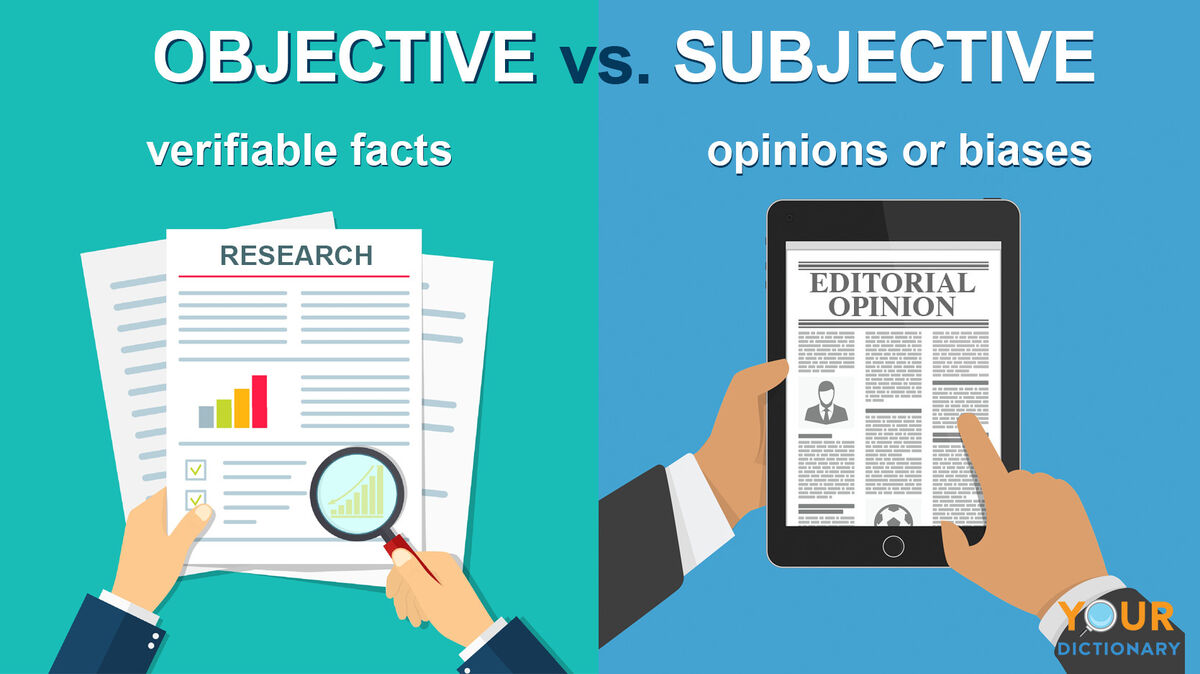
Unlike objective language, which aims to present information in a neutral and unbiased manner, subjective language is inherently personal and reflects the speaker’s own thoughts and feelings. It is often used in informal settings, such as personal conversations, creative writing, and opinion pieces, where the expression of personal perspectives is valued.
Characteristics of Subjective Language
Some key characteristics of subjective language include:
- Use of personal pronouns:Subjective language often uses personal pronouns such as “I,” “me,” and “my” to express the speaker’s own perspective.
- Use of emotive language:Subjective language frequently employs emotive language, such as adjectives and adverbs that convey strong emotions or feelings.
- Use of value judgments:Subjective language often includes value judgments, which express the speaker’s opinions or beliefs about something.
- Use of figurative language:Subjective language may use figurative language, such as metaphors and similes, to create vivid images and convey personal experiences.
Examples of Subjective Language
Examples of subjective language include:
- “I believe that climate change is a serious threat to our planet.”
- “The movie was absolutely terrible; I hated it.”
- “She is the most beautiful woman I have ever seen.”
- “The food was delicious; I couldn’t get enough of it.”
Impact of Subjective Language
Subjective language can have a significant impact on communication and understanding. It can be used to persuade, influence, or evoke emotions in others. However, it is important to be aware of the potential impact of subjective language and to use it responsibly.
Ethical Considerations
There are ethical considerations to keep in mind when using subjective language. It is important to be honest and transparent about one’s own biases and perspectives, and to avoid using subjective language to deceive or manipulate others.
Characteristics of Subjective Language
Subjective language is characterized by its use of personal opinions, feelings, and judgments. This type of language is often used in everyday conversation, as well as in creative writing, such as poetry and fiction.
The key characteristics of subjective language include:
- Personal opinions: Subjective language often expresses the speaker’s or writer’s personal opinions. These opinions may be based on the speaker’s or writer’s experiences, beliefs, or values.
- Feelings: Subjective language can also be used to express the speaker’s or writer’s feelings. These feelings may be positive or negative, and they may be about a variety of topics, such as people, places, or things.
- Judgments: Subjective language can also be used to make judgments about people, places, or things. These judgments may be based on the speaker’s or writer’s personal opinions or feelings.
These characteristics of subjective language can impact the interpretation of text in several ways. First, subjective language can make it difficult to determine the author’s intended meaning. This is because the author’s personal opinions, feelings, and judgments may not be shared by the reader.
Second, subjective language can make it difficult to evaluate the accuracy of a text. This is because the author’s personal opinions, feelings, and judgments may not be based on facts.
Finally, subjective language can make it difficult to determine the purpose of a text. This is because the author’s personal opinions, feelings, and judgments may not be relevant to the reader’s interests.
Impact on Interpretation
The use of subjective language can have a significant impact on the interpretation of text. This is because subjective language is often open to multiple interpretations, depending on the reader’s own personal opinions, feelings, and judgments.
For example, consider the following sentence:
The movie was great.
This sentence is subjective because it expresses the speaker’s personal opinion about the movie. The reader may not agree with the speaker’s opinion, and they may have their own interpretation of the movie.
The use of subjective language can also make it difficult to determine the author’s intended meaning. This is because the author’s personal opinions, feelings, and judgments may not be clear to the reader.
For example, consider the following sentence:
The government is doing a good job.
This sentence is subjective because it expresses the speaker’s personal opinion about the government. The reader may not agree with the speaker’s opinion, and they may have their own interpretation of the government’s performance.
The use of subjective language can also make it difficult to evaluate the accuracy of a text. This is because the author’s personal opinions, feelings, and judgments may not be based on facts.
For example, consider the following sentence:
Climate change is a hoax.
This sentence is subjective because it expresses the speaker’s personal opinion about climate change. The reader may not agree with the speaker’s opinion, and they may have their own interpretation of the evidence on climate change.
Subjective language is language that expresses the speaker’s opinions, feelings, or beliefs. It is often used in persuasive writing, such as advertising or political speeches. Language is important because it allows us to communicate our thoughts and ideas with others.
It also allows us to express our emotions and to connect with others on a personal level. Subjective language can be a powerful tool for communication, but it is important to use it responsibly.
The use of subjective language can also make it difficult to determine the purpose of a text. This is because the author’s personal opinions, feelings, and judgments may not be relevant to the reader’s interests.
For example, consider the following sentence:
You should vote for me.
This sentence is subjective because it expresses the speaker’s personal opinion about who the reader should vote for. The reader may not agree with the speaker’s opinion, and they may have their own interpretation of the candidates and their policies.
Types of Subjective Language
Subjective language is a type of language that expresses personal opinions, feelings, or beliefs. It is often used in everyday conversation, as well as in writing and other forms of communication.
There are several different types of subjective language, including:
- Opinions: Expressions of personal beliefs or judgments.
- Feelings: Expressions of emotions or sensations.
- Values: Expressions of what is considered important or desirable.
- Preferences: Expressions of what is liked or preferred.
- Beliefs: Expressions of what is considered to be true or factual.
It is important to recognize subjective language in communication because it can help us to:
- Understand the perspectives of others.
- Avoid misunderstandings.
- Make more informed decisions.
- Communicate more effectively.
Purpose of Subjective Language
Subjective language serves specific purposes in writing, influencing readers’ interpretations and evoking emotional responses. Writers employ subjective language for various reasons, including:
Expression of Personal Perspectives
- To convey personal opinions, feelings, and experiences
- To share unique insights and interpretations
- To establish a connection with readers on an emotional level
Persuasion and Influence
- To persuade readers to adopt a particular viewpoint
- To influence their thoughts, feelings, and actions
- To create a sense of urgency or evoke a desired emotional response
Literary Expression
- To enhance the vividness and impact of storytelling
- To create imagery and evoke sensory experiences
- To express complex emotions and psychological states
While subjective language can be effective in achieving these purposes, it also comes with potential benefits and drawbacks:
Benefits
- Enhances reader engagement and emotional connection
- Allows for personal expression and creativity
- Can be used to persuade and influence effectively
Drawbacks
- Can lead to biased or inaccurate information
- May hinder objective analysis and critical thinking
- Can be misinterpreted or misunderstood by readers
Bias in Subjective Language
Subjective language, by its very nature, carries the potential for bias. Bias can influence the interpretation of text by introducing a slanted perspective or favoring a particular viewpoint.
Types of Bias in Subjective Language
- Confirmation bias:The tendency to seek out and interpret information that confirms existing beliefs or biases.
- Negativity bias:The tendency to focus on negative aspects of a situation or person, often leading to unfair or biased judgments.
- Framing bias:The way in which information is presented can influence how it is perceived and interpreted, leading to biased conclusions.
Impact of Bias on Interpretation
Bias in subjective language can have a significant impact on how a text is interpreted. It can lead to:
- Misunderstandings:Biased language can create misunderstandings by conveying a distorted or incomplete view of a situation.
- Unfair judgments:Bias can lead to unfair or inaccurate judgments, as it may not fully consider all relevant perspectives.
- Polarization:Biased language can contribute to polarization by reinforcing existing biases and making it difficult to find common ground.
It is important to be aware of the potential for bias in subjective language and to critically evaluate the sources of information to ensure that they are not biased or slanted towards a particular viewpoint.
Using Subjective Language Effectively
Using subjective language effectively in writing requires careful consideration of the audience, purpose, and ethical implications. By understanding the power of subjective language to evoke emotions and persuade, writers can harness its potential while avoiding bias and prejudice.
Tips for Using Subjective Language Effectively
- Consider the audience:Tailor the language to resonate with the target audience’s values, beliefs, and experiences.
- Align with the purpose:Use subjective language to enhance emotional impact, persuade, or create a desired atmosphere.
- Use vivid and sensory language:Engage the reader’s senses and emotions by using descriptive words that appeal to sight, sound, smell, taste, and touch.
- Be specific and concrete:Avoid vague or abstract language. Use specific examples, anecdotes, and details to make the writing more relatable and impactful.
- Use emotive language:Incorporate words and phrases that evoke strong emotions, such as joy, sadness, anger, or fear.
- Use rhetorical devices:Employ figures of speech, such as metaphors, similes, and personification, to create vivid imagery and enhance persuasion.
- Be aware of bias:Recognize and avoid using subjective language that perpetuates stereotypes, prejudices, or discriminatory attitudes.
- Use responsibly:Subjective language should be used judiciously to avoid overwhelming the reader or compromising the credibility of the writing.
Examples of Effective and Ineffective Use of Subjective Language, What is subjective language
Effective:“The vibrant colors of the sunset painted the sky with hues of gold, crimson, and azure.” Ineffective:“The sunset was pretty.” Effective:“The pungent aroma of freshly brewed coffee wafted through the air, promising a comforting and invigorating experience.” Ineffective:“The coffee smelled good.”
Ethical Implications of Using Subjective Language
The use of subjective language raises ethical considerations, particularly in contexts where objectivity and impartiality are crucial. Writers must be mindful of the potential for bias and manipulation and use subjective language responsibly to avoid misleading or exploiting readers.
Table: Key Tips for Using Subjective Language Effectively
| Tip | Description ||—|—|| Consider the audience | Tailor language to resonate with the target audience’s values, beliefs, and experiences. || Align with the purpose | Use subjective language to enhance emotional impact, persuade, or create a desired atmosphere.
|| Use vivid and sensory language | Engage the reader’s senses and emotions by using descriptive words that appeal to sight, sound, smell, taste, and touch. || Be specific and concrete | Avoid vague or abstract language. Use specific examples, anecdotes, and details to make the writing more relatable and impactful.
|| Use emotive language | Incorporate words and phrases that evoke strong emotions, such as joy, sadness, anger, or fear. || Use rhetorical devices | Employ figures of speech, such as metaphors, similes, and personification, to create vivid imagery and enhance persuasion.
|| Be aware of bias | Recognize and avoid using subjective language that perpetuates stereotypes, prejudices, or discriminatory attitudes. || Use responsibly | Subjective language should be used judiciously to avoid overwhelming the reader or compromising the credibility of the writing.
|
Resources for Further Learning
- Scribbr: Subjective Language
- Purdue Online Writing Lab: APA Formatting and Style Guide
- American Psychological Association: APA Style
Examples of Subjective Language in Literature

Subjective language is a powerful tool that authors use to shape the reader’s perception of the characters, setting, and events in a literary work. By using words and phrases that express personal opinions, feelings, or judgments, authors can create a vivid and immersive experience for the reader.
Examples of Subjective Language in Literary Texts
The following table provides examples of subjective language in literary texts, along with the specific words or phrases used, the context in which they appear, and their intended effect:| Word or Phrase | Context | Intended Effect ||—|—|—|| “The wind howled like a banshee.” | A storm is raging.
| Creates a sense of fear and foreboding. || “The sun smiled down on the meadow.” | A beautiful day. | Creates a sense of peace and tranquility. || “The old man’s eyes were filled with wisdom.” | The old man is wise.
| Creates a sense of respect and admiration. || “The girl’s laughter was like music to my ears.” | The girl’s laughter is beautiful. | Creates a sense of joy and happiness. || “The food was absolutely disgusting.” | The food is bad.
| Creates a sense of disgust and revulsion. |
Examples of Subjective Language in Journalism
Journalism plays a vital role in shaping public opinion and informing society. However, it is crucial for journalists to maintain objectivity and avoid using subjective language that can potentially bias reporting. Subjective language in journalism can be found in various forms, including the use of opinions, emotions, and personal experiences.
The ethical implications of using subjective language in news reporting are significant. It can undermine the credibility of the journalist and the news organization, as well as erode public trust in the media. Moreover, subjective language can lead to biased reporting, which can have a negative impact on the public’s understanding of important issues.
Examples of Subjective Language in Journalistic Writing
- Opinions:“The government’s new policy is a disaster.”
- Emotions:“I am outraged by the recent events.”
- Personal experiences:“In my experience, the new law has been ineffective.”
It is important for journalists to be aware of the potential pitfalls of using subjective language and to strive for objectivity in their reporting. By doing so, they can ensure that the public receives accurate and unbiased information.
Examples of Subjective Language in Marketing

Subjective language plays a significant role in marketing by influencing consumer perceptions, evoking emotions, and shaping purchase decisions. Let’s delve into examples of subjective language in marketing and its impact on consumer behavior.
Identifying Subjective Language in Marketing Materials
Identifying subjective language in marketing materials involves recognizing words and phrases that convey opinions, emotions, or personal experiences rather than objective facts. Common examples include adjectives, adverbs, superlatives, and emotive language.
Influence of Subjective Language on Consumer Behavior
Subjective language can significantly influence consumer behavior by:
- Creating a positive or negative impression:Adjectives and adverbs can evoke positive or negative feelings towards a product or service, shaping consumer attitudes.
- Triggering emotional responses:Emotive language appeals to consumers’ emotions, creating a connection and influencing purchase decisions.
- Persuading consumers:Superlatives and comparative statements can persuade consumers by highlighting the superiority of a product or service over competitors.
Writing Subjective Language to Promote a Product or Service
To write effective subjective language for marketing purposes, focus on creating a compelling and persuasive message that resonates with the target audience. Use vivid imagery, sensory language, and emotional appeals to connect with consumers on a personal level.
Subjective language, which conveys personal opinions and emotions, stands in contrast to objective language, which presents facts and information. The language spoken in France, for example, is predominantly French, as indicated in this article. Subjective language, however, would describe the beauty of the French language or the emotions it evokes.
Table of Subjective Language Types and Effects
| Type | Examples | Potential Effects |
|---|---|---|
| Adjectives | Amazing, incredible, unique | Create positive or negative impressions, evoke emotions |
| Adverbs | Absolutely, truly, undoubtedly | Emphasize or diminish claims, build credibility |
| Superlatives | Best, most innovative, top-rated | Persuade consumers, create a sense of urgency |
| Emotive Language | Exciting, heartwarming, thrilling | Trigger emotional responses, connect with consumers |
Tips for Avoiding Subjective Language in Marketing Communications
- Focus on facts and data:Provide concrete evidence and statistics to support claims rather than relying solely on subjective opinions.
- Use specific and measurable language:Avoid vague or ambiguous terms that can be interpreted differently.
- Avoid generalizations and exaggerations:Be cautious about making sweeping statements or overstating claims.
- Consider the target audience:Tailor the language to the specific needs and preferences of the target audience.
- Seek feedback and review:Get feedback from colleagues or external reviewers to ensure the language is clear and effective.
Examples of Subjective Language in Social Media
Social media platforms have become ubiquitous, providing individuals with avenues to express their opinions, share experiences, and connect with others. Within these online spaces, subjective language plays a significant role in shaping interactions and influencing perceptions.
Subjective language in social media posts often manifests through the use of emotive words, personal anecdotes, and value judgments. These linguistic choices reflect the individual’s subjective perspective and aim to elicit specific responses or convey particular emotions.
Impact of Subjective Language on Online Interactions
The use of subjective language in social media can have a profound impact on online interactions. On the one hand, it can foster a sense of connection and shared experiences among users who identify with similar perspectives. By expressing personal opinions and emotions, individuals can create a sense of community and engage in meaningful discussions.
On the other hand, subjective language can also lead to misunderstandings, conflict, and polarization. When individuals encounter opinions that differ from their own, they may become defensive or dismissive, leading to heated exchanges and a breakdown in communication.
Examples of Subjective Language in Political Discourse

Political discourse is often characterized by the use of subjective language, which can be used to evoke emotions, sway public opinion, and distort the truth. It is important to be aware of the use of subjective language in political discourse so that we can make informed decisions about the information we are presented with.
Identifying Subjective Language in Political Speeches and Debates
Subjective language is often used in political speeches and debates to make arguments more persuasive. This language can be used to evoke emotions, such as fear, anger, or hope, and to make the speaker’s position seem more reasonable or appealing.
For example, a politician might use the term “radical” to describe their opponent, which is a subjective term that is designed to evoke negative emotions.
Explaining How Subjective Language Can Shape Public Opinion
Subjective language can have a significant impact on public opinion. This is because it can be used to frame issues in a way that is favorable to the speaker’s position. For example, a politician might use the term “tax relief” to describe their proposed tax cuts, which is a subjective term that is designed to make the cuts seem more appealing.
Writing a Short Essay on the Role of Subjective Language in Political Discourse
In a short essay, you could discuss the role of subjective language in political discourse. You could start by defining subjective language and explaining how it is used in political speeches and debates. You could then discuss the impact that subjective language can have on public opinion.
Finally, you could offer some tips for identifying and evaluating subjective language in political discourse.
Table of Examples
| Speech/Debate | Subjective Language | Effect on Public Opinion ||—|—|—|| Example 1 | “Our opponents are radical socialists who want to destroy our way of life.” | This language is designed to evoke fear and anger and make the speaker’s opponent seem unreasonable.
|| Example 2 | “We need to pass tax relief now to help working families.” | This language is designed to make the speaker’s proposed tax cuts seem appealing. |
Key Points
“Subjective language can be used to evoke emotions and sway public opinion.””It is important to be aware of the use of subjective language in political discourse.””Subjective language can be used to distort the truth and mislead the public.”
Examples of Subjective Language in Academic Writing: What Is Subjective Language
Subjective language in academic writing can be found in various forms, including opinions, emotions, and personal experiences. It is important to distinguish between subjective and objective language, as objectivity is a crucial principle in academic writing.
Subjective language can introduce bias and hinder the clarity and credibility of academic work. To maintain objectivity, writers should strive to use objective language that is based on facts, evidence, and logical reasoning.
Identifying Subjective Language
Here are some examples of subjective phrases commonly used in academic writing:
- “I believe”
- “In my opinion”
- “It seems to me”
- “I feel that”
- “This is a good example”
- “This is an important point”
These phrases express personal opinions or emotions and should be avoided in formal academic writing.
Objective Alternatives to Subjective Phrases
To maintain objectivity, writers can replace subjective phrases with more objective alternatives:
| Subjective Phrase | Objective Alternative |
|---|---|
| “I believe” | “It is believed that” |
| “In my opinion” | “According to some researchers” |
| “It seems to me” | “It has been observed that” |
| “I feel that” | “It is suggested that” |
| “This is a good example” | “This example illustrates the point” |
| “This is an important point” | “This point is significant because” |
Using Objective Language in Academic Writing
To demonstrate the use of objective language in academic writing, consider the following example:
Subjective:“The author’s argument is flawed because it is based on personal anecdotes.”
Objective:“The author’s argument lacks empirical evidence and relies solely on personal experiences.”
The objective version removes the subjective opinion and focuses on the lack of evidence.
Ethical Implications of Subjective Language
Using subjective language in academic writing can have ethical implications. It can undermine the credibility of the work, mislead readers, and introduce bias. Researchers have an ethical obligation to present their findings objectively and avoid personal opinions that could compromise the integrity of their work.
Methods for Analyzing Subjective Language
Analyzing subjective language in text involves various methods, each with its strengths and limitations. Understanding these methods is crucial for accurately identifying and interpreting subjective expressions.
Manual Analysis
Manual analysis involves human readers examining and classifying text based on predefined criteria. This method allows for in-depth interpretation and consideration of context, but it can be time-consuming and subjective.
Machine Learning
Machine learning algorithms can be trained to identify subjective language using features such as word frequency, sentiment analysis, and part-of-speech tagging. This method can automate the analysis process, but it may require a large dataset and careful model selection.
Lexical Analysis
Lexical analysis involves identifying and classifying words based on their semantic content. Subjective words can be identified using dictionaries or predefined lists of subjective terms. This method is relatively simple to implement, but it may miss context-dependent subjectivity.
Syntactic Analysis
Syntactic analysis examines the grammatical structure of text to identify subjective expressions. Subjective constructions, such as modal verbs and hedges, can be indicative of subjective language. This method can provide insights into the writer’s stance, but it may not capture all forms of subjectivity.
Discourse Analysis
Discourse analysis examines the broader context of text, including its genre, audience, and purpose. This method can help identify subjective language that is influenced by the discourse community or the writer’s agenda. It is a comprehensive approach, but it can be complex and time-consuming.
Tools for Analyzing Subjective Language
A range of computational tools are available for analyzing subjective language. These tools leverage natural language processing (NLP) techniques to extract insights from text data, enabling researchers and practitioners to identify and measure the presence of subjective language in various contexts.
Sentiment Analysis Tools
Sentiment analysis tools are designed to detect the overall sentiment expressed in a text. They typically assign a sentiment score to the text, ranging from positive to negative, based on the presence of sentiment-laden words and phrases. These tools can be used to gauge the overall tone of a text, identify customer sentiment in reviews, or track sentiment over time.
How to use:Most sentiment analysis tools are available as APIs or software packages. To use them, you need to provide the text as input and specify the desired output (e.g., sentiment score, positive/negative classification). The tool will then process the text and return the results.
Example:A company can use a sentiment analysis tool to analyze customer reviews of its products. This can help them understand the overall sentiment towards their products and identify areas for improvement.
Emotion Analysis Tools
Emotion analysis tools go beyond sentiment analysis by identifying the specific emotions expressed in a text. They typically classify emotions into categories such as joy, sadness, anger, fear, and surprise. These tools can be useful for understanding the emotional impact of a text, identifying emotional patterns in conversations, or analyzing the emotional content of marketing campaigns.
How to use:Emotion analysis tools typically require training on a dataset of labeled emotions. Once trained, the tool can be used to analyze new text data and identify the emotions expressed.
Example:A researcher can use an emotion analysis tool to analyze the emotional content of social media posts related to a particular event. This can help them understand the emotional reactions of the public to the event.
Text Classification Tools
Text classification tools assign a predefined category or label to a text based on its content. These tools can be used to classify text into categories such as positive/negative, spam/not spam, or topic-specific categories. They can be useful for organizing and filtering text data, identifying relevant content, or performing sentiment analysis.
How to use:Text classification tools typically require training on a dataset of labeled text. Once trained, the tool can be used to classify new text data into the predefined categories.
Example:A news organization can use a text classification tool to classify news articles into different categories, such as politics, sports, or business. This can help them organize their content and make it easier for readers to find relevant articles.
Applications of Subjective Language Analysis
Subjective language analysis has numerous applications across various fields, providing valuable insights into human sentiment, opinions, and attitudes.
Marketing and Advertising
- Identifying customer preferences and sentiment towards products or services.
- Analyzing feedback and reviews to improve customer satisfaction.
- Optimizing marketing campaigns based on target audience’s subjective responses.
Political Science
- Understanding public opinion and sentiment towards political candidates and policies.
- Analyzing political discourse to identify biases and persuasive techniques.
- Monitoring social media for political sentiment and predicting election outcomes.
Social Sciences
- Examining social media trends and舆论 to identify cultural shifts and societal concerns.
- Analyzing subjective language in online forums and discussion groups to understand group dynamics and collective beliefs.
- Evaluating the effectiveness of social interventions and programs based on subjective feedback.
Healthcare
- Analyzing patient feedback to improve healthcare experiences and patient satisfaction.
- Monitoring social media for patient sentiment towards treatments and medications.
- Identifying potential mental health issues based on subjective language patterns in online interactions.
Customer Service
- Analyzing customer complaints and feedback to identify areas for improvement.
- Identifying and addressing customer emotions and sentiment to enhance customer experience.
- Training customer service representatives to effectively handle subjective language and emotions.
Helpful Answers
What are the key characteristics of subjective language?
Subjective language is often characterized by the use of personal opinions, emotions, judgments, and values. It can be identified by words and phrases that express feelings, beliefs, or experiences.
What are the different types of subjective language?
Subjective language can be categorized into various types, including opinions, feelings, values, preferences, and beliefs. Each type expresses a personal perspective or judgment.
Why is it important to recognize subjective language?
Recognizing subjective language is essential for effective communication as it helps us understand the perspectives of others, avoid misunderstandings, make informed decisions, and communicate more effectively.
How can subjective language be used effectively?
Subjective language can be used effectively to convey personal experiences, emotions, and opinions. However, it is important to use it responsibly, considering the potential impact on communication and understanding.
