What language do Swiss people speak? This intriguing question invites us on a linguistic journey through Switzerland, a nation renowned for its breathtaking landscapes and rich cultural heritage. Switzerland’s multilingual tapestry, woven from four official languages and numerous dialects, reflects the country’s fascinating history and diverse population.
From the bustling streets of Zurich to the serene shores of Lake Geneva, language plays a vital role in shaping the Swiss identity and fostering a sense of unity amidst diversity. This exploration into the languages of Switzerland promises to unveil the intricacies of a nation where linguistic harmony prevails.
Introduction: What Language Do Swiss People Speak
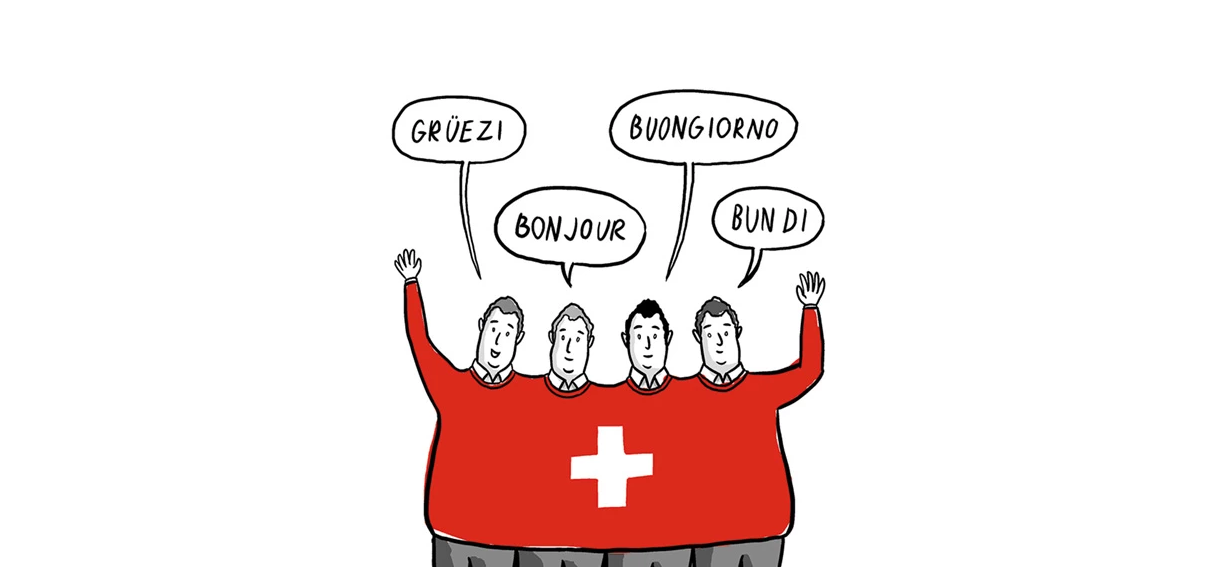
This analysis examines the linguistic landscape of Switzerland, focusing on the diverse languages spoken by its inhabitants. The primary research question guiding this study is: What are the various languages spoken in Switzerland, and how do they contribute to the country’s linguistic diversity?
Switzerland’s unique geographical location at the crossroads of Europe has shaped its linguistic landscape. As a result, the country is home to a rich tapestry of languages, reflecting its historical, cultural, and political influences.
Official Languages
Switzerland has four official languages: German, French, Italian, and Romansh. German is the most widely spoken, followed by French, Italian, and Romansh. These languages are used in government, education, and public life throughout the country.
- German: Spoken by approximately 63% of the population, German is the dominant language in the northern and eastern parts of Switzerland.
- French: Spoken by about 23% of the population, French is primarily used in the western part of the country, particularly in the cantons of Geneva, Vaud, and Neuchâtel.
- Italian: Spoken by around 8% of the population, Italian is mainly found in the southern canton of Ticino and the southern valleys of Graubünden.
- Romansh: Spoken by less than 1% of the population, Romansh is a minority language recognized as an official language at the federal level. It is primarily spoken in the southeastern canton of Graubünden.
Official Languages of Switzerland

Switzerland is a multilingual country with four official languages: German, French, Italian, and Romansh. This multilingualism is a result of Switzerland’s history and political context.
Switzerland was formed in 1291 as a confederation of three cantons: Uri, Schwyz, and Unterwalden. These cantons were all German-speaking. Over time, Switzerland expanded to include cantons that spoke French, Italian, and Romansh. The Swiss constitution of 1848 established German, French, and Italian as the official languages of Switzerland.
Official Languages and Regions
The four official languages of Switzerland are spoken in different regions of the country:
- German is spoken in the north, central, and eastern parts of Switzerland.
- French is spoken in the west and southwest.
- Italian is spoken in the south.
- Romansh is spoken in the southeast.
Regional Language Distribution

Switzerland is a multilingual country with four official languages: German, French, Italian, and Romansh. The distribution of these languages across the country is influenced by a variety of factors, including geography, history, and immigration.
Geographical Distribution
The geographical distribution of languages in Switzerland is largely determined by the country’s topography. The German-speaking region is located in the north and east, and includes the cantons of Zurich, Bern, Lucerne, and St. Gallen. The French-speaking region is located in the west, and includes the cantons of Geneva, Vaud, and Neuchâtel.
The Italian-speaking region is located in the south, and includes the canton of Ticino. The Romansh-speaking region is located in the southeastern canton of Graubünden.
Historical Factors
The historical development of Switzerland has also played a role in the distribution of languages. The German-speaking region was originally part of the Holy Roman Empire, while the French-speaking region was part of the Kingdom of Burgundy. The Italian-speaking region was part of the Duchy of Milan, and the Romansh-speaking region was part of the Raetian Alps.
Immigration
Immigration has also had an impact on the distribution of languages in Switzerland. In recent years, there has been a significant increase in the number of immigrants from non-German-speaking countries, such as Italy, Spain, and Portugal. This has led to an increase in the number of people who speak Italian, Spanish, and Portuguese in Switzerland.
Language Statistics
According to the 2010 census, the most widely spoken language in Switzerland is German, which is spoken by 63.7% of the population. French is spoken by 22.6% of the population, Italian by 8.3%, and Romansh by 0.5%. The remaining 5.9% of the population speaks other languages, such as English, Spanish, and Portuguese.
Visual Representation
The following map shows the distribution of languages in Switzerland:
[Insert map here]
Summary
The distribution of languages in Switzerland is influenced by a variety of factors, including geography, history, and immigration. The German-speaking region is located in the north and east, the French-speaking region is located in the west, the Italian-speaking region is located in the south, and the Romansh-speaking region is located in the southeastern canton of Graubünden.
– Demographics and Language Proficiency
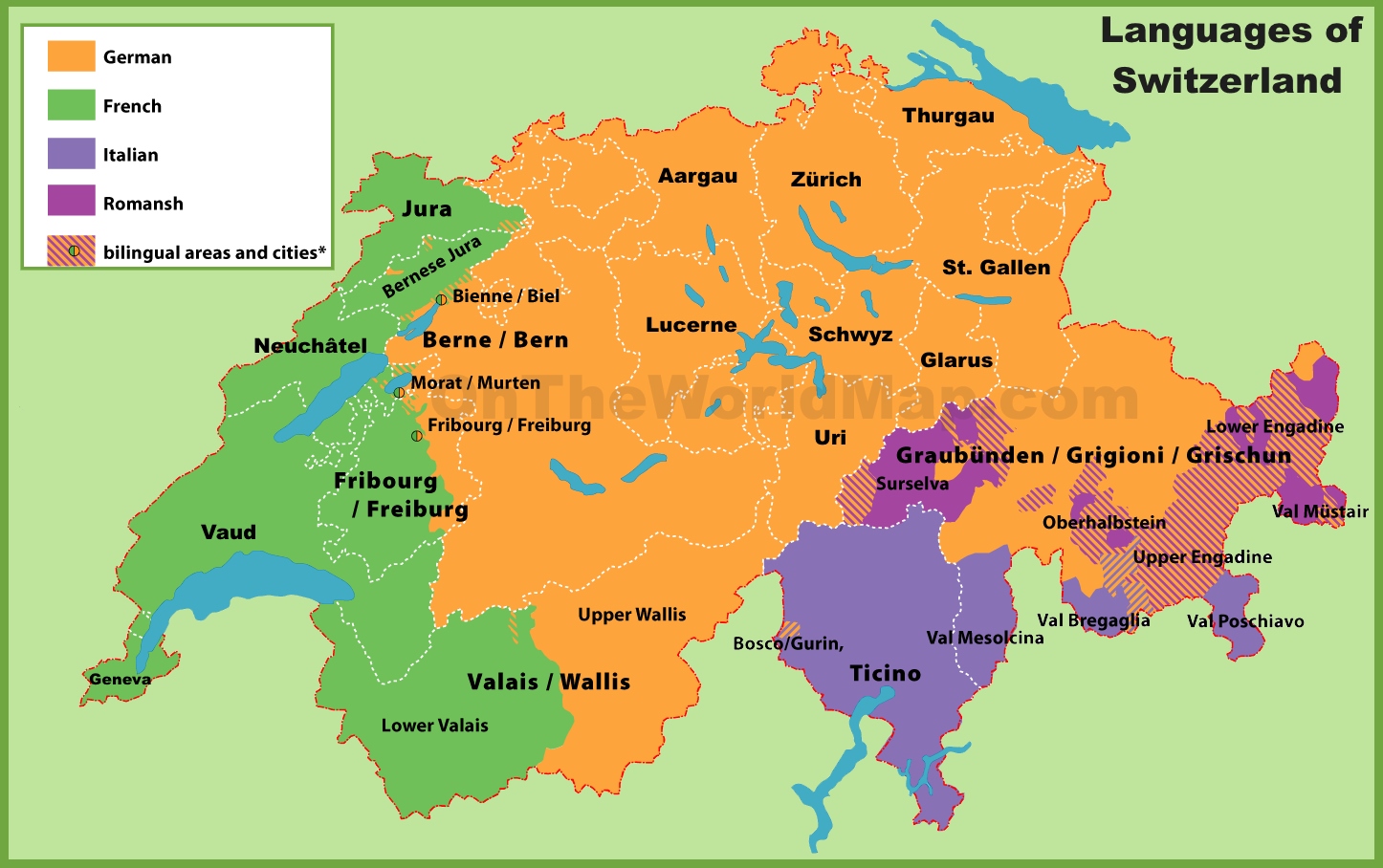
In Switzerland, language proficiency varies depending on the official language spoken. According to the 2018 census, 62.6% of the population speaks German, 22.9% speaks French, 8.4% speaks Italian, and 0.5% speaks Romansh as their main language. The remaining 5.6% of the population speaks other languages.
The level of proficiency in each official language also varies. In general, German speakers have the highest level of proficiency in their language, followed by French and Italian speakers. Romansh speakers have the lowest level of proficiency in their language.
There are a number of factors that influence language proficiency in Switzerland. These include education, immigration, and regional variation.
Education is a major factor in language proficiency. In Switzerland, children are required to learn at least two official languages in school. This helps to ensure that they have a good foundation in both languages.
Immigration is another factor that influences language proficiency. Switzerland has a long history of immigration, and this has led to a diversity of languages being spoken in the country. Immigrants often learn the official language of their new country in order to integrate into society.
Regional variation is also a factor in language proficiency. In some regions of Switzerland, one official language is more dominant than the others. For example, German is the dominant language in the German-speaking cantons, while French is the dominant language in the French-speaking cantons.
Table: Language Proficiency in Switzerland
| Language | Percentage of speakers | Level of proficiency |
|---|---|---|
| German | 62.6% | High |
| French | 22.9% | Medium |
| Italian | 8.4% | Medium |
| Romansh | 0.5% | Low |
Key Findings
The key findings of this section are as follows:
- German is the most widely spoken official language in Switzerland.
- The level of proficiency in each official language varies, with German speakers having the highest level of proficiency and Romansh speakers having the lowest level of proficiency.
- Education, immigration, and regional variation are all factors that influence language proficiency in Switzerland.
Language Use in Education
The Swiss education system plays a vital role in preserving and promoting the linguistic diversity of the country. The language used in education is determined by the region and the level of education.
At the primary and secondary levels, education is typically conducted in the local language of the canton. In German-speaking cantons, German is the primary language of instruction, while in French-speaking cantons, French is used. In Italian-speaking cantons, Italian is the main language of instruction, and in Romansh-speaking areas, Romansh is used.
The primary language spoken in Switzerland is Swiss German, a dialect of German. The country has four official languages: German, French, Italian, and Romansh. Notably, Paraguay also has two official languages: Spanish and Guaraní. What are the official languages of Paraguay ?
However, other languages may also be taught as foreign languages.
At the tertiary level, most universities offer courses in multiple languages. The choice of language depends on the university, the program, and the level of study. Some universities offer programs exclusively in one language, while others offer programs in multiple languages.
Challenges and Opportunities
Teaching in multiple languages presents both challenges and opportunities. One of the main challenges is the need for teachers to be proficient in multiple languages. This can be particularly challenging in regions where there are multiple official languages, such as in the canton of Bern, where both German and French are official languages.
Another challenge is the need to accommodate students who come from different linguistic backgrounds. This can be particularly challenging in classes where students have different levels of proficiency in the language of instruction. However, teaching in multiple languages also presents opportunities.
It can help students to develop their language skills and to become more culturally aware.
Additionally, it can help to promote understanding and cooperation between different linguistic communities. Overall, the use of multiple languages in the Swiss education system is a reflection of the country’s linguistic diversity and its commitment to preserving and promoting its cultural heritage.
Language Use in Government and Business
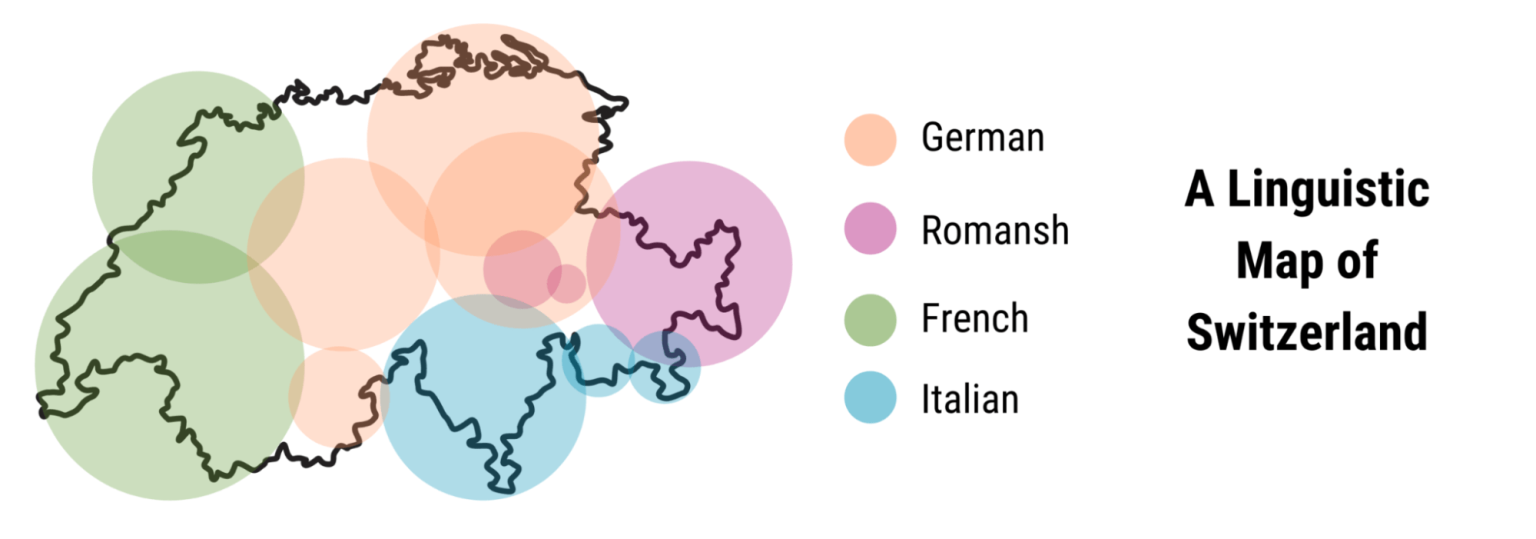
In Switzerland, the official languages are used extensively in government and business settings, reflecting the country’s multilingual character. Each language plays a significant role in communication, legal documentation, and decision-making processes.
In government, all official documents, laws, and regulations are published in the three official languages, ensuring accessibility and transparency for all citizens. Correspondence between government agencies and the public is also conducted in these languages. Public announcements and outreach campaigns are disseminated in all three languages, ensuring that information reaches all linguistic communities.
Legal Documents and Contracts
Legal documents, such as contracts, agreements, and court proceedings, are drafted and executed in the official language of the canton or region where the transaction takes place. This ensures clarity and accuracy in legal matters, minimizing the potential for misunderstandings.
Official Correspondence and Communication
Official correspondence between government agencies and businesses is typically conducted in the official language of the canton or region where the business is located. This facilitates effective communication and ensures that all parties involved have a clear understanding of the matters being discussed.
Public Announcements and Outreach
Public announcements and outreach campaigns are disseminated in all three official languages to ensure that information reaches all linguistic communities. This is particularly important in emergency situations or when conveying critical information to the public.
Impact of Multilingualism on Communication and Decision-Making
Multilingualism in government and business settings has a significant impact on communication and decision-making. On the one hand, it enhances clarity and accuracy of information, as documents and communications are available in multiple languages, reducing the risk of misunderstandings. On the other hand, it can also pose challenges, particularly in situations where not all parties are fluent in all three official languages.
To mitigate these challenges, government and business entities often employ interpreters and translation services to facilitate communication and ensure inclusivity. Additionally, training and language proficiency programs are implemented to enhance the linguistic skills of employees.
Inclusivity and Accessibility
Multilingualism promotes inclusivity and accessibility in government and business settings. By providing information and services in multiple languages, it ensures that all citizens have equal access to information and can participate fully in civic and economic life.
Potential for Miscommunication and Misunderstandings
Despite the efforts to ensure clarity and accuracy, multilingualism can also introduce the potential for miscommunication and misunderstandings. This is particularly true in situations where translations are not accurate or when individuals have limited proficiency in certain languages.
Leveraging Multilingualism to Improve Communication and Collaboration
Multilingualism can be leveraged to improve communication and collaboration in government and business settings. By fostering a multilingual environment, organizations can tap into a wider pool of talent, expand their reach to diverse markets, and enhance their global competitiveness.
For example, in international business negotiations, multilingual employees can serve as bridges between different linguistic and cultural backgrounds, facilitating effective communication and reducing the risk of misunderstandings.
– Analyze the role of language in shaping Swiss identity.

Language plays a crucial role in shaping Swiss identity, reflecting the country’s diverse linguistic and cultural heritage. The four official languages of Switzerland—German, French, Italian, and Romansh—represent distinct regional and cultural identities.
Language serves as a symbol of belonging and a source of pride for Swiss citizens. It shapes their sense of community, values, and traditions. The preservation and promotion of each official language is considered essential for maintaining the country’s cultural diversity and national unity.
Historical and Cultural Factors
The development of the Swiss linguistic landscape has been influenced by historical events and cultural exchanges. The country’s geographic location at the crossroads of Europe has led to the convergence of different languages and cultures. German-speaking regions in the north and east were influenced by Germanic tribes, while French-speaking regions in the west were shaped by Roman influence.
Italian-speaking regions in the south were influenced by neighboring Italy, and Romansh, a Romance language, is spoken in the southeastern canton of Graubünden.
Language in Education, Media, and Government
Language plays a significant role in education, media, and government in Switzerland. Primary and secondary education is conducted in the official language of the respective canton, ensuring that students are proficient in their regional language. Higher education institutions offer courses in multiple languages, reflecting the country’s multilingualism.
The media landscape in Switzerland is diverse, with newspapers, radio, and television programs available in all four official languages. This allows citizens to access information and entertainment in their preferred language, fostering a sense of inclusivity.
In Switzerland, the official languages are German, French, Italian, and Romansh. These languages are used in various aspects of life, including education, government, and media. Interestingly, markup languages, such as HTML and XML, play a crucial role in representing and structuring digital documents.
These languages define the structure and layout of web pages, allowing us to access information in a user-friendly and organized manner. In the context of Swiss languages, markup languages enable the creation of multilingual websites and documents, catering to the diverse linguistic needs of the Swiss population.
In government, all official documents and parliamentary debates are conducted in German, French, and Italian. Romansh is used in the canton of Graubünden. This multilingualism ensures that all citizens have equal access to government services and political participation.
Impact of Globalization and Migration
Globalization and migration have had a significant impact on the Swiss linguistic landscape. Increased international mobility and economic integration have led to the growth of English as a lingua franca in business and academia. While the official languages remain dominant, English is increasingly used in international communication and as a common language among non-native speakers.
Migration has also brought new languages and cultures to Switzerland. The country has a large population of immigrants and foreign workers, who speak a variety of languages. This has led to the emergence of multilingual communities and the need for language support services for non-native speakers.
Language as a Source of Unity and Division
While language can be a source of pride and unity in Switzerland, it can also be a source of division. Historical tensions between different language groups have occasionally surfaced, particularly during periods of political or economic instability. The promotion of multilingualism and the recognition of all official languages as equal are essential for maintaining social cohesion and fostering a sense of national unity.
Case Study: The Language Controversy in the Canton of Valais
The canton of Valais, located in the southwestern part of Switzerland, is a multilingual region where French and German are both official languages. In recent years, there has been a growing debate about the use of French in the canton’s schools.
Some German-speaking residents have argued that French should not be mandatory in German-speaking areas, while French-speaking residents have emphasized the importance of maintaining bilingualism in the canton.
This case study illustrates the complex relationship between language, identity, and politics in Switzerland. It highlights the need for ongoing dialogue and compromise to ensure that all linguistic communities feel valued and respected.
Language and Technology
Technology has significantly influenced language use in Switzerland. The widespread adoption of the internet and social media has facilitated communication across linguistic borders and increased exposure to different languages.
Social media platforms such as Facebook and Twitter allow users to connect with people from diverse linguistic backgrounds. This exposure to different languages and cultures has led to increased awareness and appreciation of linguistic diversity.
Online Translation Tools
Online translation tools have also played a significant role in bridging language barriers. Services like Google Translate and DeepL provide instant translations of text and speech, making it easier for people to communicate in different languages.
While these tools are not perfect and can sometimes produce inaccurate translations, they have nevertheless improved communication between people who do not share a common language.
Language Learning Apps
Language learning apps have become increasingly popular in Switzerland. These apps provide structured lessons and interactive exercises that make it easier for people to learn new languages.
The availability of these apps has lowered the barriers to language learning and has encouraged more people to acquire additional languages, contributing to the multilingualism of Swiss society.
– Provide specific examples of language policies implemented by the Swiss government.
The Swiss government has implemented several language policies to promote linguistic diversity and preserve minority languages. One such policy is the “Language Law” of 1996, which recognizes the national languages of German, French, Italian, and Romansh and establishes their use in official communication and education.
Another example is the “Federal Act on Regional Languages” of 1997, which provides financial support to organizations and initiatives that promote and preserve minority languages. This act has been instrumental in supporting the survival of languages such as Romansh, which is spoken by a small population in the southeastern canton of Graubünden.
Minority Languages
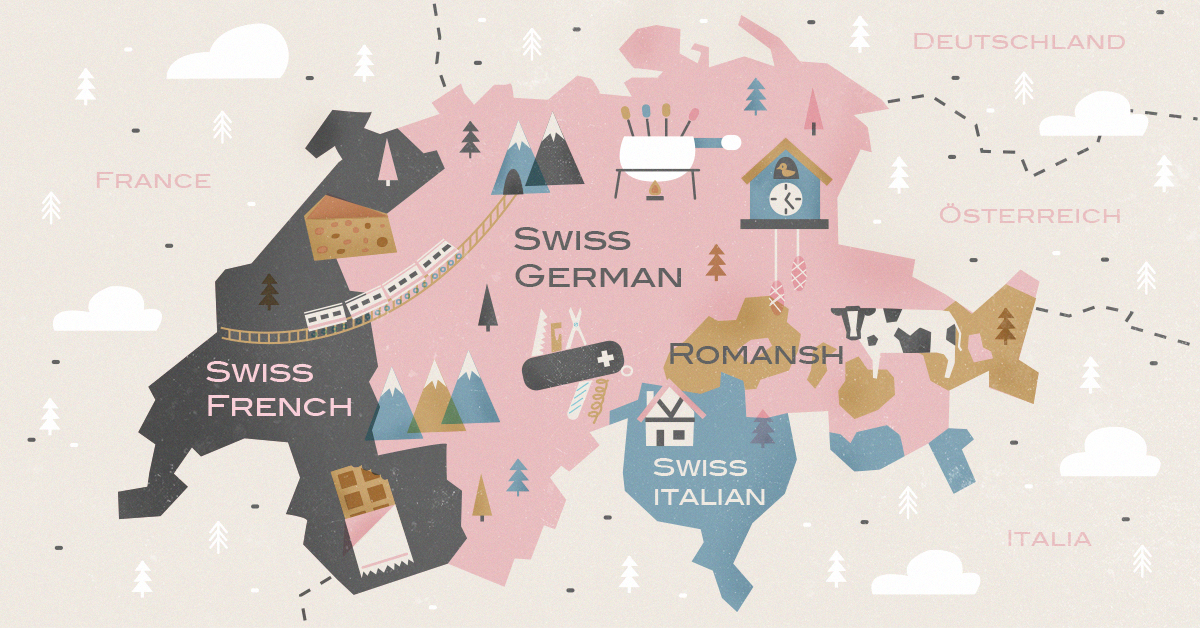
Switzerland is home to a diverse range of minority languages, reflecting the country’s rich cultural heritage and linguistic diversity. These languages include:
Romansh
A Romance language spoken in the southeastern canton of Graubünden, with approximately 60,000 speakers.
Italian
Spoken in the southern canton of Ticino and some parts of Graubünden, with around 250,000 speakers.
French
Spoken in the western cantons of Geneva, Vaud, Neuchâtel, and Jura, with over 1 million speakers.
Yiddish
A Germanic language spoken by a small Jewish community in Switzerland, with approximately 15,000 speakers.
Challenges and Opportunities
Minority language communities in Switzerland face various challenges, including:
Language Loss
The influence of dominant languages, such as German, French, and Italian, can lead to a decline in the use of minority languages.
Limited Resources
Minority languages often have fewer resources available for education, media, and cultural activities compared to majority languages.
Social Stigma
Speakers of minority languages may face discrimination or prejudice, which can hinder their language use.Despite these challenges, there are also opportunities for minority language communities:
Cultural Preservation
Minority languages play a vital role in preserving cultural identity and traditions.
Language Revitalization
Efforts are underway to revitalize minority languages through education, language promotion, and community engagement.
Tourism
Minority languages can attract tourists interested in experiencing Switzerland’s diverse linguistic heritage.
Language Contact and Influence

The Swiss languages have been influenced by various neighboring languages throughout history. The most significant influences come from German, French, and Italian, which are the official languages of Switzerland. The contact between these languages has led to borrowing, code-switching, and other forms of language contact.
Borrowing
Borrowing is the adoption of words or phrases from one language into another. Swiss German, for example, has borrowed many words from French, such as “billet” (ticket) and “garçon” (waiter). Swiss French has also borrowed words from German, such as “Käs” (cheese) and “Strasse” (street).
Code-switching
Code-switching is the practice of switching between two or more languages within a single conversation. This is common in Switzerland, where people often switch between their native language and one of the other official languages. For example, a Swiss German speaker might switch to French when speaking to a French-speaking person.
Other Forms of Language Contact
In addition to borrowing and code-switching, there are other forms of language contact that have influenced the Swiss languages. These include:
- Substrate influence:The influence of a language that was previously spoken in an area on the language that is currently spoken there.
- Superstrate influence:The influence of a language that is spoken by a dominant group on a language that is spoken by a subordinate group.
- Adstrate influence:The influence of a language that is spoken in a neighboring area on a language that is spoken in another area.
These forms of language contact have all contributed to the development of the Swiss languages and have helped to shape their unique characteristics.
Language Variation
Switzerland’s official languages exhibit regional and social variations, including dialects, accents, and slang. These variations arise from factors like geography, culture, history, and social class, influencing communication and understanding within society.
Dialects
Dialects are regional variations of a language that differ in pronunciation, grammar, and vocabulary. In Switzerland, each official language has its own dialects, such as Swiss German dialects in German-speaking regions and Romand dialects in French-speaking regions.
Accents
Accents are regional or social variations in pronunciation. In Switzerland, different accents exist within each official language, reflecting geographical or socio-economic factors. For instance, the Bernese accent in Swiss German differs from the Zurich accent.
Slang
Slang is informal language used by particular groups or subcultures. In Switzerland, slang varies across regions and social groups, often reflecting youth culture or specific professions. For example, “chlöpfe” is a Swiss German slang term for “to chat”.
Factors Contributing to Variation, What language do swiss people speak
Geography: Geographical isolation and barriers contribute to dialect formation, as communities develop unique linguistic features over time.
Culture: Cultural differences, such as traditions and customs, can influence language use and vocabulary.
History: Historical events and migrations shape language variation, introducing new words and phrases.
Social Class: Social class and status can influence language use, with different groups adopting distinct linguistic styles.
Impact on Communication
Language variation can impact communication within society. Dialects and accents can create barriers to understanding, especially in formal settings or between individuals from different regions. Slang may also hinder communication if it is unfamiliar to certain audiences.
Standardization and Language Policy
Standardization efforts aim to establish a common form of a language for official use. In Switzerland, Standard German and Standard French are used in education, government, and media. Language policy plays a role in shaping language variation by promoting certain forms of a language while potentially marginalizing others.
Language Variation and Identity
Language variation is closely tied to social identity and cultural diversity. Dialects and accents can serve as markers of regional or group affiliation, fostering a sense of belonging. Language variation also contributes to Switzerland’s linguistic and cultural richness.
Future of Language in Switzerland
The future of language use in Switzerland is a complex issue with many variables to consider. However, there are some general trends that can be observed.
One trend is the increasing use of English as a lingua franca. This is due to a number of factors, including the globalization of the economy, the rise of the internet, and the increasing mobility of people.
Another trend is the decline of minority languages. This is due to a number of factors, including the assimilation of minority groups into the dominant culture, the lack of support for minority languages in education and the media, and the difficulty of finding employment in minority language communities.
Language Distribution
It is likely that these trends will continue in the future. English is likely to become even more dominant as a lingua franca, and minority languages are likely to continue to decline.
However, there are also some factors that could lead to a change in these trends. For example, the Swiss government has taken steps to support minority languages, and there is a growing awareness of the importance of linguistic diversity.
It is therefore difficult to say with certainty what the future of language use in Switzerland will be. However, it is likely that the trends that are currently being observed will continue, with some possible changes.
Language Proficiency
It is likely that the proficiency in English will continue to increase, while proficiency in minority languages will continue to decline.
However, there are some factors that could lead to a change in these trends. For example, the Swiss government has taken steps to support minority languages, and there is a growing awareness of the importance of linguistic diversity.
It is therefore difficult to say with certainty what the future of language proficiency in Switzerland will be. However, it is likely that the trends that are currently being observed will continue, with some possible changes.
Language Policy
It is likely that the Swiss government will continue to support minority languages. However, it is also likely that the government will continue to promote the use of English as a lingua franca.
It is difficult to say with certainty what the future of language policy in Switzerland will be. However, it is likely that the government will continue to take a balanced approach, supporting both minority languages and the use of English as a lingua franca.
FAQ Insights
What are the four official languages of Switzerland?
German, French, Italian, and Romansh
Which language is most widely spoken in Switzerland?
Swiss German (a dialect of German)
Is English commonly spoken in Switzerland?
Yes, English is widely understood and spoken in tourist areas and business settings.
What is the significance of Romansh in Switzerland?
Romansh is a minority language spoken in the southeastern canton of Graubünden and is recognized as a national language.
