What language in finland – Delving into the linguistic landscape of Finland, this comprehensive overview explores the intricate tapestry of languages that have shaped the nation’s cultural identity. From the official languages to regional dialects and the influence of foreign tongues, this exploration unravels the fascinating story of what language is spoken in Finland.
Finland’s linguistic heritage is a testament to its rich history and diverse population. The official languages, Finnish and Swedish, reflect the country’s historical ties to both the East and the West. Regional languages, such as Sami and Karelian, add to the linguistic diversity, showcasing the enduring presence of indigenous cultures.
Furthermore, the proficiency in foreign languages, particularly English, underscores Finland’s global outlook and interconnectedness.
Official Languages
Finland has two official languages: Finnish and Swedish. Finnish is the native language of the majority of the population, while Swedish is spoken by a minority of about 5%. Both languages have equal legal status and are used in all official contexts.
Language Legislation in Finland
The language legislation in Finland has a long history. The first language law was passed in 1863 and it established Finnish and Swedish as the official languages of the country. The law has been amended several times since then, most recently in 2003.
The current language law states that Finnish and Swedish are the official languages of Finland. The law also protects the rights of the Swedish-speaking minority, including the right to education in their own language and the right to use their language in official contexts.
Swedish-Speaking Population
The Swedish-speaking population of Finland is a significant linguistic and cultural minority, with a rich history and a distinct identity. Historically, Swedish was the dominant language of the elite and the educated class in Finland, and it continues to play an important role in the country’s social and cultural life.
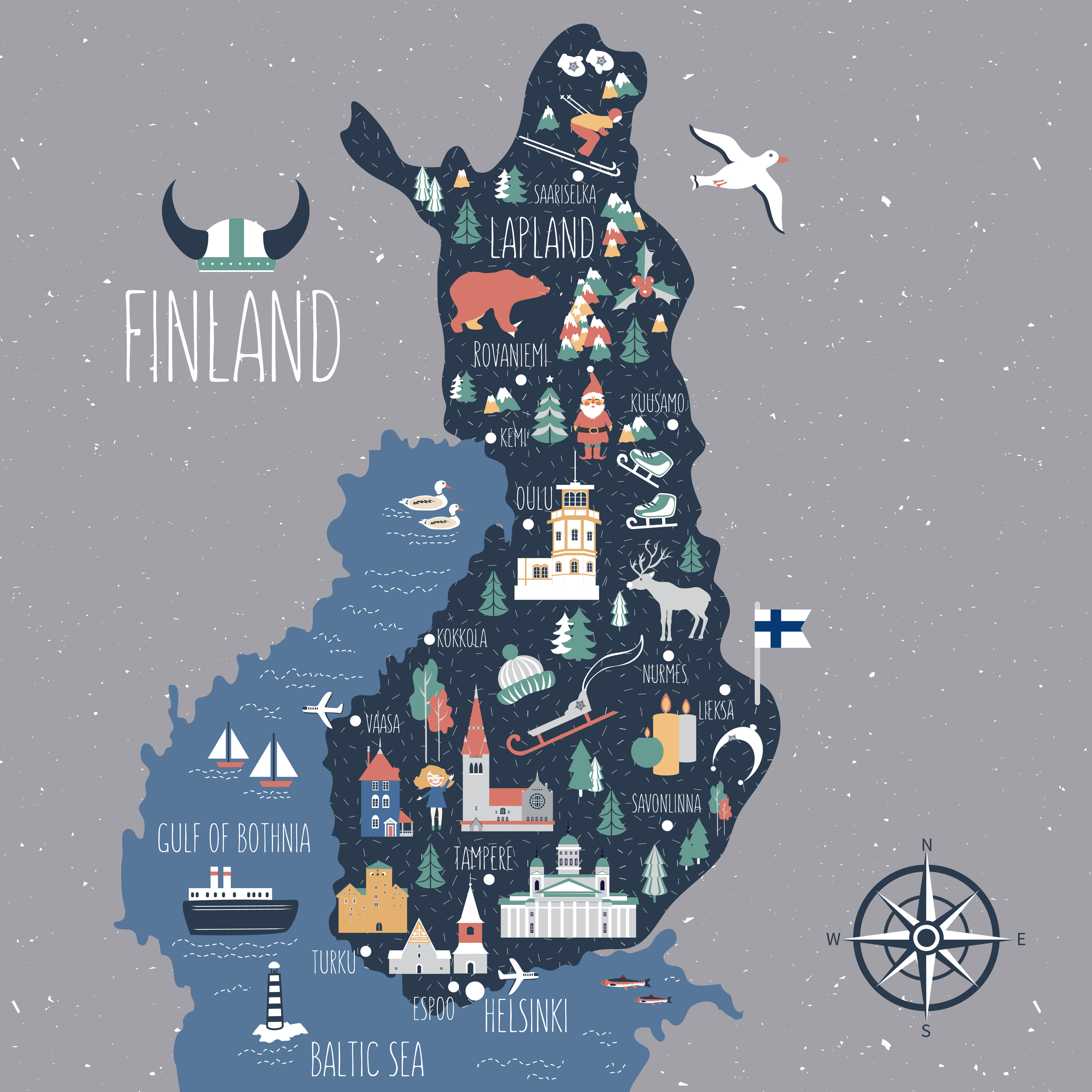
The Swedish-speaking population is concentrated in the southwestern archipelago and coastal areas of Finland, particularly in the Åland Islands, where Swedish is the sole official language. Swedish speakers also form significant minorities in the cities of Helsinki, Turku, and Vaasa.
Geographic Distribution
The Swedish-speaking population is concentrated in the following regions:
- Åland Islands: Swedish is the sole official language.
- Southwestern Finland: Swedish is spoken by a significant minority in the coastal areas.
- Helsinki: Swedish is spoken by a large minority in the capital city.
- Turku: Swedish is spoken by a significant minority in the city and surrounding areas.
- Vaasa: Swedish is spoken by a significant minority in the city and surrounding areas.
Demographics
According to the 2020 census, there are approximately 290,000 Swedish speakers in Finland, representing about 5.2% of the population. The Swedish-speaking population is aging, with a median age of 45 compared to 42 for the Finnish-speaking population.
The Swedish-speaking population has a higher level of education and income than the Finnish-speaking population. Swedish speakers are also more likely to be employed in the public sector and in higher-level occupations.
Regional Languages: What Language In Finland

In addition to Finnish and Swedish, several regional languages are spoken in Finland. These languages play a significant role in the cultural identity and heritage of the regions where they are spoken.
Sami Languages
The Sami languages are a group of Uralic languages spoken by the Sami people, an indigenous population living in the northernmost parts of Finland, Norway, Sweden, and Russia. There are nine recognized Sami languages, of which three are spoken in Finland: Northern Sami, Inari Sami, and Skolt Sami.
These languages are spoken by around 10,000 people in Finland, primarily in the Lapland region.
Karelian
Karelian is a Uralic language spoken by the Karelian people, an ethnic group living in the eastern part of Finland and in the Republic of Karelia in Russia. There are around 5,000 Karelian speakers in Finland, primarily in the North Karelia region.
Cultural Importance and Preservation Efforts
Regional languages in Finland hold great cultural importance as they represent the unique heritage and identity of the regions where they are spoken. They are often associated with traditional practices, folklore, and cultural traditions. Efforts are being made to preserve and revitalize these languages through various initiatives, including language education programs, cultural events, and media productions.
| Language | Geographical Distribution | Number of Speakers | Current Status |
|---|---|---|---|
| Northern Sami | Lapland region | ~5,000 | Endangered |
| Inari Sami | Lapland region | ~300 | Critically endangered |
| Skolt Sami | Lapland region | ~300 | Critically endangered |
| Karelian | North Karelia region | ~5,000 | Vulnerable |
“Preserving regional languages in Finland is crucial for maintaining cultural diversity, fostering a sense of identity, and ensuring the transmission of cultural heritage to future generations. It is a complex task that requires collaboration between language communities, educators, and policymakers.”
Ministry of Education and Culture, Finland
Foreign Language Proficiency
Finland has a high level of foreign language proficiency, with over 80% of the population able to speak at least one foreign language. The most commonly spoken foreign languages in Finland are Swedish, English, German, Russian, and French. The proficiency levels of these languages vary depending on the individual’s age, education level, and occupation.
There are a number of factors that influence language acquisition in Finland. These include the country’s history, geography, and education system. Finland has a long history of contact with other countries, which has led to the adoption of many foreign words and phrases into the Finnish language.
The country’s geography also plays a role in language acquisition, as it is bordered by Sweden, Norway, and Russia, all of which have their own distinct languages.
The Finnish education system places a strong emphasis on foreign language learning. All students are required to study at least one foreign language in school, and many students choose to study multiple languages. The most popular foreign languages learned in Finnish schools are Swedish, English, German, and French.
Factors Influencing Language Acquisition
The following are some of the factors that influence language acquisition in Finland:
- Age: Younger people are generally more proficient in foreign languages than older people.
- Education level: People with higher levels of education are generally more proficient in foreign languages than those with lower levels of education.
- Occupation: People who work in international businesses or who travel frequently are generally more proficient in foreign languages than those who do not.
- Motivation: People who are motivated to learn a foreign language are generally more successful at doing so.
Most Popular Foreign Languages Learned
The following are the most popular foreign languages learned in Finland:
- Swedish
- English
- German
- Russian
- French
Language Education

The Finnish education system places a strong emphasis on language teaching, recognizing its importance for communication, cognitive development, and global citizenship. The approach to language education in Finland is characterized by early immersion, communicative language teaching methods, and the use of technology to enhance learning.
From an early age, children in Finland are exposed to multiple languages through immersion programs in preschools and kindergartens. This early exposure helps them develop a natural feel for languages and lays the foundation for future language learning.
Methods and Resources
In primary and secondary schools, language teaching focuses on developing students’ communicative competence. Teachers use a variety of methods to engage students in meaningful language use, including role-playing, simulations, and project-based learning. Authentic materials, such as newspapers, magazines, and videos, are incorporated into lessons to make learning relevant and engaging.
Technology plays a significant role in language education in Finland. Interactive whiteboards, language learning apps, and online resources are widely used to support and enhance traditional teaching methods. Students have access to a range of digital tools that allow them to practice their language skills outside of the classroom.
Effectiveness
The Finnish language education system has been highly successful in promoting language proficiency. Finnish students consistently rank among the top performers in international language assessments, such as the Programme for International Student Assessment (PISA). This success can be attributed to the early start, the emphasis on communicative competence, and the use of effective teaching methods and resources.
Comparison to Other European Countries
Compared to other European countries, the Finnish language education system stands out for its early immersion approach and its focus on communicative language teaching. In many other countries, language learning begins later and often emphasizes grammar and vocabulary memorization. The Finnish approach, with its emphasis on early exposure and meaningful use of language, has been shown to be more effective in promoting language proficiency.
“The Finnish language education system is a model for other countries. Its early immersion approach and focus on communicative language teaching have proven to be highly effective in promoting language proficiency.”- Dr. Anna-Riitta Asikainen, Professor of Education, University of Helsinki
Provide specific examples of regional dialects and their distinct features.
Finland has several regional dialects, each with its own unique features. Some of the most well-known dialects include:
- The Savo dialect, spoken in the eastern and central parts of Finland, is known for its distinctive intonation and the use of the word “mä” for “I”.
- The Häme dialect, spoken in the southwestern part of Finland, is characterized by its use of the word “minä” for “I” and its tendency to drop the final vowel in words.
- The Ostrobothnian dialect, spoken in the western part of Finland, is known for its use of the word “mie” for “I” and its tendency to use long vowels.
– Examine the role of language in shaping Finnish identity and culture, focusing on the unique characteristics of the Finnish language and its influence on Finnish thought and worldview.
The Finnish language is a unique and fascinating language that has played a vital role in shaping Finnish identity and culture. Its unique characteristics, such as its agglutinative structure and vowel harmony, have influenced Finnish thought and worldview in profound ways.The agglutinative structure of Finnish allows for the creation of complex words by adding suffixes to a root word.
This allows for a great deal of precision and nuance in expression. For example, the word “talo” means “house,” but by adding the suffix “-ssa” (in), one can create the word “talossa,” which means “in the house.” This allows for a more precise description of location than would be possible in a language with a less agglutinative structure.Vowel HarmonyVowel harmony is another unique characteristic of the Finnish language.
This means that the vowels in a word must all be either front vowels (e, i, y, ä, ö) or back vowels (a, o, u). This creates a sense of euphony and musicality in the language.Influence on Finnish Thought and WorldviewThe unique characteristics of the Finnish language have influenced Finnish thought and worldview in a number of ways.
The agglutinative structure of the language encourages a logical and analytical approach to thinking. The vowel harmony creates a sense of beauty and harmony in the language, which is reflected in Finnish culture.
– Analyze the impact of technology on language use in Finland.
The rapid development of technology has profoundly influenced various aspects of our lives, including the way we use language. In Finland, technology has significantly impacted language use, communication patterns, and language acquisition.
One of the most significant effects of technology on language use in Finland is the rise of social media. Social media platforms like Facebook, Twitter, and Instagram have become ubiquitous, providing individuals with new ways to connect and communicate. This has led to the emergence of new language norms and conventions, such as the use of hashtags, emojis, and abbreviated language.
Role of Social Media, Translation Tools, and Language Learning Apps
Social media has also facilitated the spread of regional dialects and minority languages. Individuals can now easily connect with others who share their linguistic heritage, regardless of their geographic location. This has helped to revitalize and preserve minority languages that were once at risk of extinction.
Translation tools and language learning apps have also played a significant role in shaping language use in Finland. These tools have made it easier for individuals to communicate with people from different linguistic backgrounds. They have also facilitated the acquisition of new languages, both for native Finnish speakers and for immigrants.
Language and the Arts

Language is an integral part of Finnish culture and finds its expression in various art forms. The unique characteristics of the Finnish language, with its rich vocabulary and complex grammar, have significantly influenced Finnish literature, music, and other art forms.In Finnish literature, language plays a crucial role in shaping the narrative and conveying emotions.
Finnish authors have skillfully utilized the language’s nuances to create vivid imagery, explore complex themes, and express the unique Finnish worldview. The works of renowned authors like Aleksis Kivi, Eino Leino, and Väinö Linna exemplify the power of language in shaping literary expression.
Language in Music
In Finnish music, language is not merely a means of conveying lyrics but an integral part of the musical experience. Finnish composers have ingeniously employed the language’s rhythm and melody to create distinctive musical compositions. The works of Jean Sibelius, for instance, are known for their evocative use of Finnish folk melodies and rhythms.
Language in Other Art Forms
Beyond literature and music, language also plays a vital role in other Finnish art forms. In theater, for example, the Finnish language’s expressive qualities lend themselves well to creating compelling performances that resonate with audiences. In visual arts, language can be incorporated as a medium of expression, adding depth and meaning to paintings, sculptures, and other artworks.
Language and the Media
Language plays a crucial role in Finnish media, shaping the way information is disseminated, consumed, and interpreted. Finnish media outlets prioritize the use of the Finnish language, ensuring accessibility and fostering a sense of national identity.
The Finnish media landscape encompasses a diverse range of print, broadcast, and online platforms. Newspapers and magazines, such as Helsingin Sanomat and Iltalehti, serve as primary sources of written news and information. Broadcast media, including Yle and MTV, offer a wide array of news, entertainment, and educational programming.
Influence on Language Use and Societal Attitudes
The media’s use of language significantly influences societal attitudes towards language. By promoting standard Finnish, the media reinforces its status as the official language and perpetuates its use in formal and informal settings.
Moreover, the media can shape perceptions of regional dialects and minority languages. Positive portrayals of these varieties can foster inclusivity and respect for linguistic diversity, while negative depictions can contribute to marginalization.
Language and the Economy
Language plays a vital role in the economic development of Finland. Proficiency in multiple languages enhances international trade, tourism, and investment opportunities. Language barriers, on the other hand, can hinder economic growth and development. The Finnish government actively promotes language proficiency, recognizing its positive impact on the economy.
Multilingualism brings economic benefits and has the potential to drive Finland’s future economic growth.
Economic Implications of Language Proficiency
Enhances international trade
Proficiency in foreign languages enables Finnish businesses to communicate effectively with global partners, expand into new markets, and increase export opportunities.
Promotes tourism
Finland’s tourism industry benefits from multilingualism, as it allows for effective communication with international visitors, enhancing their travel experiences and encouraging return visits.
Attracts foreign investment
A skilled multilingual workforce and a supportive language environment make Finland an attractive destination for foreign investors, fostering economic growth and job creation.
Impact of Language Barriers
Hinders international trade
Language barriers can create obstacles in communication, leading to misunderstandings, delays, and lost business opportunities in international trade.
Limits tourism potential
Language barriers can discourage international visitors from exploring Finland, impacting the tourism industry’s revenue and growth potential.
Restricts foreign investment
Language barriers can make it challenging for foreign investors to operate effectively in Finland, potentially deterring investment and economic development.
Government’s Role in Promoting Language Proficiency
Educational initiatives
The Finnish government invests in language education programs to enhance the language skills of its citizens, recognizing the economic benefits of multilingualism.
Language training programs
Government-supported language training programs provide opportunities for individuals to develop their language proficiency, increasing their employability and economic competitiveness.
Finnish is the official language of Finland, spoken by the majority of the population. However, there are also significant minorities of speakers of Swedish, Sami, and Russian. In contrast, South Africa has eleven official languages, reflecting its diverse cultural heritage.
Just as the complex linguistic landscape of South Africa mirrors its history of colonialism and immigration, the linguistic diversity of Finland reflects its own unique historical and cultural influences.
Language policies
The government implements language policies that promote the use of multiple languages in various sectors, such as education, healthcare, and the workplace, fostering a multilingual environment.
Economic Benefits of Multilingualism
Increased job opportunities
In Finland, the official languages are Finnish and Swedish. However, other languages are also spoken, including Sami languages and Russian. In contrast, the official language of Colombia is Spanish, but other languages are also spoken, such as Quechua and Aymara.
What language do they speak in Columbia ? The answer is Spanish, but there are many other languages spoken in the country.
Multilingual individuals have access to a wider range of job opportunities, both domestically and internationally, enhancing their earning potential.
Improved cognitive abilities
Studies have shown that multilingualism enhances cognitive abilities, such as problem-solving, critical thinking, and memory, which are valuable assets in the modern economy.
Cultural understanding
Multilingualism promotes cultural understanding and appreciation, fostering global collaboration and innovation, which can lead to economic benefits.
– Analyze the role of language in attracting international tourists to Finland.
Language plays a crucial role in attracting international tourists to Finland. It enables effective communication, facilitates cultural understanding, and enhances the overall tourism experience. Finland’s unique language, Finnish, and its commitment to multilingualism contribute to the country’s appeal as a tourist destination.
Language as a Bridge for Communication
Effective communication is essential for a positive tourism experience. Finnish language services, such as translation, interpretation, and language assistance, help bridge language barriers and allow tourists to interact with locals, access information, and navigate the country seamlessly. This enhances their satisfaction and encourages them to return for future visits.
– Discuss the challenges and opportunities related to language for immigrants in Finland, including the impact on social integration, employment, and education.

Immigrants in Finland face numerous challenges and opportunities related to language. These include:
Challenges
- Difficulty in learning Finnish due to its unique grammar and pronunciation.
- Limited job opportunities due to insufficient Finnish language proficiency.
- Barriers to social integration caused by language differences.
- Educational disparities due to language difficulties.
Opportunities
- Improved social integration through language acquisition.
- Enhanced employment prospects with Finnish language proficiency.
- Access to education and training opportunities.
- Preservation of cultural identity through language maintenance.
Impact on Social Integration
Language plays a crucial role in social integration. Immigrants who speak Finnish fluently are more likely to:
- Form social connections with native Finns.
- Participate in community activities.
- Feel a sense of belonging to Finnish society.
Impact on Employment
Finnish language proficiency is essential for employment in Finland. Employers often require a high level of fluency in Finnish, especially in customer-facing roles and professional occupations. Immigrants who lack sufficient Finnish language skills may face limited job opportunities and lower earning potential.
Impact on Education
Language is also a key factor in education. Immigrants who struggle with Finnish may experience difficulties in understanding course materials, participating in class discussions, and completing assignments. This can lead to lower academic achievement and reduced educational opportunities.
Language and Social Inclusion
Language plays a crucial role in promoting social inclusion and reducing inequality in Finland. The Finnish government has made significant efforts to ensure equal access to language services and education for all citizens, regardless of their linguistic background.
Language Services
The Finnish government provides a range of language services to support social inclusion, including:
- Interpretation and translation services in healthcare, education, and other public services
- Language classes for immigrants and refugees
- Support for minority language communities
Education
Education is another key area where language plays a vital role in promoting social inclusion. The Finnish education system provides support for students from linguistic minority backgrounds, including:
- Bilingual education programs
- Support for students learning Finnish as a second language
- Intercultural education initiatives
Language and the Future
The future of languages in Finland is a complex and multifaceted issue, influenced by a range of factors including demographic changes, globalization, and technological advancements. These factors are likely to have a significant impact on language policy and language preservation in the years to come.
Demographic Changes
One of the most significant demographic changes affecting the future of languages in Finland is the aging population. As the number of elderly people increases, so too does the number of people who speak only Finnish. This is because older generations are less likely to have learned Swedish or other foreign languages.
As a result, the proportion of the population that is monolingual in Finnish is likely to increase in the future.
Another demographic change that is likely to affect the future of languages in Finland is the increasing number of immigrants. Immigrants often bring their own languages to Finland, which can lead to increased linguistic diversity. However, immigrants also face pressure to learn Finnish in order to integrate into Finnish society.
This can lead to a decrease in the use of immigrant languages over time.
Globalization
Globalization is another factor that is likely to have a significant impact on the future of languages in Finland. Globalization leads to increased contact between people from different linguistic backgrounds. This can lead to the spread of new languages and the decline of others.
In Finland, globalization is likely to lead to an increase in the use of English, as it is the lingua franca of international communication.
Technological Advancements, What language in finland
Technological advancements are also likely to have a significant impact on the future of languages in Finland. Technology can be used to promote language learning and to make it easier for people to communicate across linguistic barriers. For example, machine translation and other language-learning technologies can help people to learn new languages more quickly and easily.
Additionally, social media and other online platforms can be used to connect people from different linguistic backgrounds and to promote the use of minority languages.
FAQ Explained
What are the official languages of Finland?
Finnish and Swedish are the two official languages of Finland.
What regional languages are spoken in Finland?
Sami languages, such as Northern Sami, Inari Sami, and Skolt Sami, as well as Karelian, are recognized regional languages in Finland.
What is the most popular foreign language learned in Finland?
English is the most widely studied foreign language in Finland, with a high level of proficiency among the population.
