What language was spoken in ancient Rome? This seemingly simple question opens up a fascinating exploration into the heart of one of history’s most influential civilizations. From its humble origins in the Italian peninsula to its eventual status as the lingua franca of the Roman Empire, the Latin language played a pivotal role in shaping Western civilization.
Join us as we embark on a journey through the history, evolution, and legacy of the language that shaped the world.
Latin, the language of the ancient Romans, was a vibrant and dynamic tongue that evolved over centuries, leaving an enduring mark on languages and cultures far beyond the borders of the Roman Empire. Its influence can be seen in everything from the Romance languages of Europe to the legal and scientific terminology used around the globe.
Official Language of Ancient Rome
The official language of ancient Rome was Latin, a member of the Italic branch of the Indo-European language family. Latin became the official language of the Roman Republic and later the Roman Empire due to the political and military dominance of Rome.
Latin had a profound impact on the development of Western civilization. It was the language of government, law, literature, and religion in the Roman Empire. It also became the liturgical language of the Roman Catholic Church and influenced the development of many other European languages, such as French, Spanish, Italian, and Portuguese.
Spread and Decline of Latin
As the Roman Empire expanded, Latin spread throughout Europe and North Africa. It became the lingua franca of the Roman Empire and was used for communication between different peoples and cultures.
However, with the fall of the Western Roman Empire in the 5th century CE, Latin began to decline. It was gradually replaced by the various Romance languages that evolved from it. However, Latin continued to be used as the language of scholarship and diplomacy in Europe until the 19th century.
Evolution of the Latin Language
The Latin language, the root of many modern European languages, has a rich and complex history. Its origins can be traced back to the Italic branch of the Indo-European language family, which also includes Greek, Sanskrit, and Celtic languages.
The earliest known form of Latin was spoken by the Latins, an Italic people who settled in the region of Latium, in central Italy, around the 10th century BC. Over time, Latin spread throughout the Italian peninsula, becoming the official language of the Roman Republic and later the Roman Empire.
The ancient Romans spoke Latin, which evolved into the Romance languages spoken today in Europe and the Americas. Interestingly, Montenegro, a country in southeastern Europe, shares a linguistic connection with ancient Rome. The official language of Montenegro is Montenegrin, a South Slavic language closely related to Serbian and Croatian.
Montenegrin has been influenced by various languages throughout history, including Latin, which was spoken in the region during the Roman Empire. This influence can be seen in the vocabulary and grammar of Montenegrin, which bears similarities to other Romance languages.
Despite these connections, Montenegrin remains a distinct language with its own unique characteristics, reflecting the rich linguistic history of the region.
Influence of Other Languages on Latin’s Evolution
Latin’s evolution was influenced by contact with other languages, including Etruscan, Greek, and Celtic. Etruscan, the language of the Etruscans, who ruled Etruria, north of Latium, had a significant impact on Latin’s phonology and vocabulary. Greek, the language of the Hellenistic world, also had a major influence on Latin, especially in the areas of literature, philosophy, and science.
Celtic languages, spoken by the Celtic peoples who lived in Gaul (modern-day France) and other parts of Europe, also influenced Latin, particularly in the areas of vocabulary and grammar.
In ancient Rome, the official language was Latin, which spread throughout the Roman Empire and influenced the development of many modern European languages. However, just as various languages are spoken in modern-day Morocco , including Arabic, Berber, and French, ancient Rome was home to a diverse range of languages spoken by its inhabitants, reflecting the empire’s vast geographical reach and cultural diversity.
Different Stages of Latin’s Development, What language was spoken in ancient rome
Latin underwent several stages of development over the course of its history.
- Classical Latin: This was the literary and official language of the Roman Republic and Empire, from the 3rd century BC to the 3rd century AD. Classical Latin is the language of Cicero, Virgil, and other great Roman writers.
- Vulgar Latin: This was the spoken language of the common people of the Roman Empire. It differed from Classical Latin in pronunciation, grammar, and vocabulary. Vulgar Latin is the ancestor of the Romance languages, such as Italian, Spanish, French, and Portuguese.
Regional Variations of Latin

As the Roman Empire expanded, Latin spread throughout its vast territories, giving rise to regional variations. These variations were influenced by several factors, including:
- Geographical isolation: Distant provinces had less contact with Rome and developed their own linguistic features.
- Contact with other languages: Latin interacted with local languages, borrowing words and grammatical structures.
- Political and administrative divisions: Different regions had different administrative and legal systems, which influenced the vocabulary and usage of Latin.
These regional variations had a significant impact on the development of Romance languages. The different dialects of Latin eventually evolved into distinct languages, such as Italian, French, Spanish, Portuguese, and Romanian.
Examples of Regional Variations
Some examples of regional variations in Latin include:
- Vulgar Latin:The spoken form of Latin used by the common people, which differed significantly from the classical Latin of literature.
- African Latin:The Latin spoken in North Africa, which developed distinctive features such as the use of the accusative case for the subject of a sentence.
- Gallic Latin:The Latin spoken in Gaul (modern-day France), which influenced the development of French and other Romance languages.
- Iberian Latin:The Latin spoken in the Iberian Peninsula (modern-day Spain and Portugal), which gave rise to Spanish, Portuguese, and Catalan.
These regional variations illustrate the diversity and adaptability of Latin as it spread throughout the Roman Empire, eventually giving birth to the Romance languages.
Explain the role of Latin as a lingua franca in the Roman Empire
Latin’s significance as a lingua franca in the vast Roman Empire cannot be overstated. It served as a crucial tool for communication, administration, and cultural exchange across diverse regions and populations.
Latin’s widespread adoption as a common language can be attributed to several factors, including its use in official documents, education, and trade. As the Roman Empire expanded, Latin became the language of administration and law, facilitating communication between officials and subjects across the empire.
Use in Different Regions and Social Classes
The extent of Latin’s use varied across regions and social classes. In urban centers like Rome, Latin was the dominant language of government, commerce, and education. However, in rural areas, local languages and dialects continued to be spoken alongside Latin.
Among the upper classes, Latin was the language of culture and education. Children of wealthy families were taught Latin from a young age, and it became the language of literature, philosophy, and science.
Impact on Other Languages and Cultures
Latin’s widespread use as a lingua franca had a profound impact on the development of other languages and cultures in the Roman Empire. Many local languages adopted Latin words and phrases, and some, like French, Spanish, and Italian, evolved directly from Latin.
Furthermore, Latin played a significant role in the spread of Christianity throughout the empire. The Bible was translated into Latin, and it became the official language of the Church, further solidifying Latin’s influence.
– Describe the influence of Greek on the Latin language, including the periods of time in which this influence was most significant.

Greek had a profound influence on Latin, especially during the Hellenistic period (323-146 BC), when Greece was the dominant cultural force in the Mediterranean world. Greek influence on Latin can be seen in the following areas:
- Vocabulary:Latin borrowed a large number of words from Greek, especially in the areas of philosophy, science, and art.
- Grammar:Latin adopted some Greek grammatical structures, such as the use of the accusative and infinitive construction.
- Syntax:Latin adopted some Greek syntactic structures, such as the use of the subjunctive mood to express purpose.
The influence of Greek on Latin was particularly strong in the early stages of the Latin language. As Latin developed, it began to incorporate more and more Greek elements. By the time of the Roman Empire, Latin had become a highly sophisticated language that was heavily influenced by Greek.
Specific examples of Greek loanwords and grammatical structures that were adopted into Latin.
Some specific examples of Greek loanwords that were adopted into Latin include:
- Philosophical terms: philosophia(philosophy), ethica(ethics), logica(logic)
- Scientific terms: mathematica(mathematics), physica(physics), geographia(geography)
- Artistic terms: musica(music), poesis(poetry), theatrum(theater)
Some specific examples of Greek grammatical structures that were adopted into Latin include:
- Accusative and infinitive construction:This construction is used to express purpose or result.
- Subjunctive mood:This mood is used to express a variety of meanings, including purpose, possibility, and necessity.
- Participle:This part of speech can be used as an adjective or a noun.
Latin Inscriptions and Literature
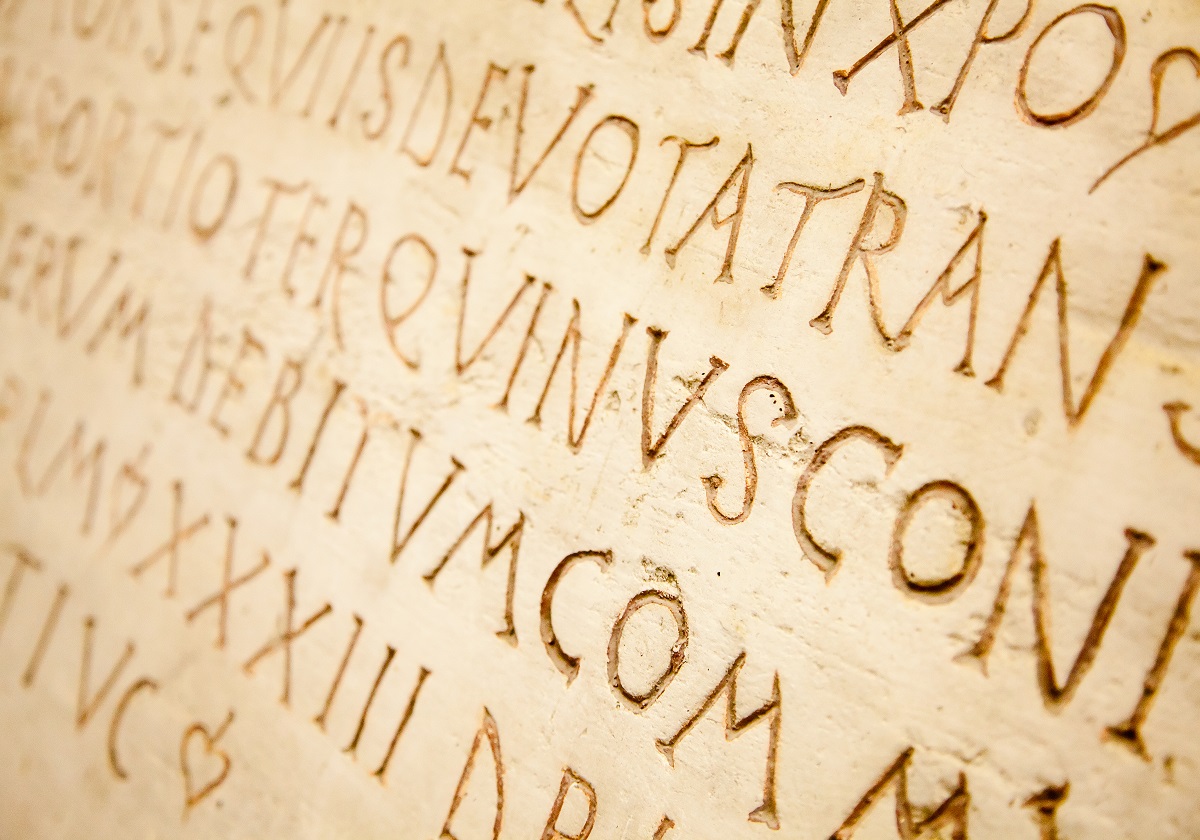
Latin inscriptions and literature played a crucial role in preserving, shaping, and disseminating the Latin language. Inscriptions, found on monuments, buildings, and other objects, provide valuable insights into the language’s evolution and usage in everyday life.
Types of Latin Inscriptions
Latin inscriptions vary in type, including:
- Monumental inscriptions:Commemorate important events, victories, and individuals.
- Funerary inscriptions:Mark graves and provide information about the deceased.
- Religious inscriptions:Found in temples and other religious sites, dedicating offerings or expressing devotion.
- Legal inscriptions:Record laws, treaties, and other legal documents.
- Domestic inscriptions:Found in homes and businesses, providing information about ownership or use.
Each type of inscription exhibits unique linguistic features, reflecting the purpose and context in which it was created.
Role of Latin Literature
Latin literature, encompassing works such as poetry, drama, and prose, played a significant role in shaping the Latin language. Authors like Cicero, Virgil, and Ovid established norms of grammar, vocabulary, and style that influenced subsequent generations of writers.
Latin literature also served as a vehicle for transmitting cultural and historical knowledge. Works such as Caesar’s “Commentaries on the Gallic War” provide valuable insights into Roman military campaigns and the history of the period.
Influence on Other Languages
The influence of Latin literature extended beyond the Roman Empire, shaping the development of other European languages. English, French, Spanish, and Italian all borrowed extensively from Latin, adopting words, grammar, and literary forms.
The study of Latin literature remains essential in classical scholarship and provides a foundation for understanding the roots of Western civilization.
– Provide specific examples of how Latin was used in education, religion, and law during the Middle Ages.: What Language Was Spoken In Ancient Rome
In the Middle Ages, Latin played a crucial role in various aspects of society, including education, religion, and law. Here are specific examples of its usage in these fields:
Education
Latin was the primary language of instruction in medieval universities. Students were required to learn Latin to read and understand the works of classical authors and scholars, which formed the foundation of medieval education. Latin was also used in textbooks, lectures, and disputations, fostering intellectual exchange and critical thinking among scholars.
Religion
Latin was the official language of the Catholic Church throughout the Middle Ages. It was used in the liturgy, церковные службы, and religious texts. The Vulgate Bible, the official Latin translation of the Bible, played a significant role in spreading Christianity and shaping medieval religious thought.
Latin was also used in theological debates and writings, facilitating the development of Christian doctrine.
Law
Latin was the language of law in the Middle Ages. Legal documents, such as contracts, wills, and court records, were written in Latin. Latin was also used in legal proceedings, with judges and lawyers conducting trials and issuing judgments in Latin.
This ensured that legal proceedings were conducted in a consistent and standardized manner across different regions of Europe.
Legacy of Latin
Latin has had a profound and enduring impact on Western languages and cultures. Its influence can be seen in the vocabulary, grammar, and syntax of many modern languages, as well as in the development of Western literature, law, and education.
The most direct legacy of Latin is the Romance languages, which evolved from the spoken Latin of the Roman Empire. These languages include Italian, French, Spanish, Portuguese, Romanian, and Catalan, among others. The Romance languages share many similarities in vocabulary, grammar, and pronunciation, reflecting their common origin in Latin.
Influence on English and Other Non-Romance Languages
Latin has also had a significant influence on English and other non-Romance languages. Many English words are derived from Latin, either directly or through French. For example, the words “science,” “literature,” and “history” all come from Latin. Latin has also influenced the grammar of English, particularly in the use of prepositions and conjunctions.
In addition to English, Latin has also influenced many other non-Romance languages, including German, Dutch, Swedish, and Russian. These languages have borrowed many words from Latin, particularly in the fields of science, law, and religion.
Latin in the Modern World
Latin, once the lingua franca of the Roman Empire, continues to hold significance in various spheres of modern society. While it is no longer widely spoken as a native language, its legacy endures through its influence on Western languages, its use in religious ceremonies, and its role in academic and specialized fields.
Religious Ceremonies
Latin remains the official language of the Roman Catholic Church and is used in its liturgies, rituals, and official documents. The Vatican, the seat of the Catholic Church, continues to promote the study and use of Latin for theological and liturgical purposes.
Academic Contexts
Latin is still taught as a classical language in many schools and universities worldwide. It is considered an important tool for understanding the foundations of Western literature, history, and culture. In some academic disciplines, such as law, medicine, and biology, Latin terminology and concepts continue to be used.
Specialized Fields
Latin is also employed in specialized fields such as taxonomy, where it is used to name and classify species. In medicine, Latin is used for anatomical and medical terminology. It is also used in the legal profession for certain phrases and legal documents.
Efforts to Revive and Promote Latin
In recent years, there have been efforts to revive and promote the use of Latin. These efforts include the establishment of organizations dedicated to the study and promotion of Latin, such as the International Federation of Latinists and the American Classical League.
Additionally, there are initiatives to create new Latin-language publications and resources.
Challenges in Studying Ancient Roman Languages
The study of ancient Roman languages, such as Latin and Etruscan, presents several challenges due to the scarcity of written sources and the difficulties in deciphering them. These challenges have a significant impact on the accuracy and completeness of our understanding of ancient Roman history and culture.
Scarcity of Written Sources
One of the primary challenges in studying ancient Roman languages is the scarcity of written sources. Many texts from this period have been lost due to wars, natural disasters, and the passage of time. The surviving texts are often fragmented and damaged, making them difficult to read and interpret.
The limited availability of written sources poses a significant challenge for researchers who seek to reconstruct the history and culture of ancient Rome. It can lead to gaps in our knowledge and make it difficult to draw definitive conclusions about certain aspects of Roman society.
Difficulties in Deciphering Texts
Another challenge in studying ancient Roman languages is the difficulty in deciphering the texts that do survive. These texts are often written in a non-standard form of Latin or Etruscan, with abbreviations, ligatures, and unusual spellings. This can make it difficult for scholars to accurately interpret the meaning of the texts.
The use of abbreviations and ligatures, in particular, can be a major obstacle to understanding ancient Roman texts. Abbreviations were commonly used in Roman inscriptions and manuscripts to save space, but they can be difficult to decipher without a key.
Ligatures, which are the joining of two or more letters into a single character, can also be challenging to read and interpret.
Role of Technology and Interdisciplinary Approaches
Despite these challenges, significant progress has been made in the study of ancient Roman languages in recent years. The development of new technologies, such as digital archives and databases, has made it possible to store and analyze large collections of texts more efficiently.
Interdisciplinary approaches, which involve collaboration between historians, archaeologists, and linguists, have also played a vital role in overcoming the challenges of studying ancient Roman languages. By combining their expertise, scholars can gain a more comprehensive understanding of the texts and the context in which they were written.
Impact on the Understanding of Ancient Roman History and Culture
The challenges of studying ancient Roman languages have a significant impact on our understanding of Roman history and culture. The scarcity of written sources and the difficulties in deciphering them can lead to gaps in our knowledge and make it difficult to draw definitive conclusions about certain aspects of Roman society.
For example, the lack of written sources from the early period of Roman history makes it difficult to reconstruct the origins of the Roman people and their culture. Similarly, the difficulties in deciphering Etruscan texts have limited our understanding of this ancient civilization, which played a significant role in the development of Roman culture.
Areas for Future Research
Despite the progress that has been made, there are still many challenges that need to be addressed in the study of ancient Roman languages. One area for future research is the development of new technologies to aid in the decipherment of texts.
Another area is the continued collaboration between historians, archaeologists, and linguists to gain a more comprehensive understanding of the texts and the context in which they were written.
By addressing these challenges, scholars can improve our understanding of ancient Roman history and culture and gain a deeper appreciation for the richness and complexity of the Roman world.
Methods for Reconstructing Ancient Roman Languages
/GettyImages-736835641-5c453d8646e0fb0001619df9.jpg "Latin tattoos tattoo quotes meaning designs")
Reconstructing ancient Roman languages is a complex and challenging task. However, by using a variety of methods, scholars have been able to make significant progress in this field.
Comparative Linguistics
Comparative linguistics is the study of the relationships between languages. By comparing different languages, scholars can identify similarities and differences that can help them to reconstruct the ancestral language from which they all descended.
For example, the Romance languages (such as Spanish, French, Italian, and Romanian) are all descended from Latin. By comparing these languages, scholars have been able to reconstruct the sounds, grammar, and vocabulary of Proto-Romance, the ancestral language of the Romance languages.
Historical Phonology
Historical phonology is the study of how sounds change over time. By studying the sound changes that have occurred in a language, scholars can reconstruct the earlier stages of that language.
For example, the Latin sound /k/ changed to /s/ before front vowels in many Romance languages. This sound change can be used to reconstruct the pronunciation of Latin words that contain /k/ before front vowels.
Epigraphy
Epigraphy is the study of inscriptions. Inscriptions are written records that can provide valuable information about the language, culture, and history of a society.
For example, the Latin inscriptions found at Pompeii have provided scholars with a wealth of information about the language and culture of the Roman Empire.
Strengths and Limitations of Each Method
Each of the methods described above has its own strengths and limitations. Comparative linguistics is a powerful tool for reconstructing the relationships between languages, but it can be difficult to apply to languages that are not closely related.
Historical phonology is a valuable tool for reconstructing the sound changes that have occurred in a language, but it can be difficult to apply to languages that have undergone significant sound changes.
Epigraphy is a valuable source of information about the language, culture, and history of a society, but it can be difficult to interpret inscriptions that are damaged or fragmentary.
Challenges and Controversies
The reconstruction of ancient Roman languages is a challenging and controversial field. There are many different methods that can be used to reconstruct these languages, and there is often disagreement among scholars about which method is the most accurate.
Despite these challenges, the reconstruction of ancient Roman languages has made significant progress in recent years. By using a variety of methods, scholars have been able to gain a better understanding of the languages that were spoken in the Roman Empire.
Future Directions for Research
There are many exciting new directions for research in the field of Roman language reconstruction. One area of research is the use of computational methods to reconstruct ancient languages. Another area of research is the study of the relationship between Roman languages and other languages in the Indo-European family.
By continuing to develop new methods and techniques, scholars will be able to gain a better understanding of the languages that were spoken in the Roman Empire.
Importance of Studying Ancient Roman Languages
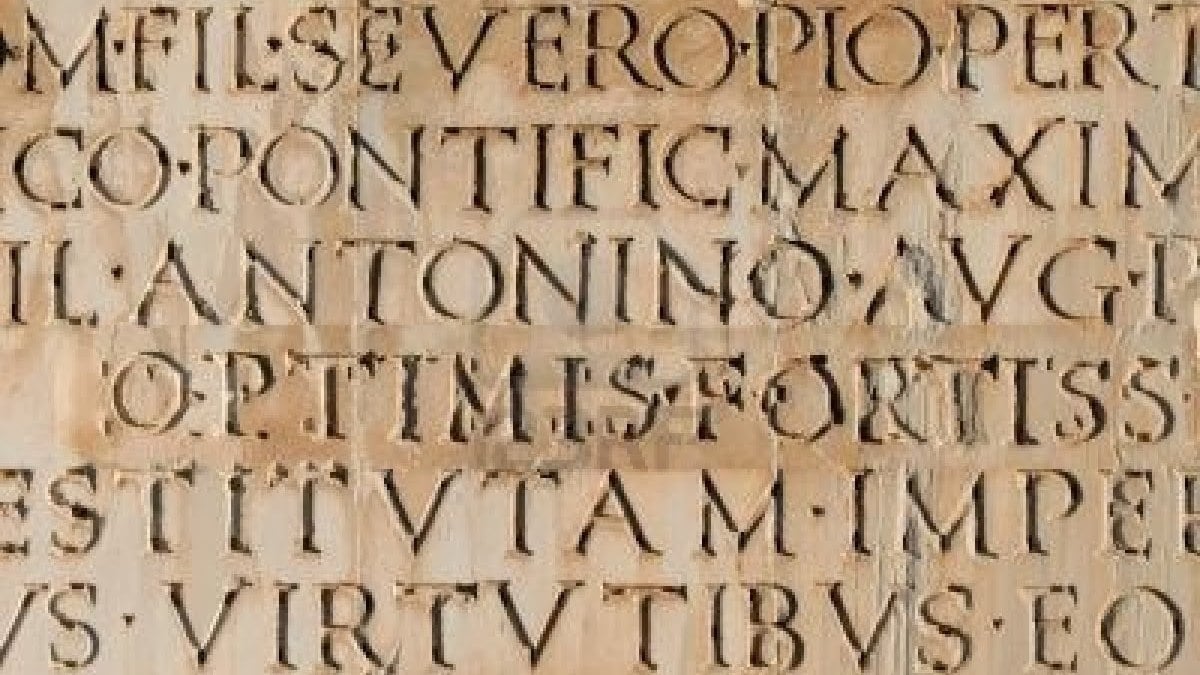
Ancient Roman languages, particularly Latin, hold immense significance in comprehending the rich history and culture of the Roman Empire. By studying these languages, scholars gain valuable insights into the development of Western civilizations, languages, and societies.
Insights into Roman History and Culture
Ancient Roman languages provide direct access to original texts, inscriptions, and literary works, offering firsthand accounts of Roman history, politics, religion, and everyday life. Through these sources, researchers can reconstruct historical events, understand the motivations and perspectives of Roman individuals, and gain a deeper appreciation for the complexities of Roman society.
Contribution to Western Languages and Societies
Latin, the most prominent ancient Roman language, has profoundly influenced the development of Western languages. Many modern European languages, such as French, Spanish, Italian, and English, are derived from Latin, sharing significant vocabulary and grammatical structures. Studying ancient Roman languages helps scholars trace the evolution of these languages and appreciate the interconnectedness of Western cultures.
Role in Contemporary Scholarship and Education
Ancient Roman languages remain essential tools in contemporary scholarship and education. They are used in fields such as classical studies, linguistics, history, and archaeology. The study of these languages provides a foundation for understanding the roots of Western civilization and facilitates access to a vast corpus of historical and literary works.
Resources for Studying Ancient Roman Languages

The study of ancient Roman languages has been facilitated by the availability of a range of resources, including dictionaries, grammars, and online databases. These resources provide essential tools for researchers, students, and enthusiasts to access and understand the complexities of these ancient languages.
One of the most important resources for studying ancient Roman languages is a comprehensive dictionary. A good dictionary will provide definitions, etymologies, and usage examples for words in the language. Some of the most popular dictionaries for ancient Roman languages include the Oxford Latin Dictionary, the Lewis and Short Latin Dictionary, and the Gaffiot Latin-French Dictionary.
In addition to dictionaries, grammars are also essential for studying ancient Roman languages. A grammar will provide information on the structure of the language, including its morphology, syntax, and phonology. Some of the most popular grammars for ancient Roman languages include the Cambridge Latin Course, the Wheelock’s Latin Grammar, and the Gildersleeve’s Latin Grammar.
In addition to dictionaries and grammars, there are also a number of online databases that can be helpful for studying ancient Roman languages. These databases provide access to a wide range of texts, inscriptions, and other resources. Some of the most popular online databases for ancient Roman languages include the Perseus Digital Library, the Latin Library, and the Packard Humanities Institute.
Finally, there are also a number of courses, workshops, and conferences dedicated to the study of ancient Roman languages. These events provide opportunities for students and researchers to learn from experts in the field and to share their own research.
Digital Humanities and Open Access Initiatives
In recent years, digital humanities and open access initiatives have played an increasingly important role in promoting the study of ancient Roman languages. Digital humanities projects have made a wide range of resources available online, including texts, inscriptions, and images.
Open access initiatives have made these resources freely available to anyone with an internet connection.
As a result of these initiatives, the study of ancient Roman languages has become more accessible than ever before. Students and researchers now have access to a wealth of resources that can help them to learn about these languages and their history.
Query Resolution
What was the official language of ancient Rome?
Latin was the official language of ancient Rome, used in government, law, literature, and religion.
Why did Latin become the lingua franca of the Roman Empire?
Latin’s widespread adoption as a common language was due to the political and military dominance of the Roman Empire, as well as its use in education, trade, and administration.
What are the Romance languages?
The Romance languages are a group of languages that evolved from Latin, including Spanish, French, Italian, Portuguese, and Romanian.
