Are numbers the same in every language? This intriguing question opens up a fascinating realm of linguistic and cultural diversity, inviting us to explore the ways in which different languages perceive, represent, and manipulate numerical concepts. From the ancient Babylonian cuneiform to the modern digital world, numbers have played a pivotal role in human communication and cognition, shaping our understanding of the world around us.
This academic presentation will delve into the complexities of numerical expression across languages, uncovering the profound influence of culture, history, and cognitive processes on our perception of numbers.
We will embark on a journey through the historical evolution of numbers, tracing their origins and transformations across different civilizations. We will examine the diverse number systems employed by languages worldwide, from the familiar decimal system to the binary code that underpins our digital age.
Along the way, we will encounter intriguing cultural variations in the representation of numerals, ordinal numbers, and mathematical operations, revealing the intricate interplay between language and numerical cognition.
Cultural and Linguistic Diversity
Numbers are not perceived in the same way across different cultures and languages. This is due to a number of factors, including the way that numbers are represented in the language, the cultural context in which numbers are used, and the individual’s own experiences with numbers.
In some cultures, numbers are seen as having a mystical or religious significance. For example, in Chinese culture, the number 8 is considered to be lucky, while the number 4 is considered to be unlucky. In other cultures, numbers are seen as being more neutral.
For example, in Western culture, the number 13 is often seen as being unlucky, but this is not the case in all cultures.
The cultural context in which numbers are used can also affect the way that they are interpreted. For example, in some cultures, it is considered to be polite to use indirect language when referring to numbers. This is because numbers can be seen as being powerful, and it is considered to be disrespectful to use them directly.
The individual’s own experiences with numbers can also affect the way that they are interpreted. For example, someone who has had a positive experience with a particular number may be more likely to see that number as being lucky. Conversely, someone who has had a negative experience with a particular number may be more likely to see that number as being unlucky.
Impact of Cultural Context
The cultural context in which numbers are used can have a significant impact on the way that they are interpreted. For example, in some cultures, it is considered to be polite to use indirect language when referring to numbers. This is because numbers can be seen as being powerful, and it is considered to be disrespectful to use them directly.
In other cultures, numbers are seen as being more neutral. For example, in Western culture, the number 13 is often seen as being unlucky, but this is not the case in all cultures. In some cultures, the number 13 is seen as being lucky, while in other cultures it is seen as being neutral.
The cultural context in which numbers are used can also affect the way that they are used in mathematics. For example, in some cultures, it is common to use a base-10 number system, while in other cultures it is common to use a base-12 number system.
The base of the number system that is used can have a significant impact on the way that mathematical operations are performed.
Historical Evolution of Numbers
Numerical systems have undergone a significant evolution across different languages and cultures throughout history. This evolution has been influenced by factors such as the development of writing systems, trade, and scientific advancements.
The earliest known numerical systems were based on tally marks, which were used to represent quantities by making notches or marks on objects such as sticks or bones. These systems were limited in their ability to represent large numbers and were not well-suited for complex calculations.
Babylonian Numerals
The Babylonians developed a sexagesimal (base-60) numeral system around 2000 BC. This system used a combination of wedge-shaped marks to represent numbers. The Babylonians also developed a sophisticated system of mathematics that included concepts such as place value and fractions.
Egyptian Numerals
The ancient Egyptians used a decimal (base-10) numeral system that was based on hieroglyphs. This system was used for both counting and for performing calculations. The Egyptians also developed a system of fractions that was based on unit fractions.
Roman Numerals
The Romans developed a decimal numeral system that was based on seven symbols: I, V, X, L, C, D, and M. This system was used for both counting and for performing calculations. Roman numerals are still used today in some contexts, such as on clocks and in the numbering of chapters in books.
Hindu-Arabic Numerals
The Hindu-Arabic numeral system, which is the system we use today, was developed in India around the 5th century AD. This system is based on ten symbols: 0, 1, 2, 3, 4, 5, 6, 7, 8, and 9. The Hindu-Arabic numeral system is a positional system, which means that the value of a digit depends on its position in the number.
The evolution of numbers has had a profound impact on their representation and usage. The development of more sophisticated numerical systems has made it possible to perform more complex calculations and to represent larger numbers. The Hindu-Arabic numeral system is particularly well-suited for these purposes, and it has become the standard numerical system used throughout the world.
While numbers are often perceived as universal, their representation and interpretation vary across languages. For instance, in some cultures, numbers are written from right to left, while in others, they are written from left to right. Additionally, the way numbers are pronounced and their association with specific concepts can differ.
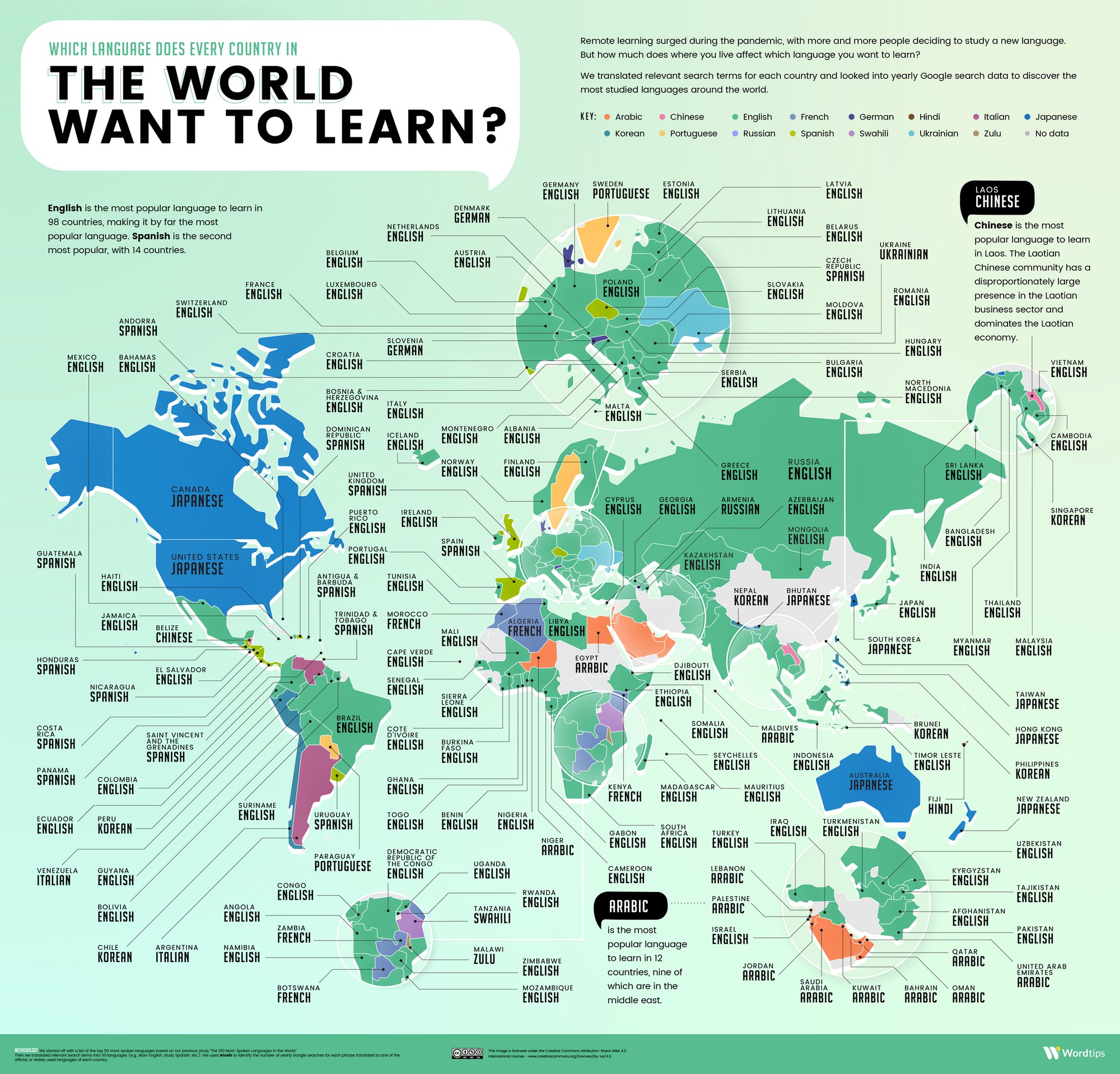
To explore this further, let’s consider the language spoken in Venezuela, which is Spanish. In Spanish, numbers are written using the Arabic numeral system and are pronounced similarly to English. However, there are some notable differences in the way numbers are used in Spanish compared to English, highlighting the influence of language on numerical representation.
Number Systems and Notation

Number systems are systems for representing numbers. They provide a way to express quantities using a set of symbols and rules. Different languages use different number systems, and the choice of number system can affect the way that numbers are represented.
The most common number system is the decimal system, which uses 10 symbols (0, 1, 2, 3, 4, 5, 6, 7, 8, 9) to represent numbers. The decimal system is a base-10 system, which means that each digit in a number represents a power of 10.
For example, the number 123 represents 1 x 10^2 + 2 x 10^1 + 3 x 10^0 = 100 + 20 + 3 = 123.
Other number systems include the binary system, which uses only two symbols (0 and 1), and the hexadecimal system, which uses 16 symbols (0, 1, 2, 3, 4, 5, 6, 7, 8, 9, A, B, C, D, E, F). The binary system is a base-2 system, and the hexadecimal system is a base-16 system.
The choice of number system depends on the application. The decimal system is commonly used for everyday calculations, while the binary system is used in computers because it is easier to implement in hardware. The hexadecimal system is used in some applications, such as computer programming and web design.
Advantages and Disadvantages of Different Number Systems
Each number system has its own advantages and disadvantages. The decimal system is easy to use and understand, but it can be inefficient for representing large numbers. The binary system is more efficient for representing large numbers, but it can be more difficult to use and understand.
The hexadecimal system is a compromise between the decimal and binary systems, and it is often used in computer programming and web design.
The universality of numbers across languages is a fascinating linguistic phenomenon. While the concept of numbers remains consistent, their representation and symbols vary widely. This diversity reflects the cultural and historical influences that shape language. English, as a widely spoken global language, has played a significant role in standardizing certain numerical systems.
The reasons behind English’s universal status, as explored in why is english a universal language , have contributed to the adoption of its numerical system in many contexts, fostering global communication and understanding.
Development of Number Systems
The development of number systems has had a profound impact on the way that we think about and use mathematics. The invention of the decimal system made it possible to perform complex calculations more easily, and the development of the binary system made it possible to create computers.
The hexadecimal system is a more recent development, and it is used in a variety of applications, such as computer programming and web design.
Mathematical Operations and Symbols

Mathematical operations and symbols are essential components of mathematics, allowing us to perform calculations and express mathematical ideas concisely. This section explores the cross-linguistic consistency of mathematical operations and symbols, examining whether they have the same meaning and usage across different languages.
Mathematical Operations, Are numbers the same in every language
The basic mathematical operations of addition (+), subtraction (-), multiplication (*), and division (/) are universally recognized and have the same meaning across languages. These operations represent fundamental mathematical concepts that are essential for performing calculations and solving problems.
For example, the equation “2 + 3 = 5” holds true in all languages, as it represents the addition of two numbers resulting in their sum. Similarly, the equation “10 – 5 = 5” represents the subtraction of one number from another, resulting in their difference.
Mathematical Symbols
Mathematical symbols are also largely consistent across languages. The equal sign (=) is universally used to indicate equality between two expressions or values. The infinity symbol (∞) is also commonly used to represent an无限大 or unbounded quantity.
Other mathematical symbols, such as the plus-or-minus sign (±), the percent sign (%), and the fraction bar (/), are also widely recognized and have the same meaning across languages.
Numerals and their Representation
Numerals are symbols used to represent numbers. They can be written in various forms, such as digits, words, or other symbols. Different languages use different sets of numerals, and even within the same language, there may be variations in numeral representation.
Comparison of Numerals in Different Languages
The following table compares the numerals used in different languages:
| Language | Numerals |
|---|---|
| English | 0, 1, 2, 3, 4, 5, 6, 7, 8, 9 |
| Spanish | 0, 1, 2, 3, 4, 5, 6, 7, 8, 9 |
| French | 0, 1, 2, 3, 4, 5, 6, 7, 8, 9 |
| German | 0, 1, 2, 3, 4, 5, 6, 7, 8, 9 |
| Chinese | 零, 一, 二, 三, 四, 五, 六, 七, 八, 九 |
| Japanese | 0, 1, 2, 3, 4, 5, 6, 7, 8, 9 |
Similarities and Differences in Numeral Representation
There are some similarities and differences in numeral representation across languages.
- Many languages use the same or similar symbols for the numbers 0 through 9.
- Some languages, such as English and Spanish, use a decimal system, where the value of a digit depends on its position in the number.
- Other languages, such as Chinese and Japanese, use a vigesimal system, where the value of a digit depends on its position in the number and its relationship to the number 20.
- Some languages, such as French and German, use a mixed system, where the value of a digit depends on both its position in the number and its relationship to the number 10.
Ordinal Numbers and Sequencing

Ordinal numbers are used to indicate the position of an item in a sequence. They are typically expressed using words like first, second, third, fourth, and so on.
The sequencing of ordinal numbers can vary across languages. In English, the sequence is based on the cardinal numbers (one, two, three, etc.). However, in some languages, the sequence is based on the position of the item in the sequence.
For example, in Japanese, the ordinal number for “first” is “ichiban,” which literally means “number one.”
Cultural and Linguistic Factors
The cultural and linguistic factors that influence the sequencing of numbers can include:
- The direction of writing. In languages that are written from left to right, the ordinal numbers are typically sequenced from left to right. However, in languages that are written from right to left, the ordinal numbers are typically sequenced from right to left.
- The base of the number system. In languages that use a decimal number system, the ordinal numbers are typically based on the powers of ten. However, in languages that use a different base number system, the ordinal numbers may be based on different powers.
- The grammatical structure of the language. The grammatical structure of a language can also influence the sequencing of ordinal numbers. For example, in some languages, the ordinal number is placed before the noun, while in other languages, the ordinal number is placed after the noun.
Real-Life Contexts
Ordinal numbers are used in a variety of real-life contexts, including:
- Indicating the order of finish in a race or competition.
- Numbering the chapters in a book.
- Indicating the order of steps in a procedure.
- Indicating the order of items in a list.
Specific Language and Culture
In Japanese, the ordinal numbers are formed by adding the suffix “-ban” to the cardinal numbers. For example, the ordinal number for “first” is “ichiban,” the ordinal number for “second” is “niban,” and the ordinal number for “third” is “sanban.” The ordinal numbers are typically placed before the noun, as in the following example:
Ichiban no gakusei wa Tanaka-san desu.
The first student is Tanaka-san.
Numerical Vocabulary and Phrases
Numerical phrases and expressions are an integral part of human language, serving not only as tools for communication but also as reflections of cultural values and perceptions. Different languages employ a wide range of numerical phrases, each carrying unique nuances and meanings that shape cultural understanding and communication.
Common Numerical Phrases and Expressions
Across languages, certain numerical phrases and expressions are commonly used in various contexts, such as:
- Cardinal numbers:Expressing specific quantities, such as “one,” “ten,” “hundred.”
- Ordinal numbers:Indicating position or sequence, such as “first,” “second,” “third.”
- Fractions and decimals:Representing parts of a whole, such as “half,” “quarter,” “0.5.”
- Measurement units:Quantifying physical attributes, such as “meter,” “gallon,” “pound.”
- Time expressions:Referring to temporal duration, such as “hour,” “day,” “week.”
- Money expressions:Describing monetary values, such as “dollar,” “euro,” “cent.”
These numerical phrases are essential for conveying precise quantities and measurements, facilitating effective communication in both formal and informal settings.
– Analyze how units of measurement (e.g., meters, pounds) are expressed and converted across languages.
Units of measurement are essential for quantifying and comparing physical quantities. They allow us to communicate about the size, weight, and other characteristics of objects in a precise and unambiguous way. However, units of measurement can vary significantly from one language to another, which can lead to confusion and errors when translating numerical values.
One of the challenges of translating numerical values in measurement contexts is the fact that different languages often use different systems of measurement. For example, the United States uses the English system of measurement, which includes units such as inches, feet, and pounds.
In contrast, most other countries use the metric system, which includes units such as meters, kilometers, and kilograms.
Conversion of Units
When translating numerical values from one language to another, it is important to be aware of the different units of measurement that are used in each language. If the units of measurement are not the same, it will be necessary to convert the values from one system to another.
There are a number of online resources that can be used to convert units of measurement. For example, the National Institute of Standards and Technology (NIST) provides a metric conversion tool that can be used to convert between the English and metric systems.
– Elaborate on the variations in numerical expression syntax across languages (e.g., infix vs. postfix notation).
Numerical expression syntax varies across languages, with some languages using infix notation (e.g., English) and others using postfix notation (e.g., Polish). Infix notation places the operator between the operands (e.g., 2 + 3), while postfix notation places the operator after the operands (e.g., 2 3 +).The choice of notation can have implications for the cognitive processes involved in solving numerical equations.
For example, research has shown that people who are more proficient in postfix notation are better able to solve equations that require them to mentally manipulate the order of operations (e.g., 2 + 34). This suggests that the use of postfix notation may promote a more flexible and efficient approach to solving numerical equations.
Numbers in Science and Technology
Numbers play a pivotal role in science and technology, providing the foundation for understanding and quantifying the world around us. Numerical accuracy and precision are paramount in these fields, as they underpin the reliability and validity of scientific and technological advancements.
Numbers in Physics
In physics, numbers are essential for describing the fundamental laws of motion and the properties of matter. They are used to quantify physical quantities such as mass, velocity, acceleration, and energy. Numerical calculations and simulations are crucial for predicting and analyzing physical phenomena, from the behavior of subatomic particles to the dynamics of celestial bodies.
Numbers in Chemistry
In chemistry, numbers are used to represent the composition of molecules and to calculate chemical reactions. The periodic table organizes elements based on their atomic number, which determines their chemical properties. Numerical ratios and equations are used to balance chemical equations and predict the products of reactions.
Numbers also play a role in spectroscopy, where they are used to analyze the absorption and emission of electromagnetic radiation by atoms and molecules.
Numbers in Biology
In biology, numbers are used to describe the structure and function of cells and organisms. Numerical data is collected through experiments and observations to quantify biological processes such as growth, reproduction, and metabolism. Numbers are also used to model and simulate biological systems, helping researchers understand complex interactions and predict outcomes.
Numbers in Engineering
In engineering, numbers are used to design and build structures, machines, and systems. Numerical calculations are used to determine the strength, stability, and efficiency of engineering designs. Engineers rely on numerical simulations and modeling to optimize designs and predict performance under various conditions.
Numbers and Technological Advancement
The use of numbers has been instrumental in the advancement of science and technology. Numerical accuracy and precision have enabled scientists and engineers to develop new theories, design innovative technologies, and make groundbreaking discoveries. Numbers have facilitated the development of fields such as computer science, artificial intelligence, and data science, which rely heavily on numerical computation and analysis.
Ethical Implications
While numbers play a crucial role in science and technology, their use also raises ethical implications. The misuse of numerical data or the manipulation of results can have serious consequences. It is essential for scientists and engineers to maintain ethical standards in their research and development, ensuring that numbers are used responsibly and accurately.
Numbers in Art and Literature: Are Numbers The Same In Every Language
Numbers play a significant role in art and literature, serving various functions beyond their mathematical purpose. They can convey symbolic meanings, create patterns and structures, and express emotions and ideas. This section explores the multifaceted use of numbers in these creative domains.
Symbolic and Metaphorical Significance
Numbers often carry symbolic and metaphorical associations. For example, the number three represents the Holy Trinity in Christianity, while the number seven signifies completeness or perfection in many cultures. In literature, the number 13 is often associated with bad luck or misfortune.
Patterns, Structures, and Rhythms
Numbers can create patterns and structures in both art and literature. In music, numerical ratios determine the intervals between notes, creating harmonies and melodies. In visual art, numbers can be used to create geometric patterns, such as the Golden Ratio, which is found in many natural forms and has been used in art for centuries.
Emotions, Ideas, and Themes
Numbers can also convey emotions, ideas, and themes. For example, the repetition of a particular number can create a sense of rhythm or emphasis. In literature, numbers can symbolize characters, events, or abstract concepts. The number four, for instance, often represents the four elements (earth, air, fire, water) or the four seasons.
Examples in Art and Literature
Examples of the effective use of numbers in art and literature abound. In Leonardo da Vinci’s “Mona Lisa,” the sitter’s enigmatic smile is said to contain a hidden numerical code. In James Joyce’s novel “Ulysses,” the number 18 appears repeatedly, representing the protagonist’s age and the number of episodes in the book.
Table or Infographic
The following table summarizes the different ways numbers are used in art and literature:
| Use| Examples||—|—|| Symbolic and metaphorical | Holy Trinity, number 13 || Patterns and structures | Golden Ratio, musical intervals || Emotions, ideas, and themes | Repetition, symbolism |
Short Story or Poem
In the short story “The Number Seven” by Ray Bradbury, the number seven takes on a mystical significance, leading the protagonist on a journey of self-discovery. In the poem “Ode to a Nightingale” by John Keats, the speaker uses numbers to convey the beauty and transience of the nightingale’s song.
Lesson Plan or Activity
A lesson plan or activity could involve students analyzing the use of numbers in a specific work of art or literature. They could identify the symbolic meanings, patterns, and emotions conveyed by numbers and discuss how these contribute to the overall work.
Numbers in Education and Learning

Numbers play a crucial role in education and learning across all disciplines, from mathematics and science to language arts and social studies. The way numbers are taught and learned varies significantly across languages and cultures, reflecting the unique cognitive and linguistic characteristics of each language.
Teaching and Learning Numbers
In many languages, numbers are introduced to young children through counting, number recognition, and simple arithmetic operations. As children progress in their education, they are exposed to more complex mathematical concepts, such as fractions, decimals, and algebra. The methods used to teach these concepts can vary depending on the language and culture, with some languages using a more concrete approach that emphasizes hands-on activities and manipulatives, while others favor a more abstract approach that relies on symbols and formulas.
Cross-Linguistic Numerical Challenges
Learning numbers in a second or foreign language can present unique challenges due to differences in the way numbers are represented and used in different languages. For example, some languages use a base-10 number system, while others use a base-20 or base-60 system.
This can lead to confusion when translating numbers between languages or when performing mathematical operations. Additionally, some languages have different grammatical rules for expressing numbers, such as the use of classifiers or the placement of numbers within sentences.
Opportunities for Cross-Linguistic Learning
Despite the challenges, cross-linguistic numerical learning can also provide opportunities for cognitive growth and cultural exchange. By learning about different number systems and grammatical rules, learners can develop a deeper understanding of the structure and logic of numbers and their relationship to language.
This can also foster an appreciation for the diversity of human cultures and the different ways of expressing and understanding the world.
The Role of Language in Numerical Cognition
Language plays a crucial role in our understanding and manipulation of numbers. The way we represent numbers, perform mathematical operations, and communicate about quantities is heavily influenced by the linguistic structures of our native language.
Language and Numerical Processing
Research has shown that the language we speak affects how we process numerical information. For instance, speakers of languages with a base-10 number system (such as English) tend to perform better on tasks involving addition and subtraction, while speakers of languages with a base-20 number system (such as the Mayan language) excel at multiplication and division.
Language and Mathematical Symbols
The symbols we use to represent numbers also vary across languages. In the Western world, we use the Hindu-Arabic numeral system, which consists of ten digits (0-9). However, other cultures have developed their own unique number systems, such as the Chinese abacus or the Roman numeral system.
Language and Numerical Vocabulary
The vocabulary we use to talk about numbers is also shaped by our language. For example, in English, we have specific words for numbers up to twelve (one, two, three, etc.), while in some other languages, there is a single word for “many” or “a lot” that covers a wide range of quantities.
Language and Mathematical Operations
The way we perform mathematical operations can also be influenced by language. In English, we typically read numbers from left to right, and we perform addition and subtraction by starting with the least significant digits. However, in some other languages, numbers are read from right to left, and mathematical operations are performed in a different order.
Essential FAQs
Do different languages have different words for numbers?
Yes, different languages often have different words for numbers. For example, the English word “one” corresponds to “ichi” in Japanese, “eins” in German, and “un” in French.
Are mathematical operations the same in all languages?
The basic mathematical operations (+, -, -, /) are generally consistent across languages, although there may be variations in the symbols used to represent them.
How do cultural factors influence the representation of numbers?
Cultural factors can influence the representation of numbers in several ways, such as the choice of number system, the sequencing of numbers, and the use of numerical phrases and expressions.
