How to say i love u in other languages – Exploring the multifaceted nature of love, this essay delves into the diverse ways cultures express affection through language. From the passionate “Je t’aime” in French to the heartfelt “Te amo” in Spanish, each phrase carries unique cultural nuances and implications.
The following paragraphs provide a comprehensive overview of how to express love in various languages, highlighting the linguistic and cultural factors that shape its expression.
Romance Languages

Romance languages are a group of languages that evolved from Latin, the language of the ancient Roman Empire. They are spoken by over 800 million people worldwide, making them one of the largest language families in the world. Romance languages are spoken in Europe, the Americas, and Africa, and they include languages such as French, Spanish, Italian, Portuguese, and Romanian.
In Romance languages, the phrase “I love you” is typically expressed using a verb meaning “to love” followed by a direct object pronoun. The direct object pronoun indicates the person who is being loved. In French, for example, the phrase “I love you” is “Je t’aime”, where “Je” is the subject pronoun (I), “t'” is the direct object pronoun (you), and “aime” is the verb (love).
The following table summarizes the phrases for “I love you” in several Romance languages, along with their pronunciations using phonetic symbols (IPA):
| Language | Phrase | Pronunciation |
|---|---|---|
| French | Je t’aime | [ʒə tɛm] |
| Spanish | Te amo | [te amo] |
| Italian | Ti amo | [ti amo] |
| Portuguese | Eu te amo | [ew te amo] |
| Romanian | Te iubesc | [te ju’besk] |
The phrase “I love you” is a powerful expression of affection and intimacy. In Romance languages, it is typically used between romantic partners, family members, and close friends. The phrase can also be used in a more general sense to express love for one’s country, one’s culture, or one’s life.
There are some subtle differences in the meaning and usage of the phrase “I love you” in different Romance languages. For example, in French, the phrase “Je t’aime” is considered to be a more formal and serious expression of love than the phrase “Je t’adore” (I adore you).
In Spanish, the phrase “Te amo” is typically used between romantic partners, while the phrase “Te quiero” (I love you) is used more generally to express affection for friends and family members.
When responding to someone who has said “I love you,” it is common to say “I love you too” or “I love you back.” In Romance languages, there are several ways to say “I love you too.” The following table provides some examples:
| Language | Phrase | Pronunciation |
|---|---|---|
| French | Je t’aime aussi | [ʒə tɛm osi] |
| Spanish | Te amo también | [te amo tambien] |
| Italian | Ti amo anch’io | [ti amo aŋk’io] |
| Portuguese | Eu também te amo | [ew tam’bem te amo] |
| Romanian | Și eu te iubesc | [ʃi ew te ju’besk] |
Germanic Languages
The Germanic languages are a branch of the Indo-European language family spoken in Europe, North America, and Oceania. They are descended from Proto-Germanic, a language that was spoken in Iron Age Scandinavia. The Germanic languages are divided into three branches: North Germanic, West Germanic, and East Germanic.
German
German is a West Germanic language spoken in Germany, Austria, Switzerland, Liechtenstein, Luxembourg, and Belgium. It is the official language of Germany, Austria, and Liechtenstein, and is also spoken in parts of Switzerland, Luxembourg, Belgium, and Denmark. German is the most widely spoken Germanic language, with over 100 million native speakers.
To say “I love you” in German, you can say “Ich liebe dich.”
Dutch
Dutch is a West Germanic language spoken in the Netherlands, Belgium, Suriname, and the Caribbean Netherlands. It is the official language of the Netherlands and Belgium, and is also spoken in parts of France, Germany, and Indonesia. Dutch is spoken by over 23 million people worldwide.
To say “I love you” in Dutch, you can say “Ik hou van je.”
Swedish
Swedish is a North Germanic language spoken in Sweden, Finland, and Åland. It is the official language of Sweden and Finland, and is also spoken in parts of Norway, Denmark, and Estonia. Swedish is spoken by over 10 million people worldwide.
To say “I love you” in Swedish, you can say “Jag älskar dig.”
Norwegian
Norwegian is a North Germanic language spoken in Norway, Sweden, Denmark, and the Faroe Islands. It is the official language of Norway, and is also spoken in parts of Sweden, Denmark, and the United States. Norwegian is spoken by over 5 million people worldwide.
To say “I love you” in Norwegian, you can say “Jeg elsker deg.”
Danish
Danish is a North Germanic language spoken in Denmark, Greenland, and the Faroe Islands. It is the official language of Denmark, and is also spoken in parts of Norway, Sweden, and Germany. Danish is spoken by over 6 million people worldwide.
To say “I love you” in Danish, you can say “Jeg elsker dig.”
Slavic Languages
Slavic languages are a group of related languages spoken by over 300 million people in Eastern and Central Europe. They are divided into three main branches: East Slavic, West Slavic, and South Slavic. The most widely spoken Slavic language is Russian, with over 250 million native speakers.
In this section, we will discuss how to say “I love you” in several Slavic languages.
Russian
In Russian, the phrase for “I love you” is “Я тебя люблю” (ya tebya lyublyu). The pronunciation is “ya te-bya lyoo-blyoo”.
- Example: “Я тебя люблю, Маша” (ya tebya lyublyu, Masha) – “I love you, Masha”
Polish
In Polish, the phrase for “I love you” is “Kocham cię” (koh-ham chee). The pronunciation is “koh-ham chee”.
- Example: “Kocham cię, Piotr” (koh-ham chee, Piotr) – “I love you, Piotr”
Czech
In Czech, the phrase for “I love you” is “Miluji tě” (mi-loo-yee te). The pronunciation is “mi-loo-yee te”.
- Example: “Miluji tě, Petro” (mi-loo-yee te, Petro) – “I love you, Petra”
Slovak
In Slovak, the phrase for “I love you” is “Ľúbim ťa” (lyoo-beem tyah). The pronunciation is “lyoo-beem tyah”.
- Example: “Ľúbim ťa, Janko” (lyoo-beem tyah, Janko) – “I love you, Janko”
Ukrainian
In Ukrainian, the phrase for “I love you” is “Я тебе кохаю” (ya tebe kokh-a-yoo). The pronunciation is “ya te-be kokh-a-yoo”.
- Example: “Я тебе кохаю, Олена” (ya tebe kokh-a-yoo, Olena) – “I love you, Olena”
Short Story
Once upon a time, there was a young man named Ivan who was deeply in love with a beautiful woman named Anya. One day, Ivan decided to tell Anya how he felt.
“Anya,” Ivan said, “Я тебя люблю.” (ya tebya lyublyu)
Anya smiled and said, “Я тебя тоже люблю, Иван.” (ya tebya tozhe lyublyu)
And so, the two of them lived happily ever after.
Asian Languages
Asian languages exhibit a diverse range of expressions for conveying the sentiment of love. These expressions vary not only across different language families but also within the same language family, reflecting cultural and regional nuances.
Chinese
- Mandarin:Wo ai ni (我爱你)
- Cantonese:Ngo oi nei (我愛你)
Wo ai ni, wo de xin yi zhong zhi you ni. (我爱你,我的心里只有你。)I love you, in my heart there is only you.
Japanese
- Standard Japanese:Aishiteru (愛してる)
- Kansai dialect:Suki yanen (好きやねん)
Aishiteru, kimi ga inai to ikite ikenai. (愛してる、君がいないと生きていけない。)I love you, I can’t live without you.
Korean
- Standard Korean:Saranghae (사랑해)
- Busan dialect:Saranghaeyo (사랑해요)
Saranghaeyo, nae sarang. (사랑해요, 내 사랑.)I love you, my love.
Vietnamese
- Northern dialect:Anh yêu em (Anh yêu em)
- Southern dialect:Anh thương em (Anh thương em)
Anh yêu em, anh sẽ mãi mãi bên em. (Anh yêu em, anh sẽ mãi mãi bên em.)I love you, I will be with you forever.
Thai, How to say i love u in other languages
- Standard Thai:Phom rak khun (ผมรักคุณ)
- Northern Thai dialect:Ao rak loei (อ้ายรักลื้อ)
Phom rak khun, khong phai ruea thang lae. (ผมรักคุณ, ไม่ใช่เรื่องเล่นๆ)I love you, it’s not a joke.
Non-Indo-European Languages
In this section, we will explore how to express “I love you,” “Thank you,” and “Hello” in several Non-Indo-European languages. These languages belong to diverse language families and regions, showcasing the rich linguistic diversity of the world.
Arabic
Arabic is a Semitic language spoken by over 300 million people worldwide. It is the official language of many countries in the Middle East and North Africa.
- I love you:ا أحبك (anaa uhibbuka)
- Thank you:شكراً لك (shukran lak)
- Hello:مرحبا (marhaba)
Hebrew
Hebrew is another Semitic language spoken by over 5 million people worldwide. It is the official language of Israel.
- I love you:אני אוהב אותך (ani ohev otach)
- Thank you:תודה רבה (toda raba)
- Hello:שלום (shalom)
Swahili
Swahili is a Bantu language spoken by over 100 million people in East Africa. It is the official language of Tanzania, Kenya, Uganda, and Rwanda.
- I love you:nakupenda
- Thank you:asante
- Hello:jambo
Yoruba
Yoruba is a Niger-Congo language spoken by over 30 million people in West Africa. It is the official language of Nigeria.
- I love you:mo ni fe rẹ
- Thank you:ọpẹ
- Hello:Ẹ kú àárọ
Zulu
Zulu is a Bantu language spoken by over 12 million people in South Africa. It is the official language of South Africa.
- I love you:ngiyakuthanda
- Thank you:ngiyabonga
- Hello:sawubona
Cultural Considerations

Expressing love across different languages and cultures involves intricate nuances and cultural contexts. Cultural norms and values significantly influence how love is articulated and perceived, often leading to misunderstandings or misinterpretations in romantic relationships.
The Role of Cultural Norms and Values
Cultural norms and values shape the expectations, behaviors, and communication patterns within a society. These norms influence how individuals express and interpret emotions, including love. For instance, in some cultures, it is considered appropriate to express love openly and frequently through verbal affirmations and physical affection.
In contrast, other cultures emphasize restraint and reserve in emotional expression, viewing excessive displays of affection as inappropriate or even shameful.
Cultural Differences and Misunderstandings
Cultural differences can lead to misunderstandings and misinterpretations in romantic relationships. For example, a person from a culture that values direct and explicit expressions of love may be confused or hurt if their partner from a more reserved culture communicates love through subtle gestures or indirect language.
Similarly, individuals from cultures that prioritize family and group harmony may struggle to navigate romantic relationships that emphasize individual autonomy and self-expression.
Expressing love transcends linguistic boundaries, with each language offering unique ways to convey affection. In Arabic, the official language of Jordan ( what language is spoken in the country of jordan ), “أحبك” (pronounced “ah-hab-uk”) carries the weight of “I love you.” Returning to the exploration of love languages, the Spanish “te amo” and the French “je t’aime” exemplify the diverse expressions of this universal emotion across cultures.
Language Barriers and Cross-Cultural Relationships
Language barriers can pose significant challenges in cross-cultural relationships, particularly when it comes to expressing and understanding love. Limited vocabulary or lack of fluency can make it difficult to convey complex emotions accurately. Moreover, cultural nuances and idioms that are deeply ingrained in a language may not translate directly, leading to misunderstandings or misinterpretations.
Create a Table
To provide a comprehensive overview of the phrases for “I love you” in different languages, we have organized them into an HTML table with responsive columns.
The table includes languages from various language families, including Romance, Germanic, Slavic, Asian, and Non-Indo-European languages. This table allows for easy comparison and reference.
Table
The following table displays the phrases for “I love you” in different languages:
| Language | Phrase |
|---|---|
| English | I love you |
| Spanish | Te amo |
| French | Je t’aime |
| German | Ich liebe dich |
| Russian | Я тебя люблю |
| Chinese | 我爱你 |
| Japanese | 愛してる |
| Arabic | أحبك |
Provide Examples: How To Say I Love U In Other Languages
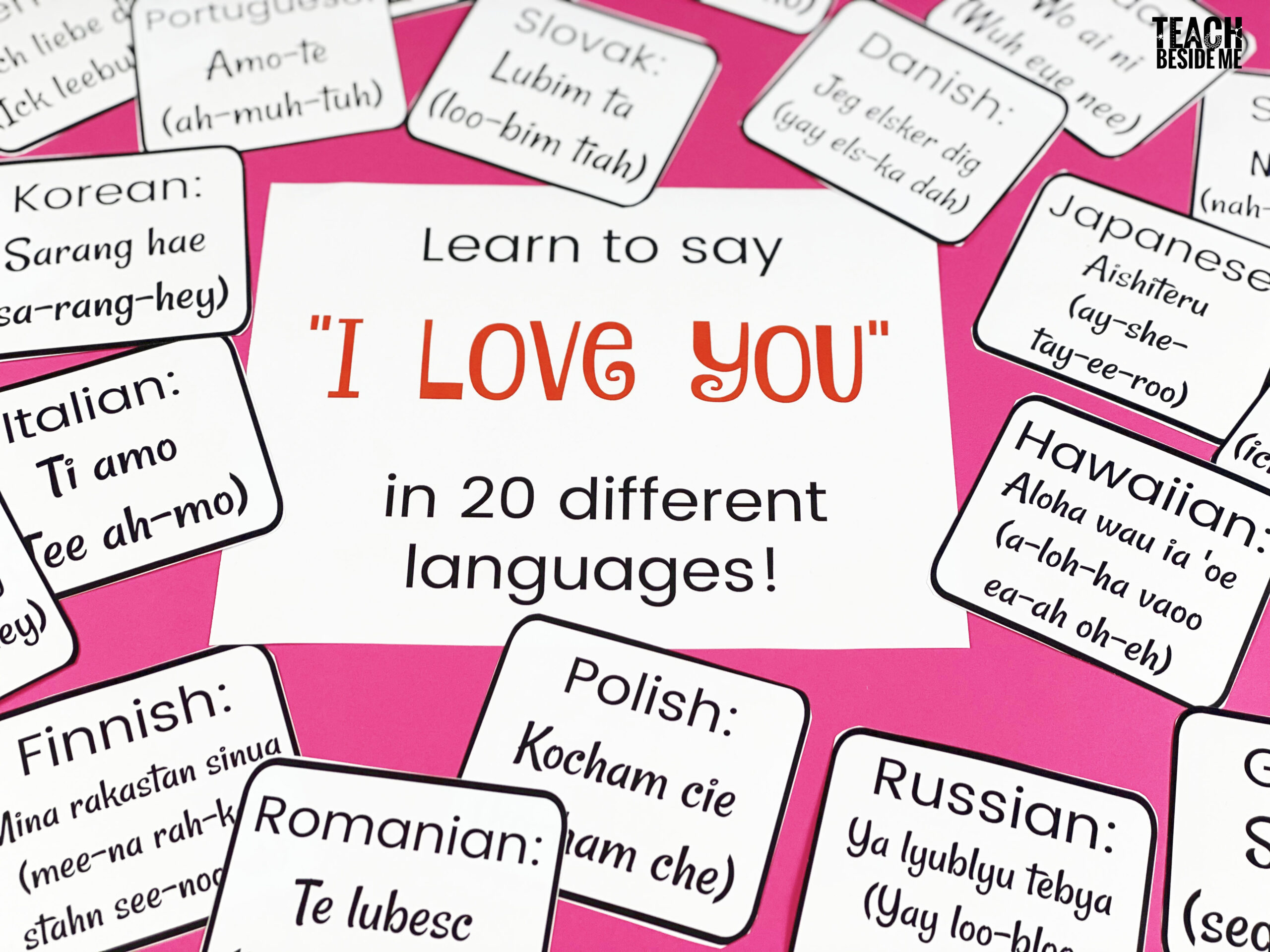
To illustrate the practical application of the phrases, let’s explore a few real-life situations:
Examples
Consider the following table for examples of using the phrases in various situations:
| Phrase | Example | Situation |
|---|---|---|
| Je t’aime (French) | “I love you, my darling.” | Expressing love to a romantic partner |
| Ich liebe dich (German) | “I love you, my friend.” | Expressing affection to a close friend |
| Te amo (Spanish) | “I love you, my child.” | Expressing love to a child or family member |
| Wo ai ni (Mandarin) | “I love you, my teacher.” | Expressing gratitude and respect to a mentor |
| Aishiteru (Japanese) | “I love you, my homeland.” | Expressing patriotism or love for one’s country |
These examples demonstrate the versatility of the phrases and their adaptability to different relationships and contexts.
Design a Blockquote
A blockquote is a way to highlight a quote or saying within your text. It is typically indented and set off from the rest of the text, and it can be used to add emphasis or to introduce a new idea.
To create a blockquote in HTML, use the
tag. The opening
tag should be placed before the quoted text, and the closing
tag should be placed after the quoted text.
Example
The greatest glory in living lies not in never falling, but in rising every time we fall.
Commonly Asked Questions
What are some common cultural differences in expressing love?
Cultural norms influence the frequency, intensity, and public display of affection. For example, some cultures value reserved expressions of love, while others encourage open and demonstrative displays.
How can language barriers impact cross-cultural relationships?
Language barriers can create misunderstandings and misinterpretations, especially when it comes to expressing emotions. Mispronunciation or incorrect usage of phrases can lead to unintended meanings or offense.
What are some non-verbal ways to express love?
Gestures, actions, and gifts can convey love without words. Holding hands, giving hugs, and offering thoughtful presents are universal expressions of affection.
