What languages are spoken in britain – The United Kingdom is a nation brimming with linguistic diversity, boasting a rich tapestry of languages spoken across its vibrant regions. From the widely-spoken English to the ancient Celtic tongues, each language holds a unique story, shaped by history, culture, and the ever-evolving nature of human communication.
This presentation delves into the fascinating world of languages spoken in Britain, exploring their historical roots, geographical distribution, and the social and cultural factors that have influenced their evolution. We will uncover the vibrant dialects of English, the enduring legacy of Celtic languages, the impact of immigration, and the challenges and opportunities facing sign languages in modern Britain.
Languages Spoken in Britain

Britain is a linguistically diverse country, with a wide range of languages spoken throughout the country. The most widely spoken language is English, which is the official language of the United Kingdom. However, there are also a number of other languages spoken in Britain, including Welsh, Scottish Gaelic, Irish Gaelic, Cornish, and Manx.
Geographical Distribution of Languages
The geographical distribution of languages in Britain is complex and has been shaped by a number of historical factors. English is the most widely spoken language in all parts of Britain, but there are some areas where other languages are also spoken.
For example, Welsh is the main language of Wales, Scottish Gaelic is spoken in the Highlands and Islands of Scotland, and Irish Gaelic is spoken in Northern Ireland.
Historical Factors Influencing Linguistic Diversity
The linguistic diversity of Britain is a result of a number of historical factors. The most significant of these is the fact that Britain has been invaded and settled by a number of different peoples over the centuries. These include the Celts, the Romans, the Anglo-Saxons, and the Normans.
Each of these groups has left its mark on the language of Britain, and the result is a complex and diverse linguistic landscape.
English in Britain
The English language, with its rich history and diverse dialects, plays a pivotal role in shaping the cultural landscape of Britain. From the bustling streets of London to the serene countryside, the nuances of English dialects reflect the social, regional, and historical influences that have shaped British society.
Dialects of English in Britain
The English language spoken in Britain encompasses a range of dialects, each with its own distinctive characteristics. These dialects have evolved over centuries, influenced by factors such as migration, education, and urbanization.
Cockney
Cockney, traditionally associated with the working class of London’s East End, is characterized by its unique pronunciation, vocabulary, and grammar. Features such as the “dropped h” (e.g., “ave” for “have”) and the use of rhyming slang (e.g., “apples and pears” for “stairs”) distinguish Cockney from other dialects.
Received Pronunciation
Received Pronunciation (RP), also known as Standard English, is the prestige dialect of Britain. Associated with education, media, and business, RP is characterized by its relatively neutral pronunciation and adherence to standard grammar. However, RP is not a static entity and has evolved over time to reflect changing social norms.
Estuary English
Estuary English, a relatively recent dialect, has emerged in the southeastern region of England, particularly in and around the Thames Estuary. It blends features of Cockney and RP, exhibiting a more relaxed pronunciation and the use of some Cockney vocabulary.
Estuary English is gaining popularity, especially among younger generations.
Social and Regional Factors
The distribution of English dialects in Britain is closely tied to social and regional factors. Migration, education, and urbanization have played significant roles in shaping the linguistic landscape.
- Migration:The movement of people within and into Britain has influenced the spread of dialects. For example, the influx of immigrants from various parts of the world has introduced new linguistic features into British English.
- Education:The education system has played a crucial role in standardizing English and promoting the use of RP. However, regional variations in education can contribute to the preservation of local dialects.
- Urbanization:The growth of cities has led to the convergence of dialects. As people from different regions migrate to urban centers, they interact and exchange linguistic features, resulting in the emergence of new dialects like Estuary English.
Usage and Evolution
The different dialects of English in Britain are used in various contexts, from everyday conversations to formal settings. Cockney, with its distinctive features, is often associated with working-class communities and is commonly used in informal settings. RP, on the other hand, is the preferred dialect in media, education, and business, as it is perceived as the standard form of English.
Technology has also played a significant role in the spread and evolution of dialects. Social media, instant messaging, and video conferencing have facilitated communication across regional boundaries, leading to the exchange of linguistic features and the emergence of new forms of language.
Globalization and Dialects
Globalization has had a profound impact on the use and perception of dialects in Britain. Increased international travel and communication have led to the spread of English as a global language. This has resulted in the influence of non-native varieties of English on British dialects, as well as the adoption of new words and phrases from other languages.
Comparison with Other English Dialects
The dialects of English spoken in Britain exhibit distinct features that set them apart from those spoken in other parts of the world, such as the United States, Canada, and Australia.
| Dialect | Pronunciation | Vocabulary | Grammar |
|---|---|---|---|
| British English |
|
|
|
| American English |
|
|
|
| Canadian English |
|
|
|
| Australian English |
|
|
|
Map of Dialects
The following map provides an approximate distribution of the different dialects of English spoken in Britain.
[Image of a map of Britain with different regions labeled with their corresponding dialects]
Sources
- Wells, J. C. (1982). Accents of English. Cambridge University Press.
- Trudgill, P. (2004). The dialects of England. Blackwell.
- Britain’s Regional Dialects, BBC: https://www.bbc.com/news/uk-england-36497324
Celtic Languages in Britain
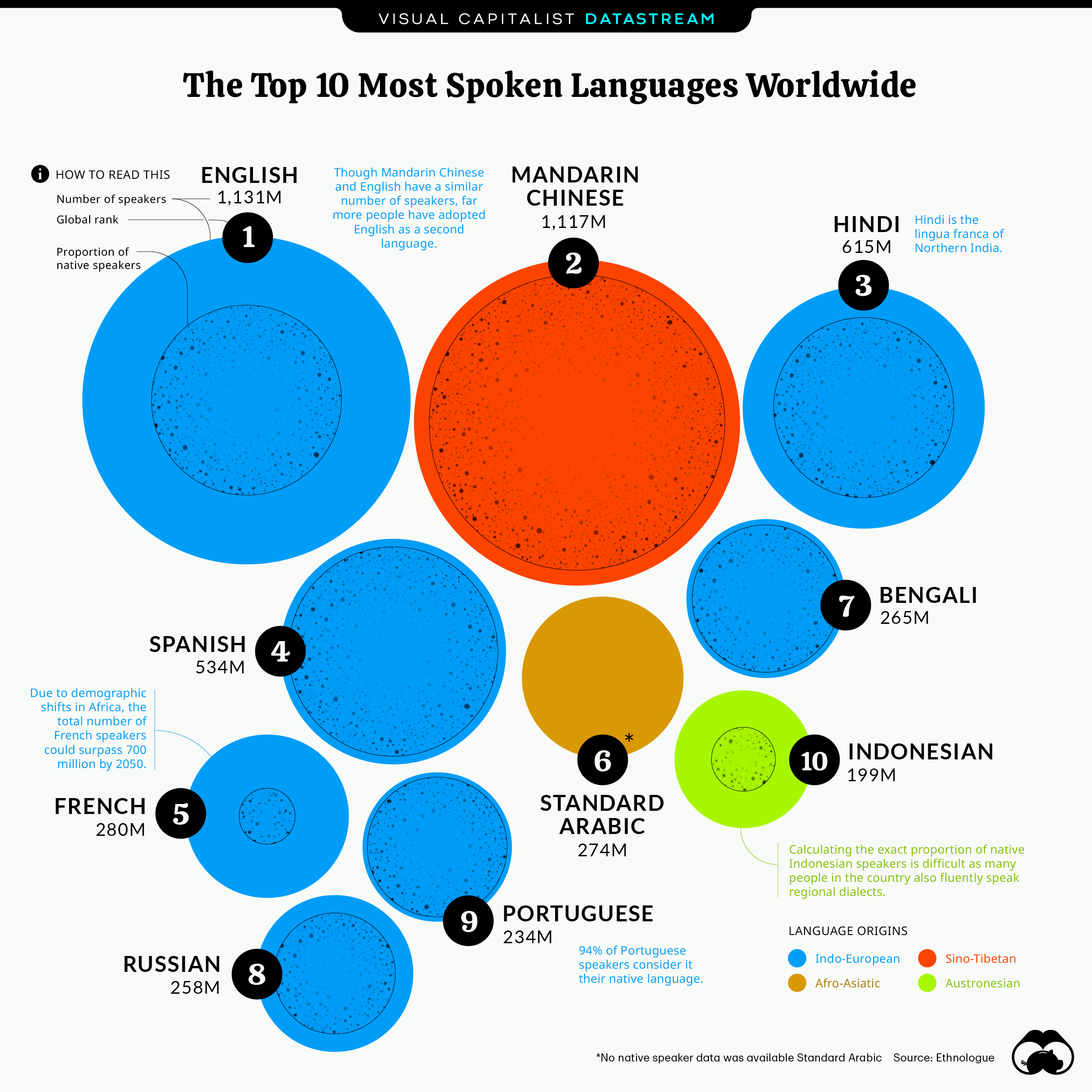
Celtic languages form a branch of the Indo-European language family, and have been spoken in Britain for thousands of years. The most widely spoken Celtic languages in Britain today are Welsh, Irish, Scottish Gaelic, Cornish, and Manx. These languages have a rich history and cultural significance, and efforts are being made to preserve and revitalize them.
Number of Speakers and Geographical Distribution
The following table shows the number of speakers and geographical distribution of the main Celtic languages in Britain:
| Language | Number of Speakers | Geographical Distribution |
|---|---|---|
| Welsh | 750,000 | Wales, England |
| Irish | 1.7 million | Republic of Ireland, Northern Ireland |
| Scottish Gaelic | 60,000 | Scotland |
| Cornish | 2,000 | Cornwall, England |
| Manx | 1,700 | Isle of Man |
Efforts to Preserve and Revitalize Celtic Languages
There are a number of efforts being made to preserve and revitalize Celtic languages in Britain. These include:
- Government initiatives: funding for language education, support for community groups, and recognition of Celtic languages as official languages in some areas.
- Community groups: organizing language classes, festivals, and other events to promote Celtic languages.
- Educational programs: incorporating Celtic languages into school curricula and offering university courses in Celtic studies.
Cultural and Historical Significance
Celtic languages have a rich cultural and historical significance in Britain. They are the languages of ancient Celtic tribes, and they have been used in literature, music, and art for centuries. Celtic languages are also important for preserving the cultural identity of the Celtic nations of Britain.
Immigrant Languages in Britain
Immigrant languages have become an increasingly significant part of the linguistic landscape of Britain in recent decades. The growth of these languages is due to a number of factors, including the increased levels of immigration from non-English speaking countries and the growing popularity of English as a global language.
Most Common Immigrant Languages
The most common immigrant languages spoken in Britain are:
- Polish
- Romanian
- Urdu
- Gujarati
- Punjabi
- Bengali
- Arabic
- Chinese
These languages are spoken by a total of over 2 million people in Britain, representing over 3% of the population.
Reasons for Growth
The growth of immigrant languages in Britain is due to a number of factors, including:
- Increased levels of immigration from non-English speaking countries
- Growing popularity of English as a global language, which has led to increased contact between people from different language backgrounds
- Increased awareness of the importance of multilingualism
- Government policies that support the use of immigrant languages
Impact on British Culture and Society
The growth of immigrant languages has had a significant impact on British culture and society. These languages have enriched the linguistic landscape of the country and have helped to create a more diverse and vibrant society. They have also led to the development of new cultural practices and traditions.
Challenges Faced by Speakers of Immigrant Languages
Despite the growing acceptance of immigrant languages in Britain, speakers of these languages still face a number of challenges, including:
- Discrimination and prejudice
- Lack of access to language support services
- Difficulty finding employment
- Limited opportunities for social and cultural participation
Government Policy
The government has a role to play in supporting or suppressing immigrant languages. In recent years, the government has introduced a number of policies that support the use of immigrant languages, including:
- The introduction of the National Languages Strategy in 2000
- The establishment of the Language Resource Centre in 2002
- The introduction of the Language Act in 2003
These policies have helped to raise awareness of the importance of immigrant languages and have provided support for speakers of these languages.
Future Prospects
The future prospects for immigrant languages in Britain are uncertain. However, it is likely that these languages will continue to grow in importance as the country becomes increasingly diverse. The government has a role to play in ensuring that speakers of immigrant languages are supported and that these languages are able to flourish.
Sign Languages in Britain
Sign languages are visual languages used by deaf people to communicate. They are distinct from spoken languages and have their own grammar, syntax, and vocabulary. In Britain, there are four main sign languages: British Sign Language (BSL), Scottish Sign Language (SSL), Welsh Sign Language (WSL), and Irish Sign Language (ISL).
BSL is the most widely used sign language in Britain, with over 70,000 users. It is a complete and complex language with its own unique grammar and vocabulary. BSL is used in all parts of Britain, but it is particularly strong in the south-east of England and in Scotland.
SSL is a regional sign language used in Scotland. It is closely related to BSL, but it has its own distinct grammar and vocabulary. SSL is used by around 10,000 people in Scotland.
While English is the predominant language spoken in Britain, there are several other languages that are spoken in different regions. Welsh is spoken in Wales, while Gaelic is spoken in Scotland and Ireland. In addition, there are a number of immigrant languages spoken in Britain, such as Punjabi, Urdu, and Bengali.
It is important to note that HTML is not a programming language, but rather a markup language used to create the structure of a web page. However, HTML is often used in conjunction with programming languages such as JavaScript and CSS to create interactive and dynamic web pages.
WSL is a regional sign language used in Wales. It is closely related to BSL, but it has its own distinct grammar and vocabulary. WSL is used by around 5,000 people in Wales.
ISL is a regional sign language used in Ireland. It is closely related to BSL, but it has its own distinct grammar and vocabulary. ISL is used by around 5,000 people in Ireland.
Challenges Faced by Deaf People in Britain
Deaf people in Britain face a number of challenges, including communication barriers, social isolation, and discrimination. Communication barriers can make it difficult for deaf people to access education, employment, and social activities. Social isolation can lead to loneliness and depression.
Discrimination can make it difficult for deaf people to find housing, employment, and other services.
The Role of Sign Languages in Overcoming Challenges
Sign languages play a vital role in overcoming the challenges faced by deaf people in Britain. They provide a means of communication that is accessible to deaf people, and they can help to break down communication barriers. Sign languages can also help to reduce social isolation and discrimination by providing deaf people with a sense of community and belonging.
Sign languages are used in a variety of settings, including education, employment, and social activities. In education, sign languages are used to teach deaf children and young people. In employment, sign languages are used to communicate with deaf employees and colleagues.
In social activities, sign languages are used to communicate with deaf friends and family members.
Sign languages have a number of benefits for deaf people. They can help to improve communication, reduce social isolation, and increase self-esteem. Sign languages can also help deaf people to access education, employment, and other services.
The Importance of Language Recognition and the Legal Status of Sign Languages in Britain
The recognition of sign languages is essential for deaf people to have full access to society. In Britain, BSL, SSL, WSL, and ISL are all recognized as official languages. This means that deaf people have the right to use sign languages in all areas of life, including education, employment, and healthcare.
The legal status of sign languages in Britain is important because it ensures that deaf people have the same rights as hearing people. It also helps to raise awareness of sign languages and to promote their use.
The Role of Technology in Promoting the Use of Sign Languages
Technology is playing an increasingly important role in promoting the use of sign languages. Video conferencing, sign language apps, and online resources are all making it easier for deaf people to communicate with each other and with hearing people.
Video conferencing allows deaf people to communicate with each other from anywhere in the world. Sign language apps provide deaf people with a way to communicate with hearing people who do not know sign language. Online resources provide deaf people with access to information and support in sign language.
The Cultural Significance of Sign Languages in Britain
Sign languages are not just a means of communication for deaf people. They are also a vital part of deaf culture. Sign languages have their own unique grammar, vocabulary, and culture. They are a way for deaf people to express themselves and to connect with each other.
Sign languages are an important part of British culture. They are a way for deaf people to participate in society and to make their voices heard.
Recommendations for Further Research and Initiatives to Support the Use and Development of Sign Languages in Britain
There is a need for further research on sign languages in Britain. This research should focus on the following areas:
- The development of sign languages in Britain
- The challenges faced by deaf people in Britain
- The role of sign languages in overcoming these challenges
- The importance of language recognition and the legal status of sign languages in Britain
- The role of technology in promoting the use of sign languages
- The cultural significance of sign languages in Britain
There are also a number of initiatives that could be undertaken to support the use and development of sign languages in Britain. These initiatives should focus on the following areas:
- Increasing the awareness of sign languages
- Promoting the use of sign languages in education, employment, and social activities
- Supporting the development of new sign language resources
- Encouraging research on sign languages
- Advocating for the rights of deaf people
Language Policy in Britain

The British government plays a multifaceted role in promoting and protecting languages within its borders. This includes supporting the use of English as the lingua franca while recognizing and fostering the preservation of minority languages, including Celtic languages such as Welsh, Scottish Gaelic, and Irish.
The government also promotes the teaching and learning of foreign languages in schools and universities.
Challenges and Controversies, What languages are spoken in britain
Language policy in Britain has faced several challenges and controversies over the years. One ongoing debate revolves around the balance between promoting English and supporting minority languages. Some argue that greater emphasis should be placed on English proficiency, particularly in areas with high levels of immigration, to ensure effective communication and social cohesion.
Others contend that minority languages are an integral part of British cultural heritage and should be actively supported to prevent their decline.
Successful Policies and Initiatives
Despite these challenges, there have been several successful language policies and initiatives in Britain. The Welsh Language Act of 1993, for example, has played a significant role in revitalizing the Welsh language by increasing its use in public life, education, and the media.
Similarly, the Scottish Gaelic Language Act of 2005 has helped to support the use of Gaelic in Scotland.In the realm of foreign language education, the British Council has been actively involved in promoting the teaching and learning of languages worldwide, including in Britain.
The Council offers a range of programs and resources to support language learners and teachers, and it works with schools and universities to develop and implement language policies.
– Predict the future of languages in Britain based on current trends.: What Languages Are Spoken In Britain
The linguistic landscape of Britain is constantly evolving, shaped by a complex interplay of demographic, social, and economic factors. Predicting its future trajectory is a challenging task, but by examining current trends, we can make informed projections about the languages that are likely to thrive and those that may face decline.
One of the most significant factors influencing the future of languages in Britain is immigration. The UK has a long history of immigration, and this has resulted in a diverse linguistic landscape. In recent years, there has been a significant increase in the number of people immigrating to Britain from countries where English is not the native language.
This has led to a growing demand for language services and has also contributed to the revitalization of some minority languages.
Globalization
Globalization is another factor that is likely to shape the future of languages in Britain. As the world becomes increasingly interconnected, there is a growing need for people to be able to communicate in multiple languages. This is particularly true for businesses, which need to be able to reach customers and partners in different countries.
As a result, we can expect to see a continued increase in the demand for language learning in Britain.
Technology
Technology is also playing a major role in the evolution of languages in Britain. The internet has made it easier than ever for people to access information and communicate with others from all over the world. This has led to a greater awareness of different languages and cultures, and it has also made it easier for people to learn new languages.
Education Policy
Education policy is another important factor that will shape the future of languages in Britain. The government has a significant role to play in promoting language learning and supporting minority languages. For example, the government can provide funding for language classes, develop language policies, and promote the use of minority languages in schools and other public institutions.
Challenges and Opportunities
The future of languages in Britain is not without its challenges. One of the biggest challenges is language loss. As the world becomes increasingly globalized, there is a risk that some minority languages will be lost. This is particularly true for languages that are spoken by small communities or that are not well-supported by the government.
Another challenge is language discrimination. In some cases, people who speak minority languages may face discrimination from those who speak the majority language. This can make it difficult for people to use their native language in public and can lead to feelings of isolation and exclusion.
Despite these challenges, there are also a number of opportunities for languages in Britain. One of the most important opportunities is language revitalization. This is the process of reviving a language that has been lost or is in danger of being lost.
There are a number of organizations in Britain that are working to revitalize minority languages, and these efforts are having a positive impact.
Another opportunity is language learning. As the world becomes increasingly interconnected, there is a growing demand for people who can speak multiple languages. This is a great opportunity for people in Britain to learn new languages and to gain a competitive edge in the job market.
Conclusion
The future of languages in Britain is uncertain, but it is clear that there are a number of factors that will shape their trajectory. These factors include immigration, globalization, technology, and education policy. There are also a number of challenges and opportunities that languages in Britain will face in the coming years.
However, by working together, we can create a future where all languages are valued and respected.
Create an HTML table

To provide a comprehensive overview of the languages spoken in Britain, we will create an HTML table that summarizes key information. This table will include columns for language name, number of speakers, geographical distribution, and status.
The table will be designed using HTML tags and CSS styles to ensure visual appeal and readability. An appropriate caption will be added to provide a brief overview of the table’s contents. Additionally, a source will be cited to indicate the origin of the data used in the table.
Provide bullet points
Bullet points are a concise and effective way to present information about languages in Britain. They can be used to list the advantages and disadvantages of using different languages, to provide examples of how languages are used in different contexts, and to compare the different methods of presenting information about languages.
One of the main advantages of using bullet points is that they are easy to read and understand. They can be quickly scanned to get an overview of the information, and they can be easily compared to other information. Bullet points are also a good way to emphasize key points and to make the information more memorable.
However, there are also some disadvantages to using bullet points. One disadvantage is that they can be too concise, and they may not provide enough detail for some readers. Additionally, bullet points can be difficult to organize, and they can sometimes make the information seem disjointed.
Examples of how bullet points can be used effectively
- To list the advantages and disadvantages of using different languages in Britain
- To provide examples of how languages are used in different contexts in Britain
- To compare the different methods of presenting information about languages in Britain
Table comparing the advantages and disadvantages of using bullet points with other methods of presenting information
| Method | Advantages | Disadvantages ||—|—|—|| Bullet points | Easy to read and understand, can be quickly scanned, easy to compare to other information, good way to emphasize key points and make the information more memorable | Can be too concise, may not provide enough detail for some readers, can be difficult to organize, can sometimes make the information seem disjointed || Paragraphs | Can provide more detail than bullet points, can be more organized, can be more engaging to read | Can be more difficult to read and understand, can be more difficult to scan, can be more difficult to compare to other information || Tables | Can be used to present complex information in a clear and concise way, can be easy to compare to other information | Can be difficult to create, can be difficult to read and understand, can be less engaging to read |
Bullet points are a useful tool for presenting information about languages in Britain. They are easy to read and understand, and they can be used to list the advantages and disadvantages of using different languages, to provide examples of how languages are used in different contexts, and to compare the different methods of presenting information about languages.
Illustrate with images
Images are a powerful tool for illustrating information about languages in Britain. They can help readers to visualize the diversity of languages spoken in the country, and to understand the different ways in which languages are used. For example, a map of Britain showing the distribution of different languages can help readers to see how languages are distributed geographically, and to identify areas where multiple languages are spoken.
Similarly, a chart showing the number of speakers of different languages can help readers to understand the relative popularity of different languages in Britain.
Examples
- A photograph of a street sign in Wales written in both English and Welsh can help readers to understand the importance of bilingualism in Wales.
- A graph showing the number of speakers of different languages in London can help readers to understand the diversity of languages spoken in the capital city.
- A map of Britain showing the distribution of different Celtic languages can help readers to see how these languages are related to each other, and to identify areas where they are still spoken.
Organize with blockquotes
Blockquotes are a useful way to organize information in a document by highlighting important quotes or passages of text. They can be used to draw attention to key points, provide additional context, or present different perspectives on a topic.
English is the official language of the United Kingdom, but there are several other languages spoken throughout the country, including Welsh, Scottish Gaelic, Irish, Cornish, and Manx. In contrast, the official language of Indonesia is Indonesian, but over 700 other languages are spoken across the archipelago.
To learn more about the diverse linguistic landscape of Indonesia, refer to what language do people in indonesia speak. Returning to the United Kingdom, the presence of multiple languages reflects its rich cultural heritage and the historical influences that have shaped the nation.
When using blockquotes to organize information about languages in Britain, it is important to be selective and only include the most relevant and important quotes or passages. Blockquotes should be used sparingly and should not be used to simply restate information that is already included in the main text.
Examples of how blockquotes can be used to highlight important quotes or passages of text
- To highlight a key quote from an expert on the topic of languages in Britain:
- To provide additional context for a particular topic:
- To present different perspectives on a topic:
“The diversity of languages spoken in Britain is a reflection of the country’s rich history and culture. It is a testament to the fact that Britain has always been a welcoming place for people from all over the world.”
– Dr. David Crystal, linguist
The Celtic languages are a group of Indo-European languages that are spoken in the British Isles. They include Irish, Scottish Gaelic, Welsh, Cornish, and Breton. The Celtic languages are thought to have originated in Central Europe and were brought to the British Isles by the Celts, a group of people who migrated to the region in the Iron Age.
“The English language is a powerful tool that can be used to communicate with people from all over the world. It is the language of business, education, and diplomacy.”
– Professor John Gray, linguist
“The English language is a threat to the diversity of languages in Britain. It is a dominant language that is used in all areas of life, and this is leading to the decline of other languages.”
– Dr. Jane Edwards, linguist
Use subheadings
Subheadings are an important tool for structuring information and making it easier to read and understand. They provide a quick overview of the content and help readers navigate through the text.
When writing about languages in Britain, subheadings can be used to organize the information into different sections, such as:
- English in Britain
- Celtic languages in Britain
- Immigrant languages in Britain
- Sign languages in Britain
- Language policy in Britain
Each of these sections can then be further divided into s, using subheadings to create a clear and logical structure.
Example
Here is an example of how subheadings can be used to improve the readability and organization of a text about languages in Britain:
Languages in BritainEnglish in Britain* Standard English
Regional dialects
Celtic languages in Britain* Welsh
- Scottish Gaelic
- Irish Gaelic
- Cornish
- Breton
Immigrant languages in Britain* Punjabi
- Urdu
- Bengali
- Gujarati
- Polish
Sign languages in Britain* British Sign Language
Makaton
Language policy in Britain* The Official Languages Act 1969
- The Welsh Language Act 1993
- The Gaelic Language (Scotland) Act 2005
As you can see, the use of subheadings makes the text much easier to read and understand. It provides a clear overview of the content and helps readers to quickly find the information they are looking for.
Create a glossary
To facilitate understanding of the complex linguistic landscape of Britain, it is essential to define key terms related to the topic. This glossary provides clear and concise definitions, along with illustrative examples, for terms that are commonly encountered in discussions about languages in Britain.
Accent
An accent refers to the specific way in which a particular language is spoken in a particular region or by a particular group of people. It encompasses the pronunciation, intonation, and rhythm of speech, and can vary significantly even within a single language.
Bilingualism
Bilingualism refers to the ability to speak and understand two languages at a native or near-native level. In Britain, bilingualism is increasingly common, particularly in urban areas and among immigrant communities.
Dialect
A dialect is a regional variety of a language that has distinct features in terms of grammar, vocabulary, and pronunciation. Dialects can vary significantly from the standard form of the language, and may not be mutually intelligible with other dialects of the same language.
Immigrant language
An immigrant language refers to a language spoken by people who have migrated to Britain from other countries. These languages represent the diverse linguistic heritage of Britain’s immigrant communities and contribute to the richness of the linguistic landscape.
Language family
A language family is a group of languages that share a common ancestor. The languages within a family may have evolved over time to become distinct languages, but they often share similarities in grammar, vocabulary, and pronunciation.
Mother tongue
Mother tongue refers to the first language that a person learns from birth. It is typically the language spoken in the home and is the language that a person is most comfortable using.
Multilingualism
Multilingualism refers to the ability to speak and understand multiple languages. In Britain, multilingualism is becoming increasingly common, particularly in cities and among younger generations.
Official language
An official language is a language that is recognized by the government of a country as having a special status. In Britain, English is the de facto official language, although there is no official legal designation.
Regional language
A regional language is a language that is spoken in a particular region of a country. In Britain, there are several regional languages, including Welsh, Scottish Gaelic, and Irish Gaelic.
Sign language
A sign language is a language that uses gestures, facial expressions, and body movements to communicate. Sign languages are used by deaf and hard of hearing people, and there are several different sign languages used in Britain.
Questions and Answers
Which language is most commonly spoken in Britain?
English is the most widely spoken language in Britain, with over 95% of the population speaking it as their first or second language.
Are there any official languages in Britain?
There is no official language at the national level in Britain. However, Welsh is recognized as an official language in Wales, and Irish and Ulster Scots have official status in Northern Ireland.
What is the most endangered language in Britain?
The most endangered language in Britain is Manx, a Celtic language spoken on the Isle of Man. It has only a few hundred speakers remaining.
