How to say merry christmas in different languages? This question takes us on a fascinating linguistic journey, exploring the diverse ways in which people around the world express their holiday greetings. From the familiar “Merry Christmas” in English to the melodious “Feliz Navidad” in Spanish, each language holds a unique story of cultural traditions and linguistic evolution.
As we delve into the nuances of these phrases, we’ll uncover the significance of cultural greetings, the origins and variations of the phrase “Merry Christmas,” and the etiquette surrounding its use in different countries. Along the way, we’ll discover how language reflects the rich tapestry of human experience and the spirit of the holiday season.
Languages of the World
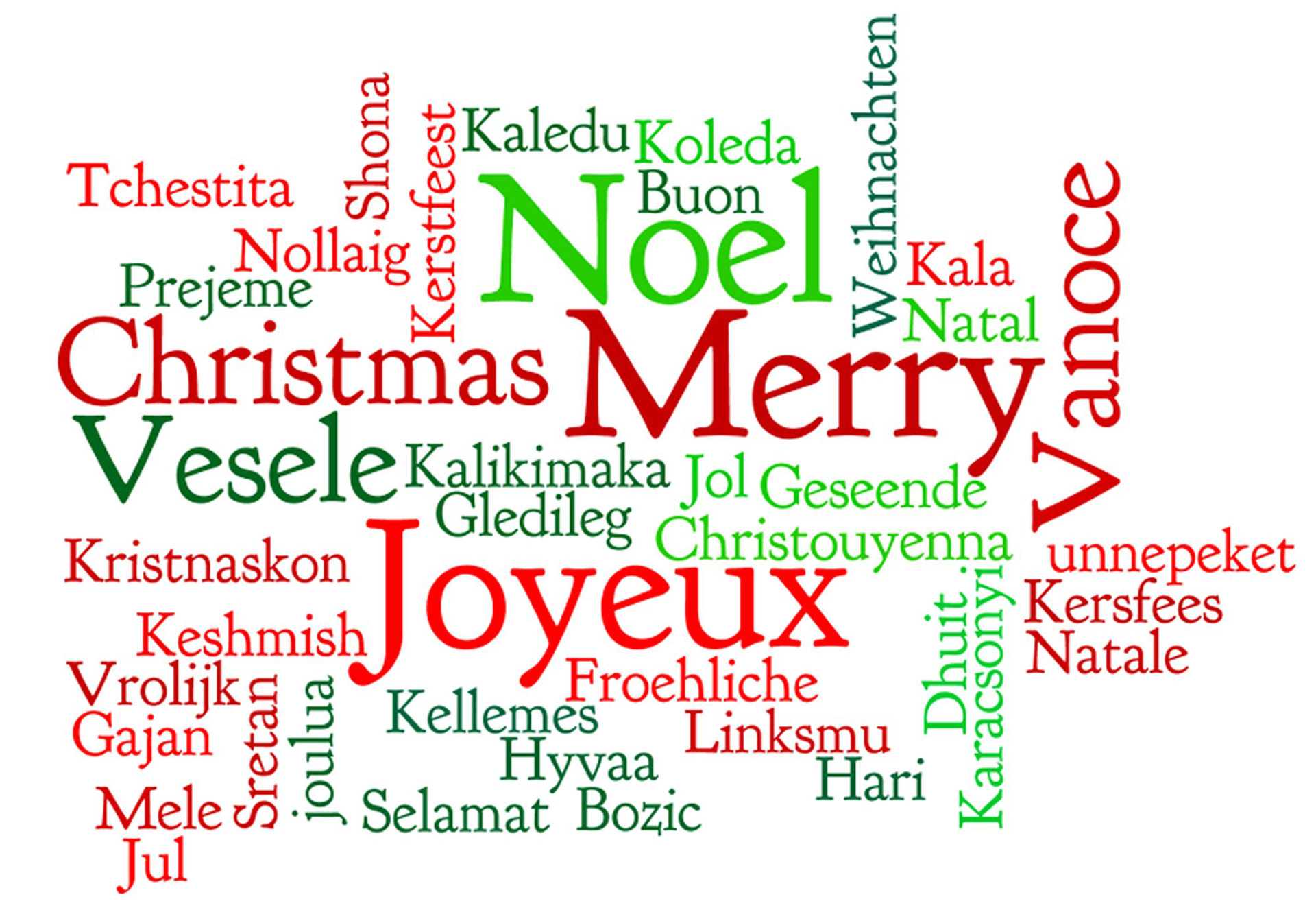
Languages are a fundamental aspect of human communication, facilitating the exchange of ideas, thoughts, and emotions across cultures and borders. Throughout history, numerous languages have emerged, each with its unique characteristics and significance. In the modern world, a handful of languages have gained prominence, becoming widely spoken and influential in various regions.
The most spoken languages globally, in terms of native speakers, include:
- Mandarin Chinese: Spoken by over 1.1 billion people primarily in China, Taiwan, Singapore, and other parts of Southeast Asia.
- Spanish: Spoken by over 534 million people across Spain, Latin America, and parts of the United States.
- English: Spoken by over 1.45 billion people as a native or second language, with significant presence in the United Kingdom, United States, Canada, Australia, and many other countries.
- Hindi: Spoken by over 602 million people, primarily in India and parts of South Asia.
- Arabic: Spoken by over 372 million people across the Middle East and North Africa.
These languages hold immense cultural, economic, and political significance in their respective regions. They serve as mediums of instruction, government, business, and media, shaping the identities and perspectives of vast populations.
Cultural Greetings
Cultural greetings are a vital aspect of social interactions in various societies worldwide. They reflect the values, beliefs, and customs of different cultures and play a crucial role in establishing relationships, conveying respect, and facilitating communication.
Merry Christmas is a phrase that can be translated into many different languages. For example, in Portuguese, it is “Feliz Natal.” If you are interested in learning more about the languages spoken in Portugal, you can click here. Other languages spoken around the world have their own unique ways of saying Merry Christmas, such as “Joyeux Noël” in French and “Frohe Weihnachten” in German.
Greetings can vary significantly across cultures, ranging from verbal expressions to physical gestures. Some common examples include:
Verbal Greetings
- In many Western cultures, the handshake is a common form of greeting, often accompanied by a verbal greeting such as “Hello” or “Good morning.”
- In Japan, the traditional greeting involves a slight bow with hands clasped in front of the body, accompanied by the phrase “Konnichiwa” (good day).
- In India, the traditional greeting is the “Namaste,” where individuals bring their palms together in front of their chest and say “Namaste.”
Physical Gestures, How to say merry christmas in different languages
- In some Arab cultures, the traditional greeting involves a kiss on the cheek or a hug between close friends or family members.
- In many Polynesian cultures, the traditional greeting is a nose-to-nose touch, known as the “hongi.”
- In Thailand, the traditional greeting is the “wai,” where individuals place their palms together in front of their chest and bow their heads.
Understanding and respecting cultural greetings is essential for effective communication and building positive relationships across different cultures.
Merry Christmas in English
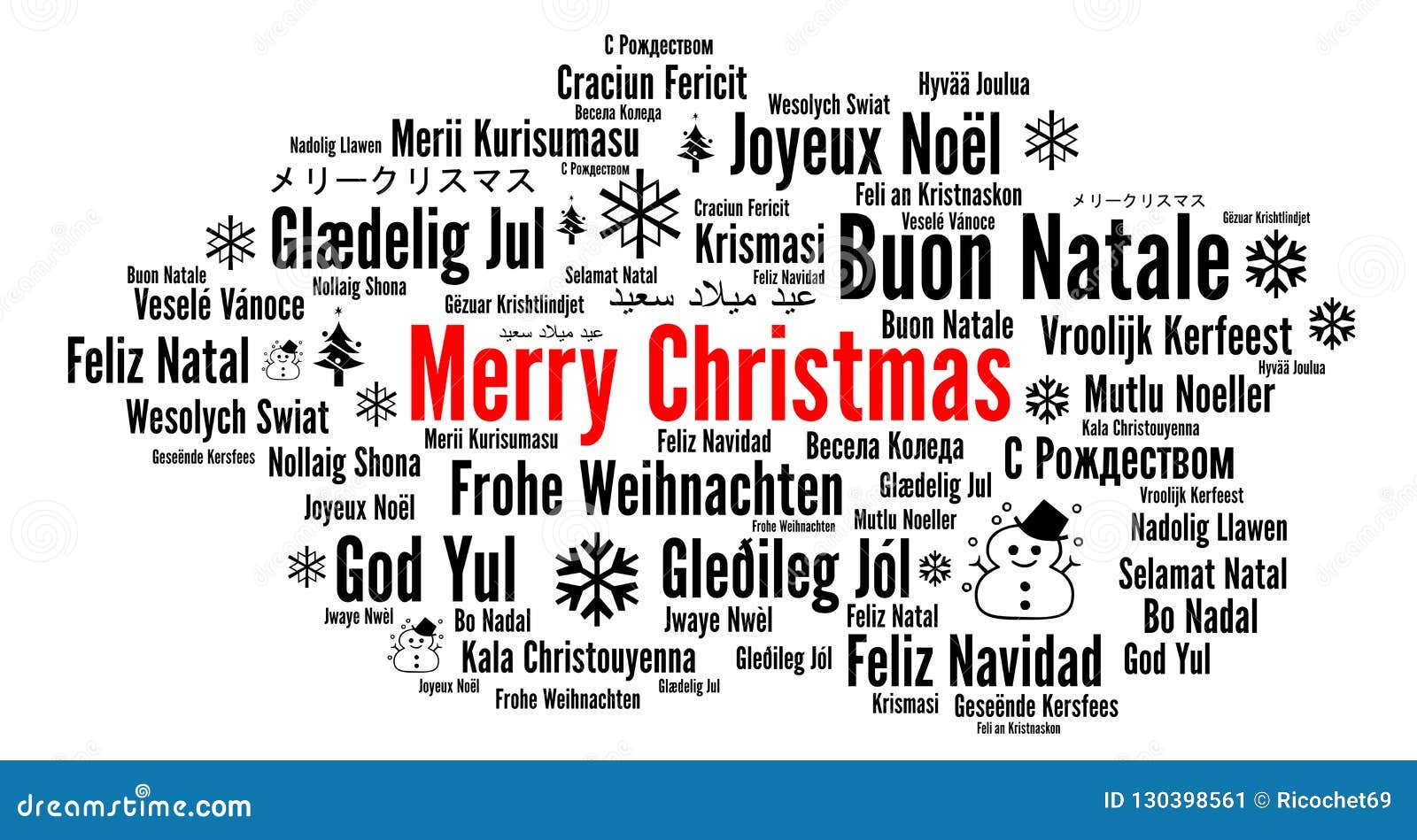
The phrase “Merry Christmas” has a long and rich history in English-speaking countries. Its origins can be traced back to the early days of Christianity, when the faithful would exchange greetings of “Christ’s Mass” on December 25th.
Evolution of the Phrase
Over time, the phrase “Christ’s Mass” evolved into “Merry Christmas.” The first recorded use of the phrase “Merry Christmas” in English was in 1534. By the 17th century, the phrase had become widely used throughout England and its colonies.
Significance of the Phrase
The phrase “Merry Christmas” is a significant part of English-speaking culture. It is used to express joy and goodwill during the Christmas season. The phrase is also used as a greeting, a wish, and a toast.
Merry Christmas in Spanish
The Spanish translation of “Merry Christmas” is “Feliz Navidad”. It is pronounced as “feh-LEES nah-vee-DAHD”.In Spanish-speaking countries, Feliz Navidad is a common and widely used greeting during the Christmas season. It is typically exchanged between family members, friends, and acquaintances as a way to express good wishes and joy.
The phrase is often accompanied by a warm smile and a hug or handshake.
Variations of Feliz Navidad
There are several variations of Feliz Navidad used in different Spanish-speaking regions:| Region | Variation | Pronunciation | Usage ||—|—|—|—|| Spain | Feliz Navidad | feh-LEES nah-vee-DAHD | Standard greeting || Mexico | Feliz Navidad | feh-LEES nah-vee-DAHD | Standard greeting || Argentina | Feliz Navidad | feh-LEES nah-vee-DAHD | Standard greeting || Colombia | Feliz Navidad | feh-LEES nah-vee-DAHD | Standard greeting || Puerto Rico | Feliz Navidad | feh-LEES nah-vee-DAHD | Standard greeting || Cuba | Feliz Navidad | feh-LEES nah-vee-DAHD | Standard greeting |
Example Usage
Here is an example of how Feliz Navidad might be used in a Spanish-language context:”¡Feliz Navidad a todos!” (Merry Christmas to all!)
Merry Christmas in French
The French translation of “Merry Christmas” is “Joyeux Noël,” pronounced as “zhwa-yuh nwa-ehl.” This phrase holds significant cultural importance in French-speaking countries, serving as a traditional greeting exchanged during the Christmas season.
Variations of “Merry Christmas” in French
In French-speaking regions, there are several variations of “Joyeux Noël” used in different contexts:
- Joyeux Noël et Bonne Année:Merry Christmas and Happy New Year
- Bonnes Fêtes de Fin d’Année:Happy Holidays
- Joyeux Noël à Tous:Merry Christmas to All
Etiquette of Using “Merry Christmas” in French
When using “Joyeux Noël” in French-speaking cultures, it is important to observe proper etiquette:
- Use the phrase during the Christmas season, typically from December 24th to January 6th.
- Greet friends, family, and acquaintances with “Joyeux Noël” in a warm and sincere manner.
- In formal settings, use the full phrase “Joyeux Noël et Bonne Année” to convey a more respectful greeting.
Table of French Christmas Greetings
| Formal | Informal | Pronunciation |
|---|---|---|
| Joyeux Noël et Bonne Année | Joyeux Noël | zhwa-yuh nwa-ehl eh bawn a-nay |
| Bonnes Fêtes de Fin d’Année | Bonnes Fêtes | bawn fayt duh faen da-nay |
| Joyeux Noël à Tous | Joyeux Noël à Tous | zhwa-yuh nwa-ehl ah too |
History of “Merry Christmas” in French
The origins of “Joyeux Noël” can be traced back to the Middle Ages, when the phrase “Gaudiosi Natalis” was used in Latin. Over time, the phrase evolved into “Joyeux Noël” in French, becoming a staple of the Christmas season.
Role of “Merry Christmas” in French-Speaking Communities
“Joyeux Noël” plays a significant role in French-speaking communities, serving as a symbol of unity and celebration during the Christmas season. It is used in religious services, family gatherings, and holiday festivities.
Resources for Learning More
- FrenchPod101: How to Say Merry Christmas in French
- Lawless French: Merry Christmas in French
- Collins Dictionary: Joyeux Noël
– Provide the German translation of “Merry Christmas” and its pronunciation.
The German translation of “Merry Christmas” is “Frohe Weihnachten”. It is pronounced as “froh-eh vah-nahk-ten”.
The phrase is typically used to greet people during the Christmas season, which runs from December 24th to January 6th. It is also common to see the phrase written on Christmas cards, decorations, and other festive items.
– Regional Variations
There are some regional variations in the pronunciation of “Frohe Weihnachten”. In some parts of Germany, the phrase is pronounced with a more pronounced “r” sound, while in other parts, the “r” is pronounced more softly.
There are also some regional variations in the usage of the phrase. In some parts of Germany, it is common to say “Frohe Weihnachten” only on Christmas Eve, while in other parts, it is used throughout the Christmas season.
– Historical Origins
The phrase “Frohe Weihnachten” has its origins in the early Christian church. The first recorded use of the phrase dates back to the 4th century AD. The phrase was originally used as a greeting among Christians during the Christmas season.
Over time, the phrase became more widely used and eventually became the standard way to greet people during Christmas in Germany.
– Cultural Nuances
There are some cultural nuances associated with using the phrase “Frohe Weihnachten”. For example, it is considered to be more polite to say “Frohe Weihnachten” in person than it is to write it in a letter or email.
It is also considered to be more polite to say “Frohe Weihnachten” to someone who is older than you than it is to someone who is younger than you.
– Usage Examples
- Formal setting:“Ich wünsche Ihnen ein frohes Weihnachtsfest.” (I wish you a Merry Christmas.)
- Informal setting:“Frohe Weihnachten!” (Merry Christmas!)
– Summary Table
| Key Point | Description |
|---|---|
| Translation | Frohe Weihnachten |
| Pronunciation | froh-eh vah-nahk-ten |
| Cultural Context | Used to greet people during the Christmas season |
| Usage | Typically used in person, more polite to say to someone older than you |
| Historical Origins | Dates back to the early Christian church |
| Cultural Nuances | Considered more polite to say in person than in writing |
– Short Story
It was Christmas Eve, and the streets of Berlin were filled with people rushing to finish their last-minute shopping. In the midst of the hustle and bustle, two friends, Maria and Sophia, were walking home from the Christmas market.
“Frohe Weihnachten, Sophia!” Maria said.
“Frohe Weihnachten, Maria!” Sophia replied. “I hope you have a wonderful Christmas.”
Maria and Sophia continued walking, chatting about their plans for the holiday. They talked about the food they were going to eat, the presents they were going to give, and the family and friends they were going to spend time with.
As they approached Maria’s house, they stopped to say goodbye.
“Frohe Weihnachten noch einmal!” Sophia said.
“Frohe Weihnachten!” Maria replied. “Take care.”
Maria watched as Sophia walked away, then turned and went inside. She was filled with a sense of peace and joy. Christmas was a time for family, friends, and giving, and she was grateful to be able to spend it with the people she loved.
– Resources
Merry Christmas in Italian

Merry Christmas in Italian is “Buon Natale” (pronounced “bwawn nah-tah-lay”).
This phrase is widely used throughout Italy during the Christmas season, and it is considered a warm and festive greeting. Italians typically exchange “Buon Natale” wishes with family, friends, and acquaintances during the Christmas Eve and Christmas Day celebrations.
Merry Christmas in Chinese
In Chinese, “Merry Christmas” is translated as “圣诞快乐” (Shèng dàn kuài lè). It is pronounced as “shèng dàn kuài lè” with a neutral tone on the first syllable and a fourth tone on the second and third syllables.
Cultural Context and Usage
Christmas is not a traditional Chinese holiday, but it has gained popularity in recent years, particularly in major cities. It is primarily celebrated by Christians and those who have adopted Western customs. The exchange of gifts, Christmas decorations, and festive gatherings are common practices during this time.
In some Chinese-speaking countries, such as Hong Kong and Singapore, Christmas is a public holiday. In these regions, it is widely celebrated with parades, special events, and holiday markets.
– Provide the Japanese translation of “Merry Christmas” and its pronunciation.

Japanese Translation and Pronunciation
The Japanese translation of “Merry Christmas” is “Meri Kurisumasu” (メリークリスマス). It is pronounced as “meh-ree koo-ree-soo-mah-soo”.
Cultural Context and Usage
In Japan, Christmas is not a traditional holiday, but it has become increasingly popular in recent decades. It is seen as a time for celebration and spending time with family and friends. The phrase “Meri Kurisumasu” is used to wish someone a Merry Christmas and is typically said with a smile and a bow.
– Provide the Russian translation of “Merry Christmas” and its pronunciation.: How To Say Merry Christmas In Different Languages
In Russian, “Merry Christmas” is “С Рождеством Христовым!” (pronounced as “S Rozhdestvom Khristovym!”). It is a traditional greeting exchanged on Christmas Day, which is celebrated on January 7th in Russia and other Russian-speaking countries.
Cultural Context and Usage
Christmas is a significant holiday in Russia, with many people attending church services and gathering with family and friends to celebrate. The phrase “С Рождеством Христовым!” is used as a greeting to express joy and well wishes during this festive season.
In formal settings, such as official speeches or written greetings, the full phrase “С Рождеством Христовым!” is typically used. In informal conversations, however, it is common to use a shortened version, such as “С Рождеством!” (pronounced as “S Rozhdestvom!”).
Regional Variations
There are no significant regional variations in the pronunciation or usage of the phrase “С Рождеством Христовым!” throughout Russia. However, in some parts of Ukraine, the phrase “Христос Рождається!” (pronounced as “Khrystos Rozhdayetsya!”) is also used as a Christmas greeting.
Comparison to Other Slavic Languages
The phrase “С Рождеством Христовым!” is similar to the Christmas greetings in other Slavic languages, such as “Веселого Різдва!” (pronounced as “Veseloho Rizdva!”) in Ukrainian and “Wesołych Świąt!” (pronounced as “Vesokikh Svyont!”) in Polish.
History and Origins
The phrase “С Рождеством Христовым!” has its origins in the Russian Orthodox Church. The phrase is a translation of the Greek phrase “Χριστός γεννάται!” (pronounced as “Khristos gennatai!”), which means “Christ is born!” This phrase has been used as a Christmas greeting in Russia since the early days of Christianity.
Merry Christmas in Arabic
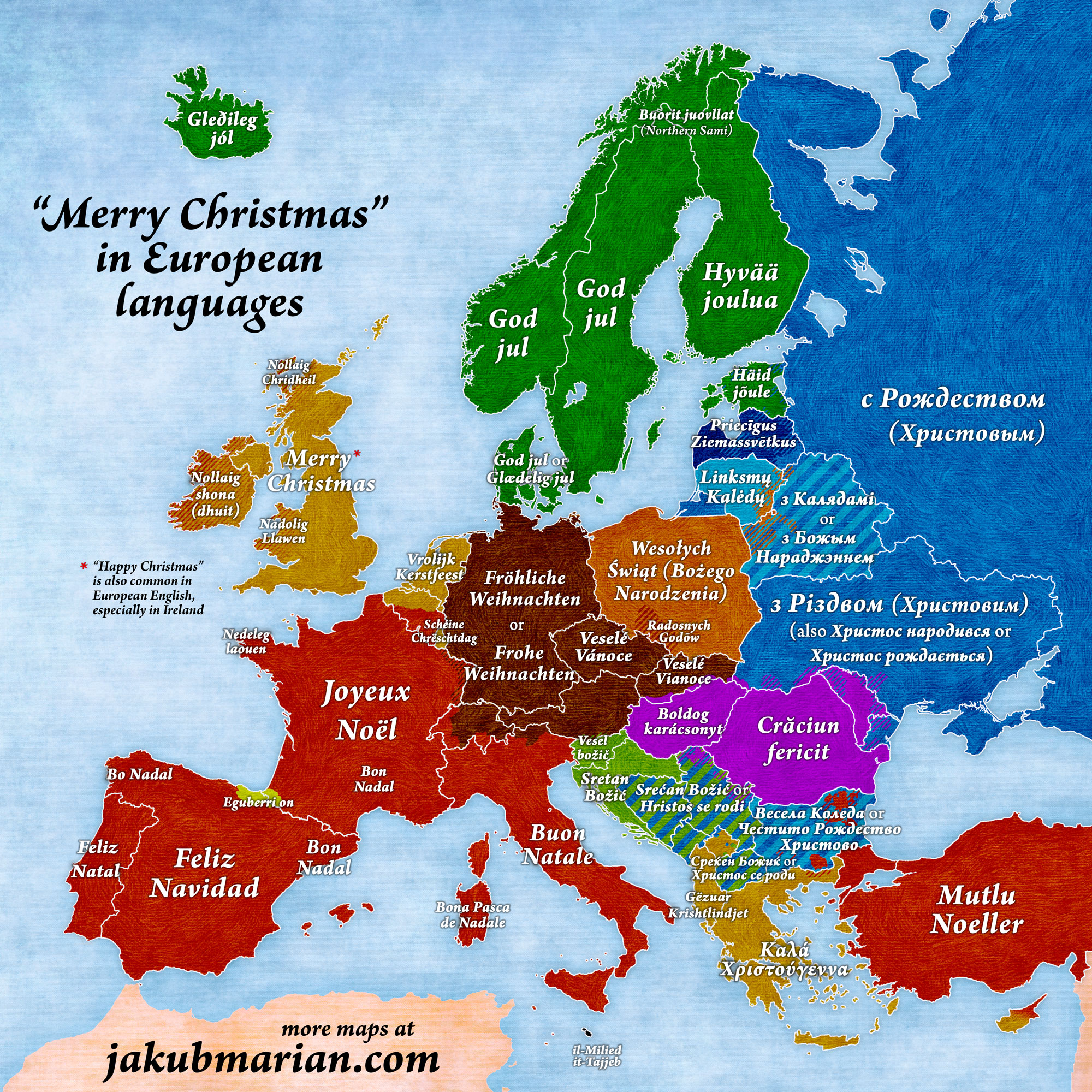
In Arabic, “Merry Christmas” is translated as “عيد ميلاد مجيد” (pronounced as “Eid Milad Majid”). This phrase is widely used by Arabic-speaking Christians to extend Christmas greetings and well wishes.
Cultural Context and Usage
Christmas is a significant holiday for Arabic-speaking Christians, and “Eid Milad Majid” is an essential part of the festive greetings. The phrase carries a deep religious meaning, as it signifies the birth of Jesus Christ, who is revered as a prophet in Islam.
In Arabic-speaking countries, Christmas is celebrated with a blend of traditional Christian customs and local cultural practices. Families gather for special meals, exchange gifts, and attend church services.
Short Story/Dialogue
Here’s a short dialogue that incorporates the phrase “Merry Christmas” in Arabic:
Ahmed:Eid Milad Majid, my friend! May this Christmas bring you joy and blessings.
Maryam:Eid Milad Majid to you too, Ahmed. I wish you a peaceful and happy holiday.
Variations and Dialects
The phrase “Eid Milad Majid” may vary slightly in pronunciation and spelling across different Arabic dialects. Here’s a table summarizing some regional variations:
| Dialect | Pronunciation | Spelling |
|---|---|---|
| Egyptian Arabic | Eed Meeled Mageed | عيد ميلاد مجيد |
| Levantine Arabic | Eed Meelad Majeed | عيد ميلاد مجيد |
| Gulf Arabic | Eed Meelad Mabrook | عيد ميلاد مبارك |
Christmas Traditions and Customs
Arabic-speaking Christians celebrate Christmas with a variety of traditions and customs, including:
- Attending church services
- Exchanging gifts
- Preparing special meals, such as roast lamb or stuffed grape leaves
- Decorating homes with Christmas trees and lights
- Singing Christmas carols
Merry Christmas in Hindi
Merry Christmas is a popular holiday celebrated by many people around the world, including in Hindi-speaking countries. The Hindi translation of “Merry Christmas” is “मेरी क्रिसमस” (pronounced as “may-ree kris-mus”).In Hindi-speaking countries, Christmas is typically celebrated with family and friends.
Merry Christmas, or its equivalent, is said differently in various languages worldwide. For instance, in Mongolian, a language spoken by the people of Mongolia ( what language does mongolians speak ), it is “зул сайн баяр хүргэе” (zul sain bayar khurgeye).
Regardless of the language, the sentiment of joy and well wishes remains the same during this festive season.
People often exchange gifts, eat special foods, and attend religious services. Christmas is also a time for reflection and giving back to the community.There are several different ways to wish someone “Merry Christmas” in Hindi. Some of the most common phrases include:* मेरी क्रिसमस (may-ree kris-mus)
- This is the most common way to say “Merry Christmas” in Hindi.
- क्रिसमस की शुभकामनाएं (kris-mus kee shubh-kaam-naa-yen)
- This phrase means “Merry Christmas wishes” in Hindi.
- क्रिसमस की बधाई (kris-mus kee ba-dhaa-ee)
- This phrase means “Merry Christmas greetings” in Hindi.
The following table compares the different Hindi phrases for “Merry Christmas” and their English equivalents:| Hindi Phrase | English Equivalent ||—|—|| मेरी क्रिसमस | Merry Christmas || क्रिसमस की शुभकामनाएं | Merry Christmas wishes || क्रिसमस की बधाई | Merry Christmas greetings |Here is a short story about a Hindi-speaking family celebrating Christmas:The Sharma family was excited to celebrate Christmas.
They had decorated their home with a Christmas tree, lights, and ornaments. On Christmas morning, the children woke up early and ran to the living room to see what Santa had brought them. They were so excited to find presents under the tree.After opening their presents, the Sharma family went to church for a Christmas service.
They sang Christmas carols and listened to the story of Jesus’ birth. After church, they went home and had a big Christmas dinner. They ate turkey, stuffing, mashed potatoes, and pie.The Sharma family had a wonderful Christmas. They spent time together, exchanged gifts, and celebrated the birth of Jesus.
Merry Christmas in Portuguese
In Portuguese, “Merry Christmas” is translated as “Feliz Natal”. It is pronounced as “feh-LEESH na-TAHL”.
The phrase “Feliz Natal” is widely used in Portuguese-speaking countries, including Brazil, Portugal, Angola, Mozambique, and Cape Verde. It is a common greeting exchanged during the Christmas season, which typically runs from December 1st to January 6th.
Cultural Context and Usage
In Portuguese-speaking cultures, Christmas is a significant holiday celebrated with family and friends. It is a time for exchanging gifts, sharing meals, and attending religious services.
The greeting “Feliz Natal” is used in various contexts, including:
- As a greeting card message
- In person when meeting friends and family
- In social media posts and messages
Questions Often Asked
What is the most common way to say Merry Christmas in English?
The most common way to say Merry Christmas in English is “Merry Christmas.”
What is the Spanish translation of Merry Christmas?
The Spanish translation of Merry Christmas is “Feliz Navidad.”
How do you say Merry Christmas in French?
You can say Merry Christmas in French by saying “Joyeux Noël.”
