Delving into the realm of linguistics, we embark on an exploration of the enigmatic question: Is Greek a dead language? This inquiry invites us to unravel the intricate tapestry of a language that has left an enduring mark on Western civilization.
Throughout history, languages have risen and fallen, leaving behind a legacy of both spoken and written records. As we delve into the case of Greek, we will examine the criteria that define a dead language and explore the factors that have shaped its evolution over the centuries.
Definition of a Dead Language
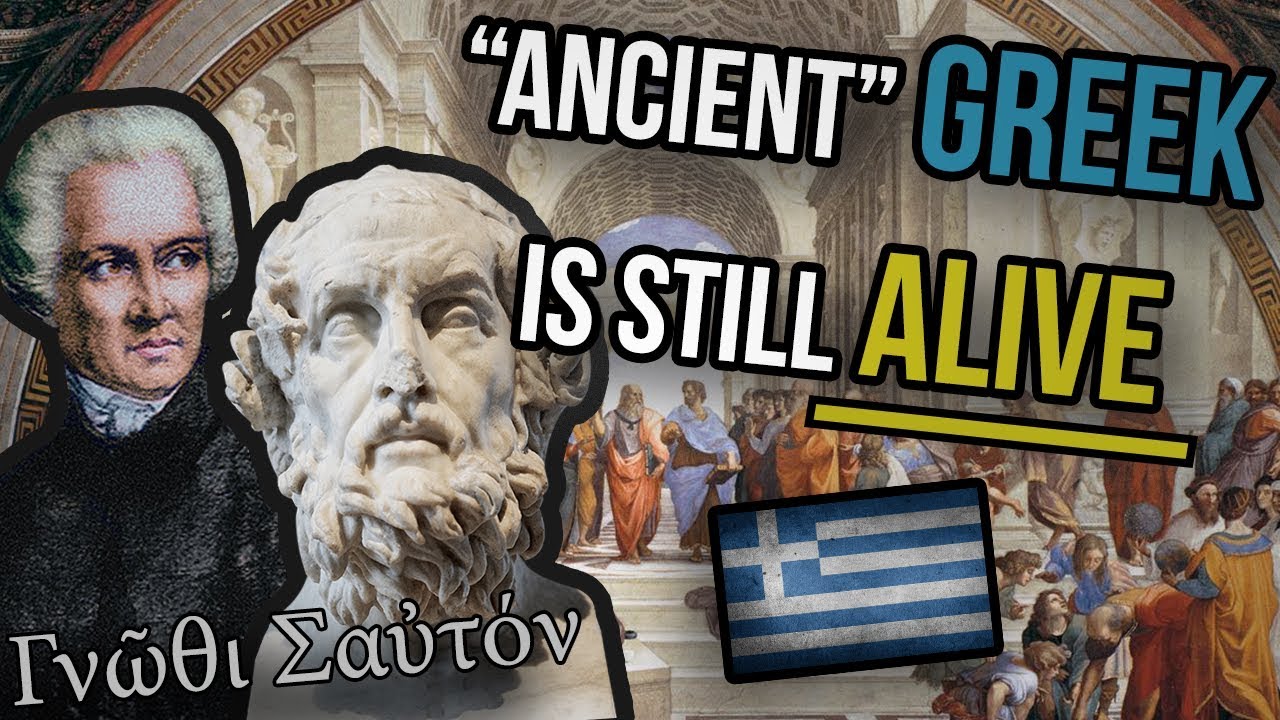
A dead language is a language that is no longer spoken or written as a native language by any community. It may still be used as a liturgical language, a scholarly language, or a language of instruction, but it is no longer a living language in the sense that it is not used for everyday communication.
There are a number of criteria that can be used to determine whether a language is considered dead. These criteria include:
- Lack of native speakers
- Absence of written records
- Limited usage in academic or religious contexts
The distinction between a dead language and a living language is not always clear-cut. Some languages may have only a handful of native speakers, but they may still be considered living languages if they are used for everyday communication. Other languages may have no native speakers, but they may still be used as liturgical languages or languages of instruction.
The study of dead languages can provide valuable insights into the history of language and culture. Dead languages can also be used to help us understand the evolution of language and the relationships between different languages.
Historical Context of Greek

The Greek language has a rich and multifaceted history that spans over several millennia. Its origins can be traced back to the Bronze Age, and it has undergone significant changes and developments over time. The historical evolution of Greek can be divided into several major periods:
Mycenaean Greek (c. 1600-1100 BCE)
The earliest known form of Greek is Mycenaean Greek, which was written in a script known as Linear B. Mycenaean Greek was the language of the Mycenaean civilization, which flourished in mainland Greece and Crete. It was used for administrative and economic purposes, and it provides valuable insights into the society and culture of the Mycenaeans.
Ancient Greek (c. 800-300 BCE)
After the collapse of the Mycenaean civilization, Greek entered a period of decline. However, it began to revive in the 8th century BCE, and by the 5th century BCE, it had become a major literary and philosophical language. Ancient Greek was the language of Homer, Plato, Aristotle, and other great thinkers and writers.
It was also the language of the Greek city-states, and it played a vital role in the development of Western civilization.
Hellenistic Greek (c. 300 BCE-300 CE)
After the conquests of Alexander the Great, Greek spread throughout the Mediterranean region and beyond. It became the lingua franca of the Hellenistic world, and it was used for communication, trade, and administration. Hellenistic Greek was also the language of the New Testament, and it played a major role in the spread of Christianity.
Medieval Greek (c. 300-1453 CE)
With the rise of the Byzantine Empire, Greek continued to be an important language in the Eastern Mediterranean. It was the official language of the Byzantine Empire, and it was used for religious, literary, and administrative purposes. Medieval Greek also saw the development of a number of new dialects, such as Pontic Greek and Tsakonian.
Modern Greek (c. 1453 CE-present)
After the fall of the Byzantine Empire, Greek entered a period of decline. However, it began to revive in the 19th century, and it is now the official language of Greece and Cyprus. Modern Greek has undergone significant changes over time, and it is now quite different from Ancient Greek.
However, it retains many of the features of its ancient ancestor, and it is still a living and vibrant language.
Factors Contributing to the Development and Decline of Greek
The development and decline of Greek over time have been influenced by a number of factors, including:
- Political and military factors:The rise and fall of empires, as well as wars and conquests, have had a major impact on the spread and decline of Greek.
- Economic factors:Trade and commerce have played a significant role in the spread of Greek, as merchants and traders carried the language to new regions.
- Cultural factors:The spread of Greek culture, including its literature, philosophy, and art, has also contributed to the spread of the language.
- Religious factors:The spread of Christianity, which was written in Greek, also played a major role in the spread of the language.
Modern Greek and its Relation to Ancient Greek: Is Greek A Dead Language
Modern Greek, the official language of Greece and Cyprus, is a direct descendant of Ancient Greek, the language spoken by the ancient Greeks during the classical period. While Modern Greek has undergone significant changes over the centuries, it retains a remarkable degree of continuity with its ancient ancestor.
Vocabulary
The vocabulary of Modern Greek shares a substantial number of words with Ancient Greek. Many common nouns, verbs, and adjectives have remained unchanged or have undergone only minor phonetic shifts. For example, the word for “house” is “σπίτι” (spíti) in Modern Greek and “οἶκος” (oîkos) in Ancient Greek.
However, Modern Greek has also incorporated many new words from other languages, particularly from Latin, Italian, and Turkish.
Grammar
The grammar of Modern Greek is generally simpler than that of Ancient Greek. Many of the complex grammatical features of Ancient Greek, such as the optative and subjunctive moods and the dual number, have been lost in Modern Greek. However, Modern Greek retains the basic structure of Ancient Greek, including the use of articles, declensions, and conjugations.
Pronunciation
The pronunciation of Modern Greek differs significantly from that of Ancient Greek. The ancient Greek language was characterized by a complex system of vowel and consonant sounds, many of which have been lost or simplified in Modern Greek. For example, the ancient Greek diphthong “ου” (ou) is pronounced as “u” in Modern Greek, and the ancient Greek consonant “θ” (theta) is pronounced as “th” in English.
Evolution of the Greek Language
The Greek language has undergone a long and complex evolution from its ancient to its modern form. The following are some of the key historical events that have influenced the development of the Greek language:
- The conquest of Greece by the Romans in 146 BC led to the introduction of Latin into Greece. Latin had a significant impact on the Greek language, particularly in the areas of vocabulary and grammar.
- The Byzantine Empire, which ruled Greece from the 4th to the 15th centuries, was a major center of Greek culture and learning. During this period, the Greek language underwent a number of changes, including the loss of the ancient Greek diphthongs and the simplification of the grammar.
- The Ottoman conquest of Greece in the 15th century led to the imposition of Turkish as the official language of Greece. Turkish had a significant impact on the Greek language, particularly in the areas of vocabulary and pronunciation.
- The Greek War of Independence in the 19th century led to the revival of the Greek language as the official language of Greece. During this period, a number of efforts were made to purify the Greek language of foreign influences and to restore it to its ancient form.
In addition to these historical events, the Greek language has also been influenced by a number of other languages, including Italian, French, and English. As a result, Modern Greek is a rich and diverse language that reflects the long and complex history of Greece.
Passage in Modern Greek, Ancient Greek, and English
Here is a short passage in Modern Greek, followed by its translation into Ancient Greek and English:
Modern Greek:Ο ήλιος λάμπει στον ουρανό.
Ancient Greek:Ἥλιος φαίνει ἐν οὐρανῷ.
English:The sun shines in the sky.
The Use of Greek in Academia and Research

Greek continues to play a vital role in academia and research, particularly in fields such as classics, linguistics, history, and theology. Its enduring significance stems from its status as the language of many ancient texts and its ability to provide access to historical contexts that would otherwise be inaccessible.
Role in Accessing Ancient Texts
Greek is essential for accessing and understanding ancient texts, such as those produced by Homer, Plato, Aristotle, and other renowned figures. These texts provide invaluable insights into the history, culture, and thought of ancient Greece and Rome. By studying Greek, scholars can engage directly with these primary sources, gaining a deeper understanding of their content and context.
Applications in Specific Fields
- Classics:Greek is indispensable for studying ancient Greek literature, including poetry, drama, and prose. Scholars use Greek to analyze literary devices, interpret meanings, and understand the historical and cultural contexts of these works.
- Linguistics:Greek is a valuable resource for linguists interested in the evolution of language and the Indo-European language family. By studying Greek, linguists can trace the development of words, grammar, and sound systems over time.
- History:Greek is crucial for historians seeking to understand ancient Greece and Rome. It allows them to read inscriptions, papyri, and other historical documents, providing insights into political, social, and economic aspects of these civilizations.
- Theology:Greek is essential for theological studies, as it is the original language of the New Testament and many early Christian writings. Scholars use Greek to interpret biblical texts, understand the historical context of Christianity, and engage with patristic literature.
Challenges and Opportunities
While Greek offers immense benefits in academia, its use also presents challenges. Specialized knowledge and training are required to master the language and its nuances. Additionally, the availability of resources, such as dictionaries and grammars, can vary depending on the specific field of study.
However, the opportunities that Greek provides far outweigh these challenges.
While Greek may be considered a dead language in terms of its spoken form, its written form continues to be studied and revered for its historical and literary significance. In a similar vein, the Hebrew language, though primarily used in religious contexts today, offers a rich tapestry of ancient texts and traditions.
Exploring the intricacies of how to read Hebrew language provides a gateway to unlocking the wisdom and cultural heritage embedded within its written word, much like the enduring legacy of Greek literature.
Future of Greek in Academia
The future of Greek in academia appears promising. The increasing use of digital tools, such as online databases and digital editions of texts, is making Greek more accessible to scholars. Furthermore, the globalization of scholarship is leading to a greater appreciation of the importance of Greek in understanding diverse cultures and historical periods.
Greek in Religious and Liturgical Contexts

Greek has played a pivotal role in religious practices, particularly within the Eastern Orthodox Church. Its significance as the liturgical language has shaped religious ceremonies and texts, leaving an enduring legacy on Eastern Orthodox Christianity.
The Eastern Orthodox Church, with its rich liturgical tradition, has preserved the use of Greek as its official language. Greek is employed in all aspects of worship, including prayers, hymns, and readings from the Bible. This usage has maintained a direct connection to the original texts of the New Testament, written primarily in Greek.
Significance of Greek in Religious Ceremonies
The use of Greek in religious ceremonies enhances the sacred and solemn nature of the rituals. The familiar words and phrases, steeped in centuries of tradition, evoke a sense of continuity and connection to the early Church. Moreover, the use of Greek in liturgies fosters a sense of unity among Orthodox Christians, transcending linguistic and cultural boundaries.
Impact on Religious Texts
Greek has also profoundly influenced the development of religious texts within the Eastern Orthodox Church. The original Greek texts of the New Testament and other early Christian writings have served as the foundation for theological doctrines and interpretations. The preservation of these texts in Greek has allowed for meticulous study and analysis, contributing to a deep understanding of Christian beliefs and practices.
The Study of Greek in Education
The study of Greek has long been recognized for its educational value. It offers numerous benefits for students, including enhanced language learning abilities, critical thinking skills, and a deeper understanding of Western culture.Greek is often taught as a second or foreign language in educational settings ranging from secondary schools to universities.
By studying Greek, students gain a solid foundation in grammar, vocabulary, and syntax, which can facilitate their learning of other languages. Additionally, the study of Greek literature, history, and philosophy provides students with valuable insights into the development of Western civilization.
Benefits for Language Learning
The study of Greek can significantly enhance language learning abilities. Greek grammar, with its complex system of declensions and conjugations, challenges students to develop analytical and problem-solving skills. This rigorous training improves their ability to understand the structure and mechanics of language, which can be beneficial for learning other languages, both ancient and modern.
Benefits for Critical Thinking
Greek philosophy, particularly the works of Plato and Aristotle, has had a profound influence on the development of critical thinking. By engaging with Greek philosophical texts, students learn to analyze arguments, identify fallacies, and construct logical proofs. These skills are essential for intellectual development and can be applied to a wide range of academic disciplines.
Benefits for Cultural Understanding
Greek culture has had a profound impact on Western civilization. Through the study of Greek literature, history, and art, students gain a deeper understanding of the roots of Western culture and its enduring legacy. This knowledge fosters an appreciation for cultural diversity and promotes a global perspective.
Greek in Literature and Arts
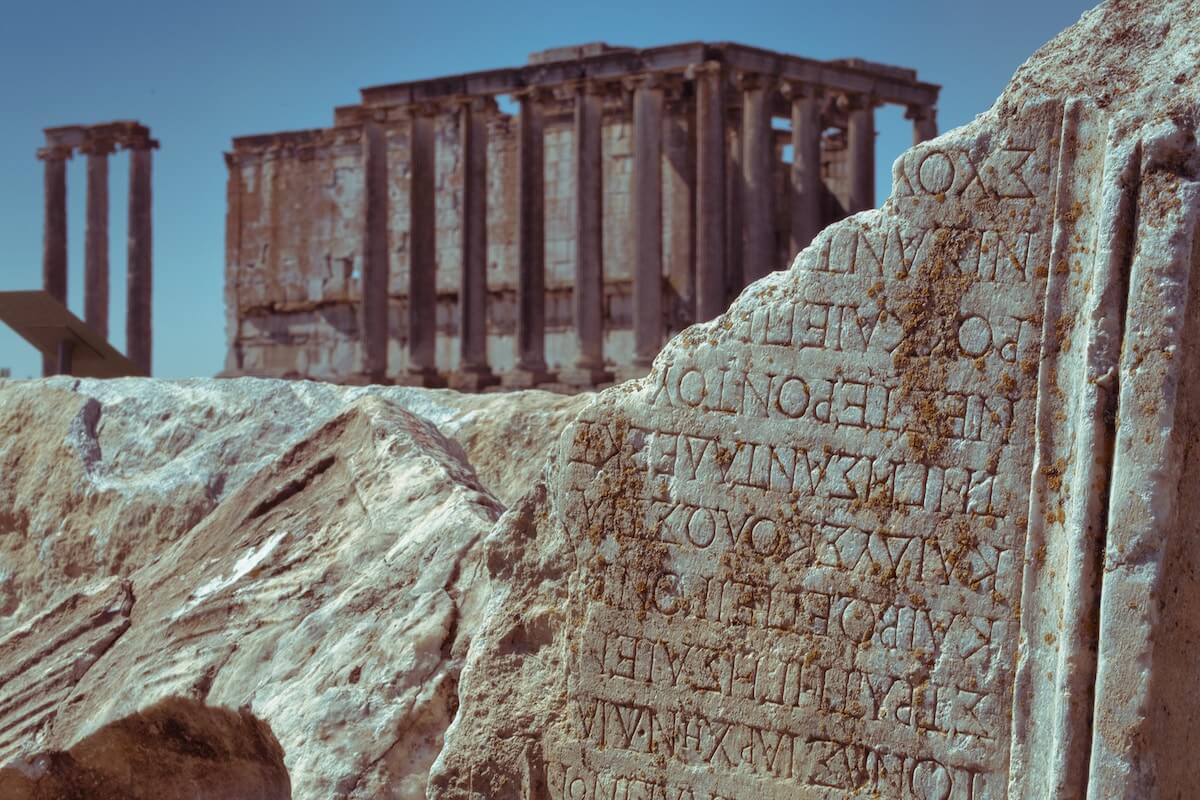
Greek literature and language have profoundly influenced Western civilization, shaping its philosophical, dramatic, and poetic traditions. Ancient Greek thinkers like Plato, Aristotle, and Socrates laid the foundations of Western philosophy, with their ideas still shaping contemporary thought. Greek drama, particularly the works of Sophocles, Euripides, and Aeschylus, established the conventions of Western theater and continue to be performed and studied worldwide.
Greek poetry, from Homer’s epic masterpieces to the lyrical works of Sappho, has inspired generations of poets and remains a source of literary excellence.
Influence on Contemporary Art Forms
Greek mythology and literary works continue to inspire contemporary art forms and cultural expressions. Artists, writers, and filmmakers draw upon Greek myths and characters to explore themes of love, loss, fate, and human nature. For example, the story of Orpheus and Eurydice has been adapted into operas, ballets, and films, while the figure of Prometheus has inspired countless works of art and literature that grapple with the themes of rebellion and the human condition.
The Role of Greek in International Communication
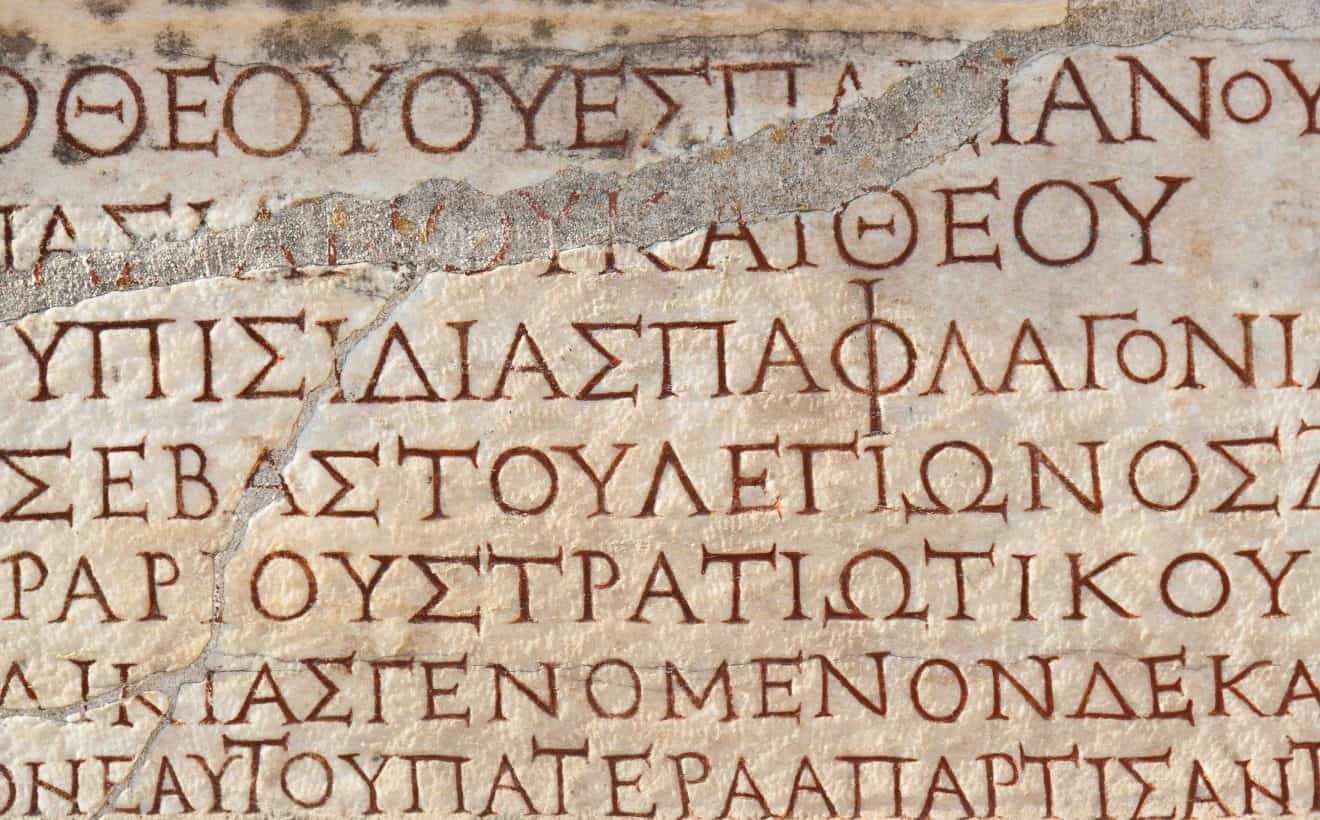
Greek has played a significant role in international communication throughout history. Its use as a diplomatic and international language can be traced back to ancient times, when it was adopted by the Hellenistic kingdoms and later by the Roman Empire.
One of the most important factors contributing to the spread of Greek as an international language was its use as the lingua franca of the Mediterranean region. Greek was used for trade, diplomacy, and cultural exchange between the various Greek city-states, as well as between Greece and other Mediterranean powers such as Egypt, Persia, and Rome.
Although Greek is commonly referred to as a “dead language,” it has significantly influenced modern languages and continues to be studied for its historical and cultural significance. Notably, the Old Testament, a foundational text for Judaism and Christianity, was primarily written in Hebrew, with some portions also written in Aramaic.
Exploring the languages used in the Old Testament sheds light on the historical context and cultural diversity of the ancient world, while also highlighting the enduring legacy of Greek as a language of scholarship and religious texts.
Specific Instances of Greek as a Lingua Franca in International Diplomacy
- The Koine Greek dialect was used as the official language of the Hellenistic kingdoms, which were established by Alexander the Great in the 4th century BC.
- Greek was used as the official language of the Roman Empire from the 1st century BC until the 7th century AD.
- Greek was used as the official language of the Byzantine Empire from the 4th century AD until the 15th century AD.
- Greek was used as the official language of the Ottoman Empire from the 15th century AD until the 19th century AD.
In addition to its use as a diplomatic language, Greek has also been used for religious and liturgical purposes. The New Testament of the Christian Bible was written in Greek, and Greek is still used as the liturgical language of the Eastern Orthodox Church.
Greek Inscriptions and Documents Demonstrating its Use in International Communication
- The Rosetta Stone is a stone slab inscribed with a decree in three languages: Ancient Egyptian, Demotic, and Greek. The Greek text helped scholars decipher the Egyptian hieroglyphs.
- The Dead Sea Scrolls are a collection of ancient Jewish texts that were written in Hebrew, Aramaic, and Greek.
- The Codex Sinaiticus is a 4th-century AD manuscript of the Christian Bible that is written in Greek.
Timeline of Key Events and Periods where Greek Played a Prominent Role in International Communication
- 4th century BC: Alexander the Great conquers the Persian Empire and establishes the Hellenistic kingdoms, which use Greek as their official language.
- 1st century BC: The Roman Empire adopts Greek as its official language.
- 4th century AD: The Byzantine Empire is founded and Greek becomes its official language.
- 15th century AD: The Ottoman Empire conquers the Byzantine Empire and Greek becomes the official language of the Ottoman Empire.
- 19th century AD: The Ottoman Empire begins to decline and Greek is gradually replaced by Turkish as the official language.
Reasons why Greek was Chosen as a Diplomatic Language
- Greek was the language of the most powerful empire in the Mediterranean region, the Roman Empire.
- Greek was a widely spoken language, with a rich literary and philosophical tradition.
- Greek was a relatively easy language to learn, compared to other languages such as Latin or Hebrew.
Factors that Contributed to the Decline of Greek as a Diplomatic Language
- The rise of Latin as the official language of the Western Roman Empire.
- The spread of Islam and the rise of the Arabic language.
- The decline of the Byzantine Empire.
- The rise of nationalism in Europe.
– Describe the challenges faced in creating educational materials and resources for an ancient language with limited existing documentation.
Creating educational materials and resources for an ancient language with limited existing documentation presents several challenges:
Incomplete and fragmented sources
- Ancient texts often survive only in fragments, making it difficult to reconstruct a complete picture of the language.
- Limited availability of reference materials, such as dictionaries and grammars, makes it challenging to verify information and ensure accuracy.
Lack of native speakers
- The absence of native speakers means that pronunciation and intonation can only be inferred from written sources.
- The lack of a living speech community makes it difficult to develop authentic materials that reflect the natural use of the language.
Grammatical complexities
- Ancient languages often have complex grammatical structures that can be challenging for learners to grasp.
- The lack of modern context makes it difficult to understand the nuances and subtleties of the language.
Greek as a Heritage Language
Greek continues to play a significant role as a heritage language for Greek diaspora communities scattered across the globe. For many descendants of Greek immigrants, maintaining proficiency in the ancestral tongue serves as a vital connection to their cultural roots and a source of pride in their heritage.
However, heritage language learners often face unique challenges in acquiring and maintaining fluency. These challenges may include limited exposure to the language in their daily lives, lack of access to native speakers, and differing accents and dialects within the diaspora.
Despite these obstacles, the preservation of Greek as a heritage language remains crucial for maintaining linguistic diversity and fostering a sense of cultural identity among Greek diaspora communities.
Challenges and Opportunities for Heritage Language Learners
Heritage language learners navigate a complex landscape of opportunities and challenges. On the one hand, they may benefit from a natural affinity for the language due to exposure to Greek within their families or community. This exposure can provide a foundation for developing listening comprehension and pronunciation skills.
On the other hand, heritage language learners may encounter difficulties in acquiring certain aspects of the language, such as grammar and vocabulary. The lack of consistent exposure to the language in formal settings can hinder their ability to develop fluency in reading, writing, and speaking.
Additionally, the influence of the dominant language in their daily lives can lead to language interference and the adoption of non-native pronunciation patterns.
Preserving Linguistic Diversity
The preservation of Greek as a heritage language is essential for maintaining linguistic diversity and fostering cultural heritage. Greek is one of the oldest and richest languages in the world, with a vast literary and historical tradition. Its preservation ensures that future generations can access and appreciate this rich cultural legacy.
Moreover, the preservation of Greek as a heritage language contributes to the overall vitality of the language. By maintaining a presence in diaspora communities, Greek can continue to evolve and adapt to changing circumstances, ensuring its survival as a living language.
The Future of Greek
The future of Greek is a topic of much speculation and debate, as the language faces challenges from globalization, technology, and cultural change. However, there are also factors that suggest that Greek will continue to play an important role in society.One factor that will likely contribute to the continued use of Greek is its status as an official language of Greece and Cyprus.
This means that Greek will continue to be used in government, education, and the media in these countries. Additionally, Greek is a liturgical language for the Greek Orthodox Church, which has millions of followers around the world. This ensures that Greek will continue to be used in religious contexts.Another factor that will likely contribute to the continued use of Greek is its rich history and culture.
Greek is the language of Homer, Plato, Aristotle, and other great thinkers. It is also the language of the New Testament. As such, Greek is a language that is closely associated with Western civilization. This cultural significance is likely to ensure that Greek will continue to be studied and used by scholars and students around the world.Of course, there are also challenges that Greek faces.
One challenge is the rise of English as a global language. English is now the lingua franca of business, science, and technology. This means that Greek is increasingly being marginalized in these fields. Additionally, the Greek economy has been struggling in recent years, which has led to a decrease in funding for Greek language education.Despite these challenges, there are reasons to be optimistic about the future of Greek.
The Greek government is taking steps to promote the use of Greek in education and the media. Additionally, there is a growing interest in Greek language and culture around the world. This interest is being driven by factors such as the popularity of Greek food and music, as well as the increasing number of people who are traveling to Greece.Overall, the future of Greek is uncertain.
However, there are factors that suggest that the language will continue to play an important role in society. Greek is a language with a rich history and culture. It is also the official language of two countries and a liturgical language for millions of people around the world.
These factors are likely to ensure that Greek will continue to be used and studied for many years to come.
Education
Greek will likely continue to be an important language in education. It is a required subject in schools in Greece and Cyprus, and it is also offered as a foreign language in many other countries. Greek is a valuable language to learn for students who are interested in history, philosophy, literature, and theology.
Additionally, Greek is a good foundation for learning other languages, such as Latin, Italian, and Spanish.
Media
Greek is likely to continue to be used in the media, especially in Greece and Cyprus. There are many Greek-language newspapers, magazines, and television channels. Additionally, Greek films and music are popular both in Greece and abroad.
Business
Greek is likely to continue to be used in business, especially in Greece and Cyprus. However, English is increasingly becoming the lingua franca of business, so Greek is likely to be used less in international business transactions.
Religion
Greek will likely continue to be used in religion, especially in the Greek Orthodox Church. Greek is the liturgical language of the Greek Orthodox Church, and it is also used in many other Orthodox churches around the world.
Politics
Greek is likely to continue to be used in politics, especially in Greece and Cyprus. Greek is the official language of both countries, and it is used in government, parliament, and the courts.
Misconceptions about Greek
The notion of Greek as a dead language is a common misconception that arises from its ancient origins and limited use in everyday conversation. However, the continued use of Greek in various domains challenges this perception, demonstrating its enduring relevance and vitality.
One misconception is that Greek is no longer spoken or written by anyone. In reality, Modern Greek is the official language of Greece and Cyprus, spoken by millions of people worldwide. It has evolved from Ancient Greek but retains significant similarities in grammar and vocabulary, making it accessible to those familiar with the ancient language.
Another misconception is that Greek is only used in religious and liturgical contexts. While it is true that Greek is the liturgical language of the Greek Orthodox Church, it is also widely used in academia, research, and literature. Many universities offer courses in Greek language and literature, and Greek texts continue to be studied and translated for their historical and literary significance.
Challenges in Educational Materials for Ancient Greek
Despite the continued use of Greek, creating educational materials for Ancient Greek can be challenging due to limited existing documentation. Unlike Modern Greek, which has a vast corpus of written and spoken materials, Ancient Greek texts are primarily limited to literary works, inscriptions, and historical documents.
This scarcity of resources makes it difficult to develop comprehensive educational materials that cover all aspects of the language.
Examples of Greek Usage in Modern Contexts

Beyond its traditional domains, Greek continues to find versatile applications in contemporary society, showcasing its adaptability and vitality in various fields and settings.
One notable example is the use of Greek in the scientific and technological realms. Greek-derived terminology is prevalent in disciplines such as medicine, biology, and mathematics. Terms like “diagnosis,” “epidemiology,” and “algorithm” have become indispensable in these fields, demonstrating the enduring influence of Greek on modern scientific discourse.
Greek in International Organizations
- The United Nations and the European Union both recognize Greek as an official language, highlighting its importance in international diplomacy and cooperation.
Greek in Business and Finance
- Greek is still used in the shipping industry, a sector where Greece has a long-standing tradition. Terms such as “nautical miles” and “cargo” are commonly employed in international maritime communication.
Greek in Arts and Culture
- In the realm of art and culture, Greek mythology and literature continue to inspire contemporary works. From paintings and sculptures to plays and novels, Greek themes and characters remain a rich source of artistic expression.
Greek in Fashion and Design, Is greek a dead language
- The fashion industry has also embraced Greek influences. Designers often incorporate Greek motifs, patterns, and colors into their creations, paying homage to the country’s rich cultural heritage.
– Provide a detailed comparison of Greek grammar with that of other Indo-European languages, including verb conjugations, noun declensions, and syntax.
Greek grammar shares several fundamental features with other Indo-European languages, including verb conjugations, noun declensions, and a complex system of syntax. However, it also exhibits some unique characteristics that set it apart from its Indo-European relatives.
In terms of verb conjugations, Greek verbs are characterized by a rich system of tenses, moods, and voices. Verbs are conjugated according to person, number, and tense, and there are separate forms for active, passive, and middle voices. The verb system is also highly synthetic, with many grammatical features being expressed through the use of suffixes and prefixes.
Noun declensions in Greek are also complex, with nouns being declined according to case, number, and gender. There are three genders (masculine, feminine, and neuter) and three numbers (singular, dual, and plural). Each noun has a stem, to which various endings are added to indicate its grammatical function.
Greek syntax is also highly complex, with a wide range of sentence structures and a flexible word order. Sentences can be either paratactic (coordinated) or hypotactic (subordinated), and there is a rich system of conjunctions and prepositions to connect clauses and phrases.
Verb Conjugations
Greek verbs are conjugated according to person, number, tense, mood, and voice. There are three persons (first, second, and third), two numbers (singular and plural), and three voices (active, passive, and middle). The tense system is complex, with a variety of simple and compound tenses.
The mood system includes the indicative, subjunctive, optative, and imperative moods.
Noun Declensions
Greek nouns are declined according to case, number, and gender. There are three genders (masculine, feminine, and neuter) and three numbers (singular, dual, and plural). The case system is complex, with eight cases: nominative, vocative, accusative, genitive, dative, locative, instrumental, and ablative.
Syntax
Greek syntax is highly complex, with a wide range of sentence structures and a flexible word order. Sentences can be either paratactic (coordinated) or hypotactic (subordinated), and there is a rich system of conjunctions and prepositions to connect clauses and phrases.
User Queries
Is Modern Greek the same as Ancient Greek?
Modern Greek is a direct descendant of Ancient Greek, sharing a common vocabulary and grammatical structure. However, there have been significant changes in pronunciation, grammar, and vocabulary over time.
Why is Greek still used in academia?
Greek remains a vital language in academia due to its vast body of ancient texts and its role in fields such as classics, linguistics, history, and theology.
Is Greek a difficult language to learn?
The difficulty of learning Greek depends on one’s native language and language learning experience. However, its complex grammar and extensive vocabulary can pose challenges for learners.
