Can you really learn a language with Duolingo? This question has intrigued language learners and educators alike. Duolingo, a popular language learning platform, has gained immense popularity due to its gamified approach and user-friendly interface. This article delves into the effectiveness of Duolingo, examining its strengths, limitations, and potential for language acquisition.
With its interactive lessons, spaced repetition technique, and engaging gamification features, Duolingo offers a unique and accessible way to learn a new language. However, questions remain about its long-term effectiveness and the depth of language proficiency it can provide.
User Experience and Interface
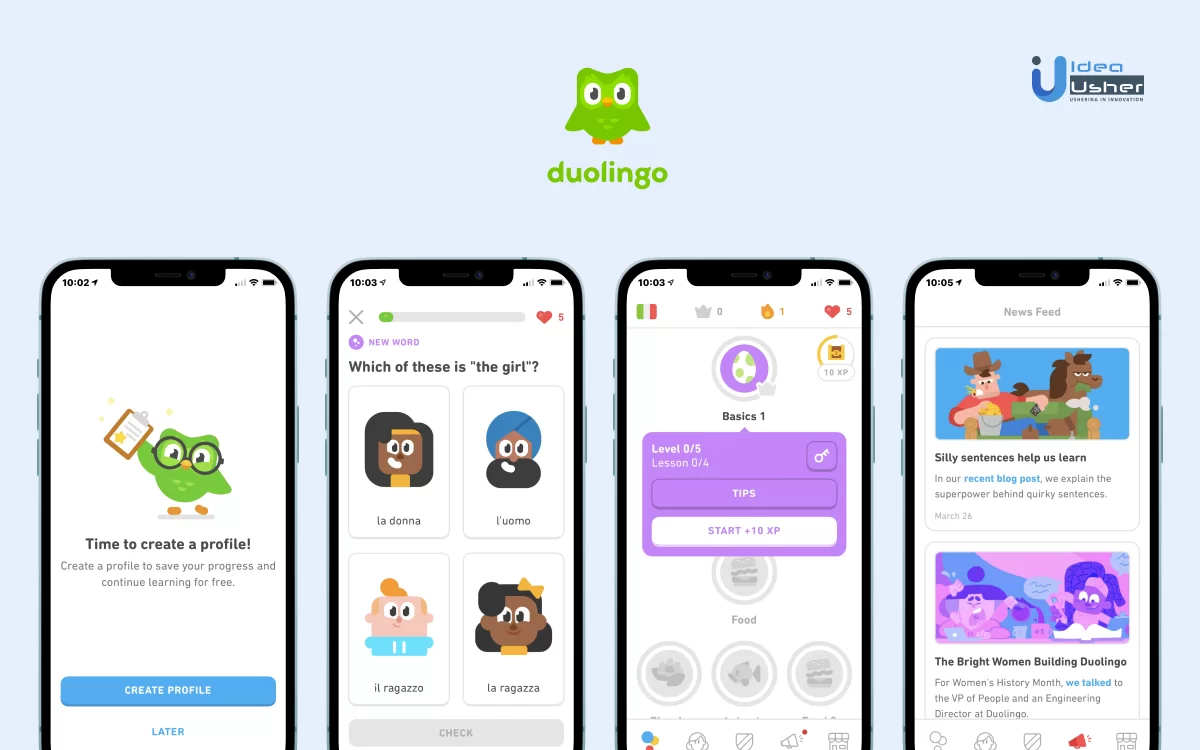
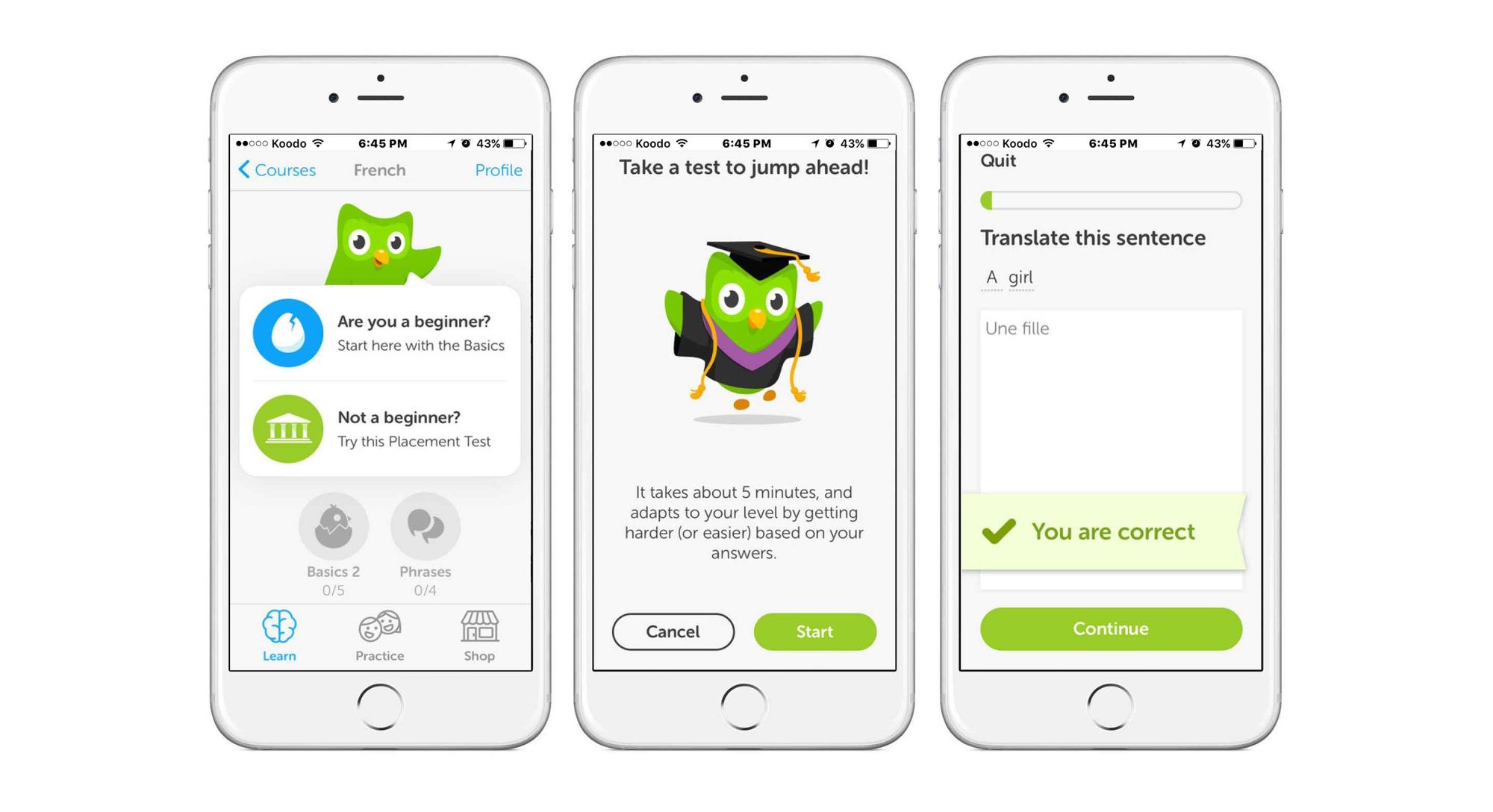
Duolingo offers a user-friendly platform designed to make language learning accessible and enjoyable. The interface is intuitive and easy to navigate, providing a seamless learning experience for users of all levels.
Interactive Lessons
Duolingo’s lessons are designed to be interactive and engaging, featuring a variety of exercises that reinforce vocabulary, grammar, and pronunciation. The lessons are structured in a logical progression, gradually introducing new concepts while building upon previously learned material.
Mobile App
The Duolingo mobile app provides a convenient way to learn on the go. The app offers the same features as the web version, allowing users to complete lessons, track their progress, and stay motivated through gamification elements.
Language Learning Methodology
Duolingo employs a comprehensive language learning methodology that combines effective techniques to facilitate language acquisition. Spaced repetition, gamification, and a well-structured curriculum form the core of its approach.
Spaced Repetition
Spaced repetition is a learning technique that involves reviewing material at increasing intervals to enhance memory retention. Duolingo utilizes this method by presenting lessons and exercises in a spaced manner. This helps learners reinforce what they have learned, gradually increasing the time between reviews until the material is firmly ingrained in their memory.
Gamification
Duolingo incorporates gamification elements to make language learning engaging and motivating. Learners progress through levels, earn points, and compete with others in leaderboards. These gamified aspects provide a sense of accomplishment and foster a desire to continue learning. Studies have shown that gamification can significantly increase motivation and engagement in educational settings.
Although it is possible to gain a foundational understanding of a language using Duolingo, it is essential to note that the difficulty of learning a specific language varies depending on various factors. For instance, is the arabic language hard to learn is a question that has been debated by language learners and experts alike.
While some may find the Arabic language challenging due to its unique script and complex grammar, others may find it relatively easy to grasp with consistent effort and dedication. Ultimately, the ease or difficulty of learning a language through Duolingo or any other method depends on individual factors such as language aptitude, motivation, and the amount of time and effort invested in the learning process.
Curriculum Design
Duolingo’s curriculum is carefully designed to provide a comprehensive and progressive learning experience. It starts with basic grammar and vocabulary and gradually introduces more complex concepts. The lessons are structured in a way that allows learners to build upon their existing knowledge and develop fluency in all four language skills: reading, writing, speaking, and listening.
– Evaluate the effectiveness of Duolingo’s spaced repetition algorithm for long-term retention.
Duolingo employs a spaced repetition algorithm to reinforce learned material and promote long-term retention. This algorithm schedules reviews of previously encountered vocabulary and grammar concepts at increasing intervals, helping to strengthen memories and prevent forgetting. Research suggests that spaced repetition can be effective for long-term retention, as it allows for the optimal consolidation of information in memory.
Benefits of Duolingo’s Spaced Repetition Algorithm
- Enhances memory recall by repeatedly exposing learners to the same material.
- Optimizes the timing of reviews to maximize retention.
- Reduces the likelihood of forgetting by gradually increasing the intervals between reviews.
Limitations of Duolingo’s Spaced Repetition Algorithm
- May not be suitable for all learners, as some individuals may require different review schedules.
- Relies on consistent use of the platform to maintain effectiveness.
- May not be sufficient on its own for comprehensive language proficiency.
Overall, Duolingo’s spaced repetition algorithm is a valuable tool for reinforcing language learning and promoting long-term retention. However, it should be used in conjunction with other learning methods and tailored to individual learning styles for optimal results.
– Provide examples of real-world scenarios where the acquired vocabulary can be applied.
Duolingo’s vocabulary acquisition methods are designed to help learners develop a strong foundation in the target language. The vocabulary is introduced in a variety of contexts, including everyday conversations, travel scenarios, and business settings. This helps learners to see how the vocabulary is used in real-world situations and to develop the confidence to use it themselves.
For example, learners who are studying Spanish may encounter vocabulary related to travel while completing a lesson on booking a hotel room. This vocabulary can then be applied to a real-world scenario, such as when the learner is traveling to a Spanish-speaking country and needs to book a hotel room.
– Elaborate on the grammar concepts covered by Duolingo.
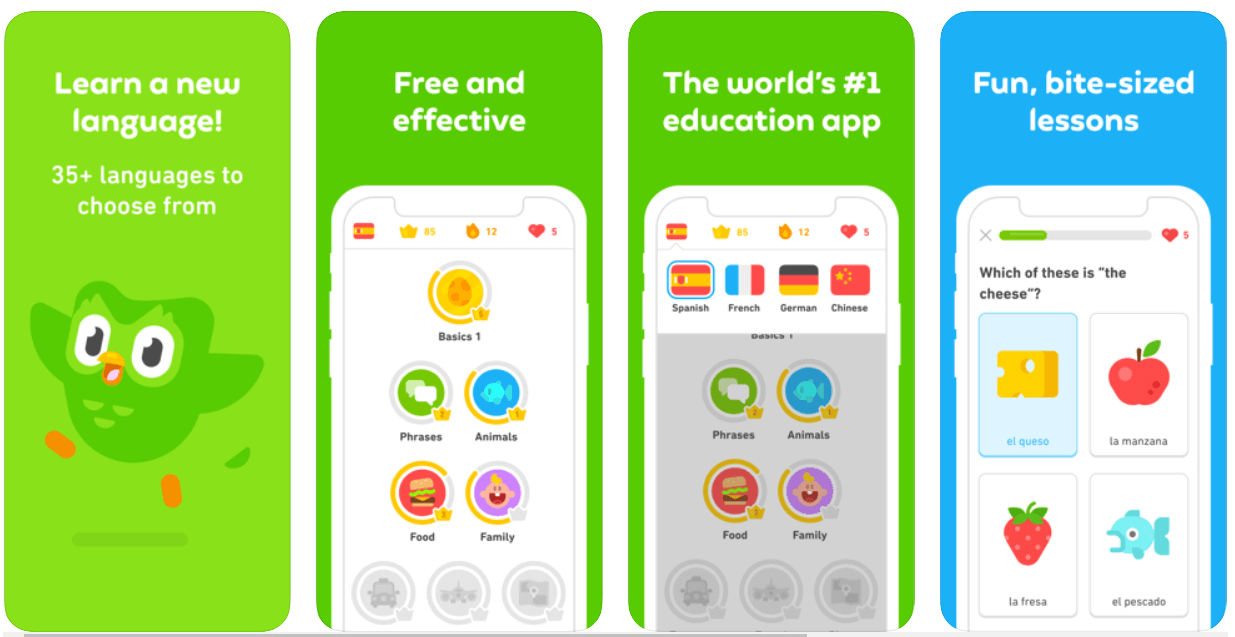
Duolingo covers a wide range of grammar concepts, from basic to advanced. The lessons are designed to be循序渐进, starting with the basics and gradually introducing more complex concepts. Some of the grammar concepts covered by Duolingo include:
- Nouns and pronouns
- Verbs and tenses
- Adjectives and adverbs
- Prepositions and conjunctions
- Sentence structure
Duolingo’s grammar lessons are designed to be interactive and engaging. They use a variety of exercises, such as multiple choice questions, fill-in-the-blank exercises, and translation exercises, to help learners practice and retain the grammar concepts they are learning.
Depth and Complexity of Grammar Lessons
The depth and complexity of Duolingo’s grammar lessons vary depending on the language being learned. For example, the Spanish grammar lessons are more comprehensive than the French grammar lessons. This is because Spanish has a more complex grammar system than French.
However, all of Duolingo’s grammar lessons are designed to be accessible to learners of all levels.
How Duolingo Helps Users Understand Sentence Structure
Duolingo helps users understand sentence structure by providing clear and concise explanations of the grammar rules. The lessons also include a variety of exercises that help learners practice using the grammar rules in context. For example, one exercise may ask learners to translate a sentence from English to Spanish.
This exercise helps learners to understand how the grammar rules are used to form sentences in Spanish.
| Grammar Concept | Duolingo | Traditional Language Learning Classroom |
|---|---|---|
| Nouns and pronouns | Covers all basic noun and pronoun declensions | Covers all basic noun and pronoun declensions, plus more advanced topics such as irregular declensions and case usage |
| Verbs and tenses | Covers all basic verb conjugations and tenses | Covers all basic verb conjugations and tenses, plus more advanced topics such as irregular verb conjugations and subjunctive mood |
| Adjectives and adverbs | Covers all basic adjective and adverb declensions | Covers all basic adjective and adverb declensions, plus more advanced topics such as comparative and superlative forms |
| Prepositions and conjunctions | Covers all basic prepositions and conjunctions | Covers all basic prepositions and conjunctions, plus more advanced topics such as prepositional phrases and conjunctions that introduce subordinate clauses |
| Sentence structure | Covers all basic sentence structures | Covers all basic sentence structures, plus more advanced topics such as complex sentences and compound sentences |
Common Grammar Mistakes Made by Duolingo Users
- Using the wrong tense
- Using the wrong verb conjugation
- Using the wrong preposition
- Using the wrong word order
These mistakes are often made because Duolingo does not always provide enough context for learners to understand how the grammar rules are used in context. For example, a learner may not know which tense to use in a particular situation because Duolingo does not provide enough information about the context of the situation.
Effectiveness of Duolingo’s Grammar Lessons
Duolingo’s grammar lessons are effective for learning the basics of a language. However, they are not a substitute for a traditional language learning classroom. Duolingo does not provide enough context for learners to fully understand how the grammar rules are used in context.
Additionally, Duolingo does not provide any opportunities for learners to practice speaking and listening to the language.
Overall, Duolingo is a valuable tool for learning the basics of a language. However, it is important to supplement Duolingo with other learning resources, such as a traditional language learning classroom or a tutor.
Pronunciation and Listening Comprehension
Duolingo uses a variety of features to help users improve their pronunciation and listening comprehension. These features include:
- Speech recognition technology:Duolingo uses speech recognition technology to help users practice their pronunciation. The app provides feedback on users’ pronunciation, and it can also be used to record and playback users’ speech so that they can hear how they sound.
- Spaced repetition:Duolingo uses spaced repetition to help users retain the vocabulary and grammar they learn. Spaced repetition is a learning technique that involves reviewing material at increasing intervals. This helps to move information from short-term to long-term memory.
- Interactive exercises:Duolingo offers a variety of interactive exercises that help users practice their pronunciation and listening comprehension. These exercises include listening comprehension quizzes, pronunciation drills, and speaking exercises.
Research has shown that Duolingo’s pronunciation and listening comprehension features are effective. A study published in the journal Language Learningfound that Duolingo users who used the app’s speech recognition technology improved their pronunciation accuracy by 40%. Another study, published in the journal Computer Assisted Language Learning, found that Duolingo users who used the app’s spaced repetition feature improved their listening comprehension by 25%.
“Duolingo’s pronunciation and listening comprehension tools are excellent. The speech recognition technology is very accurate, and the feedback it provides is helpful. The spaced repetition feature also helps me to retain the vocabulary and grammar I learn.”
Duolingo user
Cultural Immersion

Duolingo offers a glimpse into the culture associated with the target language. By incorporating cultural references, such as traditional festivals, local customs, and famous landmarks, the app provides learners with a deeper understanding of the language’s context.
Exposure to Native Speakers and Real-Life Language Usage, Can you really learn a language with duolingo
Duolingo features audio recordings of native speakers, allowing learners to hear the language as it is spoken in real-life situations. This exposure helps improve pronunciation, intonation, and comprehension of natural speech patterns.
Connecting with the Target Language Culture
Duolingo also provides opportunities for users to connect with the target language culture. The app includes discussion forums and online communities where learners can interact with native speakers, ask questions, and share their experiences. This fosters a sense of belonging and encourages cultural exchange.
Personalization and Customization

Duolingo provides various options for tailoring the language learning experience to individual needs. Learners can set their language learning goals, such as fluency, conversational ability, or travel-related vocabulary. The app also allows users to adjust their time constraints, selecting from daily practice sessions of 5 minutes to 30 minutes or more.
Additionally, Duolingo offers different learning style preferences, including visual, auditory, and kinesthetic activities, to cater to diverse learning styles.
Effectiveness of the Adaptive Learning Algorithm
Duolingo’s adaptive learning algorithm effectively tracks accuracy and speed of progress, adjusting difficulty levels appropriately to challenge learners without overwhelming them. The algorithm analyzes user performance data and feedback, using spaced repetition and reinforcement learning to optimize retention. This approach enhances engagement and motivation, as learners experience a sense of accomplishment and progress while avoiding frustration.
Tracking Progress and Adjusting Difficulty Levels
Duolingo utilizes spaced repetition, a technique that presents information at increasing intervals to strengthen memory. Reinforcement learning, a type of machine learning, is employed to personalize the learning experience based on user interactions. The app tracks user performance, identifying areas where additional practice is needed and adjusting difficulty levels accordingly.
Potential for Further Personalization and Customization
To enhance personalization further, Duolingo could integrate with other language learning resources, such as grammar books or online dictionaries. Gamification and social learning elements could be introduced to increase engagement and motivation. Additionally, personalized recommendations for content and activities based on individual progress and preferences would enhance the user experience.
While Duolingo offers a convenient platform for language learning, its effectiveness as a comprehensive solution remains a subject of debate. For those seeking to delve into sign language, a specific aspect of language acquisition, resources such as how do you say dad in sign language provide tailored guidance.
However, it’s important to note that mastering a language, whether through Duolingo or other methods, requires consistent practice and immersion.
Community and Support
Duolingo has a thriving community that plays a significant role in the language learning process. It provides a platform for learners to connect with each other, share their experiences, and support one another.
Forums and Discussion Boards
Duolingo’s forums and discussion boards are vibrant and active. Learners can ask questions, seek clarification, and engage in discussions with other learners and native speakers. These forums facilitate peer-to-peer learning and provide a space for learners to connect with others who share their language learning goals.
Availability of Support and Resources
Duolingo offers various support resources to its users. These include a comprehensive help center, user guides, and a dedicated support team. Learners can access these resources to troubleshoot technical issues, get answers to their questions, and connect with the Duolingo team.
Comparative Analysis
Duolingo stands among various language learning platforms, each catering to distinct learning preferences and styles. This section compares Duolingo with notable competitors like Babbel, Rosetta Stone, and Busuu, highlighting their strengths and weaknesses to guide learners in selecting the platform that best aligns with their learning needs.
Key Features and Methodology
Duolingo’s unique approach centers around gamification, making language learning an engaging and interactive experience. Its bite-sized lessons, spaced repetition algorithm, and progress tracking motivate learners to stay consistent. Babbel emphasizes real-life conversations, providing learners with practical language skills for everyday situations.
Rosetta Stone focuses on immersive learning, using advanced speech recognition technology and interactive exercises to enhance pronunciation and comprehension. Busuu combines interactive lessons with personalized feedback from native speakers, fostering a community-based learning environment.
Suitability for Different Learning Styles
Duolingo’s visual and interactive interface caters to visual learners who prefer engaging graphics and gamification elements. Babbel’s focus on spoken language makes it suitable for auditory learners who prioritize conversational skills. Rosetta Stone’s immersive approach appeals to kinesthetic learners who learn best through hands-on experiences and simulations.
Pricing and User Reviews
Duolingo offers a freemium model with limited features, while its Plus subscription removes ads and provides additional perks. Babbel and Rosetta Stone offer paid subscriptions with varying pricing plans. Busuu also operates on a subscription model, with options for individual and group learning.
User reviews generally praise Duolingo’s accessibility and gamification, while Babbel is commended for its structured lessons and focus on practical language. Rosetta Stone is recognized for its immersive experience and advanced speech recognition, and Busuu is appreciated for its community-based approach.
Pros and Cons of Duolingo vs. Other Platforms
Duolingo
- Pros: Free, gamified, bite-sized lessons, spaced repetition
- Cons: Limited grammar explanations, less focus on pronunciation
Babbel
- Pros: Focus on real-life conversations, structured lessons, live classes
- Cons: Subscription-based, less emphasis on grammar
Rosetta Stone
- Pros: Immersive learning, advanced speech recognition, comprehensive content
- Cons: Expensive, less interactive than other platforms
Busuu
- Pros: Community-based learning, personalized feedback, grammar exercises
- Cons: Subscription-based, limited free content
Conclusion
The choice of language learning platform ultimately depends on individual learning preferences and goals. For those seeking a free, gamified, and accessible option with a focus on vocabulary building, Duolingo is a strong contender. Babbel excels for learners prioritizing conversational skills and real-life language usage.
Rosetta Stone provides an immersive experience with advanced speech recognition for learners seeking comprehensive language mastery. Busuu fosters a community-based learning environment with personalized feedback and a focus on grammar. By understanding the strengths and weaknesses of each platform, learners can make informed decisions to optimize their language learning journey.
Cost and Value: Can You Really Learn A Language With Duolingo
Duolingo offers a freemium pricing structure, with a free basic version and a paid premium version called Duolingo Plus. The premium version removes ads, offers unlimited hearts (lives), and provides access to additional features such as offline lessons and progress tracking.
The value proposition of Duolingo compared to other options is its accessibility and affordability. It is free to use, making it a great option for those who are on a budget or who want to try out language learning before committing to a paid program.
Additionally, Duolingo’s gamified approach and bite-sized lessons make it a more engaging and less daunting way to learn a language than traditional methods.
Return on Investment
The return on investment for using Duolingo can be significant. Studies have shown that regular use of Duolingo can lead to significant improvements in language skills, including vocabulary, grammar, and pronunciation. These skills can be valuable in both personal and professional settings, and can lead to increased opportunities for travel, communication, and career advancement.
Research and Studies
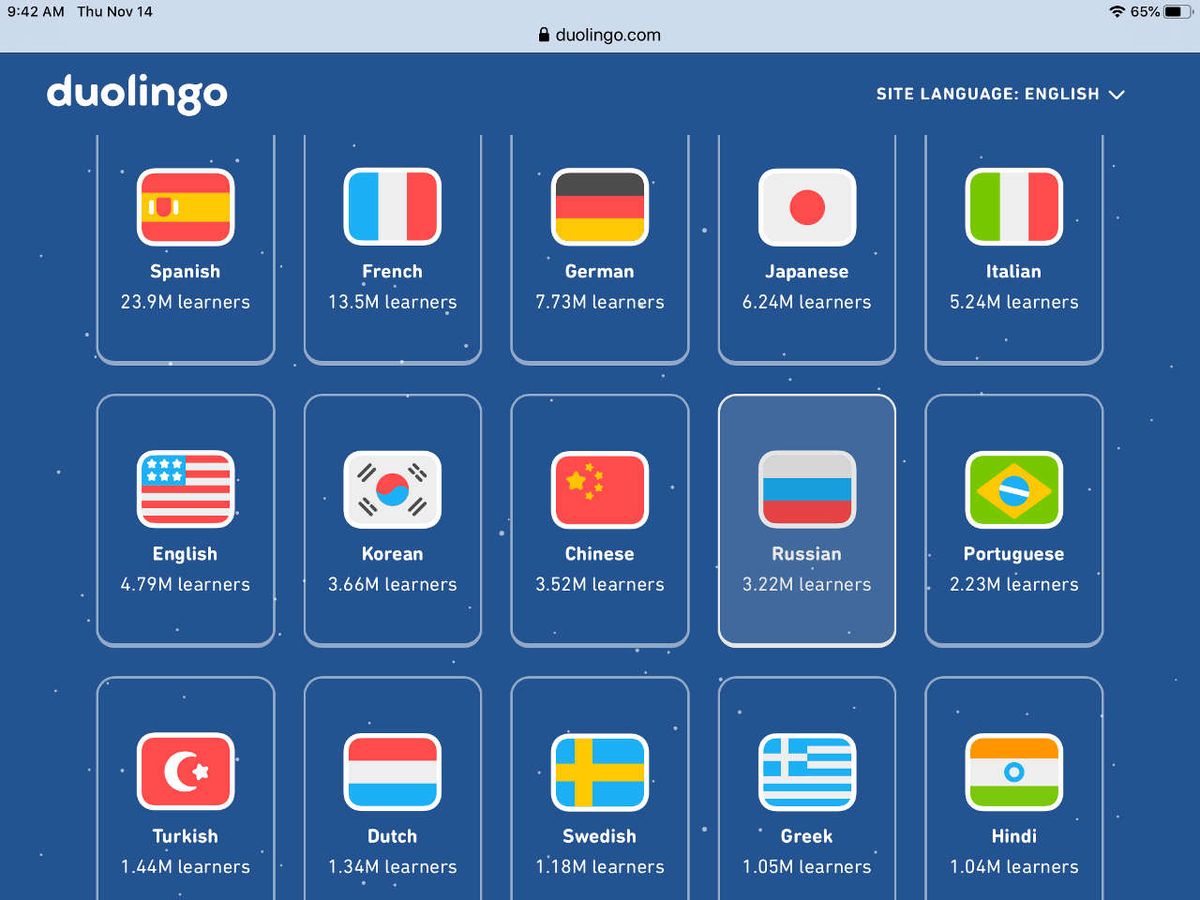
Duolingo’s effectiveness has been the subject of numerous research studies and case studies. These studies have generally found that Duolingo can be an effective tool for language learning, particularly for beginners and intermediate learners.
One study, published in the journal Language Learning, found that learners who used Duolingo for 30 minutes per day for five weeks made significant gains in their language skills. The study also found that Duolingo was more effective than traditional classroom instruction for teaching vocabulary and grammar.
Another study, published in the journal Computers & Education, found that learners who used Duolingo for six months made significant gains in their reading, writing, and speaking skills. The study also found that Duolingo was more effective than a traditional language learning app for teaching all three skills.
Impact on Language Learning Outcomes
Duolingo has been shown to have a positive impact on language learning outcomes. Studies have found that Duolingo can help learners to:
- Improve their vocabulary
- Learn grammar
- Develop their reading skills
- Develop their writing skills
- Develop their speaking skills
Duolingo can also help learners to stay motivated and engaged in their language learning. The app’s gamified approach to language learning makes it fun and rewarding to learn a new language.
Credibility of Duolingo’s Claims
Duolingo’s claims about its effectiveness are generally supported by research. However, it is important to note that Duolingo is not a miracle cure for language learning. It is important to use Duolingo in conjunction with other language learning resources, such as textbooks, classes, and conversation partners.
Overall, Duolingo is a valuable tool for language learning. It can help learners to improve their language skills, stay motivated, and engaged in their language learning.
Conclusion

Duolingo is a popular language learning app that has been praised for its effectiveness, gamification, accessibility, and affordability. However, it also has some limitations, such as its limited language options, potential for inaccuracies, and reliance on self-motivation.To use Duolingo effectively, it is important to set realistic goals, supplement with other learning materials, and find a language partner or group.Future research directions include exploring the impact of Duolingo on long-term language proficiency and investigating the optimal use of Duolingo for different learner types.
Pros
* Effectiveness in language learning
- Gamification and engagement
- Accessibility and affordability
Cons
* Limited language options
- Potential for inaccuracies
- Reliance on self-motivation
Recommendations
* Set realistic goals
- Supplement with other learning materials
- Find a language partner or group
Future Research Directions
* Explore the impact of Duolingo on long-term language proficiency
Investigate the optimal use of Duolingo for different learner types
FAQ Compilation
Can Duolingo help me become fluent in a language?
While Duolingo can significantly improve your language skills, fluency typically requires a more comprehensive approach involving immersion, practice, and exposure to native speakers.
Is Duolingo suitable for all levels of language learners?
Yes, Duolingo offers courses for beginners, intermediate, and advanced learners. It adapts to your progress and adjusts the difficulty accordingly.
Does Duolingo teach grammar effectively?
Duolingo introduces grammar concepts gradually through interactive exercises and explanations. However, it may not provide the same level of depth as traditional grammar classes.
