How to say hi in spanish language – Embark on a linguistic journey as we explore the nuances of greeting in Spanish, a language rich in cultural etiquette and expressive gestures. From formal introductions to casual hellos, this presentation delves into the intricacies of saying “hello” in Spanish, providing practical guidance and insights into the cultural significance behind each greeting.
Whether you’re a language learner eager to expand your vocabulary or a traveler seeking to navigate social interactions seamlessly, this comprehensive guide will equip you with the knowledge and confidence to greet others appropriately in Spanish-speaking environments.
Formal Greetings
In Spanish, formal greetings are used in professional and academic settings, as well as when interacting with individuals of higher social status or those we do not know well. These greetings typically involve a handshake or a slight bow, and are accompanied by appropriate eye contact and a respectful tone of voice.
The most common formal greeting in Spanish is “Buenos días” (Good morning), which is used from sunrise until noon. In the afternoon, “Buenas tardes” (Good afternoon) is used until sunset, and “Buenas noches” (Good evening) is used from sunset until sunrise.
Examples of Formal Greetings and Pronunciation
- Buenos días(Good morning) – pronounced “BWAY-nos DEE-as”
- Buenas tardes(Good afternoon) – pronounced “BWAY-nas TAR-des”
- Buenas noches(Good evening) – pronounced “BWAY-nas NO-ches”
- Mucho gusto(Pleased to meet you) – pronounced “MOO-choh GOO-stoh”
- Encantado(Delighted to meet you) – pronounced “en-can-TAH-doh”
When greeting someone formally, it is important to use the appropriate title and last name, followed by the greeting. For example, if you are meeting a doctor, you would say “Buenos días, Doctor Smith” (Good morning, Dr. Smith).
Cultural Context and Usage of Formal Greetings
Formal greetings are an important part of Spanish culture, and they are used to show respect and politeness. It is considered rude to not greet someone formally, and it can be seen as a sign of disrespect. In general, it is better to err on the side of formality, especially when meeting someone for the first time.
Informal Greetings
In informal settings, Spanish speakers use a variety of greetings to express friendliness and familiarity. These greetings are typically more casual and less formal than those used in formal settings.
Common Informal Greetings
- Hola(oh-la): This is the most common informal greeting and can be used in most situations. It is equivalent to “hello” in English.
- Buenos días(bway-nos dee-as): This means “good morning” and is used from sunrise until noon.
- Buenas tardes(bway-nas tar-des): This means “good afternoon” and is used from noon until sunset.
- Buenas noches(bway-nas noh-chays): This means “good evening” and is used from sunset until sunrise.
- ¿Qué tal?(kay tal): This means “how are you?” and is a common way to greet someone you know well.
- ¿Cómo estás?(koh-moh eh-stahs): This also means “how are you?” and is a more formal way to greet someone.
When greeting someone informally, it is common to use a combination of words and gestures. For example, you might say “Hola” while shaking someone’s hand or giving them a hug.
Cultural Context and Usage
Informal greetings are used in a variety of settings, including when meeting friends, family, or colleagues. The type of greeting you use will depend on the relationship you have with the person you are greeting and the context of the situation.
For example, you would typically use a more formal greeting when meeting someone for the first time or when greeting someone in a professional setting. You would use a more informal greeting when meeting a friend or family member.
Body Language and Gestures
Body language and gestures are also important when greeting someone in Spanish. For example, it is common to make eye contact when greeting someone. You may also want to smile or nod your head.
The way you greet someone can also convey your level of respect. For example, you would typically bow or curtsy when greeting someone who is older or more senior than you.
Tips for Using Informal Greetings Appropriately
- Use the appropriate greeting for the situation.
- Make eye contact and smile when greeting someone.
- Use a friendly tone of voice.
- Be respectful of the person you are greeting.
By following these tips, you can ensure that you are using informal greetings appropriately in different situations.
In the vibrant tapestry of human communication, the ability to greet one another is a fundamental aspect. In the Spanish language, a simple “Hola” conveys a warm and welcoming salutation. While spoken words form the backbone of our interactions, there are also expressive forms of language that transcend verbal boundaries.
One such language is sign language, where gestures and hand movements convey meaning. Just as we say “Hola” in Spanish, in sign language, the graceful movement of the hands can convey the beauty of a person or an object. To explore this fascinating aspect of communication, visit how to say beautiful in sign language , where you can delve into the intricacies of this expressive language.
Regional Variations

The Spanish language is spoken in over 20 countries, and as a result, there are many regional variations in the way that people greet each other. In some regions, the formal greeting of “Hola” is used almost exclusively, while in others, there are a variety of informal greetings that are more common.
Examples of Regional Greetings
Here are some examples of regional greetings in Spanish, along with their pronunciation in IPA:
- Hola(Standard Spanish): /ˈola/
- Buenos días(Good morning): /ˈbwɛnos ˈdi.as/
- Buenas tardes(Good afternoon): /ˈbwɛnas ˈtar.dɛs/
- Buenas noches(Good evening): /ˈbwɛnas ˈno.tʃɛs/
- ¿Qué tal?(How are you?): /ke tal/
- ¿Cómo estás?(How are you?): /ˈko.mo esˈtas/
- ¿Qué pasa?(What’s up?): /ke ˈpa.sa/
- ¿Qué onda?(What’s up?): /ke ˈon.da/
Factors Influencing Regional Variations
The regional variations in Spanish greetings are influenced by a number of factors, including:
- Geography: The geographical isolation of certain regions has led to the development of unique dialects and greetings.
- Culture: The culture of a region can also influence the way that people greet each other. For example, in some cultures, it is considered more polite to use a formal greeting, while in others, informal greetings are more common.
- History: The history of a region can also play a role in the development of regional greetings. For example, in some regions, the Spanish language has been influenced by other languages, such as Arabic or Catalan, which has led to the adoption of new greetings.
Social and Linguistic Implications
The regional variations in Spanish greetings have a number of social and linguistic implications. For example, the use of a particular greeting can indicate the speaker’s social status, region of origin, and level of education. In some cases, the use of a particular greeting can even be a source of conflict, as it can be perceived as being disrespectful or失礼.
Map of Regional Variations
The following map shows the distribution of regional variations in Spanish greetings. The map is based on data from the Ethnologue, a database of the world’s languages.
[Image of a map showing the distribution of regional variations in Spanish greetings]
Dialogue Demonstrating Regional Variations
The following dialogue demonstrates the use of regional variations in Spanish greetings in context.
- Person A: Hola, ¿cómo estás? (Standard Spanish)
- Person B: Bien, gracias. ¿Y tú? (Standard Spanish)
- Person A: Muy bien, gracias. (Standard Spanish)
- Person B: ¿Qué tal?
(Informal greeting)
- Person A: Bien, ¿y tú? (Informal greeting)
- Person B: También bien. (Informal greeting)
Time-Specific Greetings
In Spanish, there are specific greetings used to acknowledge the time of day. These greetings are an important part of Spanish culture and are used in both formal and informal settings.
The most common time-specific greetings are:
- Buenos días(Good morning) – Used from sunrise to noon
- Buenas tardes(Good afternoon) – Used from noon to sunset
- Buenas noches(Good evening) – Used from sunset to sunrise
The pronunciation of these greetings is as follows:
- Buenos días – /bwe-nos dee-as/
- Buenas tardes – /bwe-nas tar-des/
- Buenas noches – /bwe-nas no-ches/
Time-specific greetings are used in a variety of contexts. They are typically used when greeting someone for the first time during the day, when entering a room, or when leaving a conversation.
It is important to note that the use of time-specific greetings can vary depending on the region of Spain. In some regions, it is common to use “buenos días” until sunset, while in other regions, “buenas tardes” is used from noon onwards.
To greet someone in Spanish, one might say “Hola,” meaning “Hello.” Similarly, in the Balkan region, the official language of Bulgaria is Bulgarian. If you wish to delve deeper into the intricacies of the Bulgarian language, I recommend exploring this article for further insights.
Returning to Spanish greetings, “Buenos días” translates to “Good morning,” while “Buenas tardes” signifies “Good afternoon.”
Non-Verbal Cues
Non-verbal cues play a crucial role in Spanish greetings, conveying nuances and emotions that enhance the verbal message. These cues include eye contact, facial expressions, body language, and personal space.
Maintaining direct eye contact during a greeting is considered respectful and sincere. A warm smile signals friendliness and openness, while a frown or lack of eye contact can indicate disinterest or disapproval.
Facial Expressions
- Smile:Friendliness, warmth, openness
- Frown:Disapproval, disinterest, anger
- Raised eyebrows:Surprise, interest, disbelief
- Wink:Playfulness, flirtation, conspiracy
Body Language
- Handshakes:Firm and confident handshakes are common in formal settings, while a light and friendly handshake is appropriate for informal greetings.
- Hugs:Hugs are reserved for close friends and family members, and their duration and intensity vary depending on the relationship.
- Kisses:Cheek kisses are a common greeting between friends and family in many Spanish-speaking countries, typically one kiss on each cheek.
Personal Space
- Formal settings:Maintain a comfortable distance of about an arm’s length.
- Informal settings:Closer personal space is acceptable, especially among friends and family.
The sequence of non-verbal cues during a Spanish greeting typically involves making eye contact, smiling, and extending a handshake or greeting with a kiss. The intensity and duration of these cues can vary depending on the formality of the situation and the relationship between the individuals.
Cultural Etiquette
In Spanish-speaking cultures, greetings play a crucial role in social interactions. Understanding the cultural etiquette surrounding greetings is essential for navigating social situations respectfully and appropriately.
Importance of Social Hierarchy, Formality, and Personal Space:
- Social Hierarchy:Spanish-speaking cultures often place great importance on social hierarchy. When greeting individuals, it is important to consider their age, social status, and position in the community.
- Formality:The level of formality in greetings varies depending on the context. In formal settings, such as business meetings or official events, more formal greetings are used. In informal settings, such as among friends or family, more casual greetings are appropriate.
- Personal Space:Personal space is generally more limited in Spanish-speaking cultures than in some other cultures. When greeting someone, it is important to respect their personal space and avoid standing too close.
Tips for Appropriate Greeting Behavior
- Use the appropriate greeting:The choice of greeting depends on the context, the relationship between the individuals, and the level of formality. Common greetings include “Hola” (Hello), “Buenos días” (Good morning), “Buenas tardes” (Good afternoon), and “Buenas noches” (Good evening).
- Maintain eye contact:Making eye contact while greeting someone conveys respect and sincerity.
- Smile:A warm smile can make a greeting more friendly and inviting.
- Be respectful:Always address individuals using the appropriate titles, such as “Señor” (Mr.), “Señora” (Mrs.), or “Señorita” (Miss). In formal settings, it is also customary to use the formal pronoun “usted” (you) instead of the informal “tú” (you).
- Adapt to local customs:Greeting customs can vary depending on the specific region or country. It is important to observe and adapt to local customs to avoid any cultural misunderstandings.
– Write examples of greetings for different levels of formality, including casual, semi-formal, and formal.
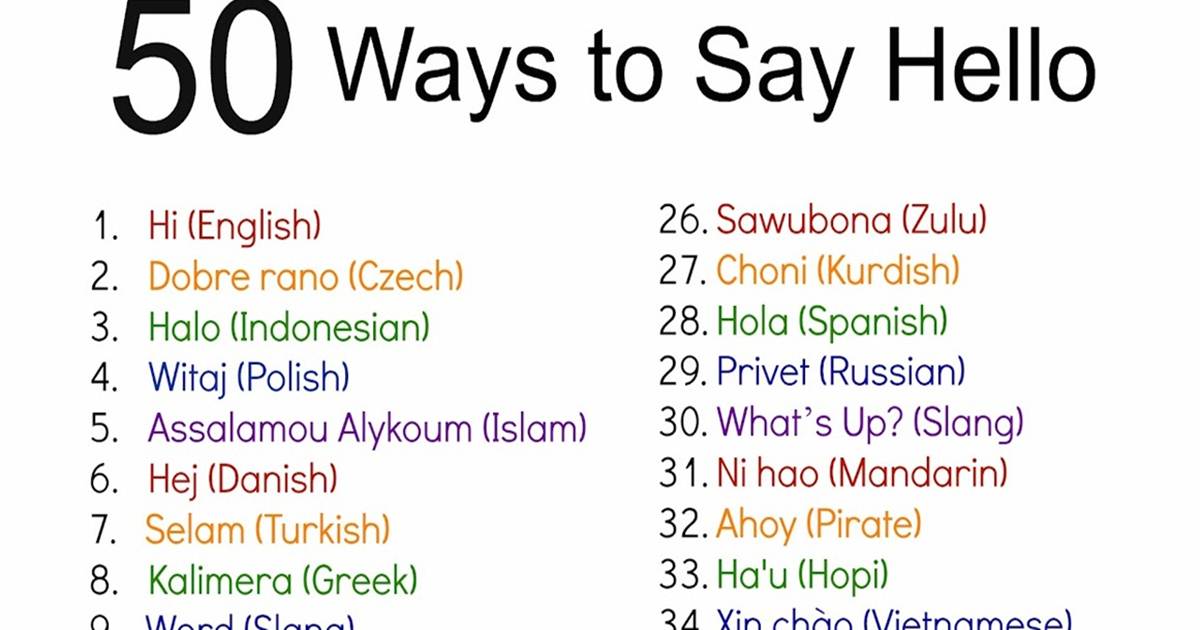
The level of formality in a greeting depends on the context of the interaction, including the setting, the time of day, and the purpose of the interaction.
In general, casual greetings are used in informal settings, such as among friends or family members. Semi-formal greetings are used in more formal settings, such as in a business meeting or a job interview. Formal greetings are used in very formal settings, such as in a diplomatic meeting or a religious ceremony.
Casual Greetings
- ¡Hola! (Hello!)
- ¿Qué tal? (What’s up?)
- ¿Cómo estás? (How are you?)
Semi-Formal Greetings
- Buenos días (Good morning)
- Buenas tardes (Good afternoon)
- Buenas noches (Good evening)
Formal Greetings
- Estimado/a [name] (Dear [name])
- Distinguido/a [name] (Distinguished [name])
- Excelentísimo/a [name] (Most excellent [name])
Responding to Greetings: How To Say Hi In Spanish Language
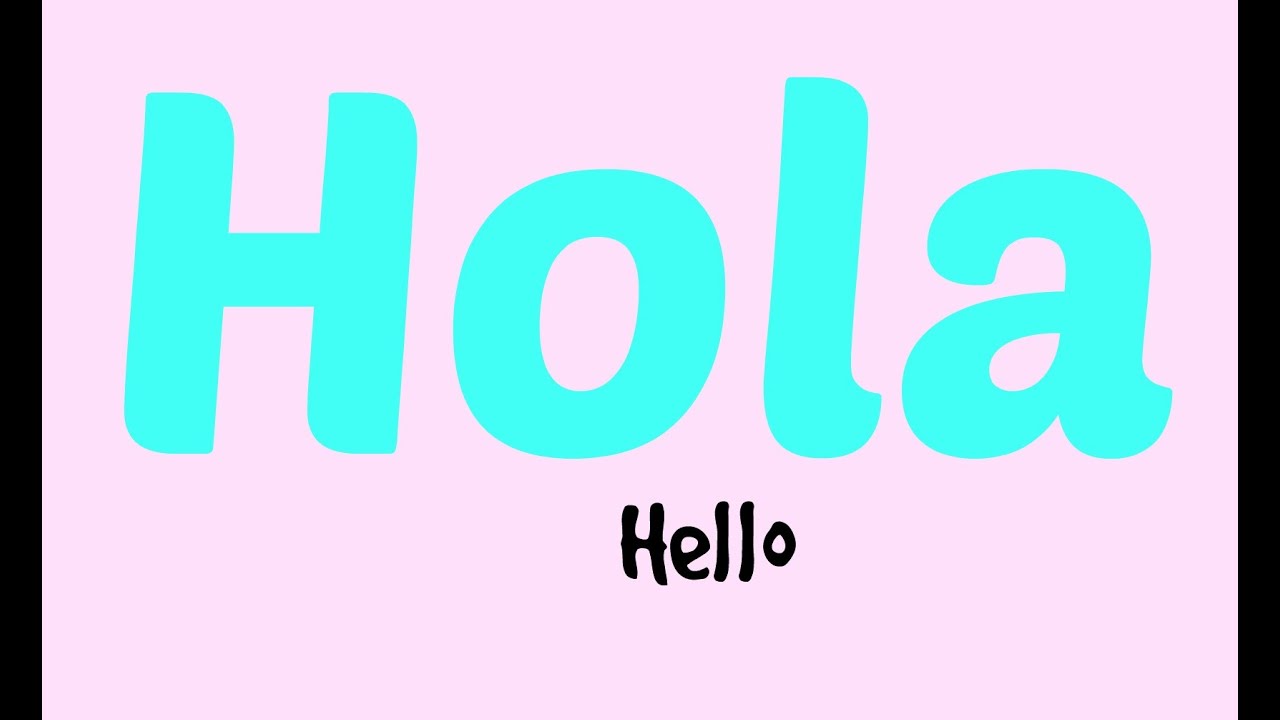
Responding to greetings in Spanish is an important part of social interactions. There are several common ways to respond, depending on the level of formality and the context of the situation.
One common way to respond to a greeting is to simply say “Hola” (pronounced “OH-la”) or “Buenos días” (pronounced “BWEH-nohs DEE-as”), which means “Good morning.” This is a polite and respectful way to greet someone, and it is appropriate for most situations.
Another common response to a greeting is to say “Mucho gusto” (pronounced “MOO-choh GOO-stoh”), which means “Nice to meet you.” This is a more formal way to respond to a greeting, and it is often used when meeting someone for the first time.
If you are greeting someone who you know well, you may use a more informal response, such as “¿Qué tal?” (pronounced “KAY TAHL”), which means “How are you?” This is a friendly and casual way to greet someone, and it is appropriate for use with friends and family.
Polite Forms of Address
In Spanish, as in many other languages, there are specific polite forms of address that are used to show respect to the person you are speaking to. These forms vary depending on the formality of the situation, the age and gender of the person you are addressing, and your relationship to them.
The most common polite form of address in Spanish is usted, which is the formal second-person singular pronoun. Ustedis used when you are addressing someone who you do not know well, someone who is older than you, or someone who is in a position of authority.
It is also used when you are writing a formal letter or email.
When you are addressing someone who you know well, someone who is younger than you, or someone who is a friend or family member, you can use the informal second-person singular pronoun tú. Túis also used when you are speaking to a child.
In addition to ustedand tú, there are also a number of other polite forms of address that can be used in Spanish. These include:
- Señor(Mr.)
- Señora(Mrs.)
- Señorita(Miss)
- Don(Mr.)
- Doña(Mrs.)
These titles are typically used when you are addressing someone who you do not know well or who is in a position of authority. They can also be used when you are writing a formal letter or email.
The choice of which polite form of address to use depends on a number of factors, including the formality of the situation, the age and gender of the person you are addressing, and your relationship to them. It is important to choose the correct form of address to show respect to the person you are speaking to.
Here is a short dialogue that demonstrates the use of polite forms of address in a real-world situation:
Person A:Buenos días, señor. ¿Cómo está usted?
Person B:Buenos días, señorita. Estoy bien, gracias. ¿Y usted?
Person A:Estoy bien, gracias.
In this dialogue, Person A is using the polite form of address señorbecause Person B is a man who is older than Person A. Person B is using the polite form of address señoritabecause Person A is a woman who is younger than Person B.
Cultural Differences
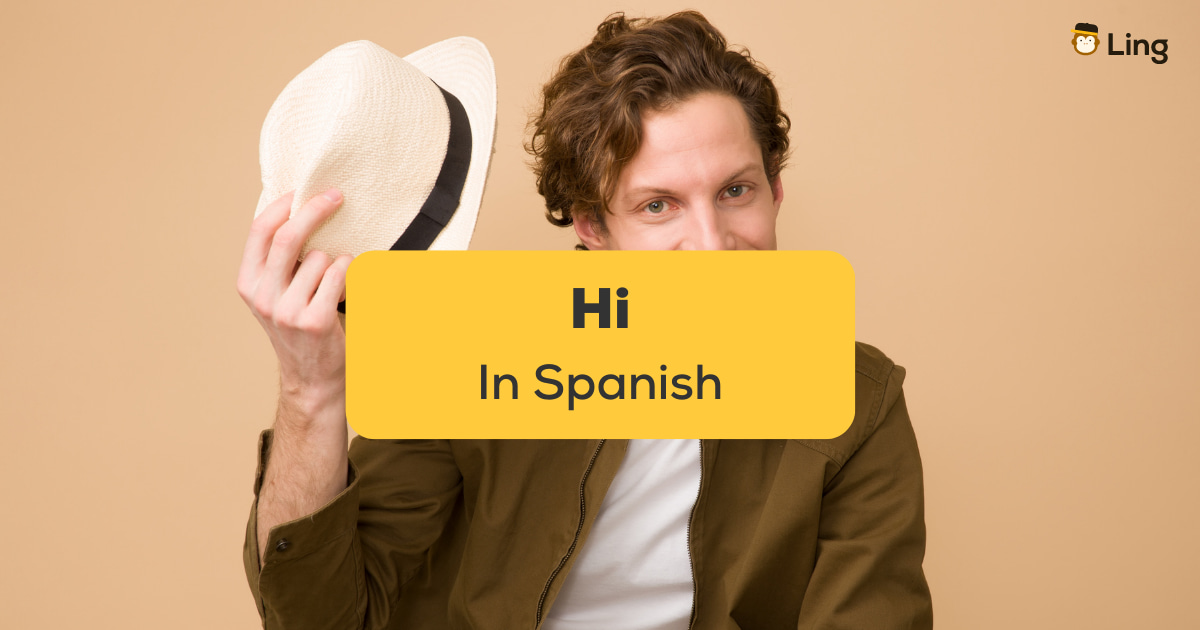
The ways of saying “hello” in Spanish vary significantly from other languages, reflecting the diverse cultural influences that have shaped the Spanish-speaking world. These differences are influenced by factors such as social hierarchy, formality, and regional customs.
In Spanish-speaking cultures, the use of formal greetings is more prevalent than in many other languages. For example, in Spanish, it is common to use the formal greeting “usted” (you) when addressing someone who is older, in a position of authority, or who is not well-known.
In contrast, in English, the informal greeting “you” is typically used in most situations.
Greetings in Different Languages
The following table provides examples of greetings in different languages and their cultural significance:
| Language | Greeting | Cultural Significance |
|---|---|---|
| Spanish | Hola | Informal greeting used among friends and family |
| Spanish | Buenos días | Formal greeting used in the morning |
| Spanish | Buenas tardes | Formal greeting used in the afternoon |
| Spanish | Buenas noches | Formal greeting used in the evening |
| English | Hello | Informal greeting used in most situations |
| English | Good morning | Formal greeting used in the morning |
| English | Good afternoon | Formal greeting used in the afternoon |
| English | Good evening | Formal greeting used in the evening |
| French | Bonjour | Formal greeting used in the morning and afternoon |
| French | Bonsoir | Formal greeting used in the evening |
| German | Guten Morgen | Formal greeting used in the morning |
| German | Guten Tag | Formal greeting used in the afternoon |
| German | Guten Abend | Formal greeting used in the evening |
Historical Evolution
The Spanish greeting “hello” has undergone a significant evolution throughout history, influenced by linguistic and cultural factors. Tracing its roots back to the Roman Empire, the greeting has been shaped by various social, political, and cultural changes.
Roman Origins
The Latin phrase “salve” (meaning “be well”) served as the primary greeting during the Roman Empire. This greeting was used in both formal and informal settings, reflecting the Roman emphasis on health and well-being.
Medieval Period
During the medieval period, the greeting “Dios te salve” (meaning “God save you”) became prevalent in Spanish-speaking regions. This greeting reflected the strong influence of Christianity and the importance of divine protection.
Renaissance and Enlightenment
The Renaissance and Enlightenment periods witnessed a shift towards more secular greetings. The phrase “buenos días” (meaning “good day”) gained popularity, reflecting a growing focus on daily life and well-being.
Spanish Colonialism
Spanish colonialism had a profound impact on the evolution of “hello” in Spanish-speaking regions. The introduction of Spanish language and culture to the Americas led to the adoption of “hola” as a common greeting.
Modern Era
In the modern era, “hola” remains the most widely used greeting in Spanish-speaking countries. However, regional variations and time-specific greetings have also emerged, reflecting the diversity and cultural nuances within the Spanish-speaking world.
Slang and Colloquialisms

In addition to the formal and informal greetings discussed earlier, Spanish has a rich vocabulary of slang and colloquialisms used to say “hello.” These terms vary widely depending on the region and the social context.
One common slang term for “hello” is “¡Hola, qué tal!”(pronounced oh-la, kay tahl), which translates to “Hello, how are you?” This greeting is often used in informal settings, such as among friends or family members.
Another common slang term is “¡Buenas!”(pronounced boo-en-as), which means “Good day!” or “Good evening!” This greeting is often used in more formal settings, such as when greeting a stranger or a person in a position of authority.
In some regions of Spain, it is common to use the phrase “¡Qué pasa!”(pronounced kay pah-sa), which literally means “What’s happening?” This greeting is often used among young people and is considered to be very informal.
Regional Dialects
The Spanish language exhibits a diverse array of regional dialects, each with its unique linguistic characteristics. These dialects have a profound influence on the way people greet each other, resulting in a rich tapestry of salutations across the Spanish-speaking world.
In Spain, for instance, the standard greeting is “Hola” (pronounced oh-la), which is used in both formal and informal settings. However, in the Canary Islands, the more informal “Que tal” (pronounced kay tal) is prevalent. In Andalusia, southern Spain, the friendly “Buenas” (pronounced bway-nahs) is commonly employed.
Latin American Dialects
In Latin America, the variations in greetings are even more pronounced. In Mexico, the ubiquitous “Hola” is accompanied by a variety of regional variations. In the north, “Buenos días” (pronounced bway-nos dee-as) is common, while in the south, “Buenas tardes” (pronounced bway-nahs tar-des) is preferred.
In Argentina, the informal “Che” (pronounced chey) is widely used among friends and family.
Other Regions
Beyond Spain and Latin America, Spanish dialects have also evolved in other regions. In Equatorial Guinea, the greeting “Obiang” (pronounced oh-bee-ang) is prevalent. In the Philippines, where Spanish was once the official language, the greeting “Kumusta” (pronounced koo-moos-tah) is still used today.
These regional variations in greetings reflect the cultural diversity and linguistic richness of the Spanish language. They serve as a testament to the vibrant tapestry of human communication and the enduring power of language to connect people across borders.
Gestures and Body Language
Gestures and body language play a significant role in Spanish greetings, conveying emotions, attitudes, and social status. Understanding these non-verbal cues is essential for effective communication and avoiding cultural misunderstandings.
One of the most common gestures is the handshake. In formal settings, a firm handshake with direct eye contact is expected. However, in informal settings, a lighter handshake or a “fist bump” may be more appropriate.
Cultural Significance and Interpretation
Gestures and body language in Spanish-speaking cultures are often expressive and animated. They can convey a wide range of emotions, from warmth and friendliness to disapproval or anger. It is important to be aware of the cultural significance of these gestures to avoid misinterpretations.
Examples of Gestures and Body Language, How to say hi in spanish language
- Thumbs up:Approval, agreement
- Thumbs down:Disapproval, disagreement
- Waving hand:Greeting, goodbye
- Open arms:Embrace, welcome
- Crossed arms:Defensiveness, disagreement
Short Story
In a bustling market, Maria and Juan met for the first time. Maria extended her hand with a warm smile, while Juan responded with a firm handshake and a nod. Their body language conveyed a sense of respect and friendliness.
As they walked through the market, Juan pointed at a colorful tapestry with his index finger, indicating his interest. Maria responded by nodding her head and smiling, showing her agreement.
Tips for Adapting
- Observe the gestures and body language of locals to understand the cultural norms.
- Be mindful of your own gestures and body language, as they may be interpreted differently in Spanish-speaking cultures.
- If you are unsure about a gesture, it is best to ask for clarification to avoid misunderstandings.
Table of Common Gestures and Body Language
| Gesture | Cultural Significance |
|---|---|
| Handshake | Respect, formality |
| Thumbs up | Approval, agreement |
| Open arms | Embrace, welcome |
| Crossed arms | Defensiveness, disagreement |
| Waving hand | Greeting, goodbye |
Dialogue
Maria:Hola, Juan. Encantada de conocerte. (Hello, Juan. Nice to meet you.)
Juan:Hola, Maria. Igualmente. (Hello, Maria. Likewise.)
Maria extended her hand with a warm smile, and Juan responded with a firm handshake and a nod. Their body language conveyed a sense of respect and friendliness.
Emotions, Attitudes, and Social Status
Gestures and body language in Spanish-speaking cultures can also convey emotions, attitudes, and social status. For example, a person who is standing up straight with their shoulders back and their head held high may be perceived as confident and assertive.
Conversely, a person who is slouching with their arms crossed may be perceived as insecure or defensive. Understanding these non-verbal cues can help you to better understand the people you are interacting with.
Quick FAQs
What is the most common way to say “hello” in Spanish?
The most common way to say “hello” in Spanish is “Hola,” pronounced as “oh-la.”
Is it considered rude to use informal greetings in formal settings?
Yes, it is generally considered rude to use informal greetings in formal settings. When in doubt, it is always better to opt for a more formal greeting.
What is the difference between “buenos días” and “buenas tardes”?
“Buenos días” is used to greet someone from sunrise to noon, while “buenas tardes” is used from noon to sunset.
