What is the spoken language of Japan? This question opens a door to a world of linguistic diversity, historical evolution, and cultural nuances. Embark on a journey to explore the fascinating realm of the Japanese language, uncovering its origins, regional variations, and profound impact on Japanese society and beyond.
The Japanese language, known as Nihongo in its native form, is the official and most widely spoken language in Japan. With a rich history spanning centuries, it has undergone significant changes and developments, giving rise to a tapestry of dialects and a writing system that blends multiple scripts.
Dive into the intricacies of Japanese phonology, grammar, and vocabulary, and discover the unique characteristics that set it apart from other languages.
Overview of Spoken Language in Japan

The official spoken language of Japan is Japanese, a Japonic language spoken by around 126 million people worldwide. Its historical origins are complex, with influences from various languages, including Chinese, Korean, and Austronesian languages. Over time, Japanese has developed into a distinct language with a unique grammar and vocabulary.
Major Dialects of Japanese
There are several major dialects spoken in Japan, each with its own unique characteristics. The most widely spoken dialect is Standard Japanese, which is based on the Tokyo dialect. Other major dialects include Kansai-ben (spoken in the Kansai region), Tohoku-ben (spoken in the Tohoku region), and Kyushu-ben (spoken in the Kyushu region).
Influence of Foreign Languages
The Japanese language has been influenced by several foreign languages throughout its history. The most significant influence has been from Chinese, which has contributed a large number of loanwords to Japanese. Other languages that have influenced Japanese include Korean, Portuguese, Dutch, and English.
Regional Dialects and Variations
The Japanese language exhibits significant regional variations, resulting in a diverse range of dialects spoken throughout the country. These dialects have evolved over centuries, influenced by geographical isolation, historical events, and cultural exchanges.
Major Regional Dialects
The major regional dialects of Japan include:
- Kanto dialect: Spoken in the Tokyo metropolitan area, it is the basis of Standard Japanese.
- Kansai dialect: Spoken in the Osaka-Kyoto-Kobe region, it is characterized by its distinctive intonation and vocabulary.
- Kyushu dialect: Spoken in the southernmost island of Kyushu, it has strong influences from the neighboring Okinawa dialect.
- Tohoku dialect: Spoken in the northeastern region of Tohoku, it preserves many archaic features not found in other dialects.
- Hokkaido dialect: Spoken in the northernmost island of Hokkaido, it has been influenced by the Ainu language.
Geographical Distribution and Unique Features
Each dialect is spoken in a specific geographical area and has its own unique characteristics. For example, the Kanto dialect is known for its clear pronunciation, while the Kansai dialect is characterized by its nasalized vowels and rapid speech. The Kyushu dialect has a strong intonation and uses many unique words and phrases, while the Tohoku dialect preserves many older forms of Japanese grammar and vocabulary.
The Hokkaido dialect has a unique intonation and vocabulary influenced by the Ainu language.
Differences from Standard Japanese
Regional dialects differ from Standard Japanese in several ways, including:
- Pronunciation: Dialects may have different pronunciations for certain sounds or words.
- Grammar: Dialects may use different grammatical structures or verb conjugations.
- Vocabulary: Dialects may have unique words or phrases not found in Standard Japanese.
Social and Cultural Factors
The development of regional dialects has been influenced by various social and cultural factors, such as:
- Geographical isolation: Mountainous terrain and other geographical barriers have contributed to the isolation of certain regions, leading to the development of distinct dialects.
- Historical events: Political and economic changes, such as the rise and fall of feudal lords, have influenced the spread of certain dialects.
- Cultural exchanges: Interactions with neighboring countries and regions have introduced foreign influences into some dialects.
Attitudes and Perceptions
Attitudes towards regional dialects vary in Japan. Some dialects, such as the Kansai dialect, are often associated with warmth and friendliness, while others, such as the Tohoku dialect, may be perceived as being more formal or conservative. In general, however, there is a growing appreciation for the diversity of regional dialects as part of Japan’s cultural heritage.
Preservation and Revitalization
Efforts are being made to preserve and revitalize regional dialects in Japan. These efforts include:
- Educational programs: Some schools and universities offer courses on regional dialects.
- Community initiatives: Local communities are organizing events and workshops to promote the use of regional dialects.
- Media exposure: Regional dialects are increasingly being used in television programs, movies, and other media.
Explain the concept of Standard Japanese (Hyōjungo) as the official national language of Japan.
Standard Japanese, also known as Hyōjungo, is the official national language of Japan. It is the standardized form of the Japanese language that is used in formal settings, such as education, government, and media. Standard Japanese is based on the Tokyo dialect, which was chosen as the standard due to its political and economic importance.
Historical Development and Standardization
The standardization of Japanese began in the Meiji era (1868-1912), when Japan was undergoing a period of rapid modernization. The government established a commission to create a standard language that would be used in all official documents and publications. The commission based its work on the Tokyo dialect, which was the most widely spoken dialect at the time.
The standardization of Japanese has been a gradual process, and it is still ongoing today. The Japanese Language Council, which was established in 1949, is responsible for overseeing the standardization of the language. The council publishes a dictionary of standard Japanese, which is used as the authoritative reference for the language.
Role in Education, Media, and Formal Communication
Standard Japanese is the language of education in Japan. It is used in all schools, from elementary school to university. Standard Japanese is also the language of the media, including television, radio, and newspapers. It is also used in all formal communication, such as government documents and business contracts.
The use of Standard Japanese in education and the media has had a significant impact on regional dialects. Many regional dialects are no longer spoken by young people, who are more likely to speak Standard Japanese. This has led to a decline in the diversity of the Japanese language.
Importance for National Unity and Cultural Preservation
Standard Japanese is an important symbol of national unity in Japan. It is the language that is used by all Japanese people, regardless of their region or social status. Standard Japanese is also an important tool for cultural preservation. It is the language of Japanese literature, art, and music.
By preserving Standard Japanese, we are preserving Japanese culture.
Comparison to Other Varieties of Japanese
Standard Japanese is just one of many varieties of Japanese. There are also many regional dialects, which are spoken in different parts of Japan. Regional dialects vary in grammar, vocabulary, and pronunciation. Some regional dialects are so different from Standard Japanese that they are difficult for speakers of Standard Japanese to understand.
Despite the differences between Standard Japanese and regional dialects, they are all considered to be part of the same language. This is because they share a common grammar and vocabulary. Standard Japanese is simply the standardized form of the language, which is used in formal settings.
Phonology of Japanese
The Japanese sound system is characterized by a relatively small inventory of vowels and consonants, a moraic timing system, and a set of phonological rules that govern sound changes.
Vowels
Japanese has five vowels: /a/, /i/, /u/, /e/, and /o/. These vowels are relatively stable and do not undergo significant changes in pronunciation.
Consonants
Japanese has a set of 18 consonants: /p/, /b/, /t/, /d/, /k/, /g/, /s/, /z/, /sh/, /j/, /ch/, /ny/, /h/, /f/, /v/, /m/, /n/, and /r/. The consonants /p/, /b/, /t/, /d/, /k/, and /g/ are voiceless, while the consonants /z/, /j/, /ch/, /ny/, and /r/ are voiced.
The consonants /s/, /sh/, /h/, /f/, /v/, /m/, and /n/ are voiceless and voiced, depending on the context.
Syllable Structure
Japanese syllables are typically composed of a consonant followed by a vowel. However, syllables can also begin with a vowel or end with a consonant.
Mora Timing
Japanese has a moraic timing system, which means that the length of a syllable is determined by the number of morae it contains. A mora is a unit of time that is roughly equivalent to the length of a short vowel.
Japanese syllables can contain one or two morae.
Phonological Rules
Japanese has a set of phonological rules that govern sound changes. These rules include assimilation, vowel harmony, and devoicing.
Assimilation is a process in which a sound changes to become more similar to a neighboring sound. For example, the consonant /t/ becomes /d/ when it is followed by a voiced consonant, as in the word “mado” (window).
Vowel harmony is a process in which the vowels in a word change to become more similar to each other. For example, the vowel /a/ becomes /e/ when it is followed by the vowel /i/, as in the word “keiki” (period).
Devoicing is a process in which a voiced consonant becomes voiceless. For example, the consonant /z/ becomes /s/ when it is followed by a voiceless consonant, as in the word “atsui” (hot).
Historical Development
The Japanese sound system has undergone a number of changes over time. These changes include the loss of final consonants, the addition of new vowels, and the development of new phonological rules.
– 5. Grammar of Japanese

Japanese grammar is a complex and nuanced system that differs significantly from English grammar. The basic grammatical structure of Japanese sentences is as follows:
- Word order:Japanese sentences are typically structured in a subject-object-verb (SOV) order. For example, the sentence “私は本を読みます” (watashi wa hon o yomimasu) means “I read books.”
- Verb conjugation:Japanese verbs are conjugated to indicate tense, mood, and aspect. For example, the verb “読む” (yomu) can be conjugated to mean “read” (present tense), “read” (past tense), or “will read” (future tense).
- Use of particles:Japanese particles are grammatical markers that are used to indicate the function of words in a sentence. For example, the particle “は” (wa) is used to mark the subject of a sentence, while the particle “を” (o) is used to mark the object of a sentence.
There are different types of Japanese sentences, including:
- Declarative sentences:Declarative sentences are used to make statements. For example, the sentence “私は学生です” (watashi wa gakusei desu) means “I am a student.”
- Interrogative sentences:Interrogative sentences are used to ask questions. For example, the sentence “あなたは学生ですか” (anata wa gakusei desu ka) means “Are you a student?”
- Imperative sentences:Imperative sentences are used to give commands or requests. For example, the sentence “本を読んでください” (hon o yonde kudasai) means “Please read the book.”
Japanese particles play an important role in the grammar of the language. The most common particles include:
- Subject particles:Subject particles are used to mark the subject of a sentence. The most common subject particle is “は” (wa).
- Object particles:Object particles are used to mark the object of a sentence. The most common object particle is “を” (o).
- Topic particles:Topic particles are used to mark the topic of a sentence. The most common topic particle is “が” (ga).
- Possessive particles:Possessive particles are used to indicate possession. The most common possessive particle is “の” (no).
- Directional particles:Directional particles are used to indicate direction. The most common directional particles are “に” (ni) and “へ” (e).
Japanese verb conjugations are used to indicate tense, mood, and aspect. The most common verb conjugations are:
- Present tense:The present tense is used to indicate that an action is happening now. The present tense conjugation is formed by adding the suffix “-ます” (masu) to the verb stem. For example, the verb “読む” (yomu) becomes “読みます” (yomimasu) in the present tense.
- Past tense:The past tense is used to indicate that an action happened in the past. The past tense conjugation is formed by adding the suffix “-た” (ta) to the verb stem. For example, the verb “読む” (yomu) becomes “読んだ” (yonda) in the past tense.
- Future tense:The future tense is used to indicate that an action will happen in the future. The future tense conjugation is formed by adding the suffix “- will” (masu) to the verb stem. For example, the verb “読む” (yomu) becomes “読むでしょう” (yomu deshou) in the future tense.
- Negative tense:The negative tense is used to indicate that an action did not happen. The negative tense conjugation is formed by adding the suffix “-ない” (nai) to the verb stem. For example, the verb “読む” (yomu) becomes “読まない” (yomanai) in the negative tense.
The following table summarizes the different types of Japanese verb conjugations:| Tense | Conjugation | Example ||—|—|—|| Present |
ます (masu) | 読みます (yomimasu) |
| Past |
た (ta) | 読んだ (yonda) |
| Future |
will (masu) | 読むでしょう (yomu deshou) |
| Negative |
ない (nai) | 読まない (yomanai) |
Japanese adverbs and adjectives are used to modify verbs and nouns, respectively. Adverbs are formed by adding the suffix “-く” (ku) to the adjective stem. For example, the adjective “速い” (hayai) becomes the adverb “早く” (hayaku). Adjectives are formed by adding the suffix “-い” (i) to the noun stem.
For example, the noun “本” (hon) becomes the adjective “本い” (hon i).The following table summarizes the different types of Japanese adverbs and adjectives:| Type | Conjugation | Example ||—|—|—|| Adverb |
く (ku) | 早く (hayaku) |
| Adjective |
い (i) | 本い (hon i) |
Japanese conjunctions are used to connect words, phrases, and clauses. Conjunctions are formed by adding the suffix “-て” (te) to the verb stem. For example, the verb “読む” (yomu) becomes the conjunction “読んで” (yonde).The following table summarizes the different types of Japanese conjunctions:| Type | Conjugation | Example ||—|—|—|| Conjunction |
て (te) | 読んで (yonde) |
Japanese interjections are used to express emotions or reactions. Interjections are typically formed by adding the suffix “-よ” (yo) to the noun stem. For example, the noun “嬉しい” (ureshii) becomes the interjection “嬉しいよ” (ureshii yo).The following table summarizes the different types of Japanese interjections:| Type | Conjugation | Example ||—|—|—|| Interjection |
よ (yo) | 嬉しいよ (ureshii yo) |
The following is a short story in Japanese:
私は学生です。私は本を読むのが好きです。私は毎日図書館に行きます。私は本を読むのが好きです。本を読むのは楽しいです。
The grammatical structure of the story is as follows:
- The first sentence is a declarative sentence. The subject is “私” (I) and the verb is “です” (am).
- The second sentence is a declarative sentence. The subject is “私” (I) and the verb is “好きです” (like).
- The third sentence is a declarative sentence. The subject is “私” (I) and the verb is “行きます” (go).
- The fourth sentence is a declarative sentence. The subject is “私” (I) and the verb is “好きです” (like).
- The fifth sentence is a declarative sentence. The subject is “本を読む” (reading books) and the verb is “楽しい” (fun).
The story is written in the present tense and uses simple grammar. The story is about a student who likes to read books. The student goes to the library every day to read books. The student finds reading books to be enjoyable.
Vocabulary of Japanese

The Japanese language boasts a vast and intricate vocabulary that has been shaped by centuries of cultural exchange and linguistic evolution. It is a unique blend of native words, Chinese characters, and loanwords from various languages, resulting in a rich and expressive lexicon.
One of the most striking features of Japanese vocabulary is the extensive use of Chinese characters, known as kanji. Kanji were introduced to Japan around the 5th century AD and have since become an integral part of the written language.
The primary spoken language of Japan is Japanese, a member of the Japonic language family. Unlike many other languages, it is not related to any other major language group, making it a language isolate. The exact origins of Japanese are unknown, but it is thought to have diverged from other languages around the 9th century BCE.
In contrast, Cleopatra VII, the last pharaoh of Ptolemaic Egypt, spoke Koine Greek, the common Greek dialect of the Hellenistic period. Koine Greek was widely used throughout the Mediterranean region and was the language of administration and commerce. It is believed that Cleopatra also spoke Egyptian, the native language of her kingdom.
Each kanji represents a word or concept and can have multiple readings, depending on the context. This system allows for a concise and efficient expression of complex ideas.
Loanwords
Japanese has also incorporated a significant number of loanwords from other languages, primarily English. These loanwords are often used to express modern concepts and technologies that do not have direct equivalents in Japanese. For example, the word “computer” is a loanword from English, while the word “sushi” is a loanword from Japanese that has been adopted into English.
The vocabulary of Japanese is constantly evolving, with new words being added to the lexicon to reflect changes in society and culture. This dynamic nature of the language ensures that it remains a vibrant and expressive means of communication.
Writing Systems of Japanese

The Japanese language employs three distinct writing systems: hiragana, katakana, and kanji. Each system serves specific functions and possesses unique characteristics.
Origins and Functions
Hiragana and katakana originated from Chinese characters, known as kanji. Hiragana emerged in the 9th century as a simplified cursive form of kanji, primarily used to represent grammatical particles and native Japanese words. Katakana, developed in the 8th century, was initially employed to transcribe foreign words and names.
Kanji, the most complex system, consists of thousands of characters adopted from Chinese. They represent both semantic and phonetic elements, allowing for a compact and expressive written language.
Interrelationships
These three systems are intricately intertwined. Hiragana and katakana are often used together to represent Japanese words, with hiragana serving as the default and katakana employed for emphasis or foreign words. Kanji, on the other hand, provides the majority of the vocabulary, especially for abstract concepts and technical terms.
Key Characteristics
The following table summarizes the key characteristics of each writing system:
| System | Origin | Function | Characteristics |
|---|---|---|---|
| Hiragana | Simplified kanji | Grammatical particles, native Japanese words | Cursive, phonetic |
| Katakana | Chinese characters | Foreign words, emphasis | Angular, phonetic |
| Kanji | Chinese characters | Abstract concepts, technical terms | Logographic, combining semantic and phonetic elements |
Historical Development
The Japanese writing systems have undergone significant evolution over centuries. The introduction of Chinese characters in the 5th century laid the foundation for the development of hiragana and katakana. The Heian period (794-1185) witnessed the flourishing of hiragana, particularly in literary works.
During the Edo period (1603-1868), katakana gained prominence in official documents and newspapers. The Meiji Restoration (1868) marked a turning point, with the adoption of a standardized form of Japanese known as Hyōjungo, which emphasized the use of kanji and hiragana while limiting katakana’s role.
Challenges
Learning and using multiple writing systems presents challenges for learners. The vast number of kanji and the complexity of their stroke order can be daunting. Additionally, the intermingling of hiragana, katakana, and kanji in texts requires a high level of proficiency.
Social and Cultural Significance
Language plays a vital role in shaping Japanese society and culture, reflecting the country’s emphasis on politeness, respect, and social hierarchy.
Japanese communication is characterized by the use of honorifics, which are words or phrases used to express respect for the person being addressed or referred to. These honorifics vary depending on the speaker’s and listener’s relative social status, age, and familiarity.
Politeness and Social Hierarchy
Japanese society places great importance on politeness and maintaining social harmony. This is reflected in the language, with numerous expressions and phrases used to convey respect and deference. For example, the use of the word “hai” (meaning “yes”) is considered more polite than the more direct “un” (also meaning “yes”).
Social hierarchy also influences communication in Japan. There are distinct ways of speaking to superiors, subordinates, and equals. For example, when speaking to a superior, it is considered polite to use more formal language and avoid using casual or slang terms.
The official spoken language of Japan is Japanese, which is a member of the Japonic language family. It is the ninth most spoken language in the world, with over 128 million native speakers. While Japanese is the primary language spoken in Japan, there are also several minority languages spoken by smaller communities, such as Ainu, Ryukyuan, and Korean.
Sign language is also used by the deaf community in Japan, and there are several different dialects of Japanese Sign Language (JSL) used throughout the country. How you say thank you in sign language varies depending on the dialect, but the most common way is to make a fist with your dominant hand and then extend your thumb and little finger while moving your hand up and down.
Comparison with Other Languages
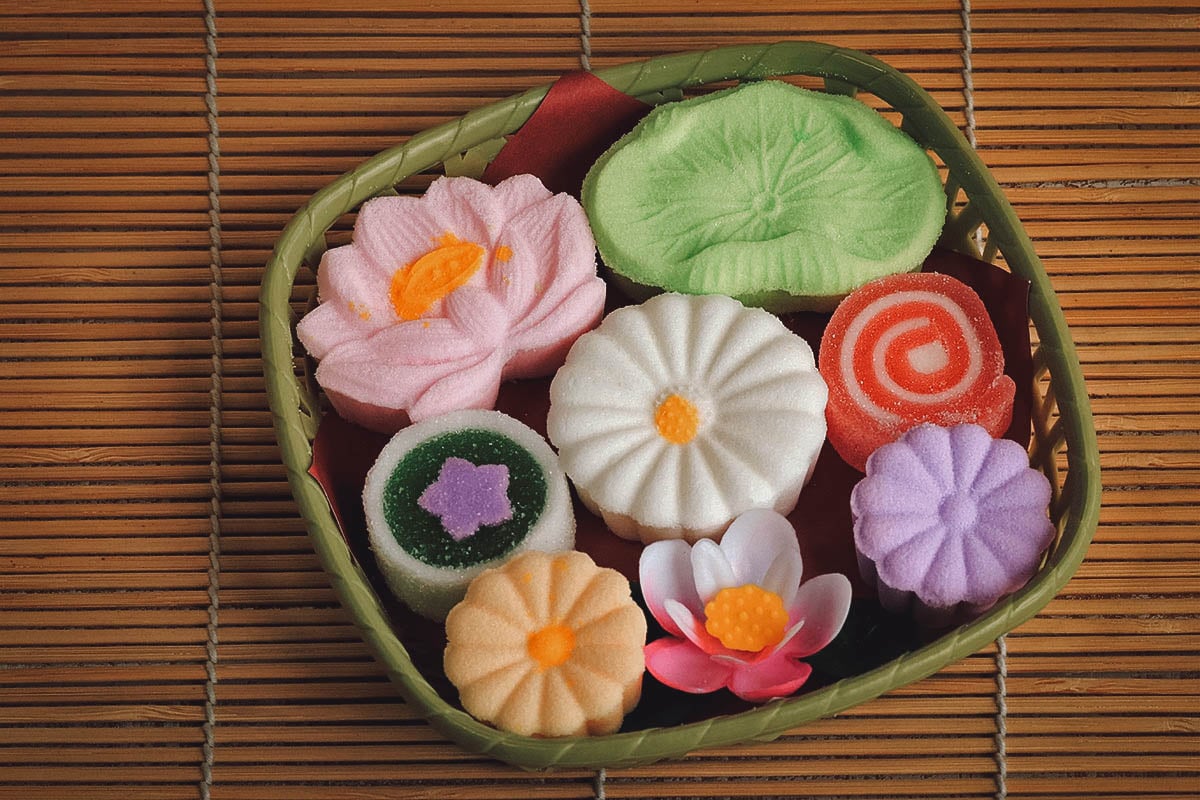
Japanese exhibits distinct features that set it apart from other languages, particularly in grammar, vocabulary, and writing systems.
Grammar
Japanese grammar differs significantly from Indo-European languages. It employs a subject-object-verb (SOV) word order, postpositions instead of prepositions, and a complex system of particles that indicate grammatical functions.
- SOV Word Order:Japanese sentences follow the SOV order, unlike English’s SVO order. For example, “私は本を読みました” (Watashi wa hon wo yomimashita) translates to “I read a book.”
- Postpositions:Japanese uses postpositions to indicate relationships between words, such as “ni” (at) and “de” (in/with). These postpositions are placed after the noun or pronoun they modify.
- Particles:Japanese grammar relies heavily on particles, which are small words that indicate the grammatical function of words in a sentence. For instance, “ga” marks the subject, while “o” marks the direct object.
Vocabulary
Japanese vocabulary is influenced by various sources, including Chinese, Korean, and Western languages. It also has a rich system of honorifics, which are words or phrases used to express respect or politeness.
- Chinese Influence:Many Japanese words, particularly those related to scholarly or technical concepts, are derived from Chinese characters (kanji).
- Honorifics:Japanese has an elaborate system of honorifics used to show respect for the listener, the speaker, or a third party.
Writing Systems
Japanese has a unique writing system that combines three scripts: hiragana, katakana, and kanji. Hiragana and katakana are phonetic syllabaries, while kanji are logographic characters adopted from Chinese.
- Hiragana:Hiragana is used to write native Japanese words and grammatical particles.
- Katakana:Katakana is used to write foreign words, onomatopoeia, and for emphasis.
- Kanji:Kanji are used to write words of Chinese origin and concepts, as well as some native Japanese words.
Language Learning and Teaching

Learning Japanese as a foreign language presents unique challenges and rewards. With its distinct grammar, writing systems, and cultural nuances, Japanese offers a fascinating and rewarding journey for language learners.
To embark on this linguistic adventure successfully, several tips and strategies can enhance your progress:
Tips for Learning Japanese
- Immerse Yourself:Surround yourself with Japanese through movies, music, books, and conversations with native speakers. This exposure will familiarize you with the language’s rhythm, intonation, and vocabulary.
- Practice Regularly:Consistent practice is crucial for developing fluency. Dedicate time each day to studying grammar, vocabulary, and writing.
- Focus on Communication:While grammar and vocabulary are essential, prioritize developing conversational skills. Engage in conversations with language partners or online forums to improve your ability to express yourself.
- Use Language Learning Resources:Utilize textbooks, apps, and online courses to supplement your learning. These resources provide structured lessons, exercises, and feedback.
- Set Realistic Goals:Learning Japanese requires patience and perseverance. Set achievable goals and celebrate your progress along the way.
Challenges and Rewards of Studying Japanese
- Complex Grammar:Japanese grammar differs significantly from English and can be challenging to master. However, understanding the underlying principles and practicing regularly can help overcome this obstacle.
- Multiple Writing Systems:Japanese utilizes three writing systems (Hiragana, Katakana, and Kanji), which can initially be daunting. However, with consistent practice, you will develop proficiency in reading and writing.
- Cultural Nuances:Japanese language and culture are intertwined. Understanding cultural customs and etiquette can enhance your communication skills and deepen your appreciation for the language.
- Job Opportunities:Proficiency in Japanese opens doors to various career opportunities in business, education, and diplomacy.
- Personal Growth:Learning Japanese challenges your cognitive abilities and expands your cultural horizons. It fosters a deeper understanding of a fascinating culture and its people.
Future of the Japanese Language: What Is The Spoken Language Of Japan
The Japanese language is expected to undergo significant changes in the coming decades, driven by globalization, technological advancements, and cultural exchange. This essay will explore the potential evolution of Japanese in the next 50 years, examining the impact of external influences, the emergence of new linguistic features, and the role of government and education in shaping the language’s future.
Impact of Globalization and Technology
Globalization has fostered increased interconnectedness and communication among nations, leading to the spread of foreign words and phrases into Japanese. English, in particular, has become increasingly influential, with loanwords and grammatical structures being adopted into Japanese. This trend is expected to continue, with the rise of global media and the internet further exposing Japanese speakers to foreign linguistic influences.Technological advancements have also played a significant role in shaping language evolution.
The advent of social media, messaging apps, and online forums has led to the emergence of new forms of communication, such as abbreviated language and emoticons. These informal modes of expression are likely to influence the development of more casual and colloquial registers of Japanese.
Emergence of New Words, Phrases, and Grammatical Structures
As Japanese society evolves, new concepts and technologies emerge, necessitating the creation of new words and phrases. For example, the term “otaku” (geek) has gained widespread usage in recent decades to describe individuals with obsessive interests in anime, manga, and other subcultures.
The language is also expected to develop new grammatical structures to accommodate changing communication needs, such as the use of gender-neutral pronouns or the incorporation of foreign grammatical elements.
Influence of Other Languages
The influence of other languages, particularly English and Chinese, is likely to continue shaping the future of Japanese. English, as a global lingua franca, will continue to provide a source of loanwords and phrases. Chinese, with its growing economic and cultural significance in the region, may also have an increasing impact on Japanese vocabulary and grammar.
However, it is important to note that Japanese has a strong tradition of linguistic resilience and is unlikely to lose its distinct identity.
Role of Government and Educational Institutions
The Japanese government and educational institutions play a crucial role in shaping the future of the language. The government’s language policies, such as the promotion of Standard Japanese (Hyōjungo) in education and media, have a significant impact on the standardization and dissemination of the language.
Educational institutions, through their curricula and teaching methods, also influence the way Japanese is learned and used by future generations.
Summary
In conclusion, the Japanese language is poised to undergo significant changes in the next 50 years. Globalization, technology, and cultural exchange will continue to drive the evolution of Japanese, leading to the emergence of new words, phrases, and grammatical structures.
The influence of other languages, particularly English and Chinese, will also play a role in shaping the language’s future. However, Japanese is expected to maintain its distinct identity while adapting to the changing linguistic landscape. The government and educational institutions will continue to play a crucial role in shaping the language’s development and ensuring its vitality in the years to come.
Major Regional Dialects of Japan

The Japanese language exhibits significant regional variation, with several major dialects spoken across the country. Each dialect possesses unique characteristics in terms of pronunciation, grammar, and vocabulary.
Geographical Distribution
- Eastern Dialects:Tokyo, Chiba, Saitama, Ibaraki, Tochigi
- Western Dialects:Osaka, Kyoto, Hyogo, Nara, Wakayama
- Northern Dialects:Aomori, Iwate, Miyagi, Akita, Yamagata
- Southern Dialects:Kyushu, Okinawa
Key Features
- Pronunciation:Regional dialects differ in the pronunciation of certain vowels, consonants, and diphthongs.
- Grammar:Dialects may have distinct grammatical structures, such as variations in verb conjugation and sentence patterns.
- Vocabulary:Dialects often have their own unique words and expressions that are not used in other regions.
Examples
- Eastern Dialects:“aru” (to be) instead of “oru” (western dialects)
- Western Dialects:“okini” (thank you) instead of “arigato” (eastern dialects)
- Northern Dialects:“namara” (very) instead of “totemo” (standard Japanese)
- Southern Dialects:“uchi naa” (our home) instead of “watashitachi no ie” (standard Japanese)
Design an infographic that visually represents the evolution of the Japanese writing systems, showcasing the development from ancient times to modern usage.

The Japanese writing system has a long and complex history, with multiple systems used simultaneously for centuries. This infographic visually represents the evolution of the Japanese writing systems, showcasing the development from ancient times to modern usage.
Origins
The earliest known form of Japanese writing is called kanji, which was introduced from China in the 5th century AD. Kanji are logographic characters, each of which represents a word or morpheme. Over time, two new writing systems were developed in Japan: hiraganaand katakana.
Hiragana is a syllabary, with each character representing a single syllable. Katakana is also a syllabary, but it is used primarily for writing foreign words and names.
Development
The Japanese writing system has continued to evolve over the centuries, with new characters being added and old characters falling out of use. In the 20th century, the Japanese government standardized the writing system, creating a set of rules for how characters should be written and used.
This standardized system is called hyōjungo, and it is the official national language of Japan.
Modern Usage, What is the spoken language of japan
Today, the Japanese writing system is used for a wide variety of purposes, including writing, printing, and electronic communication. Kanji, hiragana, and katakana are all used in modern Japanese, with each system serving a different purpose. Kanji are used for writing native Japanese words, while hiragana is used for writing grammatical particles and other function words.
Katakana is used for writing foreign words and names.
Commonly Asked Questions
What is the most common dialect of Japanese spoken in Tokyo?
The most common dialect spoken in Tokyo is the Tokyo dialect, also known as Hyōjungo, which serves as the standard form of Japanese used in formal settings and media.
Are there any endangered Japanese dialects?
Yes, there are several endangered Japanese dialects, including the Ryukyuan languages spoken in Okinawa and the Ainu language spoken by the indigenous Ainu people of Hokkaido.
How many writing systems are used in Japanese?
There are three main writing systems used in Japanese: hiragana, katakana, and kanji. Hiragana and katakana are phonetic systems, while kanji are logographic characters adopted from Chinese.
