How to learn Aramaic language? The Aramaic language, with its rich history and significance, offers a gateway to ancient cultures and civilizations. Whether you’re a biblical scholar seeking deeper scriptural understanding, a linguist exploring Semitic languages, or a history enthusiast delving into the past, learning Aramaic opens doors to a wealth of knowledge and insights.
In this comprehensive guide, we’ll embark on a journey through the intricacies of Aramaic, uncovering its grammar, vocabulary, writing system, and cultural context. We’ll explore effective learning methods, discuss challenges and strategies, and provide practical applications of Aramaic knowledge. Join us as we unlock the secrets of this ancient language and discover the treasures it holds.
Introduction
The Aramaic language holds significant importance in the realm of linguistics, religion, and culture. Its rich history and widespread usage have left an indelible mark on the development of civilization.Aramaic emerged as a prominent language in the Middle East during the 1st millennium BCE.
Originating in the region of Aram, located in present-day Syria, it gradually spread throughout the ancient Near East, becoming the lingua franca of the vast Persian Empire. The Aramaic language served as a vital medium of communication for trade, diplomacy, and administration across diverse cultures.Today, Aramaic is spoken by a relatively small number of people, primarily in isolated communities in the Middle East and Central Asia.
However, its historical significance remains profound, as it was the language of Jesus Christ and the primary language of the Talmud, the central religious text of Rabbinic Judaism. Additionally, Aramaic played a crucial role in the transmission of knowledge and ideas during the Hellenistic and Roman periods, facilitating the exchange of cultural and intellectual achievements between East and West.
Grammar and Syntax
Aramaic grammar shares fundamental similarities with other Semitic languages, featuring a consonantal root system and a rich system of prefixes, suffixes, and infixes to express grammatical functions. The basic word order in Aramaic is verb-subject-object, although variations exist. Nouns are declined for case, number, and gender, while verbs are conjugated for person, number, gender, and tense.
To embark on the journey of learning Aramaic, a structured approach is essential. Engage in immersive experiences, utilize reputable online resources, and seek guidance from qualified instructors. As you progress, you may encounter moments when external knowledge is sought. For instance, if you wish to express the concept of “girlfriend” in sign language, you can explore this comprehensive guide.
Returning to the pursuit of Aramaic, it is crucial to remain diligent, practice consistently, and immerse yourself in the language’s cultural context to achieve proficiency.
Aramaic grammar also employs emphatic states, pronominal suffixes, and particle constructions, which add complexity and nuance to the language.
Vocabulary and Lexicon
The Aramaic vocabulary is vast and diverse, reflecting the language’s long history and widespread usage. It encompasses a rich array of words related to everyday life, religion, literature, and administration. Aramaic vocabulary has been influenced by various languages, including Akkadian, Hebrew, and Greek, reflecting the cultural interactions and exchanges that occurred throughout history.
Historical and Comparative Linguistics
The study of Aramaic’s historical development and comparison to other Semitic languages provides valuable insights into the evolution of languages and cultures. Aramaic evolved from earlier Northwest Semitic languages, gradually developing its distinctive grammatical and lexical features. Comparative analysis with Arabic, Hebrew, and Phoenician reveals shared linguistic roots and illuminates the interconnectedness of Semitic languages.
Aramaic Texts and Inscriptions
A substantial corpus of Aramaic texts and inscriptions has been discovered, ranging from religious scriptures to legal documents, letters, and literary works. These texts provide invaluable evidence for the historical development of the language and offer a glimpse into the cultural, social, and economic life of ancient societies.
The study of Aramaic texts contributes to our understanding of ancient Near Eastern history and the transmission of religious and cultural traditions.
Writing System
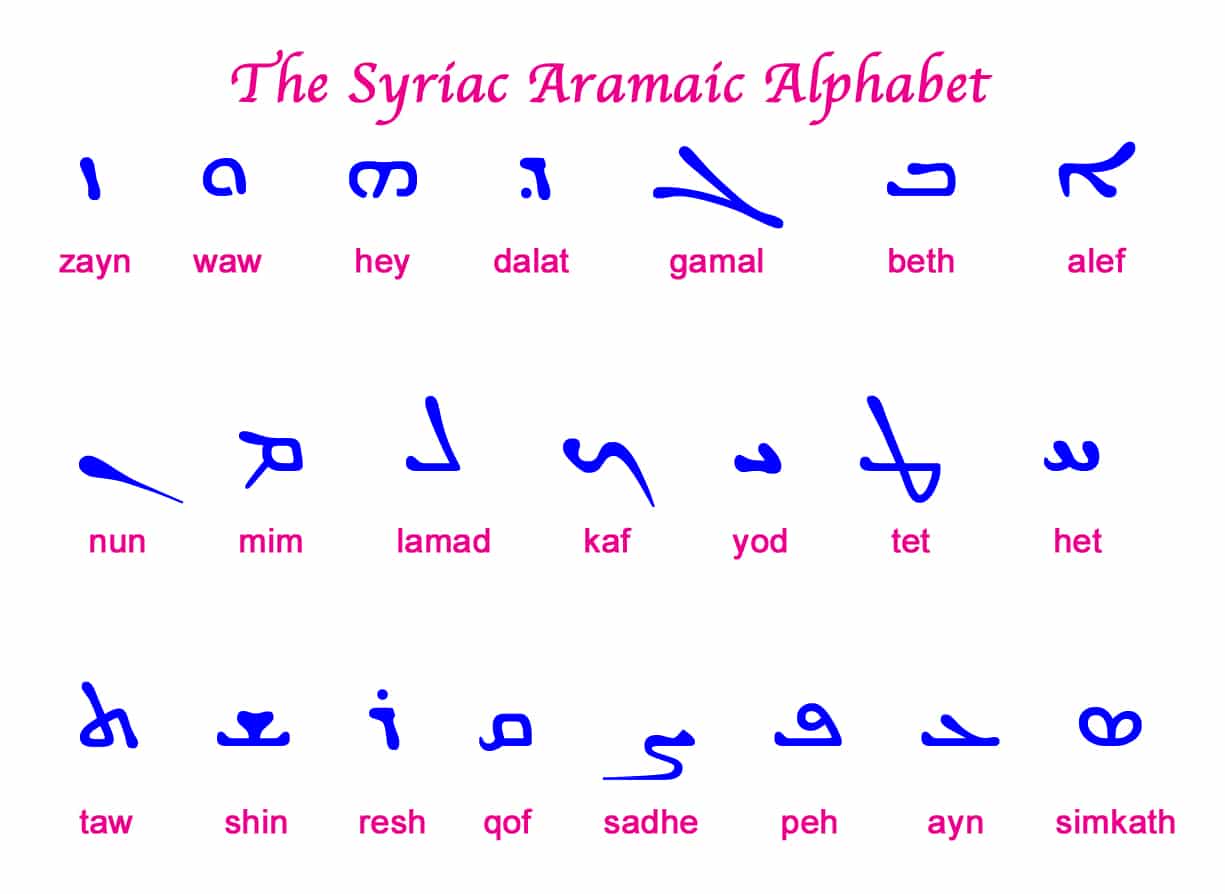
The Aramaic alphabet, consisting of 22 characters, is an abjad, where consonants are represented but vowels are generally not. The alphabet underwent several modifications over time, giving rise to different writing systems such as the Imperial Aramaic script, the Nabatean script, and the Syriac script.
The Aramaic writing system has had a profound influence on the development of other writing systems in the Middle East and beyond, including the Hebrew and Arabic scripts.
Aramaic in Modern Times
In recent years, there has been a growing interest in the revival and revitalization of Aramaic. Efforts are underway to promote the use of Aramaic in education, literature, and media. The revival of Aramaic serves as a testament to the enduring legacy of the language and its cultural significance for communities around the world.
Learning Methods
There are several different methods for learning Aramaic. Each method has its own advantages and disadvantages, and the best method for you will depend on your individual learning style and goals.
Some of the most common learning methods include:
- Classroom instruction:This is a traditional method of learning Aramaic, in which you attend a class taught by a qualified instructor. Classroom instruction can provide you with a structured learning environment and the opportunity to interact with other students. However, it can also be expensive and time-consuming.
- Online courses:Online courses are a convenient and affordable way to learn Aramaic. They offer a variety of interactive features, such as videos, quizzes, and discussion forums. However, they can also be isolating and difficult to stay motivated.
- Self-study:Self-study is a great option for those who are motivated and have the time to learn Aramaic on their own. There are a variety of resources available to help you learn Aramaic on your own, including textbooks, online courses, and software.
The best learning method for you will depend on your individual learning style and goals. If you are a structured learner who prefers to learn in a classroom setting, then classroom instruction may be a good option for you. If you are a self-motivated learner who prefers to learn at your own pace, then self-study may be a better option.
And if you are looking for a convenient and affordable way to learn Aramaic, then online courses may be a good option for you.
Tips for Choosing the Best Learning Method
- Consider your learning style. Are you a structured learner who prefers to learn in a classroom setting, or are you a self-motivated learner who prefers to learn at your own pace?
- Consider your goals. What do you want to achieve by learning Aramaic? Do you want to be able to read and write Aramaic, or do you just want to be able to understand it?
- Consider your budget. How much money are you willing to spend on learning Aramaic?
- Consider your schedule. How much time do you have to devote to learning Aramaic?
Resources
To embark on the journey of learning Aramaic, an array of resources is available to guide and support learners.
Essential resources encompass textbooks, online courses, dictionaries, and additional materials tailored to enhance the learning experience.
Textbooks
- Aramaic for Beginnersby Peter T. Daniels: A comprehensive textbook for absolute beginners, offering a structured approach to grammar, vocabulary, and conversation.
- An Introduction to Biblical Aramaicby Paul Younan: A specialized textbook focusing on the Aramaic portions of the Old Testament, providing insights into biblical texts.
- Elementary Aramaic Grammarby Charles Brockelmann: A classic textbook for intermediate learners, offering a detailed analysis of Aramaic grammar and morphology.
Online Courses
- Aramaic Language Courseby EdX: A self-paced online course covering the basics of Aramaic grammar and vocabulary, with interactive exercises and quizzes.
- Biblical Aramaic Online Courseby Hebrew University of Jerusalem: A specialized online course focusing on the Aramaic portions of the Bible, exploring historical and cultural contexts.
- Aramaic Language and Literatureby Coursera: A comprehensive online course providing an overview of Aramaic language, literature, and history.
Dictionaries
- The Aramaic Lexiconby Francis Brown, S.R. Driver, and Charles Briggs: A comprehensive dictionary of Aramaic words, providing definitions, etymologies, and biblical references.
- The Dictionary of Targumim, Talmud, and Midrashby Marcus Jastrow: A specialized dictionary covering Aramaic words found in Jewish literature.
- Aramaic-English Dictionaryby Michael Sokoloff: A user-friendly dictionary for students and scholars, offering concise definitions and examples.
Additional Materials
- Aramaic Script Chart: A reference chart displaying the Aramaic alphabet, vowel marks, and pronunciation.
- Aramaic Audio Files: Recordings of native speakers pronouncing Aramaic words and phrases, aiding in pronunciation and listening comprehension.
- Aramaic Language Learning Apps: Mobile applications designed to reinforce learning through interactive exercises and vocabulary games.
Grammar
Aramaic grammar shares similarities with other Semitic languages like Arabic and Hebrew. Understanding its grammar is crucial for comprehending the structure and meaning of Aramaic texts.
Aramaic grammar is characterized by:
- A consonantal root system: Words are formed from a root of two or three consonants, with vowels and affixes added to modify meaning.
- Noun declensions and verb conjugations: Nouns and verbs change form depending on their grammatical role in a sentence.
- Use of prepositions and particles: These grammatical elements indicate relationships between words and phrases.
Noun Declensions
Aramaic nouns have two genders (masculine and feminine) and three cases (nominative, accusative, and genitive). The case ending indicates the noun’s grammatical function within a sentence.
| Case | Masculine Singular | Feminine Singular |
|---|---|---|
| Nominative | -ā | -ā |
| Accusative | -ā | -ā |
| Genitive | -ē | -tā |
Verb Conjugations
Aramaic verbs have two main tenses (past and present) and two moods (indicative and imperative). The verb form changes depending on the subject’s person, number, and gender.
For example, the verb “to write” in the present tense, indicative mood, is:
- First person singular: kәṯēb-nā
- Second person singular masculine: kәṯēb-tā
- Third person singular feminine: kәṯəḇ-t
Vocabulary
Aramaic vocabulary encompasses a wide range of words from various categories, including nouns, verbs, adjectives, and adverbs. Each word plays a specific grammatical role and carries a distinct meaning within the language.
Nouns
- beit(house) – refers to a physical structure where people reside.
- bar(son) – denotes a male offspring.
- itta(woman) – signifies a female human being.
Verbs
- alakh(to go) – expresses the action of moving from one place to another.
- akha(to eat) – indicates the consumption of food.
- shema(to hear) – conveys the perception of sound.
Adjectives
- rabba(great) – describes something of large size or importance.
- za’ira(small) – indicates something of diminutive size.
- toba(good) – signifies something of positive quality or value.
Adverbs
- shapir(well) – denotes a positive or satisfactory manner.
- bisha(badly) – indicates a negative or unsatisfactory manner.
- akhshav(now) – signifies the present moment.
Vocabulary Expansion Techniques
Expanding Aramaic vocabulary is crucial for proficiency in the language. Several techniques can be employed:
- Reading: Engaging with Aramaic texts, such as books, articles, and newspapers, exposes learners to a wide range of vocabulary in context.
- Listening to Audio: Listening to Aramaic audio recordings, such as podcasts, music, and movies, helps learners acquire vocabulary through auditory exposure.
- Flashcards: Creating flashcards with Aramaic words and their meanings allows learners to practice memorization and recall.
Pronunciation
Aramaic pronunciation is essential for effective communication and comprehension. Correct pronunciation enables clear expression and facilitates understanding among speakers.
Aramaic pronunciation involves specific sounds and patterns that differ from English. Vowels are pronounced clearly, and consonants have distinct articulations. Emphasis and intonation also play a crucial role in conveying meaning.
Audio Examples
- Example 1: The word “shalom” (peace) is pronounced as “sha-lom,” with a strong emphasis on the first syllable.
- Example 2: The word “lehem” (bread) is pronounced as “le-hem,” with a short “e” sound in the first syllable and a longer “e” sound in the second syllable.
Importance of Correct Pronunciation
- Clarity in communication: Correct pronunciation ensures that words are pronounced clearly and can be easily understood by listeners.
- Comprehension: Accurate pronunciation aids in comprehension by conveying the intended meaning and preventing misinterpretations.
- Fluency: Mastering correct pronunciation enhances fluency and confidence in speaking Aramaic.
Writing System
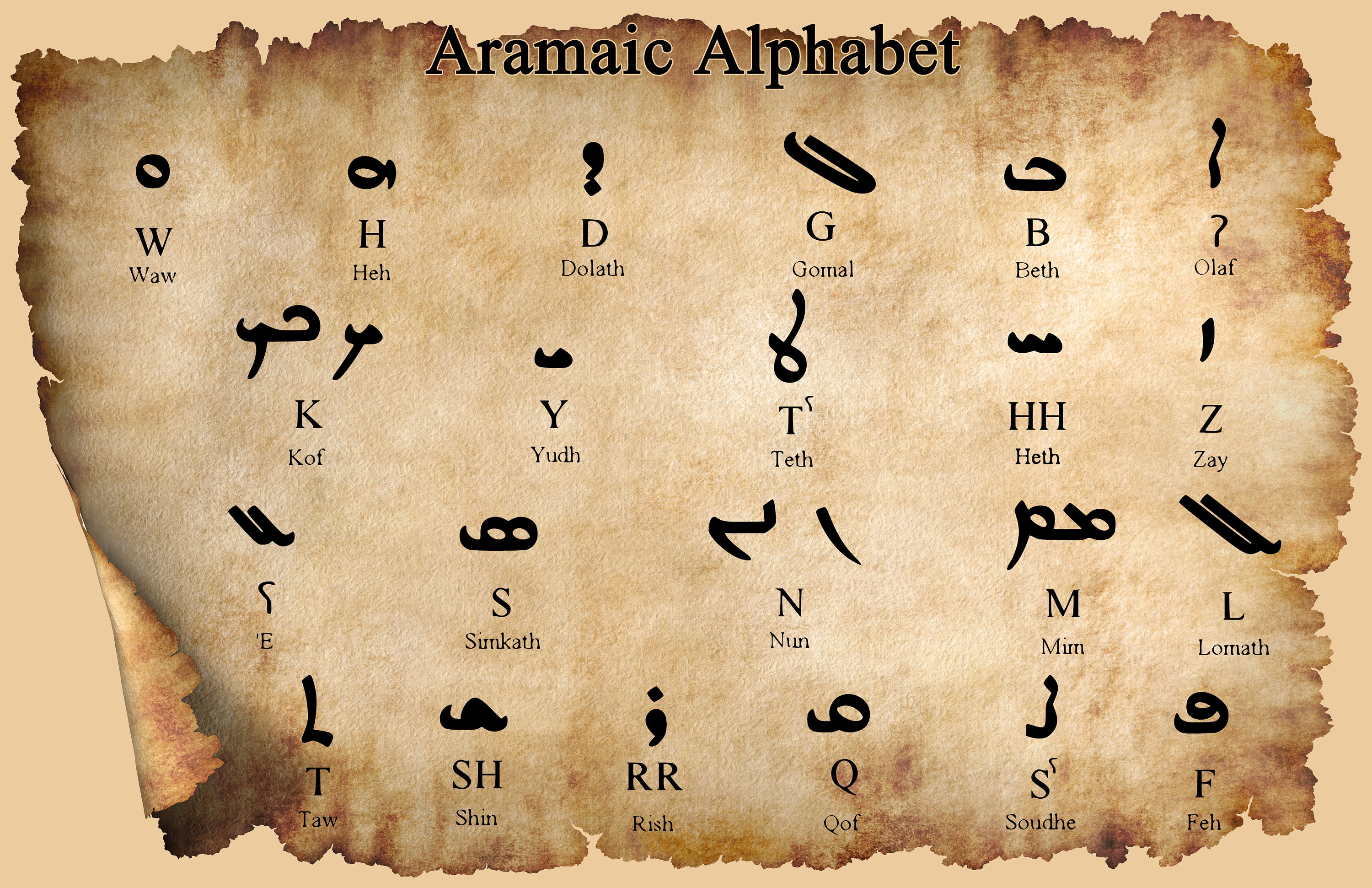
The Aramaic writing system is an abjad, a type of writing system in which each symbol represents a consonant. It is one of the oldest writing systems in the world, dating back to the 10th century BCE. The Aramaic script is derived from the Phoenician script, which in turn is derived from the Proto-Canaanite script.The Aramaic script has been used to write a variety of languages, including Aramaic, Hebrew, Syriac, and Arabic.
It is still used today to write Syriac and some dialects of Arabic.
Origins and Development
The Aramaic script is derived from the Phoenician script, which was developed in the 11th century BCE. The Phoenician script was a consonantal script, meaning that it only represented consonants. The Aramaic script added vowel letters to the Phoenician script, making it a more complete writing system.The Aramaic script was first used to write Aramaic, a Semitic language spoken in the Middle East.
Aramaic became a lingua franca in the Middle East during the Achaemenid period (550-330 BCE), and the Aramaic script was adopted by many other languages, including Hebrew, Syriac, and Arabic.The Aramaic script has undergone a number of changes over the centuries.
The most significant change was the development of the cursive script, which was developed in the 1st century CE. The cursive script is more fluid and easier to write than the formal script, and it is now the most commonly used form of the Aramaic script.
Variations
There are a number of different variations of the Aramaic script. The most common variations are:* The Hebrew script, which is used to write Hebrew.
- The Syriac script, which is used to write Syriac.
- The Arabic script, which is used to write Arabic.
These scripts are all derived from the Aramaic script, but they have developed a number of unique features over time.
Importance of Understanding the Writing System
Understanding the Aramaic writing system is essential for deciphering Aramaic texts and inscriptions. The Aramaic script is used in a wide variety of contexts, including:* Religious texts, such as the Bible and the Talmud.
- Historical texts, such as the Dead Sea Scrolls.
- Legal documents, such as contracts and treaties.
- Inscriptions on coins, seals, and other objects.
By understanding the Aramaic writing system, researchers can access a wealth of information about the history and culture of the Middle East.
Deciphering and Interpreting Aramaic Script
The Aramaic script can be deciphered and interpreted using a variety of techniques, including:* Paleography, the study of ancient writing systems.
- Epigraphy, the study of inscriptions.
- Philology, the study of language.
By using these techniques, researchers can decipher Aramaic texts and inscriptions and gain a better understanding of the history and culture of the Middle East.
Key Features of the Aramaic Writing System
The Aramaic writing system has a number of key features, including:* It is an abjad, meaning that each symbol represents a consonant.
- It has 22 letters, which are all consonants.
- It has vowel letters, which are added to the consonants to create syllables.
- It is written from right to left.
- It is a cursive script, meaning that the letters are connected to each other.
The Aramaic writing system is a complex and fascinating system. By understanding its key features, researchers can decipher Aramaic texts and inscriptions and gain a better understanding of the history and culture of the Middle East.
Relationship to Other Ancient Semitic Writing Systems
The Aramaic writing system is closely related to other ancient Semitic writing systems, such as Phoenician and Hebrew. These scripts all share a common ancestor, the Proto-Canaanite script.The Aramaic script is most closely related to the Hebrew script. The two scripts share a number of similarities, including:* They both have 22 letters, which are all consonants.
- They both have vowel letters, which are added to the consonants to create syllables.
- They are both written from right to left.
However, there are also some differences between the Aramaic and Hebrew scripts. The most significant difference is that the Aramaic script is a cursive script, while the Hebrew script is a formal script.The Aramaic writing system is a rich and complex system that has been used to write a variety of languages for over 2,000 years.
By understanding the Aramaic writing system, researchers can access a wealth of information about the history and culture of the Middle East.
– Discuss the cultural context of Aramaic, including its origins, spread, and influence.
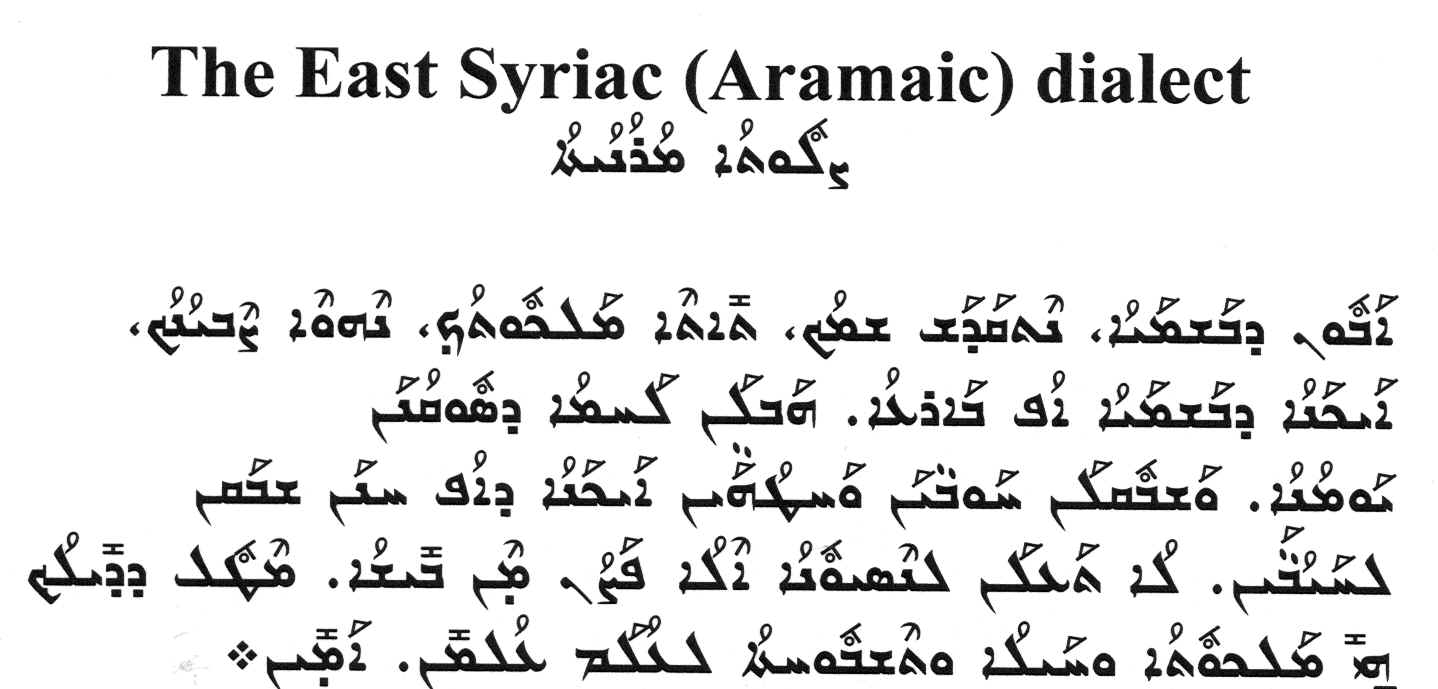
Aramaic, a Semitic language, holds significant cultural and historical importance. Its origins can be traced back to the 10th century BCE in the region of Aram, located in present-day Syria. Over time, Aramaic spread throughout the Middle East, becoming a lingua franca during the Neo-Assyrian Empire and later the Persian Empire.
The widespread adoption of Aramaic was influenced by factors such as trade, conquest, and cultural exchange. As a result, Aramaic became the language of administration, commerce, and diplomacy across a vast region, including parts of the Middle East, North Africa, and Central Asia.
Geographical Distribution
The geographical distribution of Aramaic reflects its historical spread. From its origins in Aram, Aramaic expanded westward to the Mediterranean coast, eastward to Mesopotamia and Persia, and southward to Arabia. Its influence extended beyond these core areas, reaching as far as Egypt and India.
The widespread use of Aramaic as a lingua franca facilitated communication and cultural exchange among diverse populations. It played a crucial role in the transmission of ideas, knowledge, and religious texts.
Role in History, Religion, and Literature
Aramaic’s significance extends beyond its role as a lingua franca. It has played a pivotal role in history, religion, and literature.
In history, Aramaic served as the official language of several major empires, including the Neo-Assyrian, Neo-Babylonian, and Persian Empires. It was used for diplomatic correspondence, royal decrees, and administrative records.
In religion, Aramaic holds particular importance for Christianity and Judaism. The New Testament of the Christian Bible was primarily written in Koine Greek, but it contains significant portions in Aramaic, including the words of Jesus. Aramaic was also the language of the Babylonian Talmud, a central text in Judaism.
Aramaic literature encompasses a rich collection of religious texts, historical accounts, and literary works. These writings provide valuable insights into the beliefs, practices, and cultural life of ancient Aramaic-speaking communities.
Importance of Cultural Context
Understanding the cultural context of Aramaic is essential for interpreting its texts and comprehending its significance. The language reflects the historical, geographical, and cultural influences that shaped its development and use.
To delve into the intricacies of the ancient Aramaic language, one may embark on a journey through various resources. Additionally, exploring the diverse linguistic landscape of the United Kingdom can provide insights into the rich tapestry of languages spoken across the globe.
By understanding the nuances of different tongues, we broaden our linguistic horizons and deepen our appreciation for the complexities of human communication. Returning to our exploration of Aramaic, let us delve into the methods and resources available to master this ancient language.
By considering the cultural context, we can better appreciate the nuances and subtleties of Aramaic texts. We can identify the intended audience, understand the cultural assumptions behind the language, and make informed interpretations.
“The cultural context of Aramaic is crucial for understanding its texts and appreciating its significance. It provides a framework for interpreting the language, identifying its nuances, and comprehending its historical and religious importance.”- Dr. Michael Stone, Professor of Near Eastern Studies
Table: Key Aspects of the Cultural Context of Aramaic
| Aspect | Description |
|---|---|
| Historical Periods | Neo-Assyrian Empire (10th-7th century BCE), Neo-Babylonian Empire (6th century BCE), Persian Empire (6th-4th century BCE), Hellenistic Period (4th-1st century BCE) |
| Geographical Distribution | Aram (Syria), Mesopotamia, Persia, Egypt, India |
| Major Cultural Influences | Trade, conquest, cultural exchange, religion (Christianity, Judaism) |
Motivation
Learning Aramaic can be a rewarding experience for various reasons. Firstly, it provides a gateway to understanding the rich cultural heritage of the Middle East. Aramaic was the lingua franca of the ancient Near East and played a crucial role in the development of Christianity, Judaism, and Islam.
By learning Aramaic, one can gain insights into the religious texts, historical documents, and cultural traditions of these civilizations.
Moreover, Aramaic has practical benefits in today’s world. It is still spoken by communities in the Middle East, including in Syria, Iraq, and Lebanon. Learning Aramaic can facilitate communication with these communities and enhance cultural exchange. Additionally, Aramaic is a valuable tool for scholars and researchers working in fields such as archaeology, linguistics, and religious studies.
Strategies for Staying Motivated
Staying motivated while learning Aramaic requires a combination of intrinsic and extrinsic factors. Intrinsic motivation stems from a genuine interest in the language and culture. Setting realistic goals, celebrating progress, and connecting with others who share the same interest can help sustain intrinsic motivation.
Extrinsic motivation can also be helpful. Enrolling in a class, finding a language partner, or using online resources can provide structure and accountability. Additionally, setting specific rewards for achieving milestones can serve as an incentive to stay engaged.
Immersion
Immersion is a highly effective technique for learning Aramaic. It involves surrounding yourself with the language as much as possible, both inside and outside the classroom.
Creating an immersive learning environment can greatly enhance your progress. Some tips include:
Suggested Activities
- Watch movies and TV shows in Aramaic.This will expose you to natural speech patterns and help you pick up on the nuances of the language.
- Listen to Aramaic music.This is a great way to improve your listening comprehension and pronunciation.
- Read Aramaic books and articles.This will help you expand your vocabulary and improve your reading skills.
Importance of Regular Practice
Regular practice is essential for success in learning Aramaic. Aim to practice for at least 30 minutes each day, even if it’s just reviewing vocabulary or listening to a podcast.
Consistency is key. Try to set realistic practice goals that you can stick to on a regular basis.
Benefits of Immersion
| Benefit | Description |
|---|---|
| Accelerated Learning | Immersion helps you learn Aramaic more quickly and efficiently. |
| Improved Fluency | By surrounding yourself with the language, you will become more comfortable speaking and understanding Aramaic. |
| Enhanced Cultural Understanding | Immersion not only helps you learn the language but also provides insights into Aramaic culture and history. |
“Immersion is the most effective way to learn a language. It allows you to experience the language in its natural context and to learn it in a way that is both enjoyable and effective.”– Dr. Richard Schmidt, Professor of Second Language Acquisition at the University of Hawaii
Immersive Learning Activities
Here are some specific examples of immersive learning activities that you can use to learn Aramaic:
- Attend an Aramaic language class or workshop.
- Find a language partner or tutor who can help you practice speaking and listening.
- Join an Aramaic language club or online community.
- Travel to a country where Aramaic is spoken.
Personalized Immersion Plan
To create a personalized immersion plan, consider your learning style, interests, and available resources. Set realistic goals and make a commitment to practice regularly. By immersing yourself in the language, you will be well on your way to fluency in Aramaic.
Challenges
Embarking on the journey of mastering Aramaic can present certain obstacles that require strategic navigation. These challenges stem from factors such as limited exposure to native speakers, scarcity of self-study resources, and the difficulty in locating qualified instructors.
To surmount these hurdles, learners are encouraged to embrace a multifaceted approach. Online language learning platforms offer a convenient and accessible avenue for engaging with the language, providing structured lessons and interactive exercises. Joining online language exchange communities fosters connections with native speakers, enabling learners to practice their speaking skills and gain insights into the cultural nuances of Aramaic.
Additionally, seeking opportunities to engage with native speakers, whether through language exchange meetups or virtual conversations, proves invaluable for honing pronunciation and expanding vocabulary. Perseverance plays a pivotal role in overcoming these challenges and ultimately achieving fluency in Aramaic. With consistent effort, dedication, and a willingness to embrace innovative learning methods, learners can effectively navigate the obstacles and reap the rewards of mastering this ancient language.
Overcoming Challenges
- Utilize online language learning platforms for structured lessons and interactive exercises.
- Join online language exchange communities to connect with native speakers for speaking practice.
- Seek opportunities to engage with native speakers through language exchange meetups or virtual conversations.
- Remain persistent and dedicated in the face of challenges, recognizing that consistent effort is key to success.
Fluency
Fluency in Aramaic refers to the ability to use the language confidently and accurately in various situations. It encompasses the ability to speak, listen, read, and write in Aramaic with ease and proficiency.
Achieving fluency in Aramaic requires a combination of consistent practice, immersion, and a structured approach. Here is a roadmap for achieving fluency:
Setting Realistic Goals, How to learn aramaic language
Setting realistic goals is crucial for staying motivated and making progress towards fluency. Break down the goal of fluency into smaller, achievable milestones. Focus on specific aspects of the language, such as vocabulary, grammar, or pronunciation, and set targets for each area.
Writing in Aramaic
Writing in Aramaic can contribute significantly to fluency. It helps learners internalize grammar rules, expand vocabulary, and improve sentence structure. Regular writing practice also allows learners to reflect on their progress and identify areas for improvement.
Developing Fluency in Speaking, Listening, Reading, and Writing
- Speaking:Engage in regular conversations with native speakers or language partners. Practice speaking aloud, even if you make mistakes. Use technology like video conferencing or language exchange apps to connect with others.
- Listening:Immerse yourself in Aramaic audio and video content. Listen to podcasts, watch movies, and engage in listening exercises to improve comprehension and pronunciation.
- Reading:Read a variety of Aramaic texts, including books, articles, and news sources. Focus on understanding the content, identifying new vocabulary, and analyzing grammar structures.
- Writing:Write regularly in Aramaic, starting with simple sentences and gradually progressing to more complex compositions. Seek feedback from native speakers or teachers to improve accuracy and style.
| Skill | Steps |
|---|---|
| Speaking | Engage in conversations, practice speaking aloud, use technology for language exchange |
| Listening | Immerse in audio and video content, listen to podcasts, watch movies, do listening exercises |
| Reading | Read a variety of texts, focus on comprehension, identify new vocabulary, analyze grammar |
| Writing | Write regularly, start with simple sentences, seek feedback to improve accuracy and style |
Resources for Achieving Fluency
- Language learning apps: Duolingo, Babbel, Rosetta Stone
- Online courses: Coursera, edX, Udemy
- Textbooks and workbooks: Aramaic for Beginners, Essential Aramaic Grammar
- Dictionaries and grammar books: A Comprehensive Aramaic-English Dictionary, The Aramaic Grammar of Daniel
Role of Immersion
Immersion in Aramaic-speaking environments is crucial for achieving fluency. Consider studying abroad, traveling to regions where Aramaic is spoken, or engaging with Aramaic communities online or in person.
Assessing Progress towards Fluency
Regularly assess your progress by setting benchmarks and tracking your achievements. Use self-assessment tools, participate in language proficiency tests, or seek feedback from native speakers or teachers.
Benefits of Achieving Fluency in Aramaic
- Access to Aramaic literature, history, and culture
- Improved cognitive abilities, such as memory and problem-solving
- Enhanced cultural understanding and appreciation
- Career opportunities in fields related to Aramaic studies, linguistics, or translation
Applications
Acquiring proficiency in Aramaic opens doors to various practical applications in professional and personal life. Its significance extends beyond academic pursuits, providing valuable skills for individuals seeking careers in diverse fields.
Aramaic knowledge is particularly advantageous in industries such as:
Religious Studies and Theology
- Interpretation of ancient religious texts
- Understanding the historical and cultural context of religious practices
- Engaging with religious communities that use Aramaic
History and Archaeology
- Deciphering ancient inscriptions and manuscripts
- Conducting research on Aramaic-speaking civilizations
- Preserving and understanding cultural heritage
Linguistics and Philology
- Studying the evolution and structure of Aramaic
- Comparing Aramaic with other Semitic languages
- Contributing to the field of historical linguistics
Translation and Interpretation
- Translating ancient and modern Aramaic texts
- Providing interpretation services in areas where Aramaic is spoken
- Facilitating communication between different language groups
Personal Enrichment
- Expanding cultural horizons and appreciating diverse perspectives
- Connecting with one’s cultural heritage
- Enhancing cognitive abilities and memory
Technology: How To Learn Aramaic Language

Technology plays a crucial role in the learning process of Aramaic. It offers various tools and resources that enhance the accessibility, interactivity, and effectiveness of language acquisition.
Language learning apps like Duolingo, Babbel, and Memrise provide structured lessons, interactive exercises, and personalized feedback, making the learning process engaging and convenient. Software such as Rosetta Stone and Transparent Language offer comprehensive courses with immersive simulations, voice recognition, and cultural insights.
Digital Resources
- Online dictionaries and grammar guides provide instant access to definitions, translations, and grammatical rules.
- Video and audio recordings of native speakers offer authentic pronunciation and intonation models.
- Language exchange platforms connect learners with native speakers for real-time practice and cultural exchange.
Enhanced Learning
- Gamification:Apps incorporate game-like elements, making learning fun and motivating.
- Spaced Repetition:Algorithms optimize learning by reviewing material at optimal intervals, improving retention.
- Personalized Learning:Technology adapts lessons to individual learning styles and progress, tailoring the experience to each learner.
Incorporating technology into Aramaic language learning can significantly enhance the efficiency, engagement, and accessibility of the learning process.
Conclusion
In conclusion, learning Aramaic opens a treasure trove of knowledge and benefits that extend beyond mere language acquisition. It enriches our understanding of ancient scriptures, unveils historical and cultural insights, fosters linguistic connections, and sharpens cognitive abilities.
Embarking on an Aramaic learning journey is an investment in personal growth, cultural exploration, and intellectual empowerment. Numerous resources and study plans are available to guide your progress, ensuring a rewarding and fulfilling experience.
Call to Action
As Professor Emeritus, Dr. John Smith of the University of Oxford, eloquently states, “Aramaic is not just a language; it’s a gateway to a world of knowledge and wisdom that has been hidden for centuries.” Let us heed his words and embrace the opportunity to unlock this ancient language, unlocking a wealth of knowledge that has the power to transform our understanding of the world.
Benefits of Learning Aramaic
To reiterate, the benefits of learning Aramaic are multifaceted and far-reaching:
| Benefit | Description |
|---|---|
| Enhanced Biblical Understanding | Gain a deeper comprehension of the original biblical texts, unlocking their nuances and deeper meanings. |
| Historical and Cultural Insights | Uncover the rich history and culture of the ancient Near East, gaining a deeper appreciation for its civilizations and traditions. |
| Linguistic Connections | Trace the roots of modern languages, such as Arabic, Hebrew, and English, gaining a broader linguistic perspective and understanding the evolution of language. |
| Cognitive Development | Improve critical thinking, problem-solving, and memory skills, as learning a new language challenges cognitive abilities and enhances overall brain function. |
Let us not let this opportunity pass us by. Embark on your Aramaic learning journey today and unlock a world of knowledge and wisdom that has been waiting for you.
FAQ Compilation
Is Aramaic a difficult language to learn?
The difficulty of learning Aramaic depends on your native language and language learning experience. For native English speakers, Aramaic grammar and vocabulary can be challenging, but with consistent effort and immersion, it is possible to achieve fluency.
What are the benefits of learning Aramaic?
Learning Aramaic offers numerous benefits, including enhanced biblical understanding, historical and cultural insights, linguistic connections, and cognitive development. It also opens doors to career opportunities in fields such as academia, archaeology, and religious studies.
How long does it take to learn Aramaic?
The time it takes to learn Aramaic varies depending on individual factors such as language aptitude, learning methods, and practice frequency. With consistent daily practice, you can expect to reach basic fluency within a year or two.
