How do you say thank you in chinese language – Expressing gratitude is a crucial aspect of Chinese culture, and there are various ways to say “thank you” in Chinese. This guide will provide a comprehensive overview of the different expressions, their appropriate usage, and the cultural significance of gratitude in China.
From formal expressions used in professional settings to informal phrases employed in casual conversations, this guide covers the nuances of expressing gratitude in different contexts. We will explore the cultural etiquette surrounding expressions of thanks, regional variations, and the role of gratitude in fostering positive relationships.
Introduction
Gratitude is a fundamental aspect of Chinese culture, reflecting the importance of maintaining harmonious relationships and expressing appreciation for kindnesses received. There are various ways to express “thank you” in Chinese, each carrying its own nuance and level of formality.
Understanding these expressions is crucial for effective communication and building positive connections in Chinese-speaking contexts.
Common Expressions of Gratitude
The most common and straightforward way to say “thank you” in Chinese is “谢谢 (xièxie).” It is a versatile expression that can be used in most situations, regardless of the level of formality. For a more formal setting, “感谢 (gǎnxiè)” is a more polite and respectful way to express gratitude.
It is often used in written communication or when addressing individuals in positions of authority or respect.
In informal settings, especially among friends and family, “多谢 (duōxiè)” is a casual and affectionate way to express thanks. It conveys a sense of warmth and closeness, making it suitable for expressing appreciation in personal relationships.
When receiving a gift or a favor, “不客气 (bù kèqi)” is a common response that literally means “you’re welcome.” However, it is not a direct translation of “thank you” but rather a way to acknowledge the gesture and express that the speaker does not feel indebted to the other person.
Expressing Gratitude in Different Contexts
The context in which gratitude is expressed can also influence the choice of words. In business settings, “谢谢惠顾 (xièxie huìgù)” is a polite way to express thanks for patronage or a purchase. In social situations, “谢谢款待 (xièxie kuàndài)” is used to express gratitude for hospitality or a meal.
When receiving a compliment, “哪里哪里 (nǎlǐ nǎlǐ)” is a humble way to deflect praise and express that the speaker does not deserve the compliment. It literally means “where, where” and implies that the speaker’s qualities are not as remarkable as suggested.
Cultural Significance of Gratitude
The emphasis on expressing gratitude in Chinese culture stems from the Confucian values of respect, harmony, and reciprocity. Gratitude is seen as a way to maintain balance in relationships and foster a sense of indebtedness that encourages continued kindness and support.
By expressing thanks, individuals not only acknowledge the kindness they have received but also strengthen the bonds that connect them to others.
Formal Expressions

Formal expressions of gratitude in Chinese are typically used in professional or business settings, or when expressing thanks to someone of a higher social status. These expressions often convey a sense of respect and appreciation.
The following table provides a list of formal expressions used in different situations, along with their Chinese characters, Pinyin pronunciation, and English translation:
Table of Formal Expressions
| Chinese Characters | Pinyin Pronunciation | English Translation |
|---|---|---|
| 谢谢 | xièxie | Thank you |
| 感谢 | gǎnxiè | Thank you (more formal) |
| 多谢 | duōxiè | Thank you very much |
| 万分感谢 | wànfēn gǎnxiè | Thank you very much indeed |
| 不胜感激 | bùshèng gǎnjī | I am deeply grateful |
| 感激不尽 | gǎnjī bùjìn | I am eternally grateful |
Informal Expressions: How Do You Say Thank You In Chinese Language
In casual settings, Chinese speakers often use informal expressions to express gratitude. These expressions are typically shorter and more colloquial than formal expressions, and they may vary depending on the region and the speaker’s personal style.
Here is a list of some common informal expressions used to say “thank you” in Chinese:
- 谢谢 (xièxie): This is the most common way to say “thank you” in Chinese. It is a versatile expression that can be used in most situations.
- 谢了 (xiè le): This is a more casual way to say “thank you.” It is often used among friends and family members.
- 谢啦 (xiè la): This is another casual way to say “thank you.” It is similar to “xiè le,” but it is more commonly used in northern China.
- 多谢 (duōxiè): This expression means “thank you very much.” It is more formal than “xièxie,” and it is often used in situations where the speaker wants to express their sincere gratitude.
- 感恩 (gǎn’ēn): This expression means “to be grateful.” It is a more formal way to express gratitude, and it is often used in writing or in situations where the speaker wants to show their deep appreciation.
When using informal expressions to say “thank you” in Chinese, it is important to consider the context and the relationship between the speaker and the listener. For example, “xièxie” is a more appropriate expression to use with strangers or people in a professional setting, while “xiè le” or “xiè la” are more appropriate to use with friends and family members.
Cultural Context

In Chinese culture, expressing gratitude is an integral part of social interactions. It reflects the importance of maintaining harmonious relationships and acknowledging the contributions of others.
There are specific etiquette and social norms surrounding expressions of gratitude in Chinese. It is considered polite to express gratitude promptly and sincerely. The choice of words and the tone of voice used should be appropriate to the context and the relationship between the individuals involved.
Common Phrases Used to Express Gratitude
There are a variety of common phrases used to express gratitude in Chinese, each with its own cultural nuances:
- 谢谢 (xièxie): This is the most common phrase used to express gratitude. It can be used in both formal and informal settings.
- 多谢 (duōxiè): This phrase is more formal than 谢谢 and is often used in written communication or when expressing gratitude to someone in a position of authority.
- 感恩 (gǎnen): This phrase expresses deep gratitude and is often used in situations where someone has gone above and beyond to help you.
- 太感谢了 (tài gǎnxiè le): This phrase is used to express overwhelming gratitude.
Regional Variations
There are some regional variations in the expression of gratitude in Chinese. For example, in some parts of southern China, it is common to say 唔该 (m̀goi) instead of 谢谢. In some parts of northern China, it is common to say 谢了 (xiè le) instead of 谢谢.
Role of Gratitude in Chinese Culture
Gratitude is an important virtue in Chinese culture. It is believed that expressing gratitude helps to maintain harmonious relationships and create a positive social environment. Gratitude is also seen as a way of acknowledging the interconnectedness of all things and the importance of reciprocity.
Regional Variations

The vast geographic expanse of China has given rise to regional variations in the way people express gratitude. These variations are influenced by cultural, linguistic, and historical factors.
One notable regional variation is the use of “xiè xie” (谢谢) in Mandarin-speaking regions, while “do je” (多谢) is more common in Cantonese-speaking areas. In certain parts of southern China, such as Fujian and Guangdong, the phrase “gan en” (感恩) is used to express heartfelt gratitude.
Table: Regional Variations of “Thank You” in China
| Region | Phrase | Cultural Significance |
|---|---|---|
| Mandarin-speaking | xiè xie (谢谢) | Standard and widely understood |
| Cantonese-speaking | do je (多谢) | Common in southern China |
| Fujian, Guangdong | gan en (感恩) | Expresses deep gratitude |
These regional variations reflect the diverse cultural and linguistic heritage of China and contribute to the richness of the Chinese language.
Gestures and Body Language

In Chinese culture, gratitude is often expressed through gestures and body language, which convey emotions and intentions in a nuanced manner.
One common gesture is the “cupped hand” gesture, where the hands are held together in a bowl-like shape, palms facing up. This gesture symbolizes respect and gratitude and is often used when receiving a gift or expressing thanks for a favor.
Bowing
Bowing is another significant gesture used to convey gratitude in Chinese culture. The depth and duration of the bow indicate the level of respect and appreciation. A slight nod of the head is considered a casual gesture of thanks, while a deeper bow from the waist is more formal and respectful.
Handshakes
Handshakes are not as common in Chinese culture as in Western cultures. However, they are becoming more prevalent in business and international settings. When shaking hands, it is important to maintain a firm grip and make eye contact.
Facial Expressions
Facial expressions also play a role in expressing gratitude in Chinese culture. A genuine smile and warm eye contact are considered to be sincere expressions of appreciation.
Tone and Intonation
In Chinese, tone and intonation play a crucial role in expressing gratitude. Different tones can convey varying levels of sincerity, respect, and even sarcasm or insincerity.
Mandarin Chinese has four main tones: the first tone (high and level), the second tone (rising), the third tone (dipping and then rising), and the fourth tone (falling). When expressing gratitude, the first tone is typically used for formal and respectful situations, while the second and third tones are more commonly used in informal settings.
The fourth tone, if used in isolation, can sometimes convey a sense of sarcasm or insincerity.
Regional Variations
Regional variations in tone and intonation can also affect the expression of gratitude. For example, in the southern province of Guangdong, the first tone is often pronounced with a slightly higher pitch than in the northern province of Beijing. This difference in intonation can convey a greater sense of warmth and enthusiasm.
Tone and Intonation in Written Forms
In written forms of gratitude, such as letters and emails, tone and intonation can be conveyed through the use of punctuation and capitalization. For example, a sentence written in all capital letters may convey a stronger sense of gratitude than one written in lowercase letters.
Similarly, the use of exclamation marks can add emphasis to an expression of gratitude.
Table of Tones and Intonations
| Tone | Intonation | Meaning |
|---|---|---|
| First tone | High and level | Formal and respectful |
| Second tone | Rising | Informal and friendly |
| Third tone | Dipping and then rising | Informal and sincere |
| Fourth tone | Falling | Sarcastic or insincere (when used in isolation) |
Dialogue
The following dialogue demonstrates how tone and intonation can be used to convey different levels of gratitude:
Person A: 谢谢 (xièxie) – Thank you.
Person B: 不客气 (bú kèqì) – You’re welcome.
In this dialogue, Person A uses the first tone for the word “谢谢,” which conveys a sense of formality and respect. Person B responds with the second tone for the phrase “不客气,” which is a more informal and friendly way of saying “you’re welcome.”
Cultural Comparison
Chinese expressions of gratitude share similarities with those in other cultures, such as verbal expressions (“thank you”) and non-verbal gestures (e.g., bowing). However, there are also notable differences.
In some Western cultures, gratitude is often expressed directly and explicitly, with phrases like “I am grateful for…” or “Thank you very much.” In contrast, Chinese expressions of gratitude can be more indirect and subtle, often conveyed through actions or gestures rather than words.
The Role of Indirectness
The emphasis on indirectness in Chinese gratitude reflects cultural values of humility and modesty. Directly expressing gratitude can be seen as drawing attention to oneself, which is considered inappropriate in many Chinese social contexts.
The Importance of Context
The meaning and significance of gratitude can also vary depending on the cultural context. In some cultures, gratitude is primarily seen as a way to acknowledge a specific act or gift. In other cultures, gratitude is more broadly understood as a way to express appreciation for relationships and support.
The Transformative Power of Gratitude
Research suggests that gratitude has numerous benefits for individuals and society as a whole. Expressing gratitude can lead to increased happiness, improved relationships, and reduced stress. It can also foster a sense of connection and belonging.
Examples in Dialogue
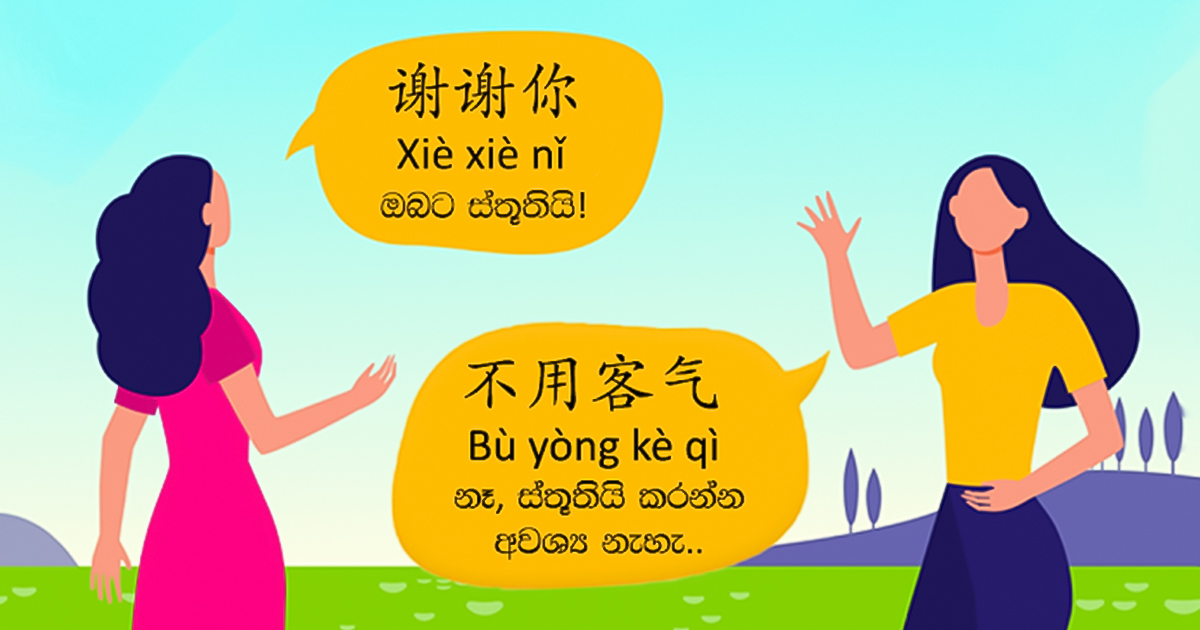
In various social interactions, expressing gratitude appropriately demonstrates appreciation and fosters positive relationships. The following dialogues illustrate the use of different gratitude expressions in different situations, ranging from formal to informal settings.
Example 1: Student-Teacher Dialogue
Student:老师,非常感谢您今天对这个难题的讲解。我终于明白了! Teacher:不客气,很高兴能帮到你。
Translation: Student:Teacher, thank you very much for explaining this difficult concept today. I finally understand it! Teacher:You’re welcome. I’m glad I could help.
Example 2: Friends’ Dialogue, How do you say thank you in chinese language
Friend 1:谢谢你这段时间一直支持我。你的鼓励对我来说意义重大。 Friend 2:不用客气,朋友之间互相帮助是应该的。
Translation: Friend 1:Thank you for supporting me all this time. Your encouragement means a lot to me. Friend 2:You’re welcome. It’s what friends are for.
Example 3: Customer-Customer Service Dialogue
Customer:谢谢您的帮助。您耐心细致地解决了我的问题。 Customer Service Representative:这是我的荣幸。很高兴能为您提供帮助。
Translation: Customer:Thank you for your help. You patiently and meticulously solved my problem. Customer Service Representative:It’s my pleasure. I’m glad I could assist you.
Common Mistakes

Foreigners often make mistakes when expressing gratitude in Chinese, leading to misunderstandings or conveying unintended meanings. Here are some common mistakes to avoid:
Mistake 1: Saying “谢谢” (xièxie) too loudly
Correction:Speak “谢谢” (xièxie) softly and politely.
Explanation:Raising your voice can be perceived as rude or aggressive in Chinese culture.
Mistake 2: Not using the appropriate tone
Correction:Use a sincere and respectful tone when saying “谢谢” (xièxie).
Explanation:A monotone or dismissive tone can convey indifference or disrespect.
Mistake 3: Using “谢谢” (xièxie) in inappropriate situations
Correction:Avoid using “谢谢” (xièxie) when you are not genuinely grateful.
Explanation:Saying “谢谢” (xièxie) for minor or trivial things can diminish its significance.
Mistake 4: Mixing up “谢谢” (xièxie) and “不客气” (bú kèqi)
Expressing gratitude in Chinese involves the phrase “xièxie” (谢谢), which translates to “thank you.” The intricacies of Chinese language and culture extend beyond this simple phrase, as evidenced by the existence of various regional dialects and the official language of Peru, which is Spanish.
To explore this further, refer to the comprehensive guide at what is the official language of peru. Returning to the topic of Chinese, “xièxie” remains the most common way to express appreciation in Mandarin.
Correction:“谢谢” (xièxie) is used to express gratitude, while “不客气” (bú kèqi) is used to respond to “谢谢” (xièxie) and means “you’re welcome.” Avoid using “不客气” (bú kèqi) to express gratitude.
Explanation:Using “不客气” (bú kèqi) to express gratitude can be confusing and失礼 (shílǐ), or impolite.
Mistake 5: Not understanding the context
Correction:Pay attention to the context and use the appropriate level of formality when expressing gratitude.
Explanation:The level of formality in expressing gratitude can vary depending on the relationship between the speaker and the recipient, as well as the situation.
Mistake 6: Using the wrong gestures
Correction:Avoid using gestures that are not appropriate in Chinese culture, such as pointing or making exaggerated movements.
Explanation:Gestures can convey different meanings in different cultures, and it’s important to be aware of the cultural context.
Additional Tips for Expressing Gratitude in Chinese
In addition to avoiding common mistakes, here are some tips to enhance the expression of gratitude in Chinese:
- Be specific about what you are grateful for.
- Use a variety of expressions to express gratitude, such as “多谢” (duōxiè), “感激不尽” (gǎnjībùjìn), or “万分感谢” (wànfēn gǎnxiè).
- Consider the cultural context and use the appropriate level of formality.
- Be sincere and genuine in your expression of gratitude.
- Practice saying “谢谢” (xièxie) and other expressions of gratitude to improve your pronunciation and intonation.
Cultural Nuances Related to Expressing Gratitude in Chinese
In Chinese culture, expressing gratitude is considered an important virtue. It is a way to show respect, appreciation, and humility. Here are some cultural nuances related to expressing gratitude in Chinese:
- It is considered impolite to refuse a gift or offer of help without expressing gratitude.
- It is common to express gratitude multiple times, even for small favors.
- It is considered rude to express gratitude in a perfunctory or insincere manner.
- The level of formality in expressing gratitude can vary depending on the relationship between the speaker and the recipient, as well as the situation.
Common Phrases and Expressions Used to Express Gratitude in Different Contexts
Here are some common phrases and expressions used to express gratitude in different contexts:
- Formal:谢谢您 (xièxie nín) – Thank you (to someone you respect)
- Informal:谢谢 (xièxie) – Thank you (to someone you are familiar with)
- For a gift:谢谢你的礼物 (xièxie nǐ de lǐwù) – Thank you for your gift
- For help:谢谢你的帮助 (xièxie nǐ de bāngzhù) – Thank you for your help
- For hospitality:谢谢你的款待 (xièxie nǐ de kuàndài) – Thank you for your hospitality
Regional Variations in the Expression of Gratitude in Chinese
The expression of gratitude can vary slightly depending on the region in China. For example, in some southern regions, it is common to say “多谢” (duōxiè) instead of “谢谢” (xièxie).
Advanced Expressions
In addition to the basic expressions of gratitude, there are also more advanced expressions used in specific situations or by native speakers. These expressions are typically more nuanced and convey a deeper level of appreciation.
In the Mandarin Chinese language, the phrase “xièxie” (pronounced “she-eh sheh”) is used to express gratitude. Interestingly, the language spoken in Aruba, a Dutch Caribbean island, is primarily Papiamento, a creole language that combines elements of Portuguese, Spanish, Dutch, and English.
Returning to the topic of Chinese, “xièxie” is a versatile phrase that can be used in various formal and informal situations to convey appreciation.
One common advanced expression is “承蒙您关照”(chéng méng nín guān zhào), which means “Thank you for your care and attention.” This expression is often used in formal settings, such as business meetings or social events. It conveys a sense of gratitude for the other person’s time, effort, or kindness.
Another advanced expression is “感谢您不吝赐教”(gǎn xiè nín bù lìn cì jiào), which means “Thank you for your invaluable guidance.” This expression is often used to express gratitude for someone’s advice, mentorship, or teaching. It conveys a sense of appreciation for the other person’s knowledge and wisdom.
Finally, the expression “您真是太客气了”(nín zhēn shì tài kè qì le) is often used to express gratitude for someone’s excessive politeness or humility. This expression can be used in both formal and informal settings. It conveys a sense of appreciation for the other person’s kindness and consideration.
– Analyze the role of gratitude in fostering positive relationships through written communication.
Gratitude is a powerful emotion that can have a profound impact on relationships. When we express gratitude, we acknowledge the good things that others do for us and let them know that we appreciate their efforts. This can make others feel valued and appreciated, which can lead to stronger and more positive relationships.
Written communication is a great way to express gratitude. When we take the time to write a thank-you note or email, we show the other person that we care about them and that we appreciate their thoughtfulness.
Cultural Factors
The way that gratitude is expressed can vary depending on the culture. In some cultures, it is common to express gratitude directly and explicitly. In other cultures, it is more common to express gratitude indirectly or subtly.
In Chinese culture, it is considered polite to express gratitude indirectly. This can be done through gestures, such as bowing or offering a gift, or through verbal expressions, such as saying “thank you” or “I appreciate it.” It is also common to write thank-you notes or emails in Chinese culture.
Teaching and Learning
Teaching students how to say “thank you” in Chinese can be an engaging and interactive experience. By incorporating a variety of activities, exercises, and resources, educators can create a lesson plan that is both effective and enjoyable.
Activities
- Interactive Games:Engage students with interactive games like Bingo or Pictionary, where they can practice saying “thank you” in different contexts.
- Role-Playing:Encourage students to participate in role-playing scenarios where they can practice using “thank you” in real-life situations.
- Cultural Immersion:Share videos or documentaries about Chinese culture and etiquette, highlighting the importance of expressing gratitude.
Exercises
- Written Practice:Provide students with worksheets or online exercises where they can write and translate sentences using “thank you.”
- Oral Practice:Encourage students to practice speaking aloud, either in pairs or as a class, to improve their pronunciation and fluency.
- Peer Feedback:Pair students up to provide feedback on each other’s pronunciation and use of “thank you” in different situations.
Resources
- Dictionaries and Phrasebooks:Provide students with access to Chinese dictionaries and phrasebooks to reinforce their understanding of “thank you.”
- Online Learning Platforms:Utilize online learning platforms like Duolingo or Memrise to provide students with additional practice and exposure to the language.
- Cultural Consultants:Consider inviting a native Chinese speaker or cultural consultant to share insights about the cultural significance of expressing gratitude.
Cultural Sensitivity

Expressing gratitude in Chinese requires cultural sensitivity to avoid misunderstandings and失礼 (disrespect). Foreigners should be mindful of the following tips:
Use the appropriate tone and language
Formal expressions are used in business and professional settings, while informal expressions are suitable for friends and family.
Consider the context
The level of formality and the specific words used may vary depending on the situation and the relationship between the speaker and the recipient.
Be aware of cultural differences
In some Chinese cultures, it is considered impolite to express gratitude too directly or effusively.
Avoid using gestures that may be offensive
Certain gestures, such as pointing or using the middle finger, are considered rude in Chinese culture.
– Summarize the key points of the article.
Expressing gratitude is an essential aspect of Chinese culture and plays a significant role in fostering positive relationships. The Chinese language offers a diverse range of expressions to convey thanks, from formal to informal settings.
Understanding the cultural context, regional variations, gestures, tone, and intonation is crucial for effective communication of gratitude in Chinese. Gratitude extends beyond verbal expressions and encompasses non-verbal cues, such as bowing and gift-giving.
Expert Answers
What is the most common way to say “thank you” in Chinese?
The most common way to say “thank you” in Chinese is “谢谢” (xièxie), pronounced as “shieh-shieh.”
Is it considered rude to say “thank you” too loudly in Chinese?
Yes, it is considered impolite to speak loudly in Chinese, including when expressing gratitude. It is best to speak softly and politely when saying “thank you.”
Are there any regional variations in how “thank you” is expressed in Chinese?
Yes, there are some regional variations in the expressions used to say “thank you” in China. For example, in Cantonese, “多谢” (doh-jeh) is commonly used, while in Shanghainese, “谢谢侬” (shieh-shieh-nong) is more prevalent.
