Are you deaf in sign language? This question may seem paradoxical, but it encapsulates the complexities of deafness and the vital role sign language plays in the lives of deaf individuals. Sign language is not merely a means of communication; it is a language with its own grammar, syntax, and vocabulary, and it is an integral part of deaf culture.
In this academic presentation, we will delve into the world of deafness and sign language, exploring the challenges and triumphs of deaf individuals and the profound impact sign language has on their lives. We will examine the cultural significance of sign language, discuss proper etiquette when interacting with deaf individuals, and explore the latest advancements in technology that are enhancing communication for deaf people.
– Deafness and Sign Language
Deafness is a condition characterized by a significant hearing loss that impacts an individual’s ability to communicate effectively through spoken language. This can result from various factors, including genetic conditions, illnesses, and environmental exposures. Deafness can range in severity from mild to profound, affecting individuals’ ability to perceive and understand speech and other auditory cues.
Sign language plays a crucial role in facilitating communication for deaf individuals. It is a visual language that utilizes hand gestures, facial expressions, and body movements to convey meaning. Sign language enables deaf individuals to express themselves, share ideas, and engage in meaningful conversations.
– Different Sign Languages and Their Usage Around the World
There are numerous sign languages used around the world, each with its own unique vocabulary and grammar. Some of the most widely used sign languages include:
- American Sign Language (ASL)
- British Sign Language (BSL)
- French Sign Language (LSF)
- Spanish Sign Language (LSE)
- Chinese Sign Language (CSL)
The choice of sign language used depends on the region and the specific deaf community.
– Challenges and Benefits of Learning Sign Language
Learning sign language presents both challenges and benefits for both deaf and hearing individuals. For deaf individuals, it provides a means of communication that allows them to fully participate in society. For hearing individuals, learning sign language can foster inclusivity, bridge communication barriers, and enrich cultural understanding.
However, learning sign language can be challenging, as it requires dedication and practice to develop fluency. It also involves a different way of thinking and processing information, which can take time to adjust to.
– Use of Technology in Enhancing Communication for Deaf Individuals
Technology has played a significant role in enhancing communication for deaf individuals. Video relay services (VRS) allow deaf individuals to communicate with hearing individuals over the phone through a sign language interpreter. Cochlear implants, electronic devices surgically implanted in the inner ear, can provide some individuals with hearing capabilities.
These technological advancements have significantly improved communication access and opportunities for deaf individuals, empowering them to engage more fully in various aspects of life.
Cultural Significance of Sign Language

Sign language holds immense cultural significance within deaf communities, fostering a sense of belonging, identity, and cultural preservation. It serves as a vital means of communication, expression, and social interaction, shaping the unique experiences and perspectives of deaf individuals.
Sense of Belonging and Identity
Sign language creates a shared space where deaf individuals can connect and identify with others who share their experiences. Through shared language and cultural practices, deaf communities develop a strong sense of belonging and unity, recognizing themselves as a distinct linguistic and cultural group.
Sign language is a visual language that uses gestures, facial expressions, and body movements to communicate. It is used by people who are deaf or hard of hearing, as well as by people who work with them. Sign language is not universal, and there are many different sign languages around the world.
For example, the official language of Haiti is Haitian Creole, but Haitian Sign Language is the language of the deaf community in Haiti.
Preservation of Deaf Culture and History
Sign language is a living language that embodies the history, traditions, and experiences of deaf communities. It preserves and transmits cultural knowledge, stories, and perspectives that would otherwise be lost. By using sign language, deaf individuals actively participate in the preservation and continuation of their unique culture.
Challenges in Maintaining and Promoting Sign Language
Despite its significance, sign language faces challenges in maintaining and promoting its use. Societal attitudes, lack of access to education and resources, and the dominance of spoken language can hinder the preservation and development of sign language.
Promoting Inclusivity and Accessibility
Sign language plays a crucial role in promoting inclusivity and accessibility for deaf individuals. By providing access to communication, education, and social activities, sign language empowers deaf individuals to participate fully in society and advocate for their rights and needs.
Deaf Etiquette and Sign Language

Interacting with deaf individuals requires adherence to appropriate etiquette to foster respectful and effective communication. Understanding and observing these guidelines ensures inclusivity and creates a comfortable environment for both parties.
Initiating and Maintaining Conversations
- Get the attention of the deaf individual by waving, tapping their shoulder, or using a light flash.
- Establish eye contact and maintain it throughout the conversation.
- Speak clearly and slowly, facing the individual directly.
- Use simple sentences and avoid jargon or slang.
- Be patient and allow ample time for responses.
Eye Contact and Facial Expressions
In sign language communication, eye contact is crucial for understanding and conveying meaning. Deaf individuals rely on facial expressions to interpret emotions, context, and grammar. Maintaining eye contact shows respect and attention.
Common Misunderstandings and Challenges
- Assuming all deaf people can lip-read:While some deaf individuals may have residual hearing, lip-reading is not a universal skill.
- Speaking too loudly or shouting:Deaf individuals may not be able to hear loud noises, so speaking at a normal volume is sufficient.
- Interrupting or talking over:Allow deaf individuals to finish signing before responding or asking questions.
Accessibility and Sign Language
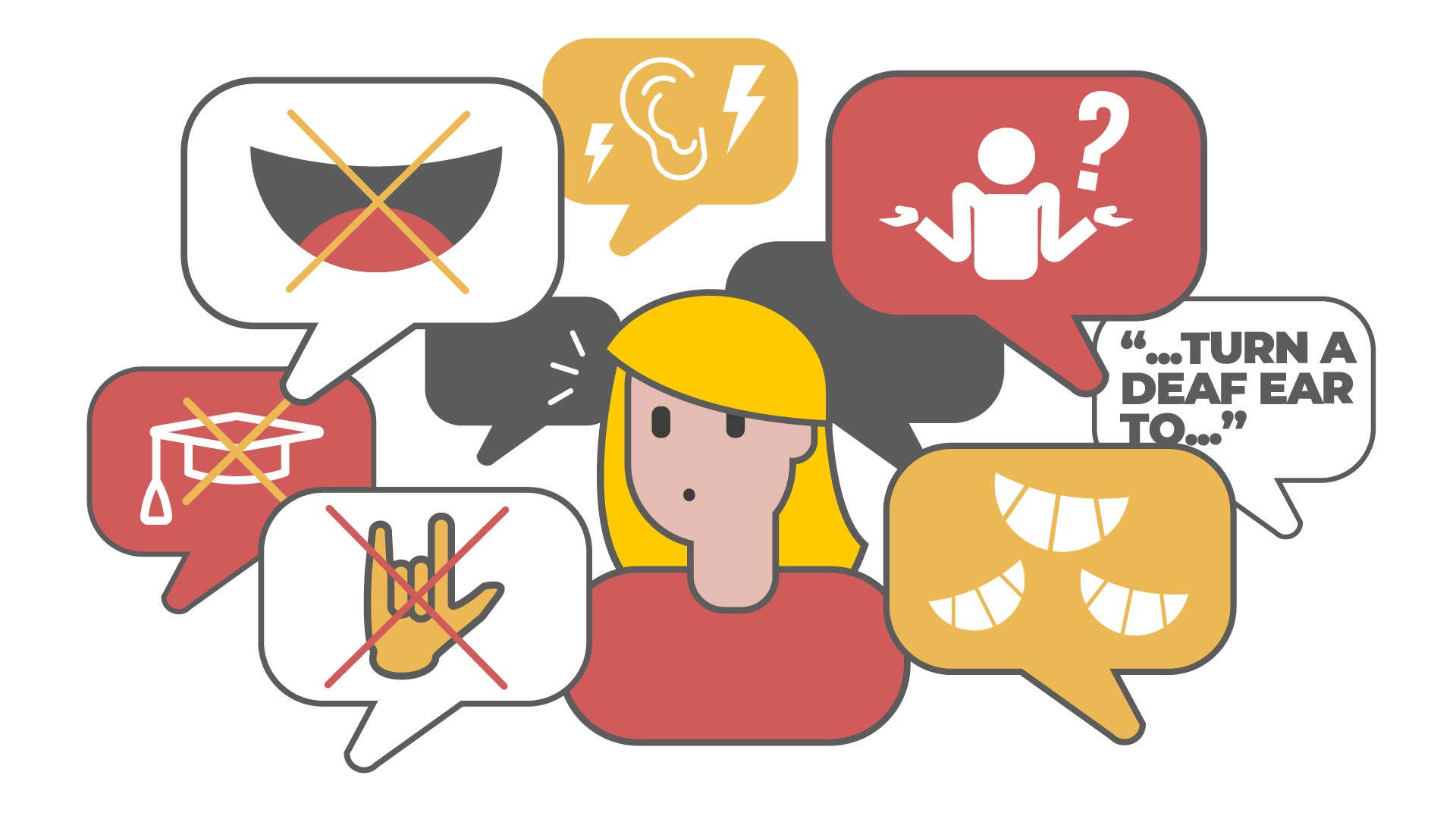
Individuals who are deaf or hard of hearing face significant challenges in accessing information and services due to communication barriers. They may encounter difficulties in understanding spoken language, reading written text, and participating in conversations.
To address these challenges, sign language interpreters play a crucial role in facilitating communication between deaf individuals and the hearing community. Interpreters translate spoken language into sign language and vice versa, enabling deaf individuals to access information and participate in various settings, such as education, healthcare, employment, and social events.
Accommodations for Accessibility
In addition to sign language interpreters, other accommodations can enhance accessibility for deaf individuals, including:
- Assistive listening devices, such as hearing aids and cochlear implants, can amplify sound and improve hearing.
- Closed captioningprovides written text on television and video screens, allowing deaf individuals to follow the dialogue.
- Text-to-speech softwareconverts written text into spoken language, enabling deaf individuals to access written materials.
- Visual aids, such as charts, diagrams, and videos, can supplement sign language interpretation and provide additional context.
- Accessible websites and mobile applicationswith features like text-to-speech functionality, closed captioning, and sign language video interpretation.
By implementing these accommodations, organizations and institutions can create more inclusive and accessible environments for deaf individuals, ensuring they have equal opportunities to participate and thrive in society.
– 5. Sign Language and Technology: Are You Deaf In Sign Language

The advancement of technology has revolutionized communication for deaf individuals, providing them with new tools to connect with the world around them.
Sign language is a visual language that uses hand gestures, facial expressions, and body movements to communicate. It is used by deaf people all over the world, and there are many different sign languages. In Zurich, the most common sign language is Swiss Sign Language (SSL).
SSL is a dialect of German Sign Language (DGS), which is used in Germany, Austria, and Switzerland. SSL has its own unique vocabulary and grammar, and it is not mutually intelligible with other sign languages. However, many deaf people in Zurich also know DGS, which allows them to communicate with deaf people from other parts of the world.
What language is spoken in Zurich ? The official languages of Zurich are German and Swiss German. However, many other languages are also spoken in the city, including English, French, Italian, and Spanish. Zurich is a truly international city, and its linguistic diversity reflects the city’s rich history and culture.
One of the most significant advancements is the development of video relay services (VRS). VRS allows deaf individuals to communicate with hearing individuals through a video call with the assistance of a sign language interpreter. This service has greatly improved access to communication in various settings, such as healthcare, education, and employment.
Assistive Listening Devices
Assistive listening devices (ALDs) are another important technological aid for deaf individuals. ALDs amplify sound and reduce background noise, making it easier for deaf individuals to hear and participate in conversations. These devices include hearing aids, cochlear implants, and FM systems.
Cochlear implants are surgically implanted devices that stimulate the auditory nerve directly, allowing deaf individuals to perceive sound. FM systems transmit sound directly to a receiver worn by the deaf individual, reducing background noise and improving speech clarity.
Challenges and Opportunities
While technology has significantly improved communication for deaf individuals, challenges remain. Some deaf individuals may not have access to or be able to afford these technologies. Additionally, the use of technology can sometimes create social barriers, as deaf individuals may be excluded from conversations if they are not using the same technology as others.
Despite these challenges, the advancements in technology have undoubtedly created new opportunities for deaf individuals to participate fully in society. As technology continues to evolve, we can expect even more innovative solutions to emerge, further improving the lives of deaf individuals.
Sign Language Education
Sign language education plays a crucial role in empowering deaf individuals with communication skills and fostering their linguistic and cultural development. This section explores various educational approaches, benefits, challenges, and best practices in sign language education.
Benefits of Early Sign Language Exposure
Exposing deaf children to sign language at an early age offers significant benefits. It promotes:
- Enhanced cognitive development and language acquisition
- Improved communication skills and social interaction
- Stronger self-esteem and cultural identity
Technology in Sign Language Education
Technology has revolutionized sign language education, providing innovative tools and resources. These include:
- Video conferencing for remote learning and accessibility
- Online dictionaries and databases for vocabulary expansion
- Interactive games and apps for engaging and interactive learning
Cultural Immersion and Language Acquisition
Immersion in deaf culture is essential for sign language acquisition. It provides:
- Exposure to native signers and authentic language use
- Understanding of deaf culture, values, and perspectives
- Opportunities for socialization and language practice
Teaching Sign Language to Hearing Students
Teaching sign language to hearing students offers benefits such as:
- Increased understanding and empathy for deaf individuals
- Enhanced communication skills and social inclusivity
- Appreciation for linguistic diversity and cultural differences
Sign Language and Healthcare
Effective communication between healthcare providers and deaf patients is paramount to ensure accessible and equitable healthcare services. Deaf individuals face unique communication barriers, making it essential to implement strategies that cater to their specific needs.
Communication Strategies
To facilitate effective communication, healthcare providers should:
- Utilize sign language interpreters to bridge the language gap.
- Provide written materials in accessible formats, such as large print or electronic text.
- Use visual aids, such as charts and diagrams, to supplement verbal communication.
- Be patient and allow extra time for communication.
Accessible Healthcare Services
Ensuring accessible healthcare services for deaf individuals involves:
- Providing interpreter services at all medical appointments and procedures.
- Training healthcare staff on deaf etiquette and communication techniques.
- Making healthcare facilities physically accessible, with features such as ramps, elevators, and assistive listening devices.
- Offering telemedicine services that allow deaf patients to communicate with healthcare providers remotely.
By implementing these strategies, healthcare providers can create an inclusive and welcoming environment for deaf patients, ensuring they receive the same quality of care as hearing individuals.
Sign Language and Employment
Deaf individuals face unique challenges in the workplace, including communication barriers, lack of accessibility, and biases. These challenges can hinder their ability to secure and maintain employment, as well as limit their career advancement opportunities.Accommodations and support systems can facilitate successful employment for deaf individuals.
These include providing sign language interpreters, assistive listening devices, closed captioning, and accessible workplace environments. Employers can also implement flexible work arrangements and provide training on deaf culture and communication to create a more inclusive workplace.
Communication Barriers
Communication is a fundamental aspect of employment, and deaf individuals may encounter barriers in communicating with hearing colleagues, supervisors, and clients. Sign language interpreters can bridge this communication gap by translating spoken language into sign language and vice versa. Assistive listening devices, such as FM systems and captioning devices, can also enhance communication by amplifying sound and providing visual cues.
Lack of Accessibility
Physical and technological barriers can make it difficult for deaf individuals to access workplaces and perform their job duties. Ensuring that workplaces are wheelchair accessible, providing visual alarms and emergency notifications, and offering accessible software and equipment are essential for creating an inclusive environment.
Bias and Discrimination
Deaf individuals may also face biases and discrimination in the workplace. Employers may hold misconceptions about deaf individuals’ abilities, assuming they are less capable or unable to perform certain tasks. Training on deaf culture and communication can help to dispel these biases and promote a more equitable workplace.
Sign Language and the Arts
Sign language plays a significant role in artistic expression, opening doors for deaf and hard-of-hearing individuals to participate in and contribute to the arts. It serves as a medium of communication, a tool for storytelling, and a means of conveying emotion and narrative.
Accessibility and Inclusivity
The incorporation of sign language in the arts enhances accessibility and inclusivity. Deaf and hard-of-hearing audiences can fully engage with performances and exhibitions, breaking down communication barriers and fostering a sense of belonging. Sign language interpreters or performers translate spoken dialogue or musical lyrics into sign language, ensuring that the artistic experience is equally accessible to all.
Storytelling and Emotion
Sign language is a powerful storytelling tool. Its visual and expressive nature allows deaf and hard-of-hearing artists to convey complex emotions, narratives, and characters. Through gestures, facial expressions, and body movements, they create immersive and engaging performances that resonate with audiences on a profound level.
Challenges and Opportunities
Deaf and hard-of-hearing artists face unique challenges in the arts industry. Limited representation, funding, and accessibility can hinder their opportunities. However, these challenges also present opportunities for innovation and creativity. Deaf artists are pushing boundaries, using their unique perspectives and experiences to create groundbreaking works that challenge traditional artistic norms.
Groundbreaking Performances and Works of Art
Numerous groundbreaking performances and works of art have utilized sign language, showcasing its artistic potential. Deaf West Theatre’s acclaimed productions of “Spring Awakening” and “Pippin” received critical acclaim for their innovative use of sign language in musical theater. Deaf dancer and choreographer Marlee Matlin has broken barriers in the dance world, performing on “Dancing with the Stars” and choreographing for Broadway productions.
Sign Language and Social Justice

Sign language plays a pivotal role in promoting social justice and equality for deaf individuals. It empowers them to fully participate in society, breaking down communication barriers and fostering inclusivity.
Advocacy efforts and initiatives are crucial in achieving these goals. Organizations like the World Federation of the Deaf and the National Association of the Deaf work tirelessly to raise awareness, advocate for accessibility, and challenge discrimination.
Legal Recognition and Rights
- Ensuring legal recognition of sign languages as official languages, granting deaf individuals equal access to information and services.
- Advocating for the right to sign language interpreters in various settings, including education, healthcare, and employment.
Education and Employment, Are you deaf in sign language
- Promoting accessible education for deaf students, providing qualified sign language interpreters and appropriate accommodations.
- Breaking down barriers in employment by raising awareness about the capabilities of deaf individuals and advocating for equal opportunities.
Community Empowerment
- Supporting the establishment of deaf clubs and organizations, fostering a sense of community and shared experiences.
- Empowering deaf individuals to advocate for themselves and participate actively in decision-making processes.
By recognizing the importance of sign language and supporting advocacy efforts, we can create a more inclusive society where deaf individuals have equal access to opportunities and can fully participate in all aspects of life.
Sign Language and Language Diversity
Sign languages are not universal; instead, they exhibit remarkable diversity across the globe. Different sign languages have evolved independently in various regions, resulting in a rich tapestry of communication systems.
Geographic Distribution and Examples
The distribution of sign languages around the world is influenced by factors such as geography, history, and culture. Some of the major sign languages include:
- American Sign Language (ASL): Used in the United States and Canada
- British Sign Language (BSL): Used in the United Kingdom
- French Sign Language (LSF): Used in France
- Chinese Sign Language (CSL): Used in China
- Japanese Sign Language (JSL): Used in Japan
Factors Contributing to Diversity
The development and evolution of different sign languages are influenced by a complex interplay of factors:
- Historical Factors:Historical events, such as migrations and conquests, can lead to the formation of new sign languages or the divergence of existing ones.
- Cultural Factors:Cultural values, norms, and beliefs shape the structure and usage of sign languages, reflecting the unique perspectives and experiences of each deaf community.
- Social Factors:Social interactions, educational opportunities, and the availability of resources contribute to the transmission and evolution of sign languages within deaf communities.
Preservation and Revitalization
Preserving and revitalizing endangered sign languages is crucial for maintaining linguistic diversity and ensuring the cultural heritage of deaf communities. This involves efforts such as:
- Documenting and archiving sign languages
- Promoting sign language education and use
- Encouraging research and development in sign language technology
Summary
Sign languages exhibit remarkable diversity around the world, reflecting the unique historical, cultural, and social experiences of deaf communities. Understanding this diversity is essential for fostering inclusivity, preserving linguistic heritage, and ensuring the well-being of deaf individuals.
Sign Language and Linguistics
:max_bytes(150000):strip_icc()/deaf-culture-big-d-small-d-1046233-cc7537314e97482abdd8fae655b2275d.jpg)
Sign languages, just like spoken languages, possess intricate linguistic structures and unique properties that set them apart from one another. They encompass a complex system of grammar, syntax, and vocabulary, enabling deaf individuals to communicate effectively and express themselves fully.
One of the most striking distinctions between sign languages and spoken languages lies in their modality. Sign languages are visual-gestural in nature, utilizing hand movements, facial expressions, and body language to convey meaning. This visual-spatial modality gives rise to unique linguistic features, such as the use of space and movement to represent grammatical concepts and the incorporation of non-manual elements (e.g., facial expressions, eye gaze) to convey additional layers of meaning.
Phonology
The phonological system of sign languages is characterized by a set of distinctive handshapes, orientations, and movements that combine to form meaningful units called signs. These signs can be modified by various non-manual elements, such as facial expressions and body posture, to create a rich and expressive language.
Grammar
Sign languages exhibit a complex grammatical structure that governs the organization and sequencing of signs within utterances. They employ a variety of grammatical markers, such as classifiers, agreement markers, and spatial relationships, to convey grammatical functions and relationships between words and phrases.
Syntax
The syntax of sign languages is characterized by a flexible word order and the use of iconic and metaphorical representations. Sign languages often rely on spatial relationships and the use of space to convey grammatical meaning, which differs from the linear structure of spoken languages.
Semantics
The semantic system of sign languages is highly visual and context-dependent. Signs often have multiple meanings, and their interpretation depends on the context in which they are used. Sign languages also make extensive use of iconic and metaphorical representations, which allows for a rich and expressive communication.
Sign Language and Advocacy
Sign language advocacy plays a vital role in promoting the rights of deaf individuals and fostering a more inclusive society. Deaf communities often face challenges in accessing education, employment, and social services due to communication barriers and societal attitudes. Advocacy efforts aim to raise awareness about these challenges and advocate for policies and practices that ensure equal opportunities for deaf people.
Role of Organizations and Individuals
Organizations such as the National Association of the Deaf (NAD) and the World Federation of the Deaf (WFD) play a crucial role in advocating for the rights of deaf people. They engage in policy development, lobbying efforts, and public awareness campaigns to promote the use of sign language and accessible communication methods.
Deaf individuals and their allies also play a vital role in advocacy by sharing their experiences, participating in protests, and educating others about the importance of sign language.
Clarifying Questions
What is the difference between being deaf and hard of hearing?
Deafness refers to a significant hearing loss that affects an individual’s ability to understand speech through hearing alone. Hard of hearing, on the other hand, refers to a lesser degree of hearing loss that may still allow for some understanding of speech with or without the use of hearing aids.
How many sign languages are there in the world?
There are over 300 sign languages used around the world, each with its own unique grammar, syntax, and vocabulary. Some of the most well-known sign languages include American Sign Language (ASL), British Sign Language (BSL), and Chinese Sign Language (CSL).
Can deaf people read lips?
Lip-reading is a skill that can be learned by some deaf people, but it is not a reliable form of communication. Lip-reading requires a great deal of practice and concentration, and it is only effective in certain situations, such as when the speaker is facing the deaf person and speaking clearly.
