How are you doing in russian language – How are you doing in Russian? This seemingly simple question opens a window into the rich tapestry of Russian language and culture. Join us as we delve into the nuances, variations, and etiquette surrounding this essential phrase.
From formal greetings to informal expressions, we’ll explore the subtleties of “How are you doing?” in Russian, providing you with the tools to navigate social interactions with confidence and cultural sensitivity.
Translation
The direct translation of “How are you doing?” in Russian is “Как дела?” (pronounced as “kak dyLAH?”).
The literal meaning of this phrase is “How are things going?” or “How are your affairs?”.
Variations

The Russian phrase “How are you doing?” has several variations, each with its own nuances and usage scenarios.
The most common variations are:
- Как дела? (Kak dyLAH?) – Informal, used in casual settings with friends, family, or acquaintances.
- Как поживаете? (Kak pozhEEvaete?) – Formal, used in more formal settings, such as with strangers, colleagues, or people in positions of authority.
- Как ваше здоровье? (Kak VAShe zdorOVye?) – Polite, used to inquire about someone’s health specifically.
- Как настроение? (Kak nastroENiye?) – Informal, used to ask about someone’s mood or state of mind.
- Как жизнь? (Kak zHIZn?) – Informal, used to ask about someone’s life in general.
Usage Scenarios
The choice of which variation to use depends on the social context and the relationship between the speakers.
For example, “Как дела?” is appropriate for use among close friends or family members, while “Как поживаете?” is more suitable for use in more formal settings.
The following table summarizes the variations, their nuances, and usage scenarios:
| Variation | Nuances | Usage Scenarios |
|---|---|---|
| Как дела? | Informal, casual | Friends, family, acquaintances |
| Как поживаете? | Formal, polite | Strangers, colleagues, people in positions of authority |
| Как ваше здоровье? | Polite, specific | Inquiring about someone’s health |
| Как настроение? | Informal, casual | Asking about someone’s mood or state of mind |
| Как жизнь? | Informal, general | Asking about someone’s life in general |
Formal vs. Informal

The Russian language distinguishes between formal and informal registers, each with its own set of vocabulary and grammar rules. This distinction is particularly evident in the way people greet each other.There are two main formal ways to ask “How are you?” in Russian:* Как Вы поживаете?(kak vy pozhivayetye?)
- This is the most formal way to ask someone how they are doing. It is typically used in professional or academic settings.
- Как Ваши дела?(kak vashi dyLAH?)
- This is a slightly less formal way to ask someone how they are doing. It can be used in both professional and social settings.
There are also two main informal ways to ask “How are you?” in Russian:* Как дела?(kak dyLAH?)
- This is the most informal way to ask someone how they are doing. It is typically used between friends and family members.
- Как жизнь?(kak zhizn?)
- This is another informal way to ask someone how they are doing. It is typically used between friends and acquaintances.
The choice of which version of the phrase to use depends on the formality of the situation. In general, it is best to use the most formal version when meeting someone for the first time or in a professional setting.
As you become more familiar with someone, you can switch to a more informal version of the phrase.
Examples
Here are some examples of situations where each version of the phrase would be appropriate:* Formal:You are meeting a new colleague for the first time. You would say, “Как Вы поживаете?”
Slightly less formal
You are talking to a professor in your university class. You would say, “Как Ваши дела?”
Informal
You are talking to a friend. You would say, “Как дела?”
Very informal
You are talking to a family member. You would say, “Как жизнь?”
Cultural Context

In Russian society, the phrase “How are you doing?” is more than a simple greeting; it holds significant cultural significance and reflects deep-rooted values and customs.
The phrase serves as a way to express genuine concern for the well-being of others. It is not merely a polite formality but a reflection of the Russian emphasis on interpersonal relationships and community. Russians place great importance on social connections and believe in supporting and caring for one another.
While my progress in the Russian language has been steady, I am also curious about the linguistic diversity of other regions. For instance, the question of “what language speak in nepal” is an intriguing one, as the country is home to over 120 languages.
Nepali , the official language, is spoken by the majority of the population, but numerous other languages, such as Maithili, Bhojpuri, and Tamang, are also widely used. Returning to my Russian language studies, I am eager to delve deeper into the intricacies of its grammar and vocabulary.
Cultural Significance
- Expression of Empathy:The phrase “How are you doing?” allows individuals to express empathy and show that they care about the emotional state of others.
- Building Relationships:Engaging in this exchange helps build and strengthen relationships by demonstrating interest and concern for the other person.
- Social Cohesion:The widespread use of the phrase contributes to social cohesion by fostering a sense of community and shared values.
Regional Differences
The phrase “How are you?” can vary across different regions of Russia due to historical, cultural, and linguistic influences.
Dialects
In certain regions, local dialects have influenced the phraseology used for “How are you?”:
- In Belarus, the Belarusian dialect uses “Дзякую” (Dzyakuyu).
- In Ukraine, the Ukrainian dialect employs “Спасибі” (Spasybi).
- In Tatarstan, the Tatar dialect utilizes “Рахмат” (Rakhmat).
Foreign Influence
In some cases, foreign languages have also impacted the regional variations of the phrase:
- In Saint Petersburg, the informal French term “Мерси” (Merci) is sometimes used.
Table of Regional Variations
The following table summarizes the regional variations in the phrase “How are you?”:
| Phrase | Dialect | Region |
|---|---|---|
| Спасибо | Standard Russian | Moscow |
| Дзякую | Belarusian | Belarus |
| Спасибі | Ukrainian | Ukraine |
| Рахмат | Tatar | Tatarstan |
| Мерси | French | Saint Petersburg (informal) |
Non-Verbal Cues
The phrase “How are you doing?” is often accompanied by non-verbal cues that can convey additional meaning. Body language and facial expressions can provide insights into the speaker’s true feelings or intentions, even if their words suggest otherwise.
Facial Expressions
- Smile:A genuine smile, with the corners of the mouth turned up and the eyes crinkling, usually indicates a positive mood.
- Frown:A frown, with the eyebrows drawn together and the corners of the mouth turned down, suggests a negative mood.
- Neutral:A neutral expression, with the face relaxed and the eyes open, may indicate indifference or uncertainty.
Body Language
- Open posture:An open posture, with the arms uncrossed and the body relaxed, conveys openness and receptiveness.
- Closed posture:A closed posture, with the arms crossed or the body turned away, suggests defensiveness or disinterest.
- Leaning in:Leaning in towards the other person indicates interest and engagement.
It’s important to note that non-verbal cues can vary depending on cultural context and individual personality traits. However, by observing these cues, we can gain a more complete understanding of the speaker’s message.
Table: Common Non-Verbal Cues Associated with “How are you doing?”
| Non-Verbal Cue | Potential Interpretation ||—|—|| Genuine smile | Positive mood, happiness || Frown | Negative mood, sadness || Neutral expression | Indifference, uncertainty || Open posture | Openness, receptiveness || Closed posture | Defensiveness, disinterest || Leaning in | Interest, engagement |
Tone and Context
Tone and context are crucial factors in interpreting the phrase “How are you doing?” The same phrase can convey different meanings depending on the situation, influenced by the speaker’s intent, the audience’s expectations, and the social and cultural context.
Speaker’s Intent and Perspective
The speaker’s intent can range from genuine concern to politeness or even sarcasm. The tone can indicate whether the speaker is interested in the person’s well-being or merely following social conventions.
Audience’s Background and Expectations
The audience’s background and expectations can shape the interpretation of the phrase. For example, in some cultures, the phrase is a common greeting, while in others, it may be perceived as intrusive or overly personal.
Social and Cultural Context
The social and cultural context can also influence the tone and interpretation of the phrase. In formal settings, the phrase may be used as a polite inquiry, while in informal situations, it may be more casual or even playful.
Influence on Interpretation
The tone and context can significantly influence the interpretation of the phrase, leading to different conclusions or actions. For example, a concerned tone may prompt the listener to share personal information, while a sarcastic tone may lead to misunderstanding or offense.
| Tone | Context | Interpretation |
|---|---|---|
| Genuine concern | Close friend | Inquiry about well-being |
| Politeness | Stranger | Social greeting |
| Sarcasm | Acquaintance | Mocking or dismissive |
Historical Evolution
The phrase “How are you doing?” in Russian, как дела (kak dyLAH), has a rich historical evolution, reflecting the social and cultural changes in Russian society over time. Its usage has shifted from a formal greeting to a more informal and casual expression, influenced by factors such as urbanization, industrialization, and the rise of mass media.
Pre-Revolutionary Era
In pre-revolutionary Russia, the phrase как дела was primarily used as a formal greeting among the upper classes and in official settings. It was considered polite and respectful to inquire about someone’s well-being, and the response would often be equally formal, focusing on health, family, and professional matters.
Soviet Period
During the Soviet era, the phrase как дела underwent a significant transformation. With the urbanization and industrialization of the country, the social structure changed, and the formal distinctions between classes became less pronounced. As a result, the phrase became more widely used in informal settings, including among friends, colleagues, and even strangers.
Post-Soviet Era
In the post-Soviet era, the usage of как дела has continued to evolve. With the rise of mass media and the influence of Western culture, the phrase has become even more casual and informal. It is now commonly used as a greeting, a conversation starter, or simply as a way to show interest in someone’s well-being.
If you’re like me, you may be wondering how to say “Happy New Year” in a different language. For example, in Hawaiian, you would say “Hau’oli Makahiki Hou!” If you’re interested in learning more about Hawaiian language and culture, I encourage you to check out this resource: How do you say happy new year in hawaiian language.
Returning to Russian, how are you doing in your Russian language studies? Are you finding it easy or challenging?
Literary Examples

The phrase “How are you doing?” is commonly used in Russian literature to convey a sense of camaraderie and concern. It is often used in dialogue between characters to establish a connection and build rapport.
In Leo Tolstoy’s novel “Anna Karenina,” the phrase is used to express the growing intimacy between Anna and Count Vronsky. When they first meet, they exchange polite greetings, but as their relationship deepens, they begin to use the more familiar “How are you doing?” to show their affection and care for each other.
Comparative Analysis
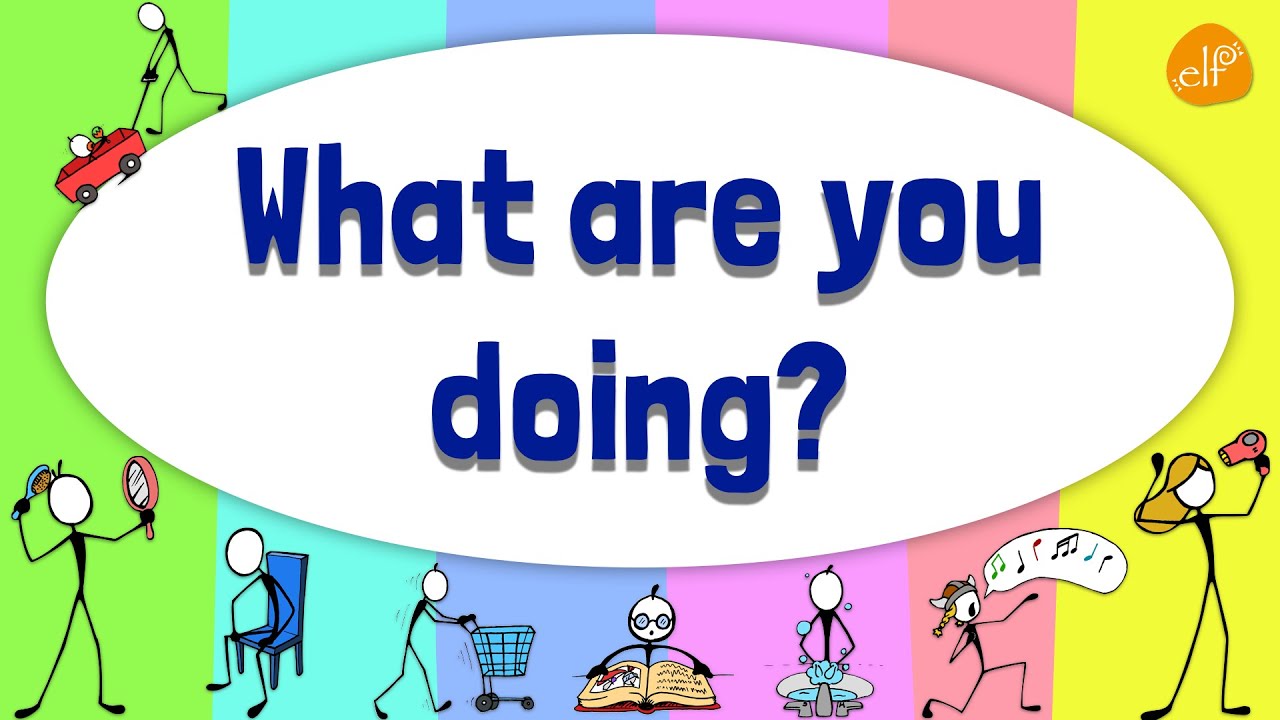
The phrase “How are you doing?” is a common greeting used in many languages to inquire about a person’s well-being. While the basic meaning of the phrase remains the same across languages, there are subtle differences in usage and meaning that reflect cultural norms and linguistic conventions.
The following table compares the phrase “How are you doing?” in Russian to its equivalents in five other languages:
| Language | Phrase | Usage | Meaning |
|---|---|---|---|
| Russian | Как дела? | Informal, everyday | How are you? |
| English | How are you doing? | Informal, everyday | How are you? |
| Spanish | ¿Cómo estás? | Informal, everyday | How are you? |
| French | Comment ça va? | Informal, everyday | How are you? |
| German | Wie geht es Ihnen? | Formal, polite | How are you? |
As can be seen from the table, the phrase “How are you doing?” is typically used in informal, everyday situations in all six languages. However, there is a notable difference in the level of formality between Russian and German. In Russian, the phrase “Как дела?” is considered informal and is typically used among friends and family members.
In German, on the other hand, the phrase “Wie geht es Ihnen?” is more formal and is used in more polite situations, such as when addressing a stranger or a person in a position of authority.
Another difference between the six languages is the way in which the phrase “How are you doing?” is used in context. In Russian, the phrase is often used as a simple greeting, without expecting a detailed response. In English, Spanish, French, and German, however, the phrase is more likely to be used as a genuine inquiry about a person’s well-being, and a more detailed response is typically expected.
Finally, it is worth noting that there are some cultural differences in the use of the phrase “How are you doing?”. In some cultures, such as in the United States, it is considered polite to respond to the phrase with a positive response, even if one is not feeling well.
In other cultures, such as in Russia, it is more common to give a more honest response, even if it is negative.
Sociolinguistic Factors
The use of the phrase “How are you doing?” is influenced by various sociolinguistic factors, including age, gender, and social class.
Younger people tend to use more informal variations of the phrase, such as “What’s up?” or “How’s it going?” Older people, on the other hand, are more likely to use the formal “How are you doing?”
Gender
Women are more likely to use polite and indirect forms of the phrase, such as “How are you?” or “How have you been?” Men, on the other hand, are more likely to use direct and to-the-point forms, such as “What’s up?” or “How’s it going?”
Social Class
People from higher social classes are more likely to use formal and polite forms of the phrase, such as “How do you do?” or “How are you?” People from lower social classes, on the other hand, are more likely to use informal and casual forms, such as “What’s up?” or “How’s it hanging?”
Educational Resources

Enhancing your Russian language proficiency requires access to a variety of educational resources. This section presents a comprehensive list of websites, apps, and textbooks to facilitate your learning journey.
With these resources at your disposal, you can effectively practice and master the phrase “How are you doing?” in Russian, gaining confidence in your communication skills.
Websites
- RussianPod101:An interactive website offering free lessons, videos, and podcasts on various aspects of Russian grammar and vocabulary, including the phrase “How are you doing?”
- Duolingo:A popular language learning app that provides bite-sized lessons and gamified exercises, covering the basics of Russian, including greetings and introductions.
- Live Lingua:A comprehensive website with grammar lessons, vocabulary lists, and audio recordings, providing a structured approach to learning Russian.
Apps
- Babbel:A subscription-based app offering interactive lessons, speech recognition exercises, and personalized feedback, focusing on practical conversation skills.
- Busuu:A user-friendly app with interactive exercises, grammar explanations, and vocabulary flashcards, designed for beginners and intermediate learners.
- Drops:A gamified language learning app that uses spaced repetition and visual cues to help you memorize new words and phrases, including “How are you doing?”
Textbooks
- Russian for Dummies:A beginner-friendly textbook that covers essential grammar, vocabulary, and cultural insights, including a chapter on greetings and introductions.
- New Penguin Russian Course:A comprehensive textbook for intermediate learners, providing detailed grammar explanations, exercises, and authentic Russian texts.
- Colloquial Russian:A practical guide to everyday Russian conversation, with a focus on common phrases and expressions, including “How are you doing?”
Interactive Exercises

Interactive exercises are essential for language learners to practice using the phrase “how are you doing” in different contexts and situations. These exercises provide opportunities for learners to engage with the phrase in a meaningful way, improving their fluency and confidence.
The following table Artikels a variety of interactive exercises that can be used to practice the phrase:
Role-Playing
- Description:Create scenarios and assign roles to learners, encouraging them to use the phrase in realistic conversations.
- Examples:
- Scenario 1: Two friends meet at a coffee shop. Learner A asks Learner B, “How are you doing?” Learner B responds with an appropriate answer, such as “I’m doing well, thanks. How about you?”
- Scenario 2: A student asks their teacher for help with a math problem. The teacher responds with, “How are you doing with the problem?” The student explains their understanding and asks for assistance.
Conversation Starters, How are you doing in russian language
- Description:Provide open-ended questions or statements that naturally lead to using the phrase.
- Examples:
- “How’s your day going?”
- “What have you been up to lately?”
- “I haven’t seen you in a while. How are you doing?”
Writing Prompts
- Description:Assign writing tasks that require learners to use the phrase in different contexts, such as dialogues, narratives, or emails.
- Examples:
- Write a dialogue between two friends who haven’t seen each other in a while. Include the phrase “how are you doing” in the conversation.
- Write a short story about a character who meets someone new and uses the phrase “how are you doing” to start a conversation.
- Write an email to a friend or colleague, using the phrase “how are you doing” to check in and see how they are.
Essential Questionnaire: How Are You Doing In Russian Language
What is the direct translation of “How are you doing?” in Russian?
Как дела? (Kak dyLAH?)
Is it appropriate to use “Как дела?” in formal settings?
No, in formal settings, it’s better to use “Как поживаете?” (Kak pozhEEvaete?)
What are some common variations of “How are you doing?” in Russian?
– Как поживаете? (Formal) – Как дела? (Informal) – Что нового? (What’s new?) – Как самочувствие? (How do you feel?)
