Is german language is easy to learn – As the popularity of learning German as a foreign language continues to soar, this comprehensive guide delves into the intricacies of its acquisition, examining factors that influence its perceived difficulty for English speakers.
With its shared Germanic roots, German exhibits both similarities and differences compared to English, impacting the ease of learning. This exploration unravels these linguistic nuances, providing insights into pronunciation, vocabulary, grammar, and cultural context.
Introduction
The German language has gained immense popularity as a foreign language, attracting learners from diverse backgrounds. As of 2023, an estimated 15.4 million individuals worldwide are studying German, making it one of the most widely learned languages globally. This growing interest can be attributed to various factors, including:
Cultural Immersion
German is the official language of Germany, Austria, and Switzerland, and is spoken by over 100 million native speakers. Learning German opens doors to rich cultural experiences, enabling individuals to immerse themselves in the literature, art, music, and history of these countries.
Career Opportunities
Germany is a global economic powerhouse, and many multinational companies have their headquarters or significant operations there. Proficiency in German can enhance career prospects in fields such as engineering, business, and finance.
Personal Growth
Learning German fosters cognitive development and improves memory and problem-solving skills. It also exposes learners to different perspectives and cultural norms, promoting personal growth and intercultural understanding.
Similarities and Differences between German and English
German and English, both belonging to the West Germanic branch of the Indo-European language family, share a common ancestor and thus exhibit numerous similarities. However, distinct differences in pronunciation, vocabulary, and sentence structure set them apart.
Cognates and Grammatical Similarities
One of the most striking similarities between German and English is the abundance of cognates, words that share a common etymological origin. This shared vocabulary stems from their common Germanic roots. For instance, the English word “mother” corresponds to “Mutter” in German, while “father” translates to “Vater.”
Furthermore, German and English share similar grammatical structures. Both languages utilize a subject-verb-object word order in declarative sentences and employ articles (e.g., “the,” “a”) to specify nouns.
Differences in Pronunciation and Vocabulary
Despite these similarities, German and English exhibit notable differences in pronunciation. German features a more complex vowel system, with distinct pronunciations for umlauts (e.g., “ä,” “ö,” “ü”) and diphthongs (e.g., “ei,” “au”).
Moreover, the vocabulary of German and English differs significantly. While cognates provide a foundation for understanding, many words have evolved differently in the two languages. For example, the German word “Haus” means “house” in English, but the English word “house” translates to “Haus” in German.
Sentence Structure and Idioms
German sentence structure often differs from English. German sentences can be more complex, with multiple subordinate clauses and verb phrases. Additionally, German employs a verb-second word order in subordinate clauses, placing the verb in the second position.
Furthermore, German and English have distinct idioms and expressions. For example, the German phrase “jemandem auf den Keks gehen” literally translates to “to go on someone’s cookie” but idiomatically means “to annoy someone.”
Implications for Learning German
The similarities between German and English, such as cognates and grammatical structures, provide a foundation for English speakers learning German. However, the differences in pronunciation, vocabulary, and sentence structure can pose challenges.
For English speakers, mastering German pronunciation is crucial for effective communication. Additionally, expanding vocabulary and understanding the nuances of German grammar are essential for achieving fluency.
Pronunciation and Phonetics
German pronunciation is generally considered more challenging for English speakers compared to other languages due to its unique sounds and pronunciation rules. Mastering German pronunciation requires attention to detail, practice, and an understanding of the specific phonetic system.
Unique Sounds
- [ç]: A voiceless velar fricative, produced by placing the tongue against the back of the palate and exhaling with friction. Similar to the “ch” in the Scottish word “loch.”
- [ŋ]: A voiced velar nasal, produced by placing the tongue against the back of the palate and allowing air to pass through the nose. Similar to the “ng” in the English word “sing.”
- [ʁ]: A voiced uvular fricative, produced by vibrating the uvula in the back of the throat. Similar to the “r” in the French word “bonjour.”
- [θ]: A voiceless dental fricative, produced by placing the tongue between the upper and lower teeth and exhaling with friction. Similar to the “th” in the English word “thin.”
- [ð]: A voiced dental fricative, produced by placing the tongue between the upper and lower teeth and exhaling with friction. Similar to the “th” in the English word “that.”
Tips for Mastering Pronunciation
Effective mastery of German pronunciation involves consistent practice, listening to native speakers, and understanding the underlying phonetic rules. Here are some tips:
- Listen attentively:Immerse yourself in German speech by listening to podcasts, watching movies, and engaging in conversations with native speakers.
- Practice regularly:Dedicate time to practicing pronunciation, focusing on specific sounds and words that pose challenges.
- Use a pronunciation guide:Consult pronunciation dictionaries, online resources, or language learning apps to verify the correct pronunciation of words.
- Focus on phonetics:Understand the International Phonetic Alphabet (IPA) and use it to transcribe German sounds accurately.
- Seek feedback:Engage with native speakers or language tutors to receive feedback on your pronunciation and identify areas for improvement.
Vocabulary and Grammar
The German language is known for its extensive vocabulary, which is often perceived as more complex than that of English. This richness stems from the incorporation of numerous compound words and the presence of multiple synonyms for many concepts.
German Vocabulary
- German vocabulary is estimated to comprise over 500,000 words, including technical and specialized terms.
- Compound words are a distinctive feature of German, allowing for the creation of new words by combining existing ones (e.g., “Fernsehen” = “far” + “see” = “television”).
- Many German words have multiple synonyms, providing a nuanced vocabulary for precise expression.
German Grammar
German grammar is characterized by its complex system of noun genders and its distinct verb conjugation patterns.
Gendered Nouns
- German nouns are assigned one of three grammatical genders: masculine, feminine, or neuter.
- The gender of a noun influences the choice of articles, adjectives, and pronouns used with it.
- Nouns denoting people or animals typically have a gender that corresponds to their biological sex.
Verb Conjugation
- German verbs are conjugated according to person, number, tense, and mood.
- The conjugation patterns vary depending on the verb class and the tense being used.
- Irregular verbs are common in German, and their conjugation patterns must be memorized.
Cases and Declensions

The German language is renowned for its intricate system of cases, a grammatical feature that assigns nouns, adjectives, and articles specific forms depending on their role within a sentence. Understanding cases is crucial for constructing grammatically correct sentences and comprehending the nuances of German grammar.
Cases in German Grammar
German grammar employs four cases: nominative, accusative, dative, and genitive. Each case serves a distinct purpose in sentence structure and affects the form of the noun, adjective, or article it modifies.
Nominative Case
- The nominative case is used for the subject of a sentence.
- It indicates the person or thing performing the action.
- Example: Der Mann geht zum Laden.(The man goes to the store.)
Accusative Case
- The accusative case is used for the direct object of a sentence.
- It indicates the person or thing receiving the action.
- Example: Ich sehe den Mann.(I see the man.)
Dative Case
- The dative case is used for the indirect object of a sentence.
- It indicates the person or thing to whom or for whom something is done.
- Example: Ich gebe dem Mann das Buch.(I give the man the book.)
Genitive Case
- The genitive case is used to indicate possession or ownership.
- It also indicates a relationship between two nouns.
- Example: Das Buch des Mannes(The man’s book)
Case Endings
The case of a noun, adjective, or article is indicated by its ending. The following table summarizes the case endings for different types of nouns:
| Case | Masculine Nouns | Feminine Nouns | Neuter Nouns |
|---|---|---|---|
| Nominative | -er,
| -e,
| -chen,
|
| Accusative | -en,
| -e,
| -chen,
|
| Dative | -e,
| -e,
| -chen,
|
| Genitive | -es,
| -er,
| -chens,
|
Common Mistakes in Case Usage
- Using the nominative case instead of the accusative case for the direct object.
- Using the accusative case instead of the dative case for the indirect object.
- Using the genitive case instead of the dative case to indicate possession.
Resources for Further Learning
- German Cases: A Comprehensive Guide: https://www.germanveryeasy.com/german-cases/
- German Case System: https://www.dw.com/en/german-case-system/a-1726538
- German Cases Made Easy: https://www.fluentin3months.com/german-cases-made-easy/
Short Story
Once upon a time, there was a man named Peter. Peter went to the store to buy a book. When he got to the store, he saw a book he wanted. He picked up the book and went to the checkout counter.
When the cashier asked him how much the book was, Peter realized he had forgotten his wallet. He told the cashier that he would come back later to pay for the book. When Peter returned to the store, he could not find the book he wanted.
He asked the cashier for help, but the cashier could not help him because Peter did not know the name of the book or the author. If Peter had used the correct case endings when he spoke to the cashier, he would have been able to tell her the name of the book and the author, and she would have been able to help him find the book.
Verb Conjugation and Tenses
German verb conjugation is a complex system that involves various verb forms and tenses. Understanding the rules and patterns of verb conjugation is crucial for constructing grammatically correct sentences in German.
German verbs are conjugated according to person, number, tense, and mood. There are six tenses in German: present, past, future, present perfect, past perfect, and future perfect. Each tense has specific rules for conjugating regular and irregular verbs.
Regular Verbs, Is german language is easy to learn
Regular verbs follow a consistent pattern of conjugation. The infinitive form of a regular verb ends in “-en”. To conjugate a regular verb, remove the “-en” ending and add the appropriate personal ending based on the subject pronoun and tense.
- Present Tense:-e (ich), -st (du), -t (er/sie/es), -en (wir), -t (ihr), -en (sie)
- Past Tense:-te (ich), -test (du), -te (er/sie/es), -ten (wir), -tet (ihr), -ten (sie)
- Future Tense:-e (ich), -st (du), -t (er/sie/es), -en (wir), -t (ihr), -en (sie)
For example, the regular verb “lernen” (to learn) is conjugated as follows:
| Subject | Present | Past | Future |
|---|---|---|---|
| ich | lerne | lernte | werde lernen |
| du | lernst | lerntest | wirst lernen |
| er/sie/es | lernt | lernte | wird lernen |
| wir | lernen | lernten | werden lernen |
| ihr | lernt | lerntet | werdet lernen |
| sie | lernen | lernten | werden lernen |
Irregular Verbs
Irregular verbs do not follow the regular conjugation patterns. They have unique conjugations for each tense and person. The most common irregular verbs should be memorized. Some examples of irregular verbs include:
- sein (to be):bin, bist, ist, sind, seid, sind
- haben (to have):habe, hast, hat, haben, habt, haben
- werden (to become):werde, wirst, wird, werden, werdet, werden
Practice Exercises
- Conjugate the regular verb “sprechen” (to speak) in the present, past, and future tenses for the subject pronoun “ich”.
- Conjugate the irregular verb “sein” (to be) in the present tense for all subject pronouns.
- Translate the following sentence into German: “I am learning German.” Use the present tense of the verb “lernen”.
– Describe the typical word order in German sentences, including the placement of verbs, subjects, and objects.: Is German Language Is Easy To Learn
Typical Word Order in German Sentences
In German sentences, the typical word order is subject-verb-object (SVO). This means that the subject of the sentence comes first, followed by the verb, and then the object.For example:
- Der Mann isst einen Apfel. (The man eats an apple.)
- Die Frau liest ein Buch. (The woman reads a book.)
- Das Kind spielt mit einem Ball. (The child plays with a ball.)
Placement of Verbs
In German sentences, the verb is usually placed in the second position. However, there are some exceptions to this rule.
- When the sentence begins with a subordinate clause, the verb is placed at the end of the sentence.
- When the sentence is a question, the verb is placed in the first position.
- When the sentence is a command, the verb is placed in the first position.
Placement of Subjects
In German sentences, the subject is usually placed in the first position. However, there are some exceptions to this rule.
- When the sentence begins with a prepositional phrase, the subject is placed after the prepositional phrase.
- When the sentence is a question, the subject is placed after the verb.
- When the sentence is a command, the subject is placed after the verb.
Placement of Objects
In German sentences, the object is usually placed in the third position. However, there are some exceptions to this rule.
The German language is often considered to be difficult to learn, but there are many resources available to help learners. One helpful resource is a guide on how to change the language on your iPhone. By following the steps outlined in this guide ( how to change the language on my iphone ), you can easily switch your iPhone’s language to German.
This can be a helpful way to immerse yourself in the language and improve your comprehension.
- When the object is a pronoun, it is placed before the verb.
- When the object is a noun phrase, it is placed after the verb.
- When the object is a subordinate clause, it is placed at the end of the sentence.
Common Mistakes and Challenges
When learning German, English speakers often make common mistakes due to differences between the two languages. Understanding these mistakes and developing strategies to avoid them is crucial for effective language acquisition.
One of the most prevalent mistakes is the incorrect use of articles. German has three articles (der, die, das) that correspond to the English “the.” However, the choice of article depends on the gender of the noun, which can be challenging for English speakers as nouns in German have grammatical gender.
Prepositions
Another common mistake involves prepositions. German prepositions often have different meanings than their English counterparts, and their usage can vary significantly. For example, the preposition “auf” can mean “on,” “at,” or “in,” depending on the context.
Idioms
English speakers may also struggle with German idioms and fixed expressions. These phrases often have no direct translation in English and require memorization and cultural understanding. For instance, the idiom “jemandem auf den Keks gehen” literally means “to step on someone’s cookie” but translates to “to annoy someone.”
Challenges Specific to English Speakers
Apart from these common mistakes, English speakers face specific challenges when learning German. One challenge is the use of cases and declensions. German nouns, adjectives, and articles change their form depending on their grammatical function in a sentence, which can be confusing for English speakers who are accustomed to a simpler system.
Additionally, verb conjugation in German is more complex than in English. German verbs have multiple forms to express different tenses, moods, and aspects, which can be overwhelming for learners.
– Provide a comprehensive list of recommended resources for learning German, categorized by level (beginner, intermediate, advanced).
Whether you’re a complete beginner or an experienced learner, there are numerous resources available to help you on your German learning journey. Here’s a comprehensive list of recommended resources categorized by level:
Beginner Resources
- Duolingo:A free and gamified language learning app that offers bite-sized lessons and interactive exercises.
- Babbel:An online language learning platform with structured courses, interactive dialogues, and speech recognition technology.
- Rosetta Stone:A well-established language learning software that uses immersion and interactive exercises to teach German.
- Deutsche Welle:A German public broadcaster that offers free online courses, news articles, and videos in German.
- Goethe-Institut:The official German cultural institute that provides a range of language courses and resources for learners of all levels.
Intermediate Resources
- Pimsleur:An audio-based language learning method that focuses on developing listening and speaking skills.
- Michel Thomas Method:A unique language learning approach that emphasizes natural language acquisition and conversation.
- Assimil:A self-study method that uses graded readers and audio recordings to improve comprehension and fluency.
- GermanPod101:A podcast-based language learning platform that offers a variety of lessons, dialogues, and cultural insights.
- dw.com:The website of Deutsche Welle, which offers a wide range of intermediate-level news articles, videos, and podcasts.
Advanced Resources
- Langenscheidt Verlag:A leading German language publisher that offers a range of dictionaries, grammar books, and other resources for advanced learners.
- Grammatik Aktiv:A comprehensive German grammar reference book that provides detailed explanations and exercises.
- Der Spiegel:A weekly German news magazine that offers in-depth articles on current events, politics, and culture.
- Goethe-Zertifikat:A standardized German language proficiency test that can help you assess your skills and set goals for further improvement.
- Tandem:A language exchange app that connects learners with native speakers for conversation practice.
Cultural Context and Immersion

Immersing oneself in the culture of the language one is learning is crucial for effective language acquisition. This is especially true for German, a language deeply rooted in its cultural context.
By engaging with German culture, learners gain a deeper understanding of the language’s nuances, idioms, and colloquialisms. This cultural immersion allows learners to develop a native-like proficiency and fluency.
Film, Music, and Literature
- Watching German films and TV shows exposes learners to authentic language use, pronunciation, and cultural references.
- Listening to German music provides an enjoyable way to improve listening comprehension and vocabulary.
- Reading German literature offers insights into the German mindset, history, and culture.
Travel and Social Interaction
- Traveling to German-speaking countries allows learners to experience the language in its natural environment.
- Interacting with native German speakers provides opportunities for practicing the language in real-life situations.
- Attending German cultural events, such as festivals or language meetups, can facilitate connections with native speakers and enhance cultural understanding.
Motivation and Perseverance
Embarking on the journey of learning German, it is imperative to cultivate a strong sense of motivation and perseverance. These qualities serve as the driving force that propels learners forward, enabling them to overcome challenges and achieve their language learning goals.
Strategies for Staying Motivated
- Set Realistic Goals:Break down the daunting task of learning German into smaller, manageable milestones. Celebrate each achievement to maintain momentum.
- Find a Learning Partner:Collaborate with a friend, classmate, or online language exchange partner to share experiences, support each other, and enhance accountability.
- Immerse Yourself:Surround yourself with German language and culture through movies, music, books, and social media. This exposure fosters familiarity and makes learning more enjoyable.
- Track Your Progress:Regularly monitor your learning by setting aside time for self-assessment and reflection. This helps you stay focused and motivated.
Strategies for Overcoming Challenges
- Embrace Mistakes:Recognize that errors are an inherent part of the learning process. Use them as opportunities to identify areas for improvement.
- Seek Support:Don’t hesitate to ask for help from teachers, classmates, or online forums when you encounter difficulties.
- Break Down Complex Concepts:Divide challenging grammar rules or vocabulary into smaller chunks to make them more manageable.
- Take Breaks:Avoid burnout by scheduling regular breaks during your study sessions. This allows your mind to rest and consolidate what you have learned.
Examples of Successful German Learners
- Michel Thomas:Known for his innovative language teaching method, Michel Thomas was a renowned polyglot who spoke over a dozen languages, including German.
- Benny Lewis:A polyglot and language learning blogger, Benny Lewis has documented his journey to fluency in German and other languages, emphasizing the importance of immersion and consistent practice.
- Steve Kaufmann:A linguist and language teacher, Steve Kaufmann has shared his experiences learning German and other languages, advocating for a focus on comprehensible input and regular exposure.
Application to Personal German Learning Journey
To incorporate these strategies into my own German learning journey, I plan to:
- Set specific and achievable goals for each learning session.
- Find a language exchange partner to practice conversation and gain insights into German culture.
- Dedicate time each week to immerse myself in German media, such as watching German films and listening to German music.
- Regularly self-assess my progress through written exercises and conversation practice.
- Embrace mistakes as learning opportunities and seek support when needed.
By applying these strategies, I aim to maintain motivation and perseverance throughout my German learning journey, ultimately achieving fluency in this beautiful and expressive language.
Comparison to Other Languages
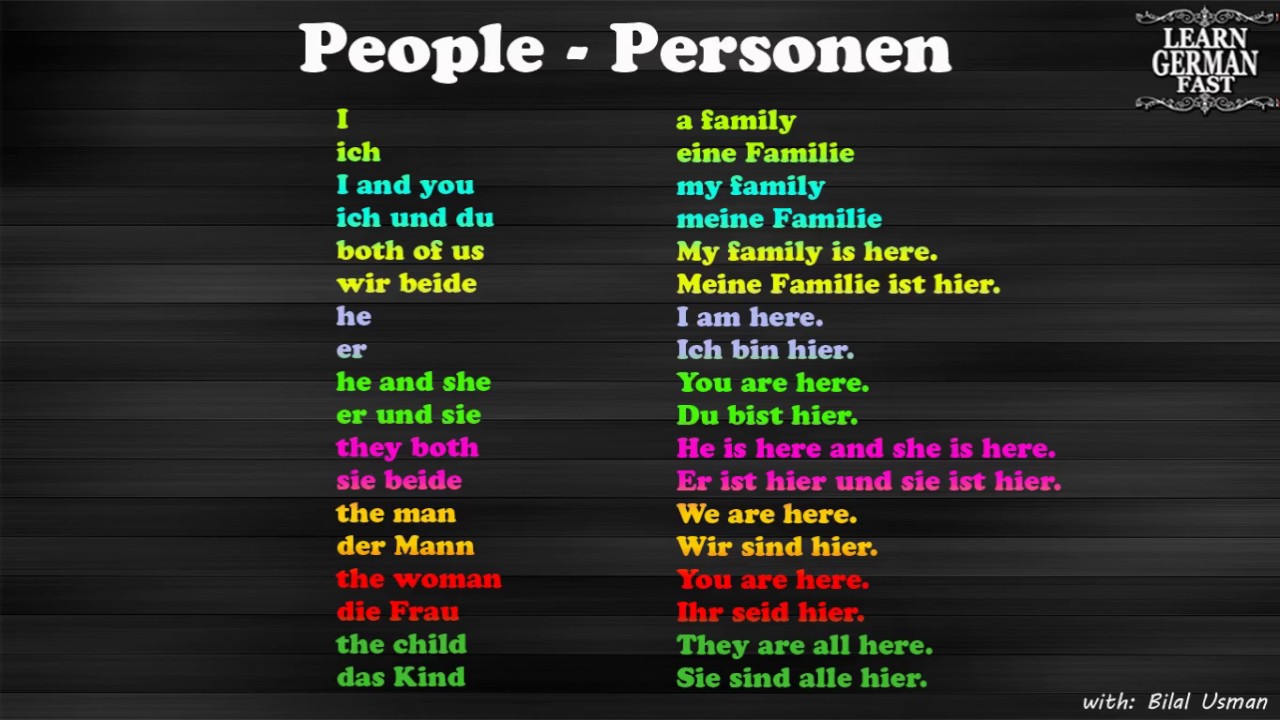
The difficulty of learning German in comparison to other popular foreign languages like Spanish, French, or Mandarin depends on several factors, including the learner’s native language, prior language learning experience, and individual learning style. However, some general observations can be made.
German is generally considered to be a moderately difficult language for native English speakers to learn, primarily due to its complex grammar system, particularly the use of cases and verb conjugations. However, German’s vocabulary shares many similarities with English, making it easier to expand one’s vocabulary.
Pronunciation can also be challenging for native English speakers, as German has a wider range of sounds and a more complex intonation pattern.
The following table provides a summary of the key differences and similarities between German and other languages in terms of difficulty, grammar, vocabulary, pronunciation, and cultural context:
| Language | Difficulty | Grammar | Vocabulary | Pronunciation | Cultural Context |
|---|---|---|---|---|---|
| Spanish | Easy | Relatively simple grammar, with regular verb conjugations and no cases | Many similarities with English vocabulary | Pronunciation is generally straightforward | Similar to English-speaking cultures |
| French | Moderate | More complex grammar than Spanish, with irregular verb conjugations and some use of cases | Many cognates with English vocabulary | Pronunciation can be challenging, with nasal vowels and the “r” sound | Similar to English-speaking cultures |
| Mandarin | Difficult | Very different grammar system from English, with no verb conjugations and a tonal system | Vocabulary is completely different from English | Pronunciation can be very challenging, with tones and unfamiliar sounds | Very different from English-speaking cultures |
| German | Moderate | Complex grammar system, with cases and verb conjugations | Many cognates with English vocabulary | Pronunciation can be challenging, with a wide range of sounds and a complex intonation pattern | Similar to English-speaking cultures, but with some key differences |
The implications of these differences for learners of German are that they should expect to spend more time and effort on mastering the grammar system, particularly the use of cases and verb conjugations. However, the similarities in vocabulary and cultural context can make it easier for learners to build a foundation in the language and to communicate effectively.
German Dialects and Regional Variations
German, like many other languages, has a rich tapestry of dialects and regional variations that add to its linguistic diversity. These dialects are the result of centuries of geographical and cultural influences, and they continue to play a significant role in the lives of many Germans today.
Pronunciation, Vocabulary, and Grammar
Dialects can have a significant impact on the pronunciation, vocabulary, and grammar of German. For example, the pronunciation of certain vowels and consonants can vary greatly between different dialects. Additionally, some dialects may have unique vocabulary words or phrases that are not used in standard German.
Furthermore, the grammar of certain dialects may differ from standard German in terms of word order, verb conjugation, and the use of cases.
Common German Dialects
There are many different German dialects, each with its own unique characteristics. Some of the most common dialects include:
- Bavarian: Spoken in the southern part of Germany, Bavarian is known for its distinctive pronunciation and vocabulary. For example, the word “house” is pronounced “Haus” in standard German, but “Hoiz” in Bavarian.
- Saxon: Spoken in the eastern part of Germany, Saxon is characterized by its use of diminutives and its unique vowel sounds. For example, the word “little” is pronounced “klein” in standard German, but “klene” in Saxon.
- Swabian: Spoken in the southwestern part of Germany, Swabian is known for its fast speech and its use of diphthongs. For example, the word “good” is pronounced “gut” in standard German, but “guat” in Swabian.
Comprehension of German Across Different Regions
The existence of different German dialects can sometimes make it difficult for people from different regions to understand each other. This is especially true for those who speak dialects that are very different from standard German. However, most Germans are able to understand at least some of the other major dialects, and there is a general trend towards the use of standard German in formal settings.
Preservation or Decline of German Dialects
The preservation or decline of German dialects is a complex issue that is influenced by a number of factors, including:
- Geographical isolation: Dialects are more likely to be preserved in areas that are geographically isolated from other regions.
- Cultural identity: Dialects can be a source of cultural identity for people who live in a particular region.
- Education: The use of standard German in schools and other educational institutions can contribute to the decline of dialects.
- Media: The media can play a role in both preserving and declining dialects. For example, the use of dialects in popular culture can help to raise awareness of them and encourage their use.
Role of Media and Education
The media and education play an important role in shaping the use and perception of German dialects. The media can help to raise awareness of dialects and encourage their use. For example, many German television shows and movies feature characters who speak dialects.
Additionally, some schools offer classes in German dialects. These classes can help students to learn about the different dialects of German and to appreciate their cultural value.
Table of German Dialects
| Dialect | Geographic Distribution | Linguistic Characteristics |
|---|---|---|
| Bavarian | Southern Germany | Distinctive pronunciation and vocabulary |
| Saxon | Eastern Germany | Use of diminutives and unique vowel sounds |
| Swabian | Southwestern Germany | Fast speech and use of diphthongs |
Map of German Dialect Regions
[Image of a map of Germany highlighting the different dialect regions]
Glossary of Common Dialectal Terms
| Dialectal Term | Standard German Equivalent |
|---|---|
| Hoiz | Haus |
| Klene | Klein |
| Guat | Gut |
Sample Dialogue in Two Different German Dialects
Bavarian
Person A:Grüß Gott, wia geht’s da?
Person B:Grüß Gott, mir geht’s guat, dank schee.
Standard German
Person A:Guten Tag, wie geht es Ihnen?
Person B:Guten Tag, mir geht es gut, danke schön.
The German language, while initially perceived as challenging, can be mastered with consistent effort and effective learning strategies. To enhance your language learning experience, it is essential to know how to switch languages on your keyboard. Windows 10 offers a convenient method to do so, allowing you to seamlessly navigate between German and other languages as needed.
This guide provides step-by-step instructions on how to switch language on keyboard windows 10 , empowering you to overcome language barriers and delve deeper into the intricacies of the German language.
Conclusion

In conclusion, learning German for English speakers can be influenced by various factors, including linguistic similarities, pronunciation differences, vocabulary gaps, grammatical complexities, and cultural immersion. While the language shares similarities with English, it also presents unique challenges that require dedicated effort and perseverance.
Despite the challenges, German remains a feasible language to learn for English speakers with a strong motivation and effective learning strategies. By understanding the factors that influence the learning process, learners can tailor their approach to maximize their success.
Additional Resources and Strategies
For learners struggling to master German, consider the following tips:
- Set realistic goals and break down the learning process into smaller, manageable steps.
- Practice regularly, even for short periods, to reinforce your understanding.
- Immerse yourself in the language through movies, music, and conversations with native speakers or language partners.
- Seek support from a tutor or language exchange partner to provide guidance and feedback.
“Learning a new language is not just about memorizing words and grammar rules. It’s about embracing a new way of thinking and communicating. With persistence and dedication, anyone can master the challenges of learning German.”- Goethe-Institut
Embrace the challenge of learning German as an opportunity for personal growth and cultural enrichment. With a positive mindset and a commitment to consistent practice, you can achieve your language learning goals and unlock the rewards of fluency.
Helpful Answers
Is German pronunciation particularly challenging?
German pronunciation can indeed present challenges for English speakers due to its unique sounds and pronunciation rules. However, with consistent practice and exposure, these challenges can be overcome.
How does German grammar compare to English grammar?
German grammar exhibits similarities and differences compared to English grammar. While both languages share a Germanic origin, German grammar is characterized by its use of cases, declensions, and verb conjugations, which can require additional effort for English speakers to master.
What are the most common mistakes made by English speakers learning German?
Common mistakes include incorrect case usage, verb conjugation errors, and difficulties with word order. Understanding the underlying grammar rules and practicing regularly can help minimize these mistakes.
