Is mathematics a language? This question has sparked debates among philosophers, linguists, and mathematicians for centuries. In this exploration, we delve into the intricate relationship between mathematics and language, examining their shared characteristics, distinct features, and profound impact on human communication and understanding.
Mathematics, with its precise symbols, rigorous syntax, and universal applicability, has often been compared to natural languages. Yet, it also possesses unique qualities that set it apart from everyday speech. As we journey through this topic, we will uncover the fascinating interplay between these two realms of expression.
Definition and Characteristics of Language
Language is a system of communication that allows us to express our thoughts, ideas, and feelings. It is a complex system that has its own unique set of rules and conventions. These rules govern how words are combined to form sentences, how sentences are combined to form paragraphs, and how paragraphs are combined to form texts.
The defining features of language include:
- Syntax:The rules that govern how words are combined to form sentences.
- Semantics:The meaning of words and sentences.
- Pragmatics:The way in which language is used in social contexts.
Mathematics is a formal language that has its own unique set of rules and conventions. These rules govern how mathematical symbols are combined to form expressions, how expressions are combined to form equations, and how equations are combined to form proofs.
The defining features of mathematics include:
- Syntax:The rules that govern how mathematical symbols are combined to form expressions.
- Semantics:The meaning of mathematical symbols and expressions.
- Pragmatics:The way in which mathematics is used in social contexts.
Natural language is the language that we use in everyday communication. It is a complex and flexible system that can be used to express a wide range of ideas and emotions. Formal languages, such as mathematics, are designed for specific purposes.
They are more precise and less ambiguous than natural language, but they are also less flexible.
Symbolism and Representation in Mathematics: Is Mathematics A Language
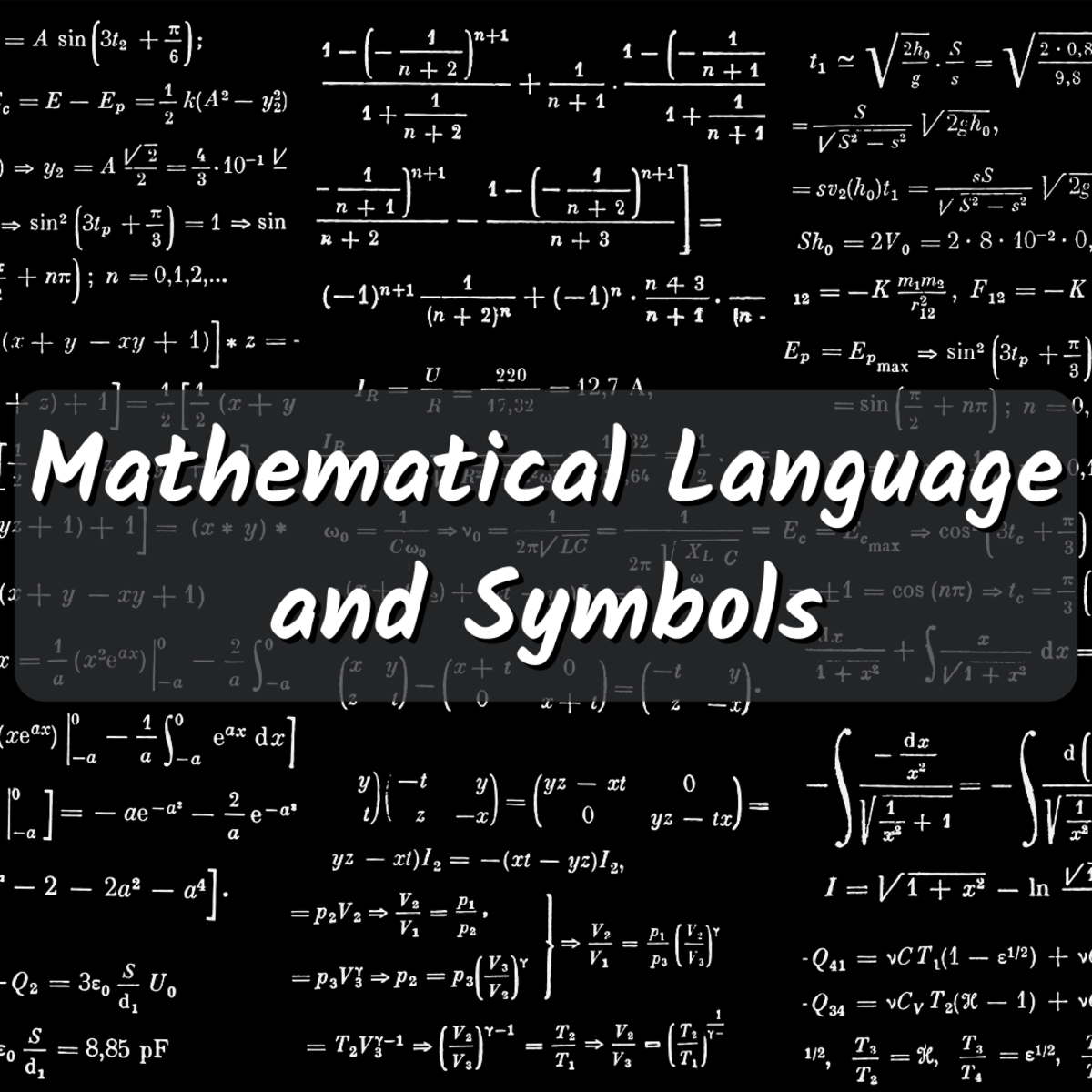
Mathematics utilizes a rich system of symbols to represent abstract concepts and ideas. These symbols serve as a concise and precise language, allowing mathematicians to communicate complex ideas effectively.
Mathematical symbols can be broadly classified into two types: operational symbols and non-operational symbols. Operational symbols represent mathematical operations, such as +, -, ×, and ÷, while non-operational symbols represent mathematical objects, such as numbers, variables, and functions.
Examples of Mathematical Symbols
- The symbol “+” represents the operation of addition.
- The symbol “-” represents the operation of subtraction.
- The symbol “×” represents the operation of multiplication.
- The symbol “÷” represents the operation of division.
- The symbol “0” represents the number zero.
- The symbol “1” represents the number one.
- The symbol “x” represents a variable.
- The symbol “f(x)” represents a function.
In addition to symbols, mathematics also employs diagrams, graphs, and other visual representations to convey mathematical concepts. Diagrams can illustrate geometric relationships, while graphs can depict the relationship between two or more variables.
Use of Diagrams and Graphs in Mathematics
- Diagrams can be used to illustrate the relationships between geometric shapes.
- Graphs can be used to plot data points and visualize the relationship between two or more variables.
- Visual representations can make mathematical concepts more accessible and easier to understand.
Communication and Expression in Mathematics
Mathematics serves as a potent tool for conveying ideas and resolving complex problems across various disciplines. Its unique language, characterized by precise notation and terminology, enables mathematicians to communicate complex concepts with clarity and precision. Mathematical language possesses the remarkable ability to be both precise and expressive, allowing for the articulation of intricate ideas with unambiguous terms.
Role of Mathematical Notation and Terminology
Mathematical notation and terminology play a pivotal role in facilitating effective communication within the mathematical community. Standardized symbols and terms provide a common vocabulary, ensuring that mathematical ideas can be conveyed consistently and accurately. The use of precise definitions and conventions eliminates ambiguity, enabling mathematicians to engage in rigorous discussions and proofs.
Precision and Unambiguity
One of the defining characteristics of mathematical language is its precision and lack of ambiguity. Mathematical symbols and terms have specific meanings, allowing for clear and concise communication. This precision is crucial for conveying complex ideas and ensuring that mathematical arguments are valid and verifiable.
Flexibility and Expressiveness
Despite its emphasis on precision, mathematical language also exhibits remarkable flexibility and expressiveness. The ability to combine and manipulate mathematical symbols enables mathematicians to represent a wide range of concepts and ideas. This flexibility allows for the development of new mathematical theories and the exploration of complex phenomena.
Communication in Different Fields
Mathematics has proven to be an invaluable tool for communicating complex ideas in various fields, including science, engineering, and economics. In science, mathematical models are used to represent physical systems and predict their behavior. In engineering, mathematical calculations are essential for designing and constructing structures and machines.
In economics, mathematical models are employed to analyze economic systems and make predictions about future trends.
Challenges and Limitations
While mathematics provides a powerful language for communication, it also presents certain challenges and limitations. The abstract nature of mathematics can make it difficult for non-mathematicians to understand complex mathematical concepts. Additionally, the reliance on symbols and notation can create a barrier to accessibility for those unfamiliar with mathematical language.
Visual Representations and Diagrams
Visual representations and diagrams play a crucial role in mathematical communication. They provide a concrete and intuitive way to represent mathematical concepts and relationships. Diagrams can help visualize complex ideas, making them more accessible to a wider audience.
Cultural and Historical Factors
The development of mathematical language has been influenced by cultural and historical factors. Different cultures have developed their own mathematical notations and terminologies, reflecting the unique ways in which they have conceptualized mathematical ideas.
Relationship with Natural Language
Mathematical language shares a close relationship with natural language. Mathematical terms and concepts are often derived from natural language, and mathematical ideas can be expressed in both mathematical and natural language. However, there are also fundamental differences between the two languages, particularly in terms of precision and ambiguity.
Ethical Implications, Is mathematics a language
The use of mathematics to communicate ideas raises important ethical considerations. It is essential to ensure that mathematical models and calculations are accurate and reliable, as they can have significant implications for decision-making and policy formulation. Additionally, it is important to communicate mathematical results in a responsible and transparent manner, ensuring that they are not misinterpreted or misused.
Formalism and Structure in Mathematics
Mathematics is a highly formalized subject, with a rigorous system of axioms, definitions, and rules of inference. This formalism contributes to the precision and reliability of mathematical reasoning.
Axiomatic Nature of Mathematics
Mathematics is based on a set of axioms, which are statements that are assumed to be true without proof. These axioms provide the foundation for all mathematical theorems and proofs. The axiomatic nature of mathematics ensures that all mathematical statements can be traced back to a small number of fundamental assumptions.
Deduction and Proof in Mathematical Reasoning
Mathematical reasoning relies heavily on deduction and proof. Deduction is the process of deriving new statements from a set of given statements, using the rules of logic. A mathematical proof is a sequence of deductions that establishes the truth of a theorem.
Proofs are essential for ensuring the validity of mathematical claims.
Applications and Utility of Mathematics
Mathematics is not merely a theoretical subject confined to academic institutions; it finds widespread applications in various fields, including science, engineering, finance, and everyday life. The practical utility of mathematical concepts and techniques extends far beyond the classroom, enabling us to solve real-world problems, make advancements in various disciplines, and enhance our understanding of the world around us.
The question of whether mathematics is a language has been debated for centuries. While some argue that it is a universal language that transcends cultural boundaries, others contend that it is merely a tool for expressing mathematical concepts. To further explore this debate, let’s consider the example of Pope Francis, who is known for his multilingualism.
According to this article , Pope Francis speaks at least seven languages, including Spanish, Italian, Portuguese, English, French, German, and Latin. This linguistic diversity highlights the complexity of language and its ability to convey different perspectives. Returning to the debate on mathematics as a language, it is evident that while it may not be as expressive as natural languages, it does possess a unique ability to communicate mathematical truths.
Applications of Mathematics in Different Fields
- Science:Mathematics is the language of science, providing the tools and techniques to quantify, analyze, and interpret scientific data. It is used in physics to describe the laws of motion and gravity, in chemistry to understand the behavior of atoms and molecules, and in biology to model complex systems like ecosystems.
- Engineering:Mathematics is essential for designing and analyzing engineering systems, from bridges and buildings to airplanes and spacecraft. It is used to calculate stresses, predict performance, and optimize designs.
- Finance:Mathematics is used extensively in finance to model financial markets, assess risk, and make investment decisions. It is also used to develop financial instruments like options and derivatives.
- Everyday Life:Mathematics is used in countless everyday situations, from calculating distances and proportions to managing finances and making informed decisions. It is an essential tool for understanding the world and making sense of our surroundings.
History of Mathematics and its Impact on Society
The history of mathematics is a testament to its enduring importance and influence on human civilization. From the ancient Babylonians and Egyptians to the Greeks and beyond, mathematicians have made groundbreaking discoveries that have shaped our understanding of the world.
The development of calculus by Newton and Leibniz revolutionized physics and engineering, while the invention of computers in the 20th century led to the development of new mathematical techniques and applications.
Role of Mathematics in Artificial Intelligence and Machine Learning
In recent years, mathematics has played a crucial role in the development of artificial intelligence (AI) and machine learning (ML). Mathematical techniques such as linear algebra, probability theory, and optimization are used to train and evaluate AI and ML models.
These models are used in a wide range of applications, including image recognition, natural language processing, and predictive analytics.
Resources for Further Exploration
- The Mathematical Association of America: https://www.maa.org
- The National Council of Teachers of Mathematics: https://www.nctm.org
- The American Mathematical Society: https://www.ams.org
Comparison to Natural Languages
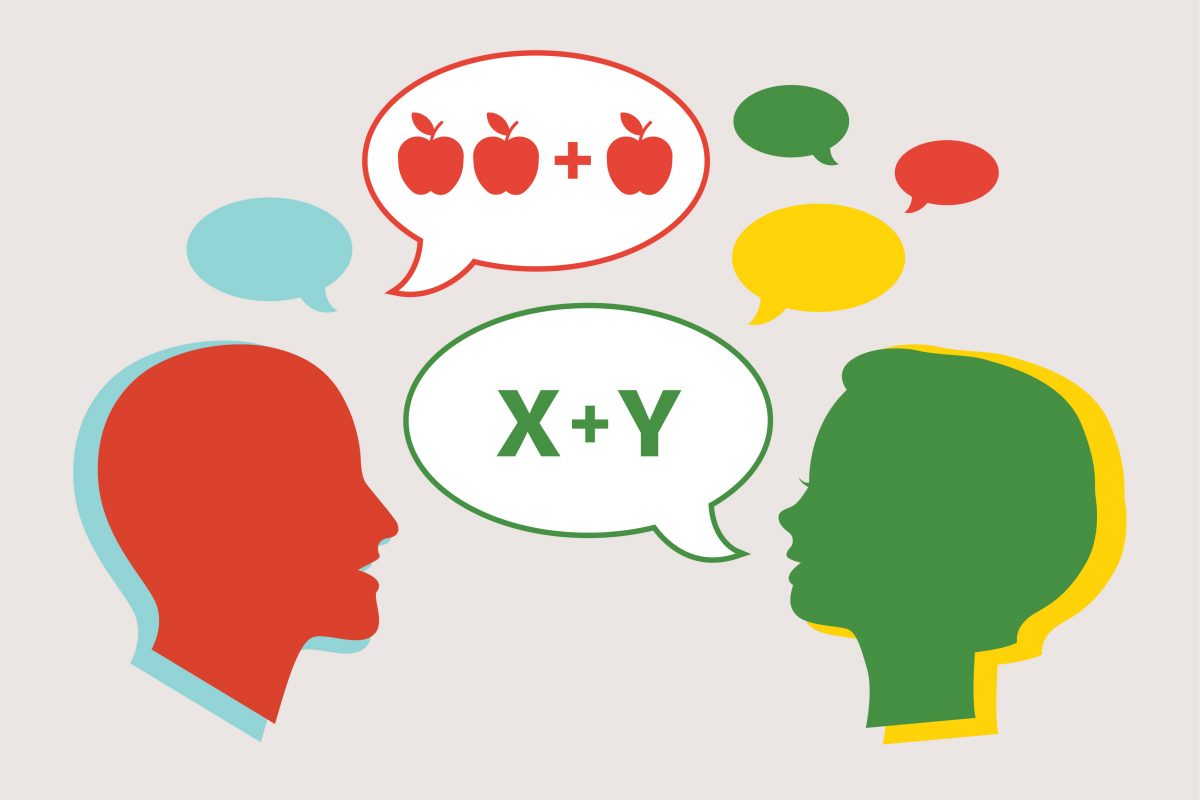
Mathematics and natural languages share some similarities, such as their use of symbols to represent ideas and their ability to express complex concepts. However, there are also significant differences between the two. Mathematics is a formal language with a well-defined syntax and semantics, while natural languages are more flexible and context-dependent.
This difference is reflected in the way that mathematical concepts can be expressed in natural language.
Some mathematical concepts can be expressed relatively easily in natural language. For example, the concept of addition can be expressed as “the sum of two numbers.” However, other mathematical concepts are more difficult to express in natural language. For example, the concept of a derivative can be expressed as “the rate of change of a function,” but this definition is not as clear or precise as the mathematical definition.
The following table compares the syntax, semantics, and pragmatics of mathematics and natural languages:
| Feature | Mathematics | Natural languages |
|---|---|---|
| Syntax | Formal, well-defined | Flexible, context-dependent |
| Semantics | Precise, unambiguous | Ambiguous, context-dependent |
| Pragmatics | Used to convey precise information | Used to convey a wide range of meanings, including emotional and social information |
In summary, mathematics and natural languages are both powerful tools for communication. However, they have different strengths and weaknesses. Mathematics is a precise and unambiguous language that is well-suited for expressing complex concepts. Natural languages are more flexible and context-dependent, which makes them better suited for expressing a wide range of meanings, including emotional and social information.
Historical Perspectives on the Nature of Mathematics
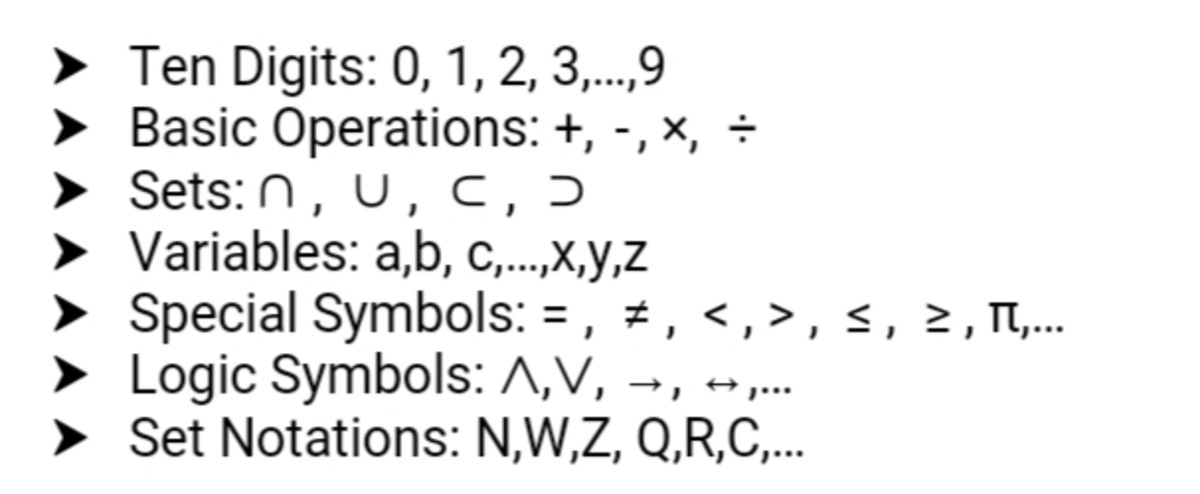
Mathematics has been recognized as a language since ancient times, with its symbols, syntax, and rules enabling the communication of complex ideas. The concept of mathematics as a language has evolved over time, influenced by the contributions of philosophers and mathematicians.
Pythagoras and the Harmony of Numbers
Pythagoras (c. 570-495 BCE) viewed mathematics as the language of the universe, believing that numbers possessed inherent properties that governed the natural world. He saw mathematical relationships in musical harmonies and geometric patterns, leading to the concept of the “harmony of numbers.”
Plato and the World of Forms
Plato (c. 428-348 BCE) proposed the theory of Forms, where mathematical objects exist in a realm of perfect and unchanging ideas. According to Plato, mathematics was the language of this ideal world, and the physical world was merely an imperfect reflection of these Forms.
Aristotle and the Role of Logic
Aristotle (c. 384-322 BCE) emphasized the role of logic in mathematics, developing a system of syllogisms and deductive reasoning. He saw mathematics as a tool for understanding the world through logical proofs and demonstrations.
Euclid and the Axiomatic System
Euclid (c. 300 BCE) formalized geometry in his work “Elements,” establishing a set of axioms and postulates from which all other geometric theorems could be logically derived. This axiomatic system became the foundation for mathematical reasoning and the development of mathematics as a rigorous discipline.
Descartes and Analytic Geometry
René Descartes (1596-1650) introduced analytic geometry, combining algebra and geometry to represent geometric figures using algebraic equations. This allowed for the translation of geometric problems into algebraic ones, further solidifying the connection between mathematics and language.
Leibniz and the Calculus
Gottfried Wilhelm Leibniz (1646-1716) developed calculus, a powerful mathematical tool for describing continuous change. Calculus expanded the expressive power of mathematics, enabling the analysis of complex phenomena in the natural world.
Frege and the Foundations of Arithmetic
Gottlob Frege (1848-1925) developed a formal system for arithmetic, reducing mathematical concepts to a set of logical axioms and rules. This work laid the foundation for the development of modern logic and set theory.
Mathematical Terminology and Vocabulary
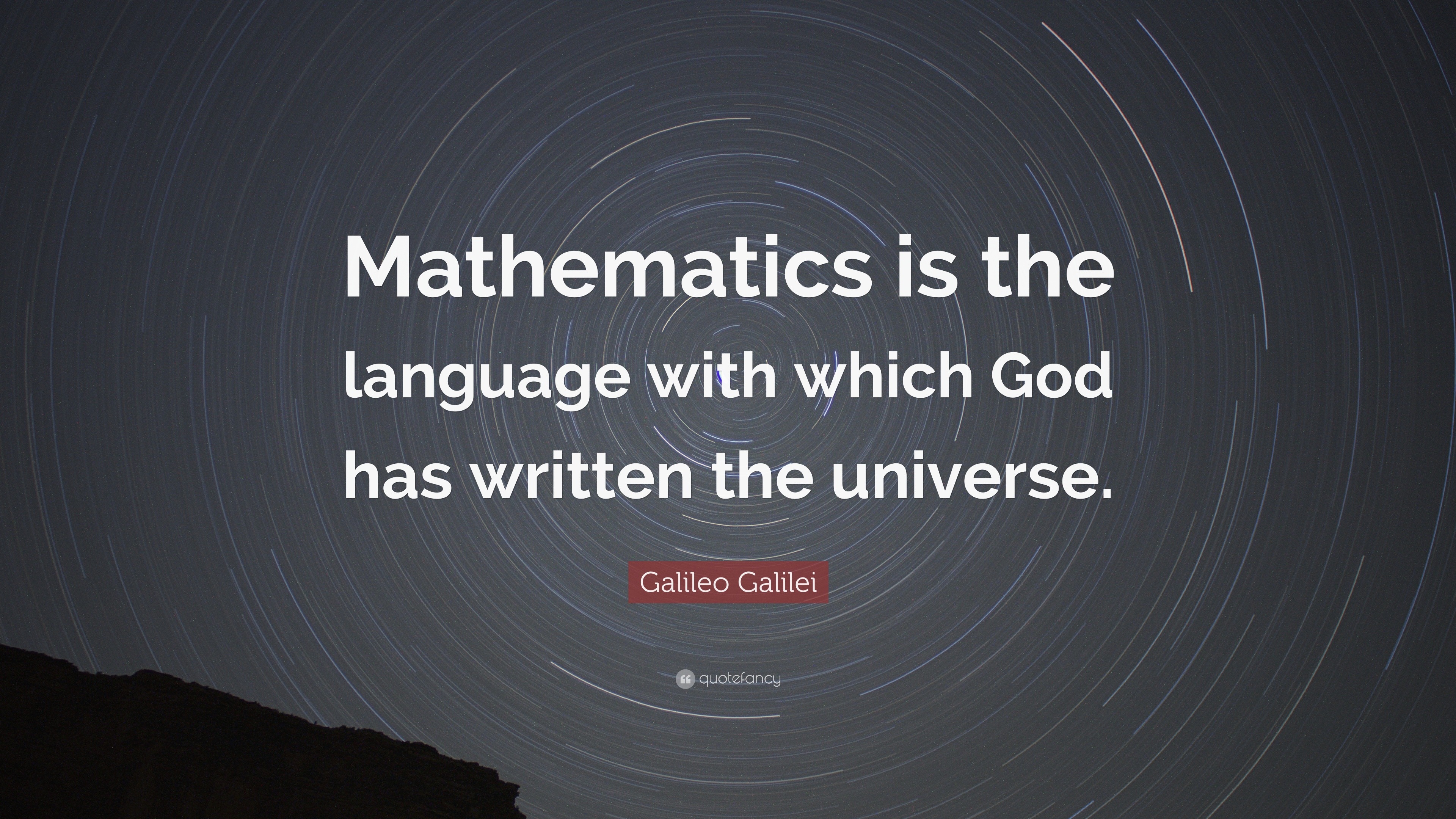
Mathematics employs a specialized vocabulary of terms and symbols to convey complex concepts precisely and concisely. These terms serve as building blocks for mathematical discourse, enabling the expression and communication of ideas in a structured and unambiguous manner.
Role of Technical Terms in Conveying Mathematical Concepts
Technical terms in mathematics are carefully defined and have specific meanings within the mathematical context. They allow mathematicians to communicate complex ideas succinctly, avoiding ambiguity and ensuring that concepts are conveyed consistently. These terms form the foundation of mathematical language, enabling the precise expression and understanding of mathematical theorems, proofs, and theories.
Pedagogical Implications
Viewing mathematics as a language carries profound implications for teaching and learning. This perspective opens avenues for fostering students’ comprehension of mathematical concepts as linguistic constructs, facilitating mathematical thinking and communication, and enhancing mathematics teaching and learning through mathematical discourse analysis.
Strategies for fostering students’ understanding of mathematical concepts as linguistic constructs include:
- Explicitly teaching the language of mathematics, including vocabulary, symbols, and syntax.
- Providing opportunities for students to engage in mathematical discourse, both oral and written.
- Using manipulatives and other concrete representations to help students connect mathematical concepts to real-world objects and experiences.
Mathematical language plays a crucial role in facilitating mathematical thinking and communication. By understanding the language of mathematics, students can more effectively express their mathematical ideas and reason logically.
Mathematical discourse analysis can be used to enhance mathematics teaching and learning by:
- Identifying and addressing common misconceptions.
- Developing more effective teaching strategies.
- Assessing student learning.
Leveraging the linguistic nature of mathematics in activities can enhance student learning, such as:
- Having students create mathematical dictionaries or glossaries.
- Engaging students in mathematical debates or discussions.
- Using mathematical games and puzzles to teach mathematical concepts.
Cultural and Social Aspects of Mathematics
Mathematics is a product of human culture and society, and it is deeply influenced by the cultural and social contexts in which it is developed and used. The language of mathematics, for example, is shaped by the languages of the cultures in which it is developed, and mathematical concepts and practices are often influenced by the cultural beliefs and values of the people who develop them.
The social factors, such as gender, class, and ethnicity, also play a role in the development and use of mathematics. For example, in many cultures, women have been historically excluded from the study of mathematics, and this has had a significant impact on the development of mathematics as a discipline.
The question of whether mathematics is a language is a subject of ongoing debate. Some argue that it is, as it shares many characteristics with spoken and written languages, such as a system of symbols, rules for combining those symbols, and the ability to convey complex ideas.
Others contend that mathematics is not a language, as it lacks the expressive power and ambiguity of natural languages. This debate is further complicated by the existence of sign languages, which are complete and expressive languages that use gestures and body movements to convey meaning.
How do you say stop in sign language ? This question highlights the similarities and differences between mathematics and sign languages, and further complicates the debate over whether mathematics is a language.
Similarly, the class and ethnicity of mathematicians have often influenced the types of mathematics that they have developed and the ways in which they have used it.
Role of Language in Shaping Mathematical Knowledge and Practices
The language of mathematics is a powerful tool that allows mathematicians to communicate complex ideas in a precise and concise way. However, the language of mathematics is also a product of the cultures in which it is developed, and it can sometimes be difficult for people from different cultures to understand.
For example, the word “number” has a different meaning in different cultures. In some cultures, the word “number” only refers to positive integers, while in other cultures it also includes negative integers and fractions. This difference in meaning can lead to confusion when mathematicians from different cultures try to communicate with each other.
Ways in Which Mathematical Concepts and Practices Are Influenced by Different Cultural Perspectives
Mathematical concepts and practices are often influenced by the cultural beliefs and values of the people who develop them. For example, the ancient Greeks believed that the universe was made up of perfect geometric shapes, and this belief influenced the development of Greek mathematics.
Similarly, the Chinese believed that the universe was made up of opposing forces, and this belief influenced the development of Chinese mathematics.
Impact of Social Factors, Such as Gender, Class, and Ethnicity, on the Development and Use of Mathematics
The social factors, such as gender, class, and ethnicity, also play a role in the development and use of mathematics. For example, in many cultures, women have been historically excluded from the study of mathematics, and this has had a significant impact on the development of mathematics as a discipline.
Similarly, the class and ethnicity of mathematicians have often influenced the types of mathematics that they have developed and the ways in which they have used it.
Role of Mathematics in Shaping Cultural Beliefs and Practices
Mathematics can also play a role in shaping cultural beliefs and practices. For example, the ancient Greeks believed that the universe was made up of perfect geometric shapes, and this belief influenced the way that they built their temples and other buildings.
Similarly, the Chinese believed that the universe was made up of opposing forces, and this belief influenced the way that they organized their society.
Ways in Which Mathematics Is Used to Communicate and Convey Cultural Knowledge
Mathematics can also be used to communicate and convey cultural knowledge. For example, the ancient Egyptians used mathematics to create a calendar that was based on the movements of the sun and the stars.
Similarly, the Mayans used mathematics to create a system of writing that was based on the numbers 1-20.
Philosophical Considerations
Considering mathematics as a language has significant philosophical implications. It challenges traditional views of mathematics as a purely objective and abstract system, and raises questions about the nature of truth, knowledge, and reality.
One key philosophical question is the relationship between mathematics, logic, and language. In philosophical discourse, mathematics is often seen as a formal language, with its own syntax and semantics. This view suggests that mathematical statements are true or false based on their logical structure, rather than on their correspondence to the external world.
Mathematics as a Tool for Logic
Mathematics provides a powerful tool for logical reasoning. Its symbols and structures allow for precise and unambiguous expression of logical arguments, making it an essential tool for philosophy and other fields that rely on rigorous logic.
Mathematics and Epistemology
The philosophical implications of mathematics also extend to epistemology, the study of knowledge. Some philosophers argue that mathematics is a priori knowledge, meaning that it is known independently of experience. This view suggests that mathematical truths are not derived from observation or empirical evidence, but rather are innate or discovered through pure reason.
Mathematics and Metaphysics
Finally, considering mathematics as a language has implications for metaphysics, the study of the nature of reality. Some philosophers argue that mathematics provides a framework for understanding the fundamental structure of the universe. This view suggests that the laws of mathematics reflect the underlying order and patterns of the cosmos.
Cognitive Science Perspectives
Cognitive science investigates the mental processes involved in acquiring, understanding, and using mathematics. By examining these processes, cognitive scientists aim to uncover the cognitive mechanisms that underlie mathematical thinking and problem-solving.
The Role of Language in Mathematical Cognition and Problem-Solving
Language plays a crucial role in mathematical cognition and problem-solving. Mathematical language provides a system of symbols and rules that enables mathematicians to communicate and express mathematical ideas. It also serves as a tool for representing and manipulating mathematical concepts.
- Symbolism:Mathematical symbols, such as numbers, variables, and operators, represent mathematical concepts and relationships. They allow mathematicians to express complex ideas in a concise and unambiguous manner.
- Representation:Mathematical language provides various forms of representation, such as equations, graphs, and diagrams. These representations help mathematicians visualize and understand mathematical concepts, making them more accessible and manipulable.
- Communication:Mathematical language facilitates communication among mathematicians, enabling them to share ideas, collaborate on research, and build upon each other’s work.
Future Directions in Research
Ongoing research in the area of mathematics as a language encompasses various facets, including the role of metaphor and analogy in mathematical reasoning, the interplay between mathematics and language in education, and the application of natural language processing techniques to analyze mathematical texts.
The Role of Metaphor and Analogy in Mathematical Reasoning
Metaphors and analogies are powerful cognitive tools that facilitate the understanding and communication of complex mathematical concepts. Research in this area explores how these linguistic devices shape mathematical thinking, aid in problem-solving, and contribute to the development of new mathematical theories.
The Relationship Between Mathematics and Language in the Context of Education
The relationship between mathematics and language is particularly relevant in the context of education. Research investigates how language can be used to enhance the teaching and learning of mathematics, examining the role of language in conveying mathematical ideas, fostering conceptual understanding, and promoting problem-solving skills.
The Use of Natural Language Processing Techniques to Analyze Mathematical Texts
Natural language processing (NLP) techniques offer new avenues for analyzing and understanding mathematical texts. Research in this area focuses on developing computational methods for extracting knowledge from mathematical documents, automating mathematical reasoning, and creating tools to assist in mathematical research and education.
Potential Implications for Future Developments in Mathematics and its Applications
These ongoing research directions have the potential to significantly impact future developments in mathematics and its applications:
- The development of new mathematical theories and concepts: Research on the role of metaphor and analogy may lead to the discovery of novel mathematical structures and relationships.
- The improvement of mathematical education: Understanding the relationship between mathematics and language can inform the development of more effective teaching methods and curricula.
- The creation of new tools and technologies for mathematical research: NLP techniques can revolutionize the way mathematicians access, analyze, and communicate mathematical knowledge.
Essential Questionnaire
What are the key characteristics that distinguish natural language from formal languages like mathematics?
Natural languages are typically ambiguous, context-dependent, and have irregular structures. Formal languages, such as mathematics, are precise, unambiguous, and have well-defined syntax and semantics.
How does language influence the development and understanding of mathematical concepts?
Language provides a framework for expressing and organizing mathematical ideas. It allows us to communicate mathematical concepts, share knowledge, and build upon existing theories.
What are the challenges and strategies for effective communication in mathematics?
Effective mathematical communication requires clarity, precision, and the ability to convey complex ideas in a comprehensible manner. Strategies include using clear and concise language, defining technical terms, and providing visual representations.
