Embark on an enthralling exploration of what are the language families, unlocking the intricate tapestry of human communication. This captivating presentation delves into the fascinating world of language classification, tracing the threads that connect languages across continents and cultures, revealing the remarkable diversity of human expression.
Through historical linguistics, sociolinguistics, and language acquisition, we uncover the evolutionary paths and social factors that shape language families. From the Indo-European to the Austronesian, each family holds a unique story, reflecting the migrations, interactions, and cultural influences that have shaped our linguistic landscape.
Define Language Families
A language family is a group of languages that are related to each other through a common ancestor. The languages in a family share a number of similarities in their grammar, vocabulary, and pronunciation. These similarities are due to the fact that the languages evolved from a common proto-language.
The criteria for classifying languages into families are based on the following:
- Shared vocabulary:The languages in a family share a number of words that have the same meaning. These words are called cognates.
- Shared grammar:The languages in a family share a number of grammatical features, such as the way that sentences are structured and the way that words are inflected.
- Shared phonology:The languages in a family share a number of phonological features, such as the way that sounds are pronounced and the way that words are stressed.
There are a number of different language families in the world. Some of the major language families include:
- Indo-European:The Indo-European language family is the largest language family in the world. It includes languages such as English, Spanish, French, German, Russian, and Hindi.
- Sino-Tibetan:The Sino-Tibetan language family is the second largest language family in the world. It includes languages such as Chinese, Tibetan, Burmese, and Thai.
- Afro-Asiatic:The Afro-Asiatic language family includes languages such as Arabic, Hebrew, and Berber.
- Austronesian:The Austronesian language family includes languages such as Malay, Indonesian, and Hawaiian.
- Niger-Congo:The Niger-Congo language family includes languages such as Swahili, Yoruba, and Zulu.
Language families are important in linguistics because they help us to understand the history of languages and the relationships between them. They also help us to understand how languages change over time.
Major Language Families of the World

Languages around the world are classified into families based on their shared linguistic features and historical development. The major language families of the world include Indo-European, Sino-Tibetan, Afro-Asiatic, Niger-Congo, Austronesian, and Dravidian.
Geographical Distribution and Number of Speakers
- Indo-European:Spoken in Europe, parts of Asia, and the Americas; over 2.5 billion speakers
- Sino-Tibetan:Spoken in China, Tibet, and Southeast Asia; over 1.2 billion speakers
- Afro-Asiatic:Spoken in North Africa, the Middle East, and the Horn of Africa; over 300 million speakers
- Niger-Congo:Spoken in sub-Saharan Africa; over 500 million speakers
- Austronesian:Spoken in Southeast Asia, the Pacific Islands, and Madagascar; over 300 million speakers
- Dravidian:Spoken in southern India and Sri Lanka; over 250 million speakers
Indo-European Language Family
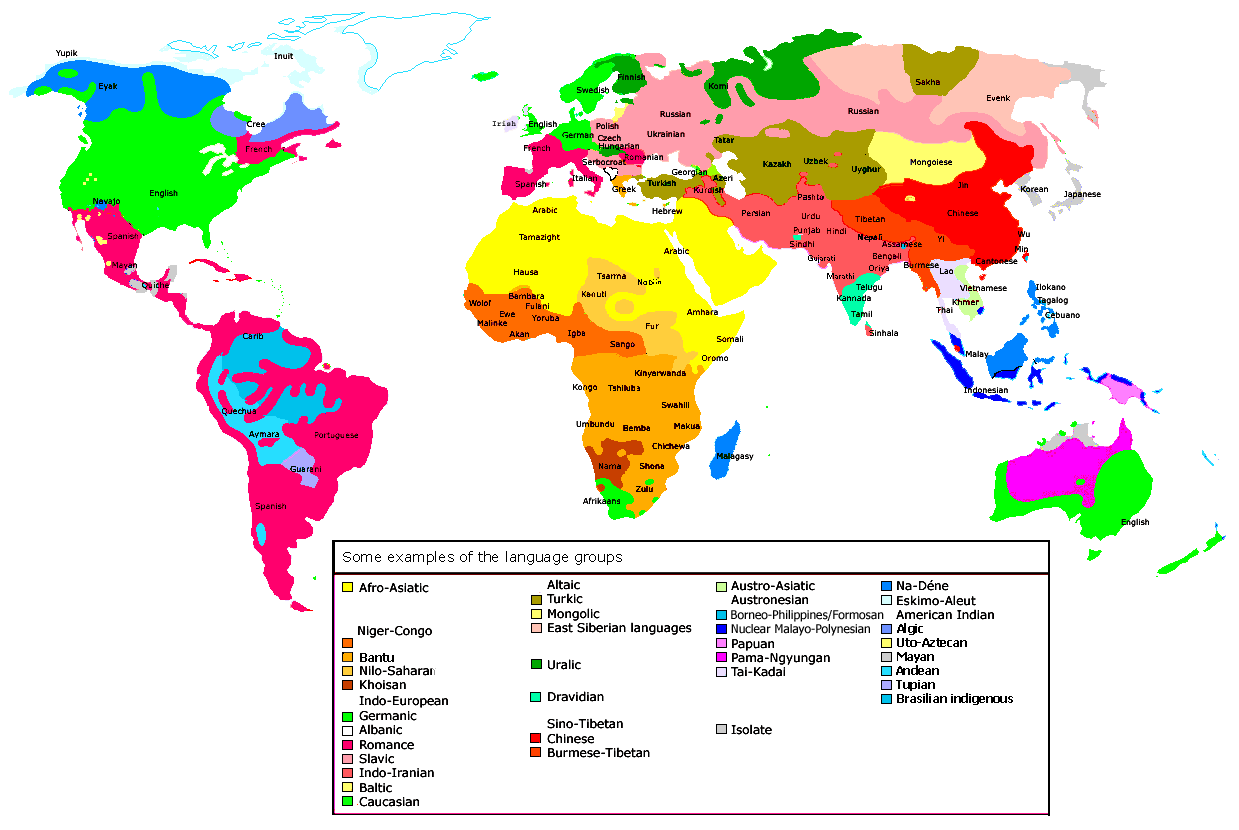
The Indo-European language family is the most widely spoken language family in the world, with over 3 billion native speakers. It is spoken in all continents except Antarctica, and its languages are used as official languages in over 100 countries.The Indo-European language family is believed to have originated in the Pontic-Caspian steppe around 4,000 BCE.
From there, it spread east and west, eventually giving rise to the many languages that are spoken today.The Indo-European language family is divided into several branches, including:
- Germanic
- Romance
- Slavic
- Indo-Iranian
- Greek
- Albanian
- Celtic
- Baltic
The Germanic branch includes languages such as English, German, Dutch, and Swedish. The Romance branch includes languages such as Spanish, French, Italian, and Portuguese. The Slavic branch includes languages such as Russian, Polish, Ukrainian, and Czech. The Indo-Iranian branch includes languages such as Hindi, Urdu, Persian, and Kurdish.
The Greek branch includes only the Greek language. The Albanian branch includes only the Albanian language. The Celtic branch includes languages such as Irish, Welsh, and Breton. The Baltic branch includes languages such as Lithuanian and Latvian.The Indo-European language family has played a significant role in the history of linguistics.
It was the first language family to be scientifically studied, and its study has led to many important insights into the nature of language. The Indo-European language family is also a source of many loanwords in other languages, and its study can help us to understand the history of cultural contact.
“The Indo-European language family is one of the most important and well-studied language families in the world. Its study has led to many important insights into the nature of language and the history of human civilization.”
Lyle Campbell, linguist
Language families are diverse and numerous, with each family consisting of languages that share common ancestry and features. If you’re curious about how to change the language on YouTube to explore content in different languages, you can refer to this helpful guide: how do you change language on youtube.
Returning to our discussion on language families, their classification helps us understand the relationships between languages and trace their historical evolution.
Sino-Tibetan Language Family: What Are The Language Families
The Sino-Tibetan language family is a major language family spoken in East and Southeast Asia. It includes over 400 languages spoken by over 1.3 billion people. The most widely spoken Sino-Tibetan languages are Mandarin Chinese, Tibetan, and Burmese.The Sino-Tibetan language family is thought to have originated in the Tibetan Plateau around 5,000 years ago.
It spread from there to the rest of East and Southeast Asia, and it is now spoken in over 20 countries. The Sino-Tibetan languages are divided into two main branches: the Sinitic branch, which includes Mandarin Chinese, and the Tibeto-Burman branch, which includes Tibetan and Burmese.
Major Branches
The Sinitic branch is the largest branch of the Sino-Tibetan language family, with over 1.2 billion speakers. The most widely spoken Sinitic language is Mandarin Chinese, which is spoken by over 850 million people. Other Sinitic languages include Cantonese, Wu, and Min.The Tibeto-Burman branch is the second largest branch of the Sino-Tibetan language family, with over 100 million speakers.
The most widely spoken Tibeto-Burman languages are Tibetan, Burmese, and Karen. Other Tibeto-Burman languages include Lolo-Burmese, Kuki-Chin, and Bodo-Garo.
– Describe the Afro-Asiatic language family
The Afro-Asiatic language family, also known as the Hamito-Semitic language family, is a group of languages spoken across North Africa, the Horn of Africa, the Arabian Peninsula, and parts of the Middle East.
The Afro-Asiatic language family is one of the largest and most diverse language families in the world, with over 300 languages spoken by more than 350 million people.
History
The Afro-Asiatic language family is thought to have originated in North Africa around 10,000 years ago. The languages of the family spread from there to the Middle East and the Horn of Africa, and eventually to parts of Europe and Asia.
Distribution
The Afro-Asiatic language family is spoken in a wide range of countries, including:
- North Africa: Egypt, Libya, Tunisia, Algeria, Morocco, Mauritania
- Horn of Africa: Ethiopia, Eritrea, Somalia, Djibouti
- Arabian Peninsula: Saudi Arabia, Yemen, Oman, United Arab Emirates, Qatar, Bahrain, Kuwait
- Middle East: Iraq, Syria, Lebanon, Jordan, Israel, Palestine
- Europe: Malta
- Asia: Cyprus
Major Branches
The Afro-Asiatic language family is divided into several major branches, including:
- Semitic languages: Arabic, Hebrew, Aramaic, Amharic, Tigrinya
- Egyptian languages: Ancient Egyptian, Coptic
- Berber languages: Tamazight, Kabyle, Shilha
- Cushitic languages: Somali, Oromo, Afar
- Chadic languages: Hausa, Kanuri, Fulani
Similarities and Differences
The languages of the Afro-Asiatic language family share a number of similarities, including:
- A common grammatical structure
- A similar set of phonemes
- A large number of cognates
However, the languages of the family also exhibit a number of differences, including:
- Different vocabulary
- Different pronunciations
- Different writing systems
Cultural and Historical Significance
The Afro-Asiatic language family has played a significant role in the history and culture of the Middle East and North Africa.
The Semitic languages, in particular, have been used as the languages of religion and government for centuries.
The Berber languages have been used as the languages of trade and commerce in North Africa for centuries.
The Cushitic languages have been used as the languages of agriculture and pastoralism in the Horn of Africa for centuries.
Future of the Afro-Asiatic Language Family
The future of the Afro-Asiatic language family is uncertain.
Some languages of the family, such as Arabic and Hausa, are growing in popularity.
Other languages of the family, such as Coptic and Berber, are facing extinction.
The future of the Afro-Asiatic language family will depend on a number of factors, including:
- The political and economic stability of the regions where the languages are spoken
- The educational opportunities available to speakers of the languages
- The attitudes of speakers of the languages towards their own languages
Austronesian Language Family
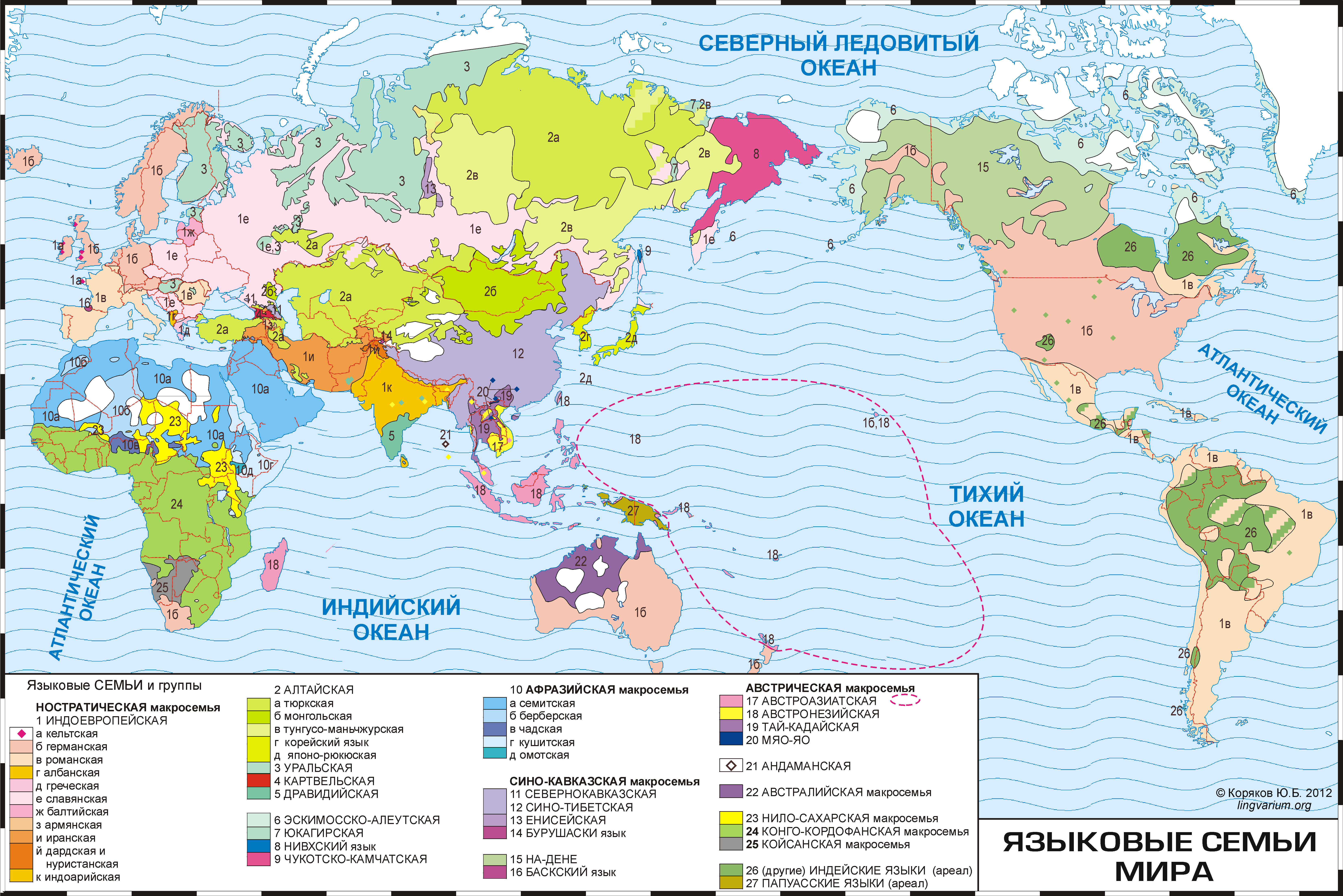
The Austronesian language family is a large and diverse group of languages spoken by over 386 million people across the islands of Southeast Asia, the Pacific, and Madagascar. It is one of the major language families of the world, and its languages are spoken by a wide range of ethnic groups, including the Malay, Javanese, Filipino, Hawaiian, Maori, and Malagasy.The Austronesian language family is thought to have originated in Taiwan around 5,000 years ago, and its languages have since spread to over 1,200 islands across the Pacific Ocean.
When discussing language families, it is essential to consider the diverse languages spoken globally. For instance, in Morocco, the official languages are Arabic and Berber, which belong to the Afro-Asiatic language family. To gain further insights into the linguistic landscape of Morocco, refer to this informative article: What Language Do They Speak in Morocco?
. Understanding the distribution of language families provides valuable context for comprehending the linguistic diversity and richness of different regions.
The Austronesian languages are characterized by a number of shared features, including a common vocabulary, a similar grammatical structure, and a system of prefixes and suffixes.
History and Distribution
The Austronesian languages are thought to have originated in Taiwan around 5,000 years ago. From there, they spread to the Philippines, Indonesia, Malaysia, and other parts of Southeast Asia. Around 2,500 years ago, the Austronesian languages began to spread to the Pacific Islands, including Polynesia, Micronesia, and Melanesia.
The Austronesian languages are now spoken in over 1,200 islands across the Pacific Ocean.
Major Branches
The Austronesian language family is divided into a number of major branches, including:
- Malayo-Polynesian: This is the largest branch of the Austronesian language family, and it includes the languages of Southeast Asia, the Pacific Islands, and Madagascar.
- Formosan: This branch includes the languages of Taiwan, and it is thought to be the closest to the proto-Austronesian language.
- Chamic: This branch includes the languages of southern Vietnam and Cambodia.
- Austronesian: This branch includes the languages of the Philippines, Indonesia, and Malaysia.
- Oceanic: This branch includes the languages of the Pacific Islands, including Polynesia, Micronesia, and Melanesia.
Dravidian Language Family

The Dravidian language family is a group of languages spoken in southern India and Sri Lanka. It is one of the four major language families of India, along with the Indo-Aryan, Sino-Tibetan, and Austroasiatic families.
The Dravidian languages are spoken by over 220 million people, making them the fourth most widely spoken language family in the world. The largest Dravidian language is Telugu, which is spoken by over 80 million people in India. Other major Dravidian languages include Tamil, Kannada, Malayalam, and Tulu.
History
The Dravidian languages are thought to have originated in southern India around 4,500 years ago. They are believed to have spread to Sri Lanka and other parts of South Asia over the centuries.
The Dravidian languages have been influenced by a number of other languages, including Sanskrit, Persian, and English. However, they have retained their unique features, which make them distinct from other language families.
Distribution
The Dravidian languages are spoken in a number of countries in South Asia, including India, Sri Lanka, Pakistan, and Nepal. The largest concentration of Dravidian speakers is in India, where they make up over 20% of the population.
The Dravidian languages are also spoken by a number of diaspora communities around the world, including in Malaysia, Singapore, South Africa, and the United Kingdom.
Major Branches
The Dravidian language family is divided into four major branches:
- South Dravidian
- Central Dravidian
- North Dravidian
- Northeast Dravidian
The South Dravidian branch is the largest, and includes the languages Tamil, Telugu, Kannada, and Malayalam. The Central Dravidian branch includes the languages Toda, Kota, and Kodagu. The North Dravidian branch includes the languages Brahui and Kurukh. The Northeast Dravidian branch includes the languages Gondi, Kui, and Kuvi.
Uralic Language Family
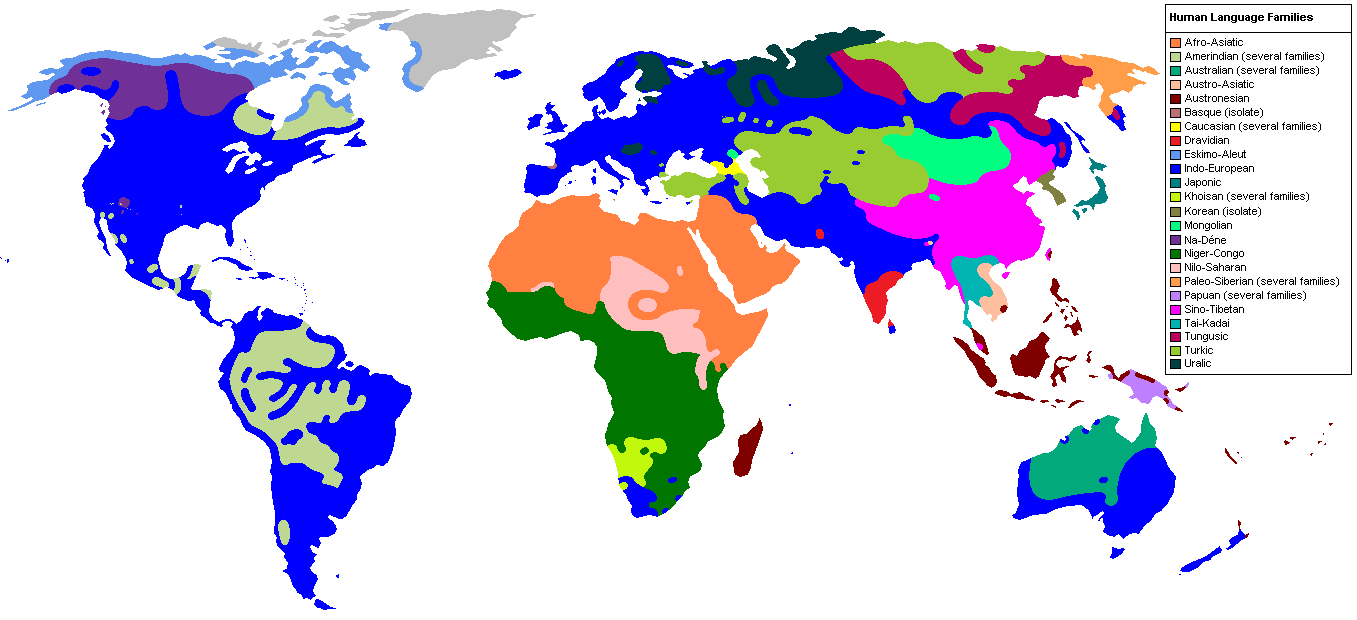
The Uralic language family encompasses a group of languages spoken in Northern Eurasia, spanning from Eastern Europe to Western Siberia. It is classified as an agglutinative language family, characterized by the use of suffixes and prefixes to modify words and create complex grammatical structures.The Uralic language family is believed to have originated in the Ural Mountains region, with its speakers gradually migrating to their current locations.
It is divided into two main branches: Finno-Ugric and Samoyedic. The Finno-Ugric branch includes languages such as Finnish, Hungarian, Estonian, and Mari, while the Samoyedic branch includes languages such as Nenets, Selkup, and Enets.
Distribution
Uralic languages are spoken in a vast geographic area, covering parts of Northern Europe, Eastern Europe, and Western Siberia. The most widely spoken Uralic language is Hungarian, with over 13 million speakers. Other major Uralic languages include Finnish, Estonian, and Mordvin.
Major Branches
As mentioned earlier, the Uralic language family consists of two main branches: Finno-Ugric and Samoyedic. The Finno-Ugric branch is further divided into several subgroups, including the Baltic-Finnic, Ugric, and Permian subgroups. The Samoyedic branch, on the other hand, is a more homogeneous group, with its languages sharing a close relationship.
Altaic Language Family
The Altaic language family is a hypothetical group of languages that includes the Turkic, Mongolic, and Tungusic language families. The term “Altaic” was first proposed by the German scholar August Schleicher in 1863. The Altaic hypothesis is based on the similarities in grammar, phonology, and vocabulary among these languages.The Altaic languages are spoken by over 300 million people in a vast area stretching from Turkey in the west to Japan in the east.
The Turkic languages are the most widely spoken of the Altaic languages, with over 200 million speakers. The Mongolic languages are spoken by over 10 million people, and the Tungusic languages are spoken by over 1 million people.There is a great deal of evidence to support the Altaic hypothesis.
The Altaic languages share many similarities in grammar, phonology, and vocabulary. For example, all of the Altaic languages have a system of vowel harmony, in which the vowels in a word must all be either front vowels or back vowels.
All of the Altaic languages also have a system of case marking, in which the grammatical function of a noun is indicated by a suffix.However, there is also some evidence that contradicts the Altaic hypothesis. For example, the Altaic languages have different word orders.
The Turkic languages are subject-object-verb languages, while the Mongolic languages are subject-verb-object languages. The Tungusic languages are both subject-object-verb and subject-verb-object languages.Despite the challenges and controversies surrounding the classification of Altaic languages, the Altaic hypothesis remains a popular and widely accepted theory.
The Altaic languages are a fascinating group of languages that have played an important role in the history and culture of Eurasia.
– Provide examples and explain their geographical distribution, including
Native American languages are spoken by indigenous peoples of North, Central, and South America. They belong to several distinct language families, each with its own unique characteristics. Here are some of the major Native American language families and their geographical distribution:
Algonquian
The Algonquian language family includes over 30 languages spoken by tribes in eastern North America, from the Atlantic coast to the Rocky Mountains. Some of the most well-known Algonquian languages include Cree, Ojibwe, and Blackfoot.
Athabaskan
The Athabaskan language family includes over 50 languages spoken by tribes in western North America, from Alaska to California. Some of the most well-known Athabaskan languages include Navajo, Apache, and Tlingit.
Caddoan
The Caddoan language family includes 5 languages spoken by tribes in the southern Great Plains and the southeastern United States. The most well-known Caddoan language is Caddo.
Eskimo-Aleut
The Eskimo-Aleut language family includes 11 languages spoken by tribes in the Arctic regions of North America and Asia. Some of the most well-known Eskimo-Aleut languages include Inuktitut, Yupik, and Aleut.
Iroquoian
The Iroquoian language family includes 10 languages spoken by tribes in the northeastern United States and southeastern Canada. Some of the most well-known Iroquoian languages include Mohawk, Oneida, and Seneca.
Muskogean
The Muskogean language family includes 6 languages spoken by tribes in the southeastern United States. Some of the most well-known Muskogean languages include Creek, Choctaw, and Chickasaw.
Salishan
The Salishan language family includes over 20 languages spoken by tribes in the Pacific Northwest of North America. Some of the most well-known Salishan languages include Lushootseed, Twana, and Bella Coola.
Siouan
The Siouan language family includes over 20 languages spoken by tribes in the central and eastern United States. Some of the most well-known Siouan languages include Lakota, Dakota, and Omaha.
Uto-Aztecan, What are the language families
The Uto-Aztecan language family includes over 60 languages spoken by tribes in western North America and Central America. Some of the most well-known Uto-Aztecan languages include Nahuatl, Hopi, and Ute.
Language Isolates
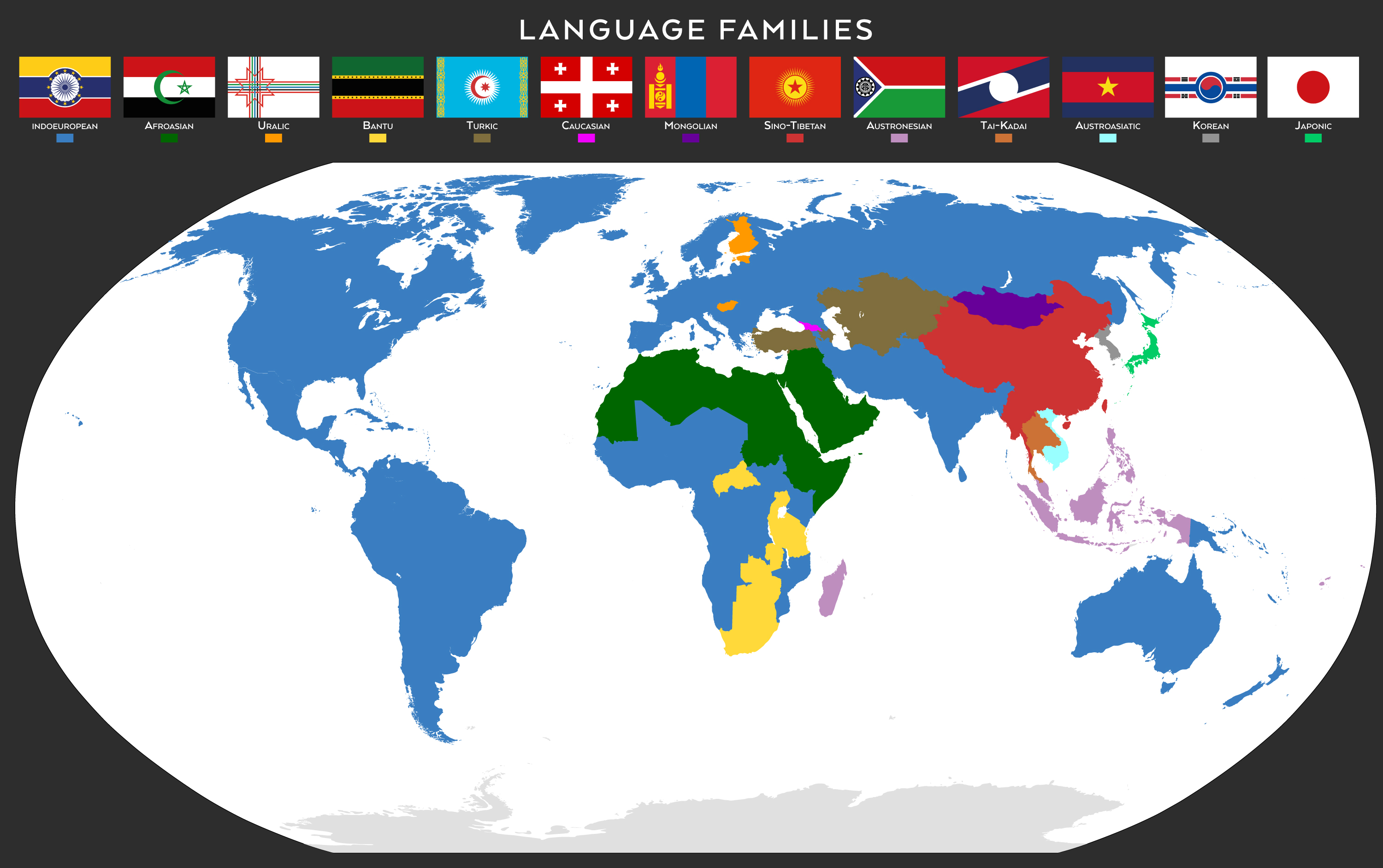
Language isolates are languages that have not been definitively linked to any other language or language family. They are often considered to be the last remnants of once-larger language families that have since disappeared.
There are a number of well-known language isolates, including Basque, Japanese, and Korean. These languages have all been studied extensively, but their origins remain a mystery. Some linguists believe that language isolates may be the result of convergent evolution, in which two or more unrelated languages develop similar features due to similar environmental or social pressures.
Others believe that language isolates may be the remnants of ancient languages that were once spoken by much larger populations, but which have since been displaced by more dominant languages.
Basque
Basque is a language spoken in the Basque Country, a region that straddles the border between Spain and France. It is a unique language, with no known relatives. Basque has been the subject of much linguistic research, but its origins remain a mystery.
Some linguists believe that Basque may be a descendant of a pre-Indo-European language that was once spoken in Europe. Others believe that Basque may be related to the Caucasian languages, a family of languages spoken in the Caucasus Mountains.
Japanese
Japanese is a language spoken in Japan. It is the native language of over 120 million people. Japanese is a member of the Japonic language family, which also includes the Ryukyuan languages spoken on the Ryukyu Islands. The origins of the Japonic languages are unknown, but some linguists believe that they may be related to the Koreanic languages, a family of languages spoken in Korea.
Korean
Korean is a language spoken in Korea. It is the native language of over 75 million people. Korean is a member of the Koreanic language family, which also includes the Jeju language spoken on Jeju Island. The origins of the Koreanic languages are unknown, but some linguists believe that they may be related to the Japonic languages, a family of languages spoken in Japan.
Language Families and Human Migration

Language families provide valuable insights into human migration patterns and can shed light on the history of human populations. By studying the distribution of language families and the relationships between languages within those families, linguists can reconstruct migration routes and gain a deeper understanding of human dispersal and settlement patterns.
Methods Used by Linguists
Linguists use various methods to analyze language families and reconstruct human migration history. These methods include:
- Comparative linguistics:Comparing languages to identify shared features, such as vocabulary, grammar, and phonology.
- Lexicostatistics:Using statistical methods to measure the degree of similarity between languages based on shared vocabulary.
- Glottochronology:Estimating the time since two languages diverged from a common ancestor based on the rate of vocabulary change.
Specific Examples
Specific examples of language families that provide insights into human migration patterns include:
- Indo-European:This family includes languages spoken across Europe, South Asia, and parts of the Middle East. It is thought to have originated in the Pontic-Caspian steppe around 6,000 years ago.
- Sino-Tibetan:This family includes languages spoken in China, Tibet, and Southeast Asia. It is thought to have originated in the Yellow River Valley around 5,000 years ago.
- Afro-Asiatic:This family includes languages spoken in North Africa, the Middle East, and parts of East Africa. It is thought to have originated in the Sahara Desert around 8,000 years ago.
Limitations and Challenges
While language families can provide valuable insights into human migration, there are also limitations and challenges associated with using them for this purpose:
- Incomplete data:Not all languages have been documented, and for some languages, only limited data is available.
- Language contact:Languages can change and borrow features from other languages, which can complicate the reconstruction of language families.
- Time depth:The methods used to reconstruct language families are limited in their ability to go back in time beyond a certain point.
“Language families are a powerful tool for understanding human migration patterns. By studying the distribution and relationships between languages, we can gain insights into the movements of human populations throughout history.”- Merritt Ruhlen, linguist
Further Research Directions
Further research in the field of language families and human migration could focus on:
- Developing new methods for analyzing language families and reconstructing migration history.
- Investigating the role of language contact in shaping the distribution of language families.
- Exploring the relationship between language families and other aspects of human culture, such as genetics and archaeology.
Language Families and Cultural Diversity
Language families play a significant role in shaping cultural diversity by influencing the customs, beliefs, and worldviews of speakers.
Language influences cultural diversity through its impact on the following aspects:
Cognitive Development
Language shapes the way individuals perceive and interact with the world. Speakers of different languages may have distinct cognitive structures, which influence their thought processes and problem-solving abilities.
Socialization
Language is a crucial tool for socialization, allowing individuals to communicate, share ideas, and establish relationships. Language families can foster cultural identity and a sense of belonging among speakers.
Cultural Transmission
Language serves as a vehicle for transmitting cultural knowledge, traditions, and values across generations. Language families facilitate the preservation and transmission of cultural heritage.
Worldview and Belief Systems
Language influences the way individuals perceive the world and their place within it. Different language families may have unique vocabularies and grammatical structures that reflect distinct cultural perspectives and belief systems.
FAQ Resource
What are the criteria for classifying languages into families?
Languages are classified into families based on shared linguistic features, including phonology, morphology, and syntax, suggesting a common ancestral language.
How do language families help us understand human migration patterns?
By tracing the distribution and evolution of language families, linguists can infer migration routes and historical interactions between different populations.
What is the significance of language isolates?
Language isolates, languages that do not belong to any known family, provide valuable insights into the diversity of human languages and the complexities of language evolution.
