What is the formal language – What is a formal language? A formal language is a system of symbols and rules that can be used to represent and communicate information. Formal languages are used in a wide variety of fields, including computer science, linguistics, and mathematics.
Formal languages are often used to describe the syntax and semantics of programming languages. They can also be used to model natural languages, such as English or Spanish. Formal languages are also used in mathematics to describe the axiomatic systems that are used to develop mathematical theories.
Definition of Formal Language
In linguistics, a formal language is a system of symbols and rules that can be used to represent and communicate information. It is a system that is both finite and complete, meaning that it has a limited number of symbols and rules, and that these symbols and rules are sufficient to represent any possible message.
Formal languages are used in a wide variety of fields, including computer science, linguistics, and mathematics. In computer science, formal languages are used to specify the syntax of programming languages. In linguistics, formal languages are used to describe the structure of natural languages.
In mathematics, formal languages are used to define mathematical theories.
Key Characteristics of Formal Languages
- Finite and complete:A formal language has a finite number of symbols and rules, and these symbols and rules are sufficient to represent any possible message.
- Abstract:A formal language is not tied to any particular natural language or other real-world phenomenon. It is a purely abstract system that can be used to represent any type of information.
- Precise:A formal language is precise and unambiguous. The symbols and rules of a formal language are defined in such a way that there is no room for interpretation.
Characteristics of Formal Languages
Formal languages are distinct from natural languages in several key characteristics. They possess a well-defined syntax, which governs the structure and formation of valid expressions within the language. This syntax is typically expressed using formal grammars, such as regular grammars, context-free grammars, and context-sensitive grammars.
Semantics, the study of meaning, plays a crucial role in formal languages. Formal languages have precise semantic rules that define the interpretation and meaning of expressions. These rules specify how expressions are evaluated and what values or results they produce.
Pragmatics, the study of language use in context, is generally not a concern in formal languages. Formal languages are designed to be unambiguous and independent of the context in which they are used. This allows them to be used for precise communication and reasoning.
Types of Formal Languages, What is the formal language
There are various types of formal languages, each with its own characteristics and expressive power. Regular languages are the simplest type, capable of expressing patterns that can be recognized by finite automata. Context-free languages are more powerful, allowing for the expression of hierarchical structures and nesting.
Context-sensitive languages are even more powerful, allowing for the expression of dependencies between symbols that are not local.
Examples of formal languages include programming languages, logical calculi, and mathematical notations. Programming languages, such as Java and Python, are formal languages used to create computer programs. Logical calculi, such as propositional logic and first-order logic, are formal languages used to express logical arguments and reason about their validity.
Mathematical notations, such as set theory and calculus, are formal languages used to express mathematical concepts and perform mathematical operations.
Formal languages have strengths and limitations in representing and communicating information. They are precise and unambiguous, making them suitable for representing complex concepts and reasoning. However, they can also be complex and difficult to understand for non-experts.
Use of Formal Languages
Formal languages are used in various domains, including the design and verification of computer systems and software. They are used to specify the syntax and semantics of programming languages, ensuring that programs are well-formed and behave as intended. Formal languages are also used in the verification of hardware designs, ensuring that they meet their specifications and are free from errors.
Formal languages are used in linguistics, cognitive science, and artificial intelligence to study the structure and meaning of natural languages. They provide a framework for analyzing the syntax and semantics of natural languages and developing computational models of language processing.
Relationship to Natural Languages
Formal languages and natural languages have a complex relationship. Formal languages are designed to be precise and unambiguous, while natural languages are often ambiguous and context-dependent. However, there is a growing interest in bridging the gap between formal languages and natural languages, developing techniques for representing and processing natural language in a more formal way.
Bridging the gap between formal languages and natural languages has several challenges and opportunities. One challenge is developing formalisms that can capture the richness and complexity of natural languages. Another challenge is developing efficient algorithms for processing and understanding natural language.
However, there are also opportunities for using formal languages to improve natural language processing tasks, such as machine translation and question answering.
Formal Language Theory
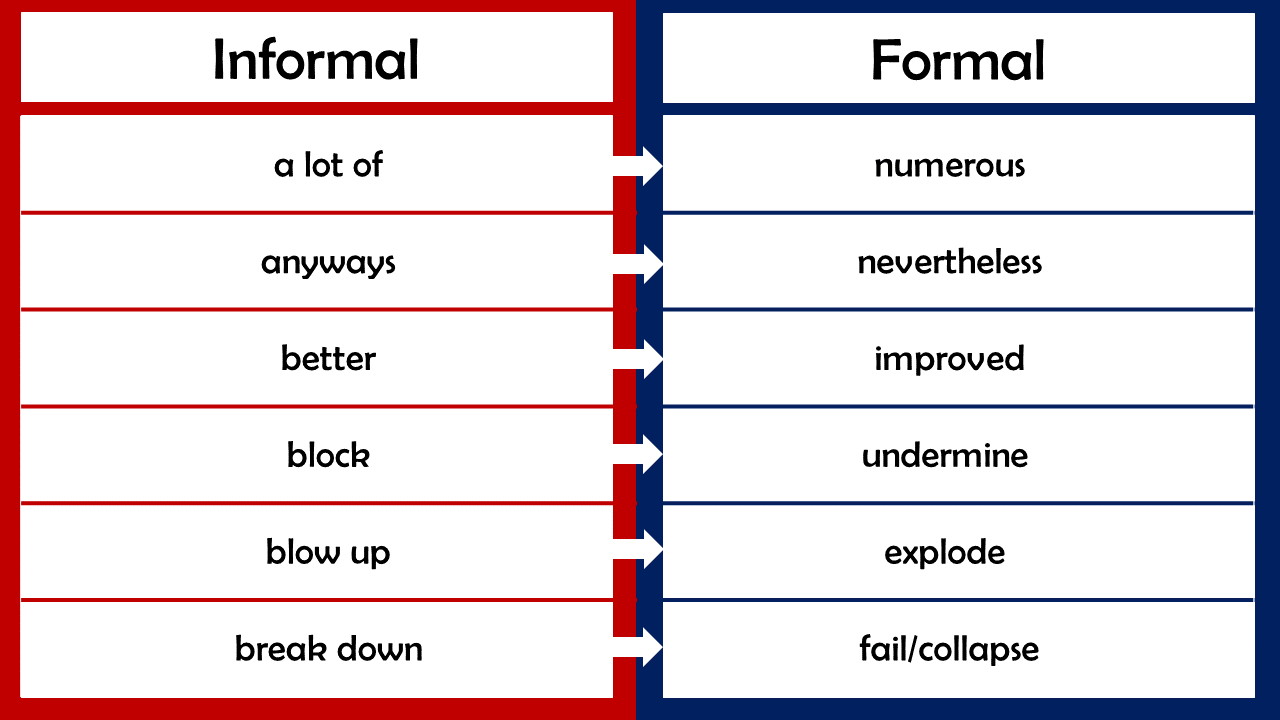
Formal language theory is a branch of theoretical computer science that studies the structure and properties of formal languages. Formal languages are sets of strings that can be generated by a grammar. They are used to model a wide variety of phenomena, including programming languages, natural languages, and mathematical logic.Formal language theory has its origins in the work of Noam Chomsky in the 1950s.
Chomsky developed a hierarchy of formal languages, known as the Chomsky hierarchy, which classifies formal languages based on their generative power. The Chomsky hierarchy consists of four levels:
1. Type 0
Unrestricted grammars
2. Type 1
Context-sensitive grammars
3. Type 2
Context-free grammars
4. Type 3
Regular grammarsFormal languages have a wide range of applications in computer science, linguistics, and other fields. In computer science, formal languages are used to specify the syntax of programming languages, design compilers and interpreters, and develop natural language processing systems.
In linguistics, formal languages are used to model the structure of natural languages and to study the relationship between language and meaning. Formal languages are also used in other fields, such as mathematics, logic, and artificial intelligence.
Types of Formal Languages, What is the formal language
There are many different types of formal languages, each with its own unique properties. Some of the most common types of formal languages include:
Regular languages
Regular languages are the simplest type of formal language. They can be generated by a regular grammar, which is a grammar that consists of a set of production rules that can be applied in a specific order.
Context-free languages
Context-free languages are more complex than regular languages. They can be generated by a context-free grammar, which is a grammar that consists of a set of production rules that can be applied in any order.
Context-sensitive languages
Context-sensitive languages are even more complex than context-free languages. They can be generated by a context-sensitive grammar, which is a grammar that consists of a set of production rules that can be applied only if the surrounding context is appropriate.
Formal language, characterized by its adherence to grammatical rules and vocabulary specific to particular domains, plays a significant role in the language of business. What is language of business often incorporates formal language to convey precise meanings, maintain clarity, and establish a professional tone.
Understanding the nuances of formal language is crucial for effective communication in business settings.
Unrestricted languages
Unrestricted languages are the most complex type of formal language. They can be generated by an unrestricted grammar, which is a grammar that consists of any set of production rules.
Regular Expressions
Regular expressions are a powerful tool for specifying patterns in strings. They are used in a wide variety of applications, including text processing, programming, and bioinformatics. Regular expressions are based on a formal language called regular expressions, which is a type of context-free language.Regular expressions consist of a set of operators that can be used to match characters, strings, and patterns.
The most common operators include:
.*
Matches any character
+
Matches one or more occurrences of the preceding character
?
Matches zero or one occurrences of the preceding character
[]
Matches any character within the brackets
[^]
Matches any character not within the bracketsRegular expressions can be used to perform a variety of tasks, such as:
Searching for text
Regular expressions can be used to search for specific patterns in text. For example, the regular expression “.*cat.*” will match any string that contains the word “cat”.
Formal language refers to a standardized form of a language used in official and academic settings. It is characterized by its adherence to grammatical rules, precise vocabulary, and often a distinct style. For instance, the formal language used in Andorra is Catalan, which is the official language of the country.
To learn more about the language spoken in Andorra, you can visit this website.
Validating input
Regular expressions can be used to validate user input. For example, the regular expression “^[a-zA-Z0-9]*$” will match any string that consists only of letters and numbers.
Parsing text
Regular expressions can be used to parse text into its component parts. For example, the regular expression “(\d+)\s+(\w+)” will match any string that consists of a number followed by a word.
Chomsky Hierarchy
The Chomsky hierarchy is a classification of formal languages based on their generative power. The Chomsky hierarchy consists of four levels:
Type 0
Unrestricted grammars
Type 1
Context-sensitive grammars
Type 2
Context-free grammars
Type 3
Regular grammarsThe Chomsky hierarchy is a strict hierarchy, meaning that each level of the hierarchy is more powerful than the level below it. For example, a context-sensitive grammar can generate a wider range of languages than a context-free grammar.The Chomsky hierarchy has a number of applications in computer science, including:
Compiler design
The Chomsky hierarchy can be used to design compilers for programming languages. A compiler is a program that translates a program written in one language into another language. The Chomsky hierarchy can be used to determine which type of grammar is needed to generate the target language.
Natural language processing
The Chomsky hierarchy can be used to develop natural language processing systems. A natural language processing system is a program that can understand and generate human language. The Chomsky hierarchy can be used to determine which type of grammar is needed to model the structure of natural languages.
Applications of Formal Language Theory
Formal language theory has a wide range of applications in computer science, linguistics, and other fields. Some of the most common applications include:
Compiler design
Formal language theory is used to design compilers for programming languages. A compiler is a program that translates a program written in one language into another language. Formal language theory can be used to determine which type of grammar is needed to generate the target language.
Natural language processing
Formal language theory is used to develop natural language processing systems. A natural language processing system is a program that can understand and generate human language. Formal language theory can be used to determine which type of grammar is needed to model the structure of natural languages.
Artificial intelligence
Formal language theory is used to develop artificial intelligence systems. An artificial intelligence system is a program that can think and learn like a human. Formal language theory can be used to develop artificial intelligence systems that can understand and generate human language.
Chomsky Hierarchy
The Chomsky hierarchy is a classification of formal languages based on their generative power. It was developed by Noam Chomsky in the 1950s and has since become a fundamental concept in formal language theory. The hierarchy consists of four levels, each of which is more powerful than the previous one.The significance of the Chomsky hierarchy lies in its ability to characterize the expressive power of different types of formal languages.
This has important implications for the design and analysis of programming languages, as well as for the study of natural languages.
Type 0: Unrestricted Grammars
Type 0 grammars are the most powerful type of grammar in the Chomsky hierarchy. They can generate any recursively enumerable language, which is a language that can be listed by a Turing machine. Unrestricted grammars have no restrictions on the form of their production rules.
Type 1: Context-Sensitive Grammars
Context-sensitive grammars are less powerful than unrestricted grammars, but they can still generate a wide variety of languages. They are restricted in that the left-hand side of a production rule can only be a single non-terminal symbol.
Type 2: Context-Free Grammars
Context-free grammars are even less powerful than context-sensitive grammars. They are restricted in that the left-hand side of a production rule can only be a single non-terminal symbol, and the right-hand side can only be a string of terminal symbols.
Type 3: Regular Grammars
Regular grammars are the least powerful type of grammar in the Chomsky hierarchy. They are restricted in that the right-hand side of a production rule can only be a single terminal symbol or a single non-terminal symbol followed by a terminal symbol.
Applications of Formal Languages

Formal languages play a pivotal role in various fields, providing a precise and rigorous framework for representing and analyzing complex systems and concepts. Their applications extend beyond theoretical computer science, reaching into diverse disciplines such as mathematics, linguistics, and beyond.
In computer science, formal languages serve as the foundation for programming languages, compilers, and other software development tools. They enable the precise definition of syntax and semantics, ensuring that programs can be interpreted and executed correctly. Formal languages also underpin the design of databases, allowing for the structured storage and retrieval of data.
Mathematics
In mathematics, formal languages are used to express mathematical theories and proofs. They provide a way to represent complex mathematical concepts in a precise and unambiguous manner, facilitating their analysis and verification. Formal languages have also been instrumental in the development of automated theorem provers, which can assist mathematicians in discovering new theorems and verifying existing ones.
Linguistics
In linguistics, formal languages are used to model natural languages. They provide a framework for describing the grammar and syntax of languages, enabling linguists to analyze and compare different languages. Formal languages have also been used to develop natural language processing systems, which can understand and generate human language.
Other Applications
Beyond these core disciplines, formal languages have found applications in various other fields, including:
- Artificial Intelligence:Formal languages are used to represent knowledge and reason about the world, enabling the development of intelligent systems.
- Bioinformatics:Formal languages are used to represent and analyze biological sequences, such as DNA and proteins.
- Cryptography:Formal languages are used to design and analyze cryptographic protocols, ensuring the security and privacy of data.
Benefits and Limitations
The use of formal languages offers several benefits:
- Precision:Formal languages provide a precise and unambiguous way to represent complex systems and concepts.
- Analysis:Formal languages enable the rigorous analysis of systems and concepts, facilitating the identification of errors and inconsistencies.
- Automation:Formal languages can be used to automate tasks, such as program verification and theorem proving.
However, formal languages also have limitations:
- Complexity:Formal languages can be complex and difficult to understand, requiring specialized training.
- Abstraction:Formal languages provide an abstract representation of systems and concepts, which may not always capture all the nuances of real-world situations.
Conclusion
Formal languages are a powerful tool for representing and analyzing complex systems and concepts. They have a wide range of applications in various fields, including computer science, mathematics, linguistics, and beyond. While they offer benefits such as precision, analysis, and automation, they also have limitations such as complexity and abstraction.
Nevertheless, formal languages continue to play a vital role in the development and advancement of these fields.
“Formal languages are the key to unlocking the mysteries of complex systems and concepts. They provide a precise and rigorous framework for representing and analyzing the world around us.”- Anonymous
Resources
Formal Language Design
The process of designing a formal language involves carefully considering its syntax, semantics, and pragmatics to create a language that is both expressive and efficient.
Syntax defines the structure and rules for constructing valid expressions in the language, ensuring that the language is well-formed and unambiguous. Semantics defines the meaning of the expressions, specifying the relationship between the syntax and the real-world concepts they represent.
Pragmatics considers the context and usage of the language, including factors such as speaker intent and the intended audience.
Step-by-Step Guide to Designing a Formal Language
To design a formal language, follow these steps:
- Define the purpose and scope of the language.Determine the specific problem or domain that the language will address, and establish its intended audience.
- Identify the syntax and semantics.Develop the rules and structure of the language, including the alphabet, grammar, and meaning of its symbols.
- Consider pragmatics.Think about how the language will be used in real-world situations, including factors such as efficiency, readability, and ease of learning.
- Test and refine the language.Use the language to solve problems and communicate ideas, and gather feedback to identify areas for improvement.
Trade-offs in Language Design
Designing a formal language involves balancing expressiveness and efficiency. A more expressive language can represent a wider range of concepts, but it may be more complex and difficult to implement. Conversely, a more efficient language may be easier to implement, but it may have limitations in expressing complex ideas.
Types of Formal Languages, What is the formal language
Formal languages can be classified into different types based on their expressive power and generative capacity:
| Type | Characteristics | Applications |
|---|---|---|
| Regular Languages | Finite state automata | Lexical analysis, text processing |
| Context-Free Languages | Pushdown automata | Programming languages, compilers |
| Context-Sensitive Languages | Linear bounded automata | Natural language processing |
| Unrestricted Languages | Turing machines | Theoretical computer science |
Sample Formal Language Specification
A formal language specification includes a grammar, semantics, and pragmatics:
- Grammar:A set of rules that define the syntax of the language.
- Semantics:A set of rules that define the meaning of the language.
- Pragmatics:A set of rules that define the usage of the language.
Formal Language Implementation
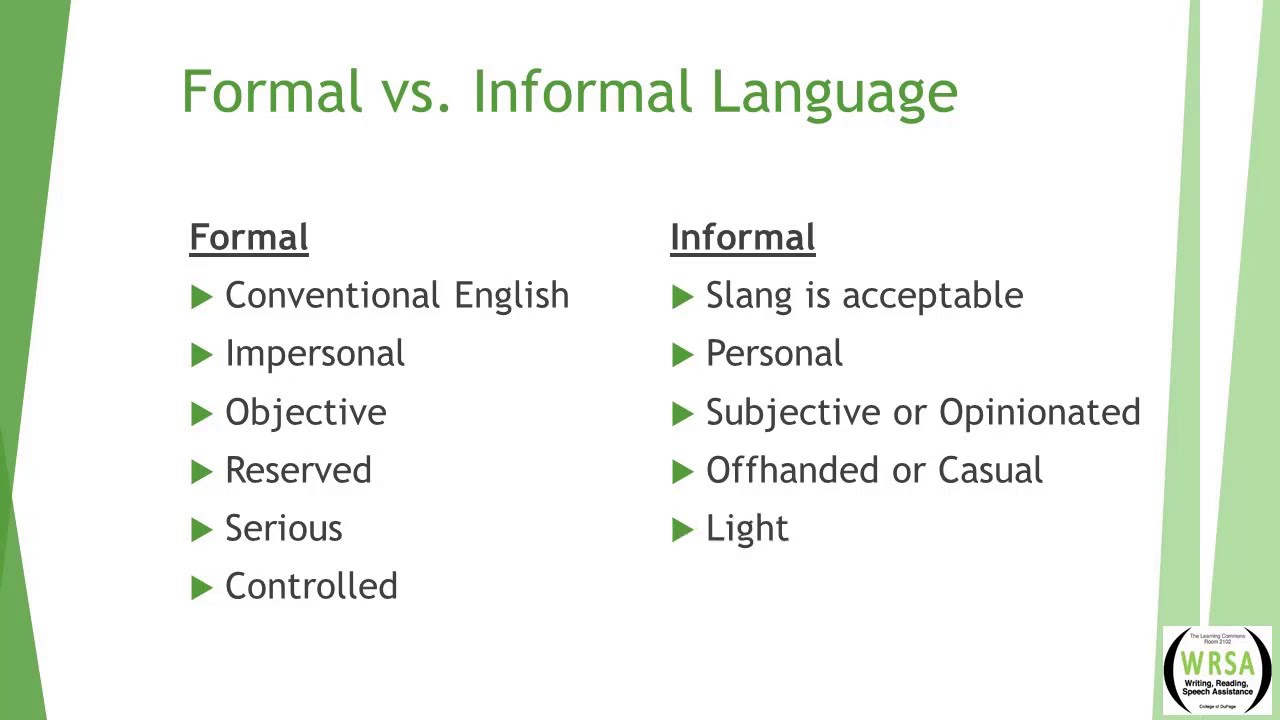
Formal languages are implemented using various techniques, primarily parsers and interpreters. Parsers analyze the structure of a formal language, verifying if the input conforms to the language’s grammar rules. Interpreters, on the other hand, execute the input directly, translating it into a series of actions or operations.
Implementing formal languages poses challenges due to their complexity and the need for efficient and accurate processing. These challenges include:
- Syntax Analysis:Verifying the input’s conformance to grammar rules can be computationally expensive, especially for complex languages.
- Semantic Analysis:Determining the meaning of the input beyond its syntactic structure can be challenging, requiring additional context and knowledge.
- Error Handling:Managing errors and providing meaningful feedback to users is crucial for user-friendly implementation.
- Performance Optimization:Ensuring efficient processing of large inputs or complex languages is essential for practical applications.
– Describe the criteria for evaluating the effectiveness of a formal language.
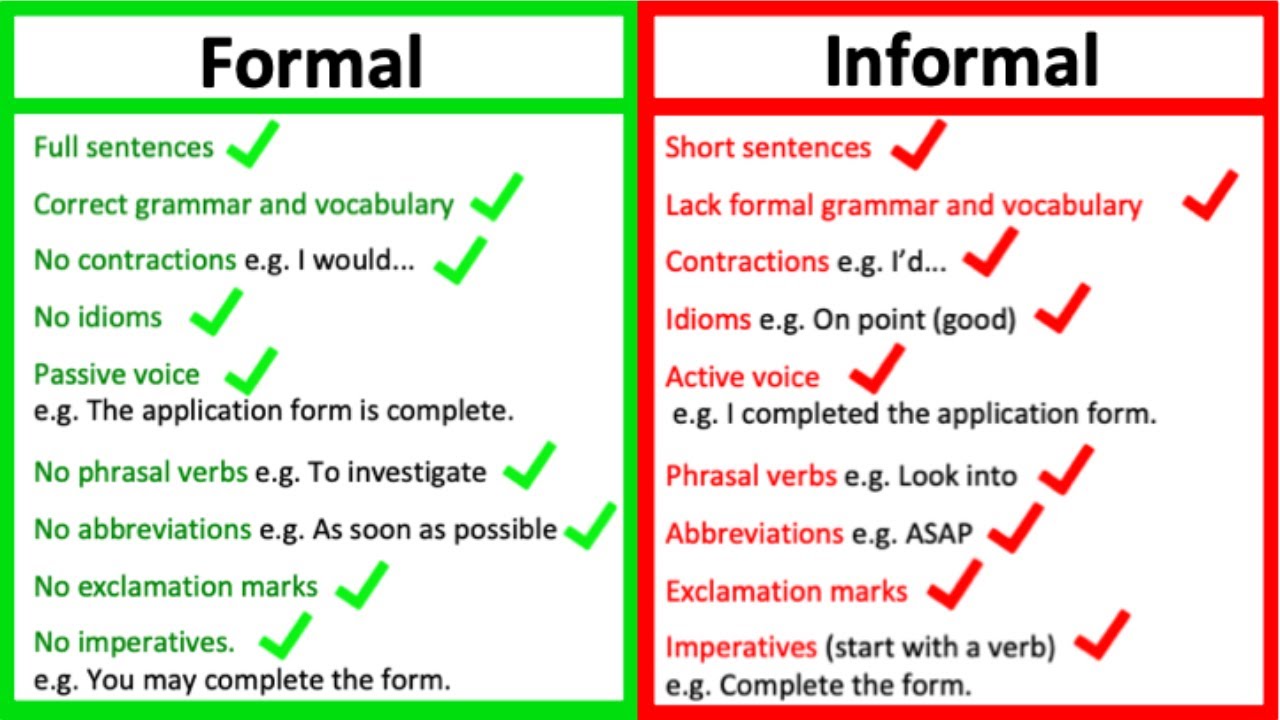
The effectiveness of a formal language can be evaluated based on several criteria, including expressiveness, efficiency, and usability.
Expressivenessmeasures the language’s ability to represent concepts and ideas accurately and concisely. A more expressive language can represent a wider range of concepts with fewer symbols or constructs.
Efficiencymeasures the language’s ability to be parsed and interpreted quickly and easily. An efficient language has a simple syntax and semantics, making it easier for computers to process.
Usabilitymeasures the language’s ease of use for humans. A usable language has a clear and consistent syntax, making it easy for humans to read, write, and understand.
Metrics for Evaluating Formal Languages
Several metrics can be used to assess the expressiveness, efficiency, and usability of a formal language:
- Expressiveness:
- Number of symbols or constructs
- Range of concepts that can be represented
- Conciseness of expressions
- Efficiency:
- Parsing time
- Interpretation time
- Memory usage
- Usability:
- Clarity of syntax
- Consistency of semantics
- Ease of reading and writing
Examples of Formal Languages and Their Evaluation Results
Here are some examples of formal languages and their evaluation results:
- Regular expressionsare a simple and expressive language for matching patterns in strings. They are efficient to parse and interpret but have limited expressiveness.
- Context-free grammarsare more expressive than regular expressions and can be used to represent a wider range of languages. They are more difficult to parse and interpret than regular expressions but still relatively efficient.
- Turing machinesare the most expressive formal language and can be used to represent any computable function. They are, however, very inefficient to parse and interpret.
Challenges and Limitations of Formal Language Evaluation
Evaluating the effectiveness of a formal language can be challenging due to the following factors:
- Subjectivity: The criteria for evaluating formal languages are often subjective, and different people may have different opinions about the effectiveness of a particular language.
- Complexity: Formal languages can be complex, and it can be difficult to measure their effectiveness accurately.
- Lack of benchmarks: There are no universally accepted benchmarks for evaluating formal languages, making it difficult to compare different languages.
Guidelines for Writing Clear and Concise Formal Language Specifications
When writing formal language specifications, it is important to follow these guidelines:
- Be clear and concise: Use clear and unambiguous language, and avoid jargon or technical terms that may not be familiar to your audience.
- Be complete: Provide all the information necessary for your audience to understand the language, including its syntax, semantics, and pragmatics.
- Be consistent: Use consistent terminology and notation throughout your specification.
- Use examples: Provide examples to illustrate how the language can be used.
- Get feedback: Ask others to review your specification and provide feedback.
Comparison of Formal Languages
Formal languages vary in their expressive power and suitability for different applications. Here’s a comparison of some common formal languages:
Regular Expressions
Regular expressions are simple and efficient for matching patterns in strings. They are commonly used in text processing, pattern matching, and data validation. However, they are limited in their expressive power and cannot describe more complex language structures.
Context-Free Grammars
Context-free grammars are more powerful than regular expressions and can describe a wider range of languages. They are used in compilers, parsers, and natural language processing. However, they can be complex and difficult to design and analyze.
Type Systems
Type systems are formal languages used to define the types of data in programming languages. They ensure type safety and help prevent errors. Type systems vary in their complexity and expressiveness, from simple structural types to more advanced dependent types.
Future Directions in Formal Language Research
Formal language theory and its applications are continuously evolving, with ongoing research and development efforts shaping the future of the field. Researchers are exploring advancements and emerging trends that promise to further enhance the capabilities and utility of formal languages.
One significant area of focus is the development of new formalisms and models for representing and reasoning about complex systems and phenomena. These include probabilistic formal languages, which incorporate elements of probability theory to handle uncertainty and randomness, and bio-inspired formal languages, which draw inspiration from biological systems to create more robust and adaptive language models.
Potential Advancements
- Enhanced Expressive Power:Developing formal languages with increased expressive power, enabling them to represent and describe more complex concepts and relationships.
- Improved Computational Efficiency:Optimizing formal languages and algorithms to enhance computational efficiency, enabling the analysis and processing of larger and more complex datasets.
- Broader Applicability:Expanding the applicability of formal languages to new domains, such as natural language processing, machine learning, and artificial intelligence.
Emerging Trends
- Quantum Formal Languages:Exploring the potential of quantum computing to develop formal languages that can exploit quantum parallelism and superposition for enhanced performance.
- Formal Verification and Validation:Utilizing formal languages to improve the correctness and reliability of software systems and hardware designs.
- Human-Centered Formal Languages:Designing formal languages that are more intuitive and accessible to non-experts, facilitating collaboration and communication between technical and non-technical stakeholders.
Create a table comparing the characteristics of formal languages to natural languages.

Formal languages and natural languages are two distinct types of languages with unique characteristics. Formal languages are designed to be precise and unambiguous, while natural languages are more flexible and expressive.
Syntax
Syntax refers to the rules that govern the structure of a language. Formal languages have a well-defined syntax that specifies how symbols can be combined to form valid expressions. Natural languages, on the other hand, have a more flexible syntax that allows for a wider range of expressions.
| Formal Language | Natural Language |
|---|---|
x + y = z | “The cat sat on the mat.” |
Semantics
Semantics refers to the meaning of a language. Formal languages have a well-defined semantics that specifies the meaning of each symbol and expression. Natural languages, on the other hand, have a more ambiguous semantics that can vary depending on the context.
| Formal Language | Natural Language |
|---|---|
x + y = z means that the sum of x and y is equal to z. | “The cat sat on the mat.” could mean that the cat is sitting on the mat, or that the cat has been sitting on the mat for a long time. |
Pragmatics
Pragmatics refers to the use of language in context. Formal languages do not have a pragmatics, as they are not used in real-world situations. Natural languages, on the other hand, have a rich pragmatics that allows speakers to communicate a wide range of meanings.
| Formal Language | Natural Language |
|---|---|
x + y = z does not have a pragmatics. | “The cat sat on the mat.” could be used to inform someone that the cat is sitting on the mat, or to ask someone to move the cat off the mat. |
Ambiguity
Ambiguity refers to the presence of multiple possible interpretations for a given expression. Formal languages are designed to be unambiguous, meaning that each expression has only one possible interpretation. Natural languages, on the other hand, are often ambiguous, meaning that a single expression can have multiple possible interpretations.
| Formal Language | Natural Language |
|---|---|
x + y = z is unambiguous. | “The cat sat on the mat.” is ambiguous. |
Expressiveness
Expressiveness refers to the ability of a language to express a wide range of meanings. Formal languages are less expressive than natural languages, as they are designed to be precise and unambiguous. Natural languages, on the other hand, are more expressive, as they allow for a wider range of meanings to be expressed.
| Formal Language | Natural Language |
|---|---|
x + y = z is not expressive. | “The cat sat on the mat.” is expressive. |
Summary
Formal languages and natural languages are two distinct types of languages with unique characteristics. Formal languages are designed to be precise and unambiguous, while natural languages are more flexible and expressive. These differences impact the way that these languages are used in different contexts.
Design a formal language for describing the structure of a website.: What Is The Formal Language
A formal language for describing the structure of a website can be designed using a context-free grammar. The grammar can include rules for defining the different elements of a website, such as the header, body, and footer. It can also include rules for defining the relationships between these elements.For example, the following grammar can be used to define the structure of a website:“` ::=
