Effective communication is the cornerstone of safe and quality healthcare. When a Deaf patient enters a medical facility, the communication barrier can lead to anxiety, misdiagnoses, and inadequate treatment. Integrating sign language for medicine into healthcare training is a powerful step toward medical equity and patient safety.
American Sign Language (ASL) is not just a tool for basic translation; it is a rich, complex language that fosters trust between patients and providers. By understanding the basics of medical ASL and the cultural nuances of the Deaf community, healthcare workers can dramatically improve patient outcomes. This guide explores how visual communication transforms the clinical experience for Deaf individuals.
Introduction to ASL & Deaf Culture
American Sign Language is a complete, natural language that serves as the primary means of communication for hundreds of thousands of Deaf individuals in North America. It is vital to recognize that the Deaf community does not view deafness as a medical deficit to be cured, but rather as a unique cultural identity. This cultural perspective, often designated with a capital “D” as in “Deaf Culture,” values shared history, art, and values.
In a clinical setting, understanding this cultural perspective is just as important as knowing how to sign. A Deaf patient may approach healthcare with caution due to past experiences of systemic exclusion and communication neglect. Utilizing sign language for medicine shows a respect for the patient’s identity, immediate comfort, and autonomy.
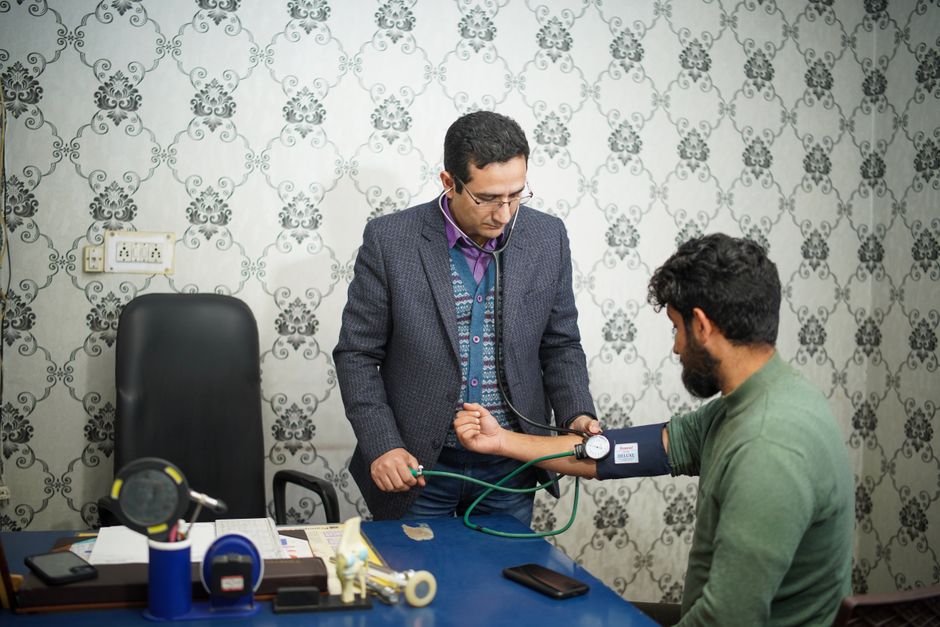
When healthcare providers take the time to learn visual communication, they break down historical barriers of isolation. Even a basic knowledge of ASL signals to the patient that their language is valued and respected. This small effort can significantly reduce the patient’s blood pressure and anxiety during a stressful medical visit.
Furthermore, medical professionals must realize that written English is not always an effective substitute for ASL. For many Deaf individuals, ASL is their first language, and English is a second language with entirely different structural rules. Therefore, relying on written notes can lead to dangerous misunderstandings regarding medication dosages and treatment plans.
Key Differences: ASL vs. Signed English
A common misconception among hearing individuals is that sign language is simply English words translated into hand gestures. In reality, that sign language we call ASL has its own distinct grammar, syntax, and organizational structure. It is completely independent of English and is classified as a foreign language in academic institutions.
Signed Exact English (SEE), on the other hand, is a system of manual communication that mimics English grammar word-for-word. While SEE uses English word order and includes signs for prefixes and suffixes, ASL uses a topic-comment structure and relies heavily on spatial relationships. For instance, ASL does not use articles like “the” or “a,” nor does it use the verb “to be” in the same way English does.
When implementing sign language for medicine, using ASL rather than Signed English is preferred by most Deaf patients. ASL allows for a more natural, fluid, and conceptually accurate exchange of medical information. Trying to force English word order on a native ASL signer can make the conversation confusing and tedious.
Understanding this distinction helps medical professionals appreciate why professional ASL interpreters are necessary for complex discussions. Translating medical jargon requires conceptual accuracy, not literal word-for-word matching. A certified interpreter ensures that the true meaning of the medical advice is communicated clearly in ASL.
Essential Beginner Signs
While learning a few signs does not make a clinician fluent, it can help establish an initial connection before a certified interpreter arrives. Knowing how to greet a patient and ask basic questions can make a world of difference in an emergency. Below are some fundamental signs and concepts that serve as a starting point for medical staff.
Greetings & Common Phrases
To begin a medical interaction, it is helpful to greet the patient warmly and introduce yourself clearly. When establishing rapport, learning how to sign my name is in sign language is a wonderful icebreaker. To do this, point to your chest for “me,” press the index and middle fingers of both hands together to form ‘H’ shapes, and cross them twice for “name,” then fingerspell your name.
If you need to ask a patient what they are experiencing or what they need to do in sign language, clarity is key. The sign for “do” is made by placing both hands in front of you with palms facing up, pinching your thumbs and index fingers together repeatedly while furrowing your brows. This indicates an open-ended question about their current state or actions.
To assess a patient’s fatigue or recovery, it is helpful to know the sign for sleep in sign language. You can sign “sleep” by holding your dominant hand over your forehead with fingers spread, then bringing your hand down past your chin while closing your fingers to touch your thumb, letting your eyelids droop slightly.
When taking a family history, a doctor might need to ask if relatives are living or how they passed, requiring knowledge of how to sign die in sign language. This sign is performed by placing both flat hands in front of you, one palm facing up and the other palm facing down, and then flipping them over simultaneously so their positions reverse.
Other essential medical signs include “doctor” and “hurt.” To sign “doctor,” tap the fingertips of your dominant bent hand twice on the inside of your non-dominant wrist, where you would check a pulse. For “hurt” or “pain,” bring the index fingers of both hands together, pointing at each other, and twist them in opposite directions near the location of the pain.
Fingerspelling & Numbers
Fingerspelling is the practice of spelling out words letter-by-letter using the ASL manual alphabet. In medical settings, fingerspelling is frequently used for proper nouns, specific medication names, and rare medical conditions that do not have a designated sign. It is crucial to keep your hand steady and close to your shoulder while spelling to ensure readability.

Numbers are equally critical when discussing medical dosages, pain levels, and appointment times. Signing numbers 1 through 5 requires the palm to face inward toward your chest, while numbers 6 through 10 face outward toward the patient. Miscommunicating a number can lead to severe dosage errors, making this a vital skill for medical professionals.
When practicing numbers, ensure your movements are distinct and deliberate. If you are asking a patient to rate their pain on a scale of 1 to 10, explain the scale clearly using visual gestures. This ensures the patient understands the parameters of the question before they sign their response.
Importance of Non-Manual Markers
In ASL, facial expressions, head tilts, and body movements are not just emotional decorations; they are grammatical features called Non-Manual Markers (NMMs). NMMs function as the tone of voice in spoken language. Without them, a signed sentence can lose its meaning, sound robotic, or even convey the opposite of what is intended.
For example, when asking a question in ASL, your eyebrows must move in specific ways. For yes/no questions, you should raise your eyebrows and tilt your head forward slightly. For open-ended “wh-” questions (such as who, what, where, why, or how), you must furrow your eyebrows to indicate a query.
When using sign language for medicine, NMMs are critical for assessing the severity of a patient’s symptoms. A patient signing “pain” with a neutral facial expression indicates mild discomfort. However, signing “pain” with a grimace, squinted eyes, and a sharp body twist communicates intense, acute agony that requires immediate intervention.
Healthcare providers must also be mindful of their own facial expressions. If you look panicked or overly stone-faced while signing, the patient may misinterpret your demeanor as bad news or a lack of empathy. Maintaining a calm, open, and clear facial expression helps build a therapeutic alliance and reassures the patient.
Deaf Community Etiquette & Myths
Interacting with the Deaf community requires an understanding of cultural etiquette to avoid unintended offense. First and foremost, when communicating through an ASL interpreter, always look and speak directly to the Deaf patient. Avoid saying things like “tell him to sit down” or “ask her where it hurts”; instead, say “please sit down” or “where does it hurt?”
Maintaining eye contact is a sign of respect and attention in Deaf culture. Looking away while a Deaf person is signing is equivalent to plugging your ears while someone is speaking to you. If you must look down at a medical chart, explain that you are doing so before breaking eye contact.

There are several damaging myths surrounding Deaf communication that persist in medical environments today. One major myth is that all Deaf people can read lips. In reality, lipreading is highly inaccurate, as only about 30 to 40 percent of English speech sounds are visible on the lips, making it an unreliable method for discussing complex medical diagnoses.
Another myth is that hearing aids or cochlear implants completely restore normal hearing. These devices assist with sound perception but do not make a person “hearing.” Understanding these realities helps healthcare systems realize the absolute necessity of professional interpreters and visual accessibility tools in every clinic.
Frequently Asked Questions
Is ASL universal?
No, ASL is not universal. Different countries and regions have their own distinct sign languages, such as British Sign Language (BSL), French Sign Language (LSF), and Mexican Sign Language (LSM). These languages have completely different vocabularies and grammatical structures from ASL.
Can I use a family member to interpret medical information?
It is highly discouraged and often illegal under the Americans with Disabilities Act (ADA) to rely on family members to interpret. Family members may lack training in medical terminology, and their emotional involvement can lead to filtered or inaccurate information being shared.
What should I do if a certified interpreter is not immediately available?
If an in-person interpreter is unavailable, medical facilities should utilize Video Remote Interpreting (VRI) services. VRI connects the patient and doctor to a certified interpreter via a video tablet or screen, ensuring immediate communication access.
How does the ADA protect Deaf patients in healthcare?
The Americans with Disabilities Act (ADA) requires all healthcare providers to provide equal access to communication. This means hospitals and clinics must provide qualified sign language interpreters, auxiliary aids, or other accommodation services free of charge to the patient.
Conclusion
Mastering the basics of sign language for medicine is a profound way to ensure that healthcare is accessible, safe, and respectful for everyone. By recognizing ASL as a distinct language and embracing Deaf cultural norms, medical professionals can prevent dangerous misunderstandings. While basic signs help build immediate rapport, they highlight the broader need for systemic accessibility and professional interpretation.
Ultimately, clinical empathy extends beyond spoken words. By committing to visual communication and cultural competence, the healthcare industry can move closer to a future where every patient is heard, understood, and treated with dignity. Let us continue to advocate for linguistic accessibility in every hospital, clinic, and emergency room across the nation.
This written guide is for educational purposes. ASL is a visual language; readers are strongly encouraged to supplement this guide with video resources and classes taught by Deaf instructors.
