What is universal language – Universal language, a concept that has fascinated linguists and language enthusiasts for centuries, holds the promise of bridging communication barriers and fostering global understanding. This comprehensive overview delves into the definition, creation, implementation, and applications of universal languages, exploring their potential benefits and challenges.
From the earliest attempts at creating a universal language to the development of modern constructed languages like Esperanto and Lojban, this exploration traces the evolution of this fascinating field. We examine the linguistic, cultural, and political factors that have shaped the development of universal languages, and consider the potential role of artificial intelligence in their future.
Definition of Universal Language
A universal language is a language that is understood by all people, regardless of their native language. It is a hypothetical language that has been proposed as a way to facilitate communication between people from different cultures.There are many different proposals for universal languages, but no single proposal has been universally accepted.
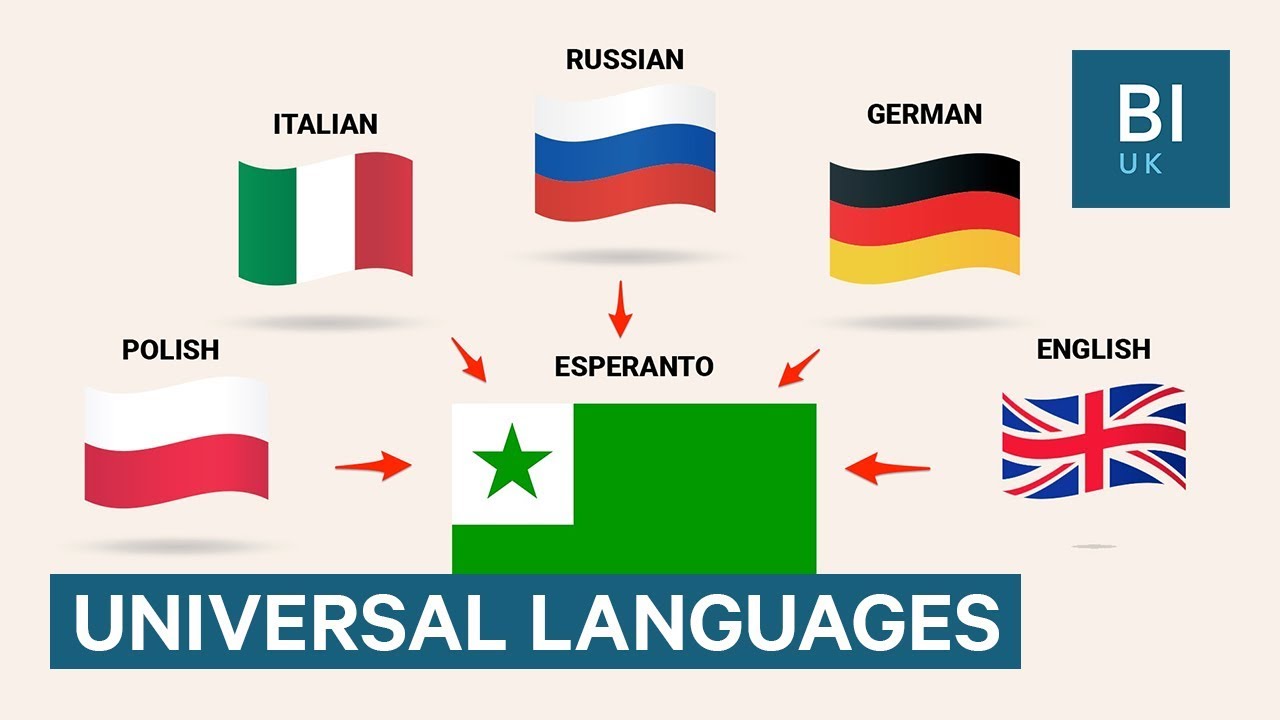
Some of the most well-known proposals include Esperanto, Interlingua, and Lojban.There are many advantages to using a universal language. First, it would make it easier for people from different cultures to communicate with each other. Second, it would help to promote understanding between different cultures.
Third, it would make it easier for people to travel and do business in other countries.However, there are also some disadvantages to using a universal language. First, it would take a long time and a lot of effort to create a universal language that is accepted by everyone.
Second, it would be difficult to get people to learn a new language, especially if they are already fluent in their own language. Third, a universal language could potentially lead to the loss of cultural diversity.Overall, the advantages of using a universal language outweigh the disadvantages.
A universal language would make it easier for people from different cultures to communicate with each other, promote understanding between different cultures, and make it easier for people to travel and do business in other countries.
History of Universal Languages
The concept of a universal language has existed for centuries, with numerous attempts to create one. These attempts were primarily motivated by the desire for easier communication and understanding among people of different linguistic backgrounds.
The earliest known attempt at a universal language was the Lingua Franca, a pidgin language that emerged in the Mediterranean region during the Middle Ages. It was a simplified form of Italian that allowed traders and sailors from different countries to communicate.
17th Century
In the 17th century, several philosophers and scholars proposed universal languages, including René Descartes and John Wilkins. Descartes’ language, called “universal mathematics,” was based on mathematical symbols and aimed to express all concepts logically.
18th Century
The 18th century saw the emergence of more elaborate universal languages, such as Esperanto, created by L.L. Zamenhof in 1887. Esperanto was designed to be easy to learn and pronounce, with a regular grammar and a vocabulary drawn from various European languages.
19th Century
In the 19th century, the development of universal languages continued with the creation of Volapük, Ido, and Interlingua. Volapük was created by Johann Martin Schleyer in 1879 and was initially popular but declined in use over time.
20th Century
The 20th century witnessed the creation of several influential universal languages, including Basic English, Interglossa, and Lojban. Basic English was developed by C.K. Ogden in 1930 and was designed to be a simplified form of English with a limited vocabulary.
21st Century
In the 21st century, the development of universal languages has continued with the creation of new languages, such as Toki Pona and Láadan. Toki Pona is a minimalist language with a vocabulary of only 120 words, while Láadan is a gender-neutral language designed to express female experiences.
Types of Universal Languages

Universal languages are those designed to facilitate communication among people who speak different native languages. They can be broadly categorized into two types: constructed and natural.
Constructed Universal Languages
Constructed universal languages are artificially created with a specific set of rules and grammar. They are not based on any existing natural language, and their vocabulary and grammar are typically designed to be simple and easy to learn.
- Advantages:Constructed languages can be designed to be highly regular and logical, making them easier to learn and use than natural languages. They can also be tailored to specific purposes, such as scientific or technical communication.
- Disadvantages:Constructed languages lack the cultural and historical context of natural languages, which can make them feel artificial or sterile. They also require learners to invest time and effort in mastering a new language.
Examples of constructed universal languages include Esperanto, Interlingua, and Lojban.
Natural Universal Languages
Natural universal languages are existing natural languages that have been adopted for international communication. They are typically widely spoken and have a rich cultural and historical context.
- Advantages:Natural languages have the advantage of being already familiar to many people, making them easier to adopt and use. They also carry the cultural and historical context of the communities that speak them.
- Disadvantages:Natural languages can be complex and irregular, making them more difficult to learn and use than constructed languages. They can also be influenced by cultural and historical factors, which can lead to misunderstandings or misinterpretations.
Examples of natural universal languages include English, Spanish, and Mandarin Chinese.
Feasibility of a Truly Universal Language
The feasibility of creating a truly universal language that is both easy to learn and widely accepted is a matter of debate. Some argue that a constructed language could be designed to meet these criteria, while others believe that a natural language is more likely to be adopted and used by a global community.
Ultimately, the success of any universal language depends on its ability to meet the needs of the people who use it. If a language is easy to learn, widely accepted, and capable of expressing a wide range of ideas and emotions, it is more likely to be adopted and used as a truly universal language.
Esperanto as a Universal Language

Esperanto is a constructed international auxiliary language created by L.L. Zamenhof in 1887. It was designed to be easy to learn and use, and to serve as a neutral means of communication between people of different linguistic backgrounds.
Esperanto has gained popularity over the years as a universal language due to its simplicity, regularity, and international recognition. It is estimated that there are currently around two million Esperanto speakers worldwide.
History and Development of Esperanto
L.L. Zamenhof, a Polish ophthalmologist, developed Esperanto in the late 19th century. He was motivated by the desire to create a language that would facilitate international communication and promote peace and understanding among people of different cultures.
Zamenhof published the first Esperanto textbook, Unua Libro, in 1887. The language quickly gained followers, and Esperanto clubs and organizations were established in many countries.
A universal language is a language that is understood by people from all over the world. It is a common language that can be used for communication between people who do not speak the same native language. One example of a universal language is Esperanto.
Esperanto is a constructed language that was created in the late 19th century by L. L. Zamenhof. It is designed to be easy to learn and to be used as a neutral language for international communication. What language do the people of Sweden speak?
The official language of Sweden is Swedish. Swedish is a Germanic language that is closely related to Norwegian and Danish. It is spoken by about 9 million people in Sweden and is also spoken in Finland, Estonia, and parts of Russia.
Reasons for its Popularity as a Universal Language
There are several reasons for the popularity of Esperanto as a universal language:
- Simplicity:Esperanto has a simple and regular grammar, with no irregular verbs or complex declensions.
- Ease of Learning:Esperanto is one of the easiest languages to learn, with a vocabulary of around 2,000 root words.
- Neutrality:Esperanto is not associated with any particular country or culture, making it a neutral choice for international communication.
- International Recognition:Esperanto is recognized by several international organizations, including the United Nations and UNESCO.
Comparison of Esperanto to Other Constructed Languages
Esperanto is one of several constructed languages that have been developed over the years. Other constructed languages include Interlingua, Ido, and Novial.
The following table compares Esperanto to some other constructed languages:
| Language | Year of Creation | Number of Speakers |
|---|---|---|
| Esperanto | 1887 | 2 million |
| Interlingua | 1951 | 10,000 |
| Ido | 1907 | 500 |
| Novial | 1928 | 200 |
Challenges and Limitations of Esperanto
Despite its popularity, Esperanto faces some challenges and limitations as a universal language:
- Lack of Native Speakers:Esperanto has no native speakers, which can make it difficult to achieve widespread adoption.
- Limited Use:Esperanto is not widely used in everyday communication, which can make it difficult for learners to find opportunities to practice the language.
- Competition from English:English is the dominant global language, and it is often seen as a more practical choice for international communication.
Arguments for and Against the Adoption of Esperanto as a Global Language
There are arguments both for and against the adoption of Esperanto as a global language.
Arguments for Esperanto:
- Esperanto is a neutral and inclusive language that can promote international understanding and cooperation.
- Esperanto is easy to learn, making it accessible to people of all backgrounds.
- The adoption of Esperanto as a global language could reduce language barriers and facilitate communication between people from different cultures.
Arguments against Esperanto:
- Esperanto is an artificial language, and it may not be as expressive or nuanced as natural languages.
- Esperanto lacks native speakers, which can make it difficult to achieve widespread adoption.
- English is already the dominant global language, and it is unlikely that Esperanto will be able to replace it.
Interlingua as a Universal Language

Interlingua is a constructed international auxiliary language designed to be easy to learn and use for people of all linguistic backgrounds. It was created by the International Auxiliary Language Association (IALA) in 1951.
Interlingua is based on the common vocabulary and grammar of the Romance languages, particularly Italian, Spanish, Portuguese, French, and Romanian. It also incorporates elements from English, German, and Russian.
Features of Interlingua
- It is a regular language, with consistent grammar and pronunciation.
- It has a large vocabulary, with words that are easily recognizable to speakers of many languages.
- It is easy to learn, with a grammar that is similar to that of many European languages.
- It is neutral, not favoring any particular national or cultural group.
Uses of Interlingua
Interlingua is used for a variety of purposes, including:
- Communication between people of different linguistic backgrounds
- Education
- Science and technology
- Literature
Advantages of Interlingua
- Interlingua is easier to learn than other universal languages, such as Esperanto.
- It has a larger vocabulary than Esperanto.
- It is more neutral than Esperanto, not favoring any particular national or cultural group.
Grammar and Vocabulary of Interlingua
The grammar of Interlingua is based on the grammar of the Romance languages. It has a subject-verb-object word order, and its verbs are conjugated for tense, mood, and voice.
The vocabulary of Interlingua is based on the common vocabulary of the Romance languages. It also incorporates words from English, German, and Russian.
Challenges and Limitations of Using Interlingua
Interlingua has some challenges and limitations, including:
- It is not as widely known as Esperanto.
- It can be difficult to find native speakers of Interlingua.
- It is not as well-supported as Esperanto, in terms of resources and materials.
Passage in Interlingua
Here is a short passage in Interlingua:
Omne homines nasce libere e equal in dignitate e in derectos. Illes es dotate de ration e de conscientia e debe ager le unes verso le alteres in un spirito de fraternitate.
This passage translates to:
All human beings are born free and equal in dignity and rights. They are endowed with reason and conscience and should act towards one another in a spirit of brotherhood.
Lojban as a Universal Language
Lojban is a constructed language designed for clear and precise communication, particularly in scientific and technical domains. It is based on a rigorous logical framework that emphasizes clarity and precision.
The structure of Lojban is highly regular and systematic. The language has a small number of basic words that can be combined to form complex concepts. The grammar is based on a set of logical rules that ensure that sentences are always unambiguous.
How Lojban Facilitates Clear and Precise Communication
Lojban’s logical structure makes it an ideal language for expressing complex ideas in a clear and concise way. The language’s unambiguous grammar and precise vocabulary eliminate the possibility of misinterpretation.
For example, the following Lojban sentence expresses the concept of “the cat is on the mat”:
.i lo ka’e du li mat.
This sentence can be translated into English as “the cat is on the mat.” However, the Lojban sentence is more precise than the English translation. The Lojban sentence specifies that the cat is on the mat, not under the mat or next to the mat.
The English translation does not specify the exact location of the cat.
Challenges and Limitations of Using Lojban as a Universal Language
Despite its advantages, Lojban has some challenges and limitations as a universal language.
- Difficulty of learning:Lojban is a complex language to learn, due to its rigorous logical structure and precise vocabulary.
- Lack of widespread use:Lojban is not widely spoken as a native language, which can make it difficult to find native speakers to practice with.
- Cultural bias:Lojban is based on Western logic and grammar, which may not be familiar to speakers of other languages.
Examples of How Lojban Can Be Used to Express Complex Ideas
Despite its challenges, Lojban can be used to express complex ideas in a clear and concise way. For example, the following Lojban sentence expresses the concept of “the cat is on the mat, and the dog is under the table”:
.i lo ka’e du li mat, li ko’a ka’e du li tavla.
This sentence can be translated into English as “the cat is on the mat, and the dog is under the table.” However, the Lojban sentence is more precise than the English translation. The Lojban sentence specifies that the cat is on the mat and the dog is under the table.
The English translation does not specify the exact location of the cat and the dog.
Comparison and Contrast of Lojban with Other Constructed Languages
Lojban is one of several constructed languages that have been designed for universal communication. Other constructed languages include Esperanto and Interlingua.
Esperanto is a constructed language that was created in the late 19th century. Esperanto is relatively easy to learn and has a large community of speakers. However, Esperanto is not as precise as Lojban, and it can be difficult to express complex ideas in Esperanto.
Interlingua is a constructed language that was created in the early 20th century. Interlingua is based on the vocabulary of Romance languages, and it is relatively easy to learn for speakers of Romance languages. However, Interlingua is not as precise as Lojban, and it can be difficult to express complex ideas in Interlingua.
Toki Pona as a Universal Language

Toki Pona is a minimalist language created by Sonja Lang in 2001. It is designed to be easy to learn and use as a universal language for communication between people of different linguistic backgrounds.
The minimalist nature of Toki Pona promotes simplicity and ease of learning. The language has a small vocabulary of around 120 words, and its grammar is very simple. This makes it possible for learners to quickly acquire a basic understanding of the language and to begin using it for communication.
Vocabulary
Toki Pona’s vocabulary is designed to be as concise as possible. Each word in the language has a specific meaning, and there are no synonyms. This helps to reduce confusion and makes it easier for learners to remember the meaning of words.
Grammar
Toki Pona’s grammar is also very simple. The language has no verb tenses, no articles, and no plurals. This makes it easy for learners to understand how sentences are structured and to produce grammatically correct sentences.
Applications of Universal Languages: What Is Universal Language
Universal languages offer practical applications in various fields, facilitating communication, breaking language barriers, and fostering collaboration. They have been successfully implemented in diverse settings, demonstrating their utility and impact.
International Communication
Universal languages enable seamless communication between individuals from different linguistic backgrounds. In international organizations, such as the United Nations, Esperanto has been used for official communication, allowing delegates to engage in discussions and negotiations effectively.
Education
Universal languages can enhance language learning and promote cross-cultural understanding. Interlingua, with its simplified grammar and vocabulary, has been adopted in schools as a bridge language, helping students grasp the fundamentals of multiple languages.
Science and Technology
Universal languages facilitate the exchange of scientific knowledge and technological advancements across borders. Lojban, with its rigorous logical structure, has been employed in scientific research, enabling researchers to communicate complex concepts with precision.
Travel and Tourism
Universal languages can ease communication during travel and tourism. Toki Pona, with its limited vocabulary and simple grammar, has gained popularity among travelers seeking a practical way to connect with locals.
Challenges in Creating a Universal Language
Creating a truly universal language faces several challenges, ranging from linguistic complexities to cultural and political hurdles. Understanding these challenges and exploring potential solutions is crucial for the successful development and adoption of a universal language.
Linguistic Challenges, What is universal language
A major linguistic challenge lies in the diversity of natural languages, each with its unique grammar, vocabulary, and pronunciation. Developing a universal language that can accommodate all these variations while remaining comprehensible and learnable is a daunting task. Furthermore, the semantic nuances and cultural connotations associated with words and phrases pose a significant challenge in creating a language that accurately conveys meaning across different cultures.
Cultural Challenges
Cultural differences can also hinder the creation and acceptance of a universal language. Languages are deeply intertwined with cultural identities and values, and imposing a new language can be perceived as a threat to cultural heritage. Cultural biases and preferences can influence the design and reception of a universal language, making it difficult to achieve true neutrality and global acceptance.
Political Challenges
Political factors can also complicate the establishment of a universal language. National and international politics often play a role in language policies, and the adoption of a universal language may be seen as a form of linguistic imperialism or cultural hegemony.
Governments and organizations may resist the implementation of a universal language due to concerns about power dynamics and the potential loss of linguistic diversity.
– Speculate on the future of universal languages.
The future of universal languages holds both promise and uncertainty. On the one hand, the increasing globalization and interconnectedness of the world suggest a growing need for a common language that can facilitate communication across borders and cultures. On the other hand, the diversity of languages and cultures around the world presents a significant challenge to the creation and adoption of a single universal language.Despite these challenges, there are several emerging trends and potential developments that could shape the future of universal languages.
One trend is the rise of technology, which is making it easier to learn and communicate in different languages. This could lead to a greater acceptance and use of universal languages, as people become more comfortable with the idea of using a language other than their native tongue.Another trend is the growing awareness of the importance of cultural diversity.
This could lead to a greater emphasis on preserving and promoting indigenous languages, rather than replacing them with a single universal language. As a result, the future of universal languages may lie not in the creation of a single, dominant language, but rather in the development of a network of languages that are used for different purposes and in different contexts.
Potential Benefits and Challenges
The adoption of a universal language could have several potential benefits. It could facilitate communication between people from different linguistic backgrounds, promote understanding and cooperation, and reduce the barriers to international trade and travel. However, there are also some potential challenges associated with the adoption of a universal language.
These include the cost and difficulty of learning a new language, the potential loss of cultural diversity, and the risk of linguistic imperialism.
Role of Technology
Technology could play a significant role in facilitating the development and use of universal languages. Machine translation and other language-learning tools could make it easier for people to learn and communicate in different languages. Social media and other online platforms could provide opportunities for people from different linguistic backgrounds to interact and communicate with each other.
Ethical Implications
There are also some ethical implications to consider when promoting or imposing a universal language. It is important to respect the linguistic diversity of the world and to avoid imposing a single language on others. It is also important to ensure that the adoption of a universal language does not lead to the loss of indigenous languages and cultures.
Benefits of a Universal Language
Having a universal language for global communication offers numerous advantages. It can foster understanding, enhance cooperation, and break down language barriers that hinder communication between people from different cultures and backgrounds.
A universal language can promote understanding by providing a common platform for people to communicate and exchange ideas. When individuals can communicate effectively, they are more likely to develop empathy and compassion for one another, leading to a greater sense of global community.
Enhanced Cooperation
A universal language can facilitate cooperation by enabling people from different countries to work together more effectively. In business, for example, a common language can streamline communication, reduce misunderstandings, and enhance productivity. Similarly, in scientific research, a universal language can foster collaboration among researchers from different linguistic backgrounds, leading to advancements in knowledge and innovation.
Breaking Down Language Barriers
A universal language can break down language barriers that often hinder communication and understanding between people from different cultures. By eliminating the need for translation, a universal language can make it easier for people to connect with each other, share their experiences, and learn from one another.
This can lead to a more inclusive and interconnected global society.
Obstacles to Universal Language Adoption
Despite the potential benefits of a universal language, widespread adoption faces several obstacles.
Universal language is a language that is understood by all people, regardless of their native language. This would make communication much easier and more efficient. However, there is no one universal language that is spoken by everyone in the world.
In fact, there are over 7,000 different languages spoken around the globe. Switzerland , for example, has four official languages: German, French, Italian, and Romansh. This means that people who live in Switzerland must learn at least one of these languages in order to communicate with each other.
The lack of a universal language can make it difficult for people from different cultures to understand each other.
One significant barrier is the resistance to change. People are often reluctant to learn a new language, especially if they already speak a widely used one. This resistance can be particularly strong among older adults and those who are not accustomed to learning new languages.
Strategies to Overcome Obstacles
To overcome these obstacles, several strategies can be employed:
- Education and awareness:Raising awareness about the benefits of a universal language can help to reduce resistance to change. Educational campaigns can be conducted through schools, universities, and the media to inform people about the advantages of a common language.
- Government support:Governments can play a significant role in promoting the adoption of a universal language. They can make it a requirement for certain professions, such as diplomats and international businesspeople. Additionally, governments can provide funding for language learning programs and resources.
- Technological advancements:Technological advancements can make it easier to learn and use a universal language. For example, language learning apps and online translation tools can help people to overcome language barriers.
Explain the benefits of using universal languages in education.
Universal languages offer several advantages in the educational sphere:
- Enhanced Communication:A universal language facilitates seamless communication between students and educators from diverse linguistic backgrounds, fostering a more inclusive learning environment.
- Access to Global Knowledge:It unlocks access to a vast pool of educational resources, research materials, and scientific advancements published in various languages.
- Cross-Cultural Understanding:By learning a universal language, students gain exposure to different cultures, perspectives, and ways of thinking, promoting empathy and global citizenship.
- Reduced Language Barriers:Eliminating language barriers enables students to focus on acquiring knowledge and skills without the hindrance of language comprehension issues.
- Increased Educational Opportunities:Universal languages open up educational opportunities for students in regions where their native language may not be widely spoken, expanding their access to quality education.
Universal Language in International Communication
Universal languages play a crucial role in international diplomacy and business, enabling effective communication and understanding across diverse linguistic barriers.
In diplomatic settings, a shared universal language allows diplomats from different nations to engage in meaningful discussions, negotiate treaties, and resolve conflicts. For example, the United Nations employs English, French, Spanish, Arabic, Chinese, and Russian as official languages to facilitate communication among its member states.
Successful Uses in Business
- Multinational corporations often adopt universal languages as their lingua franca, enabling seamless communication and collaboration among employees from various cultural and linguistic backgrounds.
- In international trade, universal languages facilitate the exchange of goods and services, allowing businesses to expand their reach and establish partnerships across borders.
Essential FAQs
What are the advantages of using a universal language?
Universal languages offer numerous advantages, including increased communication efficiency, reduced language barriers, enhanced cultural exchange, and improved access to information and education.
What are the challenges in creating a universal language?
Creating a universal language is a complex task that involves addressing linguistic, cultural, and political challenges. These include the need for a language that is easy to learn and use, acceptable to different cultures, and capable of expressing a wide range of ideas and concepts.
