How to introduce yourself in spanish language – Introducing oneself in Spanish is a crucial aspect of communication, shaping first impressions and fostering connections. This comprehensive guide delves into the nuances of Spanish introductions, providing insights into cultural etiquette, grammar, pronunciation, and common phrases. Whether navigating formal or informal settings, this guide empowers learners to make a confident and authentic introduction in Spanish.
The intricacies of Spanish grammar, including verb conjugations and sentence structure, are explored, equipping learners with the tools to construct grammatically correct introductions. Additionally, pronunciation tips and common Spanish names with their pronunciations are provided, ensuring accurate and respectful communication.
Introduction to Spanish Introductions
Introducing oneself in Spanish is an important part of social interactions. It allows you to make a good first impression and establish a connection with others.
In Spanish-speaking countries, greetings and introductions are typically more formal than in English-speaking countries. It is common to use formal titles, such as “Señor” (Mr.) or “Señora” (Mrs.), when addressing someone. When introducing yourself, it is also customary to state your nationality and profession.
Differences between Formal and Informal Greetings and Introductions
There are two main types of greetings and introductions in Spanish: formal and informal. Formal greetings are used when meeting someone for the first time or in a professional setting. Informal greetings are used when meeting friends or family members.
Some common formal greetings include:
- “Hola” (Hello)
- “Buenos días” (Good morning)
- “Buenas tardes” (Good afternoon)
- “Buenas noches” (Good evening)
Some common informal greetings include:
- “Hola, ¿qué tal?” (Hello, how are you?)
- “¿Cómo estás?” (How are you?)
- “¿Qué pasa?” (What’s up?)
How to Introduce Yourself in Spanish
To introduce yourself in Spanish, you can use the following phrase:
“Me llamo [your name]. Soy de [your nationality]. Soy [your profession].”
For example:
“Me llamo María. Soy de España. Soy profesora.”
This means: “My name is Maria. I am from Spain. I am a teacher.”
Tips for Making a Good First Impression
Here are some tips for making a good first impression when introducing yourself in Spanish:
- Be polite and respectful.
- Make eye contact.
- Speak clearly and slowly.
- Use appropriate body language.
- Be yourself.
Formal Introductions
In formal settings, it is important to introduce yourself in a polite and respectful manner. When meeting someone for the first time in a professional or academic context, it is customary to use formal introductions.
There are several phrases and vocabulary words that are commonly used in formal introductions in Spanish. These include:
- Mucho gusto:(Nice to meet you)
- Encantado/a de conocerle:(Pleased to meet you)
- Me llamo…:(My name is…)
- Soy…:(I am…)
- De profesión soy…:(I am a… by profession)
When introducing yourself formally, it is important to state your full name and your profession or title. You should also make eye contact and smile. It is also considered polite to shake hands.
Examples of Formal Introductions
Here are some examples of formal introductions in different contexts:
- At a business meeting:“Mucho gusto, me llamo Juan Pérez. Soy el director general de Pérez y Asociados.” (Nice to meet you, my name is Juan Pérez. I am the general manager of Pérez y Asociados.)
- At a conference:“Encantado/a de conocerle, me llamo María González.
Soy profesora de la Universidad de Salamanca.” (Pleased to meet you, my name is María González. I am a professor at the University of Salamanca.)
- At a social event:“Hola, me llamo Pedro. Soy médico.” (Hello, my name is Pedro. I am a doctor.)
By following these tips, you can make a good impression when introducing yourself formally in Spanish.
Name Pronunciation and Spelling: How To Introduce Yourself In Spanish Language
In Spanish, it is crucial to pronounce names correctly as they play a significant role in communication and cultural etiquette. Here are some tips for pronouncing Spanish names accurately:
Tips for Pronouncing Spanish Names
- Stress the correct syllable:Spanish names often have a stressed syllable, which is typically the second-to-last syllable. For example, in the name “María,” the stress falls on the “rí” syllable.
- Pronounce “ñ” as “ny”:The letter “ñ” is a unique Spanish letter that is pronounced like the “ny” sound in English, as in “canyon.” For example, the name “España” is pronounced “Eh-span-ya.”
- Roll your “r”s:The Spanish “r” is typically rolled, especially at the beginning of words or syllables. For example, the name “Rodrigo” is pronounced “Ro-dree-go.”
- Pay attention to double letters:Double letters in Spanish are pronounced separately, as in “ll” (pronounced “y”) and “rr” (pronounced as a rolled “r”). For example, the name “Guillermo” is pronounced “Gee-yer-mo.”
Common Spanish Names and Their Pronunciations
Here is a table of common Spanish names and their pronunciations:
| Name | Pronunciation |
|---|---|
| María | Mah-ree-ah |
| José | Ho-seh |
| Juan | Hoo-ahn |
| Pedro | Peh-droh |
| Ana | Ah-nah |
Writing Spanish Names in English
When writing Spanish names in English, it is important to use the correct spelling. This helps preserve the original pronunciation and cultural identity of the name. For example, the name “María” should be written as “Maria” in English, not “Mary.”
Importance of Correct Spelling
The Spanish language offers a multitude of ways to introduce oneself, from the formal “¿Cómo se llama usted?” to the more casual “¿Cómo te llamas?”. Similarly, in Hindi, the phrase “aap kaise hain?” is used to inquire about someone’s well-being.
To delve deeper into the nuances of introducing yourself in Hindi, consider exploring the comprehensive guide at how are you in hindi language. Returning to Spanish, the phrase “¿De dónde es usted?” is employed to ask about one’s origin.
Using the correct spelling of Spanish names is important for several reasons:
- Accuracy and Respect:It shows respect for the individual and their culture by preserving the original pronunciation and meaning of their name.
- Communication:Correct spelling helps ensure that names are pronounced correctly and avoid confusion or miscommunication.
- Documentation:Accurate spelling is essential for legal documents, such as passports and birth certificates, to ensure proper identification.
Cultural Considerations
Introductions in Spanish-speaking countries are influenced by a rich tapestry of cultural nuances that vary across regions and social contexts. Understanding these cultural considerations is essential for effective communication and building rapport.
Role of Body Language and Gestures
Body language and gestures play a significant role in introductions in Spanish-speaking cultures. Maintaining eye contact, smiling, and offering a handshake are common expressions of respect and warmth. However, the strength and duration of the handshake can vary depending on the region and social context.
Other gestures, such as a slight bow or a nod, can also convey respect and politeness. In some cultures, it is considered polite to touch the other person’s arm or shoulder during an introduction, while in others it may be perceived as overly familiar.
Etiquette of Introductions
The etiquette of introductions in Spanish-speaking countries varies depending on the formality of the setting and the relationship between the individuals involved. In formal settings, it is customary to use formal titles and surnames when introducing oneself and others.
In informal settings, such as among friends or family, first names or nicknames may be used. It is also common to use terms of endearment, such as “amigo” (friend) or “compañero” (colleague), to show familiarity and warmth.
After introducing yourself in Spanish, you might want to ask how someone is doing in French. The phrase for “how are you doing” in French is “comment ça va”. This phrase is pronounced “coh-moh sah vah”. You can learn more about this phrase and other French greetings by visiting this website: how are you doing in french language.
Once you have mastered this phrase, you can continue your conversation in Spanish by asking about the person’s name, occupation, or other personal details.
Key Cultural Considerations
The following table summarizes the key cultural considerations for introductions in Spanish-speaking countries:
| Greeting | Body Language | Etiquette |
|---|---|---|
| Formal: “Mucho gusto” (Nice to meet you) | Maintain eye contact, smile, offer a handshake | Use formal titles and surnames in formal settings |
| Informal: “Hola” (Hello) | May touch the other person’s arm or shoulder | Use first names or nicknames in informal settings |
Common Phrases and Expressions
The following are some common phrases and expressions used in introductions in Spanish, along with their cultural significance:
- “Mucho gusto”(Nice to meet you): A formal greeting used in both formal and informal settings.
- “Hola”(Hello): An informal greeting used in casual settings.
- “¿Cómo está usted?”(How are you?): A formal way to ask about someone’s well-being.
- “¿Cómo te llamas?”(What is your name?): A casual way to ask someone’s name.
Dialogue
Here is an example of a dialogue between two individuals introducing themselves in a formal setting in a Spanish-speaking country:
Person A:“Mucho gusto, mi nombre es Juan Pérez.”
Person B:“El gusto es mío, señora Pérez. Me llamo María González.”
Person A:“¿Cómo está usted, señora González?”
Person B:“Estoy bien, gracias. ¿Y usted?”
Person A:“También estoy bien, gracias.”
In this dialogue, Person A uses formal titles and surnames, maintains eye contact, and offers a handshake. Person B responds in a respectful and polite manner, using the formal “usted” form of address.
Greetings and Expressions

Greetings and expressions are an essential part of introductions in Spanish. They set the tone for the conversation and show respect for the other person.
There are a variety of common Spanish greetings and expressions used in introductions. The most common greeting is “Hola,” which means “hello.” Other common greetings include “Buenos días” (good morning), “Buenas tardes” (good afternoon), and “Buenas noches” (good evening).
In addition to greetings, there are a number of other expressions that can be used in introductions. These expressions can be used to show politeness, respect, or interest in the other person.
Using Greetings and Expressions
When using greetings and expressions in introductions, it is important to be aware of the context and the relationship between the speakers. For example, “Hola” is a more informal greeting that is typically used between friends and family members. “Buenos días” and “Buenas tardes” are more formal greetings that are typically used in business settings or when speaking to someone you do not know well.
It is also important to pay attention to the body language and tone of voice when using greetings and expressions. A warm smile and a friendly tone of voice can make a big difference in the impression you make.
Examples
Here are some examples of how to use greetings and expressions in introductions:
- “Hola, me llamo Juan. ¿Cómo estás?” (Hello, my name is Juan. How are you?)
- “Buenos días, señor Pérez. Me llamo María.” (Good morning, Mr. Pérez. My name is María.)
- “Buenas tardes, señora. ¿En qué puedo ayudarle?” (Good afternoon, madam. How can I help you?)
– 7. Polite Phrases
In Spanish introductions, using polite phrases is essential for making a good impression and showing respect for the other person. These phrases can be used in various contexts, from formal to informal settings.
Some of the most common polite phrases used in Spanish introductions include:
Greetings, How to introduce yourself in spanish language
- Mucho gusto(literally “much pleasure”): This is a common way to say “nice to meet you” in Spanish. It is typically used in formal settings.
- Encantado(literally “enchanted”): This is a more formal way to say “nice to meet you.” It is often used in business or academic settings.
- Hola(literally “hello”): This is the most informal way to say “hello” in Spanish. It is typically used in casual settings.
Introductions
- Me llamo(literally “my name is”): This is the most common way to introduce yourself in Spanish. It is typically followed by your first and last name.
- Me presento(literally “I present myself”): This is a more formal way to introduce yourself. It is often used in business or academic settings.
- Soy(literally “I am”): This is a simple way to introduce yourself. It is typically used in informal settings.
Other Polite Phrases
- ¿Cómo está usted?(literally “how are you?”): This is a polite way to ask someone how they are doing. It is typically used in formal settings.
- ¿Cómo te encuentras?(literally “how are you?”): This is a more informal way to ask someone how they are doing. It is typically used in casual settings.
- Gracias(literally “thank you”): This is a common way to say “thank you” in Spanish. It is typically used in all settings.
Using polite phrases in Spanish introductions is important for making a good impression and showing respect for the other person. By using these phrases, you can create a positive and welcoming atmosphere.
Here is a dialogue that demonstrates the use of polite phrases in an introduction:
Person A:Mucho gusto, me llamo Juan. Person B:Encantado, me llamo María. Person A:¿Cómo está usted? Person B:Muy bien, gracias. ¿Y usted?
Person A:Bien, gracias.
Role-Playing Scenarios
Role-playing scenarios are a valuable tool for practicing Spanish introductions. They allow learners to apply their knowledge of vocabulary and grammar in a real-life context and to develop their fluency and confidence in speaking Spanish.
To design role-playing scenarios, it is important to consider the following factors:
- The level of Spanish proficiency of the learners
- The specific language skills that you want to practice
- The cultural context of the scenario
Formal Introductions
Formal introductions are typically used in professional settings or when meeting someone for the first time. The following dialogue provides an example of a formal introduction:
Person A:Mucho gusto, me llamo Juan.
Person B:Mucho gusto, Juan. Me llamo María.
In this dialogue, Person A introduces themselves by saying “Mucho gusto, me llamo Juan,” which means “Nice to meet you, my name is Juan.” Person B responds by saying “Mucho gusto, Juan. Me llamo María,” which means “Nice to meet you, Juan.
My name is María.”
Informal Introductions
Informal introductions are typically used when meeting friends or family members. The following dialogue provides an example of an informal introduction:
Person A:Hola, ¿cómo estás?
Person B:Bien, ¿y tú?
Person A:Yo también estoy bien. Me llamo Juan.
Person B:Encantado, Juan. Yo soy María.
In this dialogue, Person A greets Person B by saying “Hola, ¿cómo estás?,” which means “Hello, how are you?” Person B responds by saying “Bien, ¿y tú?,” which means “Good, and you?” Person A responds by saying “Yo también estoy bien,” which means “I’m also good.” Person A then introduces themselves by saying “Me llamo Juan,” which means “My name is Juan.” Person B responds by saying “Encantado, Juan.
Yo soy María,” which means “Nice to meet you, Juan. I’m María.”
Suggestions for Practicing
There are several ways to practice Spanish introductions with a partner or group. One way is to simply take turns introducing yourselves to each other. Another way is to role-play different scenarios, such as meeting someone for the first time at a party or at work.
You can also use role-playing to practice specific language skills, such as using polite phrases or asking for someone’s name.
Here are some additional tips for practicing Spanish introductions:
- Pay attention to your pronunciation and intonation.
- Make eye contact with the person you are speaking to.
- Smile and be friendly.
- Don’t be afraid to make mistakes.
Conversational Starters
After introducing yourself in Spanish, it’s important to keep the conversation going. Here are some tips and phrases to help you do just that:
Conversational starters are phrases or questions that can help you start a conversation with someone you don’t know. They can be used in a variety of situations, such as when you’re meeting someone for the first time, or when you’re trying to get to know someone better.
There are many different types of conversational starters, but some of the most common include:
Common Conversational Starters in Spanish
| Spanish Phrase | English Translation | When to Use |
|---|---|---|
| ¿Cómo estás? | How are you? | This is a common greeting that can be used in most situations. |
| ¿De dónde eres? | Where are you from? | This is a good way to start a conversation about your background and culture. |
| ¿Qué haces? | What do you do? | This is a good way to start a conversation about your work or studies. |
| ¿Tienes algún pasatiempo? | Do you have any hobbies? | This is a good way to start a conversation about your interests. |
| ¿Qué te gusta hacer en tu tiempo libre? | What do you like to do in your free time? | This is a good way to start a conversation about your favorite activities. |
Tips for Keeping the Conversation Going
- Ask open-ended questions.
- Use follow-up questions.
- Listen attentively.
- Show interest in what the other person is saying.
- Be patient and understanding.
In addition to using conversational starters, you can also keep the conversation going by asking follow-up questions, such as:
- ¿Por qué? (Why?)
- ¿Cómo? (How?)
- ¿Dónde? (Where?)
- ¿Cuándo? (When?)
- ¿Quién? (Who?)
You can also keep the conversation going by sharing your own experiences and opinions. For example, you could say something like:
- A mí también me gusta… (I like that too…)
- No estoy de acuerdo… (I don’t agree…)
- Tengo una historia similar… (I have a similar story…)
By using conversational starters and following these tips, you can keep the conversation going and get to know someone better.
Practice Activities
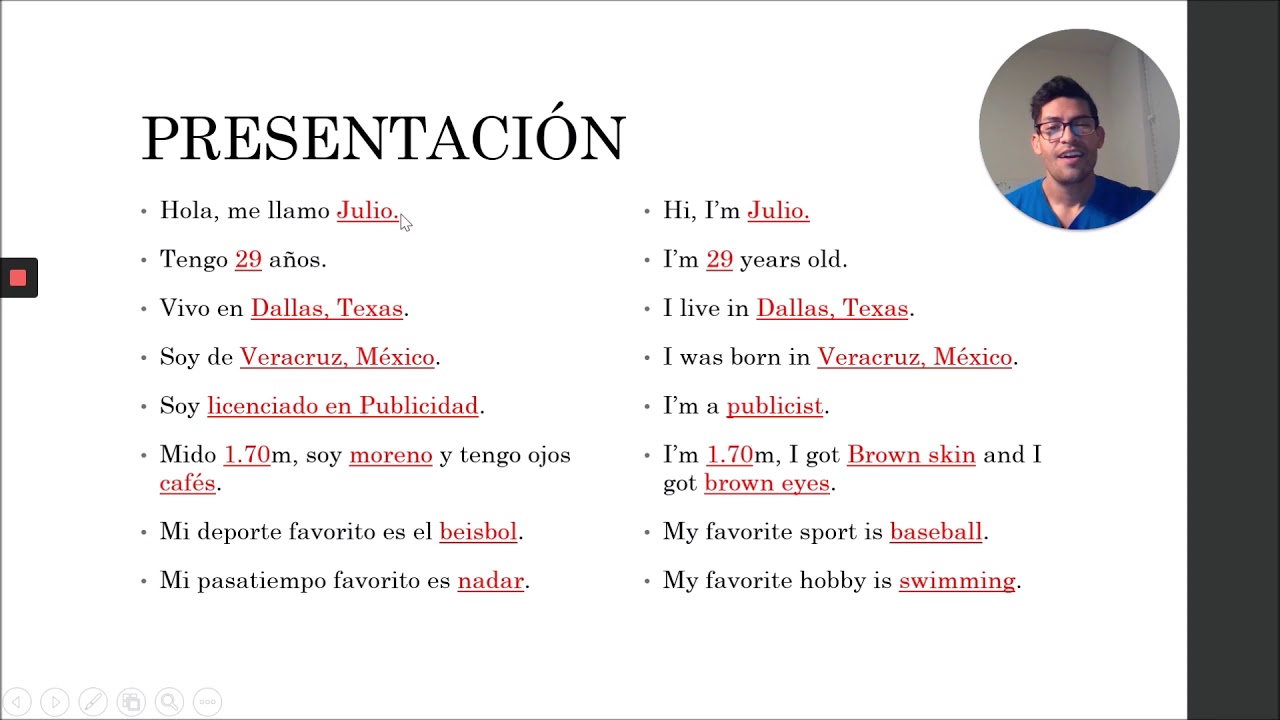
Practice activities are crucial for students to enhance their Spanish introduction skills. These activities should focus on pronunciation, vocabulary, grammar, and cultural considerations, while providing opportunities for students to practice in various scenarios.
Pronunciation exercises can involve repeating words and phrases after a native speaker, practicing tongue twisters, or using online pronunciation tools. Vocabulary exercises can include matching games, fill-in-the-blank activities, and translation exercises.
Grammar Exercises
Grammar exercises can include sentence completion, verb conjugation, and grammar drills. Role-playing exercises can help students practice introductions in different social situations, such as meeting new people, introducing themselves to a professor, or asking for directions.
Writing Activities
Writing activities can reinforce vocabulary and grammar concepts. Students can write short paragraphs about themselves, create dialogues between characters, or write formal letters of introduction.
Technology Integration
Technology can provide additional practice opportunities. Online simulations can immerse students in realistic conversation scenarios, while language learning apps can offer interactive exercises and feedback.
Peer Feedback
Peer feedback sessions can encourage students to provide constructive criticism and improve their introductions. Students can exchange written introductions or record themselves and provide feedback to each other.
Language Corner
Establishing a “Language Corner” or designated space where students can practice introductions with each other can foster a supportive learning environment and encourage confidence in spoken introductions.
Resources for Learning

Enhancing your proficiency in Spanish introductions requires dedication and practice. To facilitate your learning journey, numerous resources are available to support your progress.
Immerse yourself in the language through engaging materials and seek opportunities to interact with native speakers. Consider utilizing the following resources to supplement your learning:
Online Resources
- SpanishDict:A comprehensive online dictionary and language learning platform with extensive resources on Spanish introductions, grammar, and vocabulary.
- Duolingo:A gamified language learning app that offers interactive lessons and exercises covering Spanish introductions.
- Live Lingua:A website providing free online Spanish lessons, including a dedicated section on introductions.
Textbooks
- A Spanish Grammar Workbook:By John Butt and Carmen Benjamin, this textbook provides a thorough overview of Spanish grammar, including a chapter on introductions.
- Easy Spanish Step-by-Step:By Barbara Bregstein, this beginner-friendly textbook covers basic Spanish grammar and vocabulary, including introductions.
- Practice Makes Perfect: Spanish Conversation:By Dorothy Richmond, this workbook offers numerous exercises and dialogues focused on Spanish conversation skills, including introductions.
Language Exchange and Tutors
- HelloTalk:A language exchange app that connects learners with native speakers for language practice and cultural exchange.
- Italki:A platform that provides access to online language tutors from around the world, including Spanish tutors who can guide you in improving your introductions.
- Local language schools:Many language schools offer Spanish classes and conversation groups where you can practice introductions and interact with other learners.
Table of Common Phrases
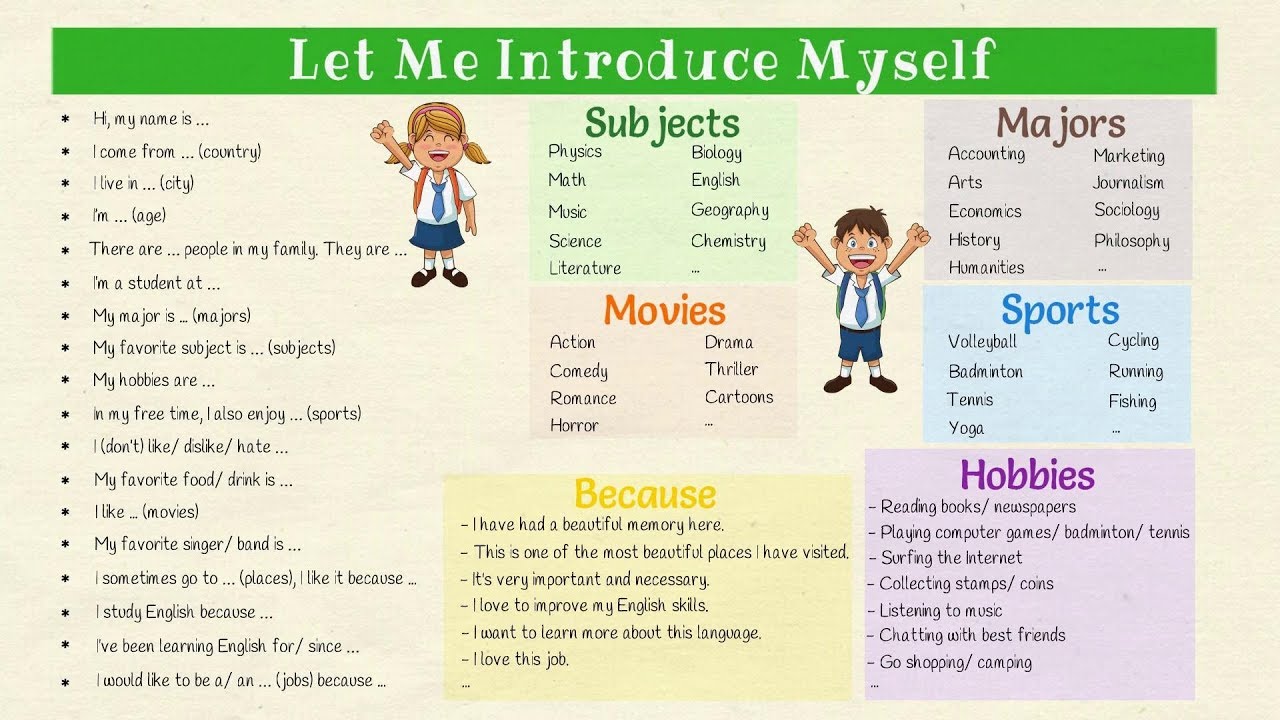
This table provides a compilation of frequently used phrases in Spanish, categorized into greetings, introductions, polite expressions, and conversational starters. Each phrase is accompanied by its English translation and a pronunciation guide for accurate pronunciation.
The table is designed to be responsive and easily accessible on various devices. The phrases are presented in four columns, with the Spanish phrase, English translation, and pronunciation guide displayed side by side for quick reference.
Greetings, How to introduce yourself in spanish language
| Spanish Phrase | English Translation | Pronunciation |
|---|---|---|
| Hola | Hello | [oh-lah] |
| Buenos días | Good morning | [bweh-nos dee-as] |
| Buenas tardes | Good afternoon | [bweh-nas tar-des] |
| Buenas noches | Good evening | [bweh-nas noh-ches] |
Introductions
| Spanish Phrase | English Translation | Pronunciation |
|---|---|---|
| Me llamo… | My name is… | [meh yah-moh…] |
| Mucho gusto | Nice to meet you | [moo-choh goo-stoh] |
| ¿Cómo te llamas? | What is your name? | [koh-moh te yah-mas?] |
| ¿De dónde eres? | Where are you from? | [deh don-deh eh-res?] |
Polite Expressions
| Spanish Phrase | English Translation | Pronunciation |
|---|---|---|
| Por favor | Please | [pohr fah-vohr] |
| Gracias | Thank you | [grah-thee-as] |
| De nada | You’re welcome | [deh nah-dah] |
| Lo siento | I’m sorry | [loh see-en-toh] |
Conversational Starters
| Spanish Phrase | English Translation | Pronunciation |
|---|---|---|
| ¿Qué tal? | How are you? | [keh tal?] |
| ¿Cómo estás? | How are you doing? | [koh-moh eh-stahs?] |
| ¿Qué hay de nuevo? | What’s new? | [keh ah-ee deh nweh-voh?] |
| ¿De qué quieres hablar? | What do you want to talk about? | [deh keh kee-eh-res ah-blar?] |
Flowchart for Introductions
Introducing oneself in Spanish involves navigating different situations and contexts. This flowchart provides a step-by-step guide to help you navigate these scenarios effectively.
Decision Points and Branches
- Formal or Informal Setting:Determine the formality of the situation to use appropriate language and tone.
- Level of Acquaintance:Consider your relationship with the person you’re meeting to adjust the level of formality.
- Group or Individual Introduction:Identify if you’re introducing yourself to a group or an individual.
Flowchart Steps
- Start:Enter the flowchart.
- Formal Setting:Use formal language and introductions (e.g., “Mucho gusto,” “Encantado”).
- Informal Setting:Use informal language and introductions (e.g., “Hola,” “Me llamo”).
- New Acquaintance:State your name and use appropriate formal or informal introductions.
- Familiar Acquaintance:Use less formal introductions and inquire about the other person’s well-being.
- Group Introduction:State your name and greet the group (e.g., “Hola a todos”).
- Individual Introduction:State your name and greet the individual (e.g., “Hola, me llamo”).
- End:Exit the flowchart.
Dos and Don’ts

When introducing yourself in Spanish, it is important to follow certain cultural and linguistic norms. Here are some “dos” and “don’ts” to keep in mind:
Dos
- Domake eye contact and smile when introducing yourself.
- Douse the appropriate formal or informal greeting, depending on the situation.
- Dostate your full name clearly and distinctly.
- Dooffer a brief explanation of who you are and what you do.
- Dobe polite and respectful, even if you are meeting someone for the first time.
Don’ts
- Don’tbe afraid to make mistakes. Everyone makes mistakes when learning a new language.
- Don’tbe too formal or informal. It is important to strike the right balance.
- Don’ttalk too quickly or too slowly. Speak at a pace that is comfortable for the other person.
- Don’tinterrupt the other person when they are speaking.
- Don’tforget to say goodbye when you are leaving.
Example Dialogue
Formal Introduction“` You:Hola, mucho gusto. Me llamo Juan Pérez. Soy profesor de español. Other Person:Encantado, Juan. Me llamo María González.
Soy estudiante de español.“` Informal Introduction“` You:Hola, ¿qué tal? Soy Juan. Other Person:Hola, Juan. Bien, gracias. ¿Y tú?
You:Bien, gracias.“`
Nonverbal Communication
Nonverbal communication plays an important role in introductions. Here are some tips to keep in mind:
- Make eye contact.This shows that you are interested in the other person and that you are paying attention to them.
- Smile.A smile can make you appear more approachable and friendly.
- Stand up straight.This shows that you are confident and respectful.
- Offer a handshake.A handshake is a common way to greet someone in Spanish-speaking countries.
Cultural Considerations
It is important to adapt your introduction to different social and cultural contexts. For example, in some cultures it is considered rude to introduce yourself using your first name. In other cultures, it is considered rude not to use a title when addressing someone.
It is always best to err on the side of caution and be more formal than informal when introducing yourself.
Troubleshooting Common Mistakes
When introducing oneself in Spanish, there are several common mistakes that learners often make. Understanding these mistakes and their solutions can help you improve your introductions and make a more positive impression.
Mispronunciation of Names
One of the most common mistakes is mispronouncing names. Spanish pronunciation rules can be different from English, and it’s important to be aware of these differences. For example, the letter “c” is pronounced as a “k” before “i” or “e,” and the letter “g” is pronounced as a “h” before “i” or “e.” Additionally, the letter “j” is pronounced as an “h.” By understanding these rules, you can avoid mispronouncing names and ensure that people can understand you correctly.
Incorrect Use of Formal and Informal Greetings
Another common mistake is using the wrong greeting for the situation. In Spanish, there are formal and informal greetings, and it’s important to know which one to use depending on the context. For example, the formal greeting “Buenos días” (Good morning) is used in more formal settings, such as when meeting a new person or a person in a position of authority.
The informal greeting “Hola” (Hello) is used in more casual settings, such as when talking to friends or family.
Lack of Cultural Awareness
Cultural awareness is also important when introducing yourself in Spanish. For example, in some Spanish-speaking cultures, it’s customary to shake hands when meeting someone new. In other cultures, it’s more common to hug or kiss on the cheek. By being aware of the cultural norms of the country you’re visiting, you can avoid making any faux pas.
Question & Answer Hub
What are the key differences between formal and informal Spanish introductions?
Formal introductions typically use formal pronouns (usted, ustedes) and more polite language, while informal introductions use informal pronouns (tú, vosotros) and more casual language.
How can I improve my pronunciation of Spanish names?
Practice pronouncing Spanish names aloud, paying attention to the placement of accents and the pronunciation of individual letters. Refer to resources that provide audio recordings of Spanish names.
What are some common cultural considerations when introducing myself in Spanish?
Be aware of the importance of eye contact, a firm handshake, and appropriate body language. Respect cultural norms regarding personal space and the use of titles.
