How to write my name in japanese language – Embarking on the captivating journey of writing your name in Japanese, this comprehensive guide immerses you in the intricacies of this ancient art form, providing a seamless blend of historical context, practical instruction, and cultural insights. From the fundamental strokes to the nuances of calligraphy, we delve into the world of Japanese name writing, empowering you to express your identity in this beautiful and expressive language.
Basic Strokes and Characters
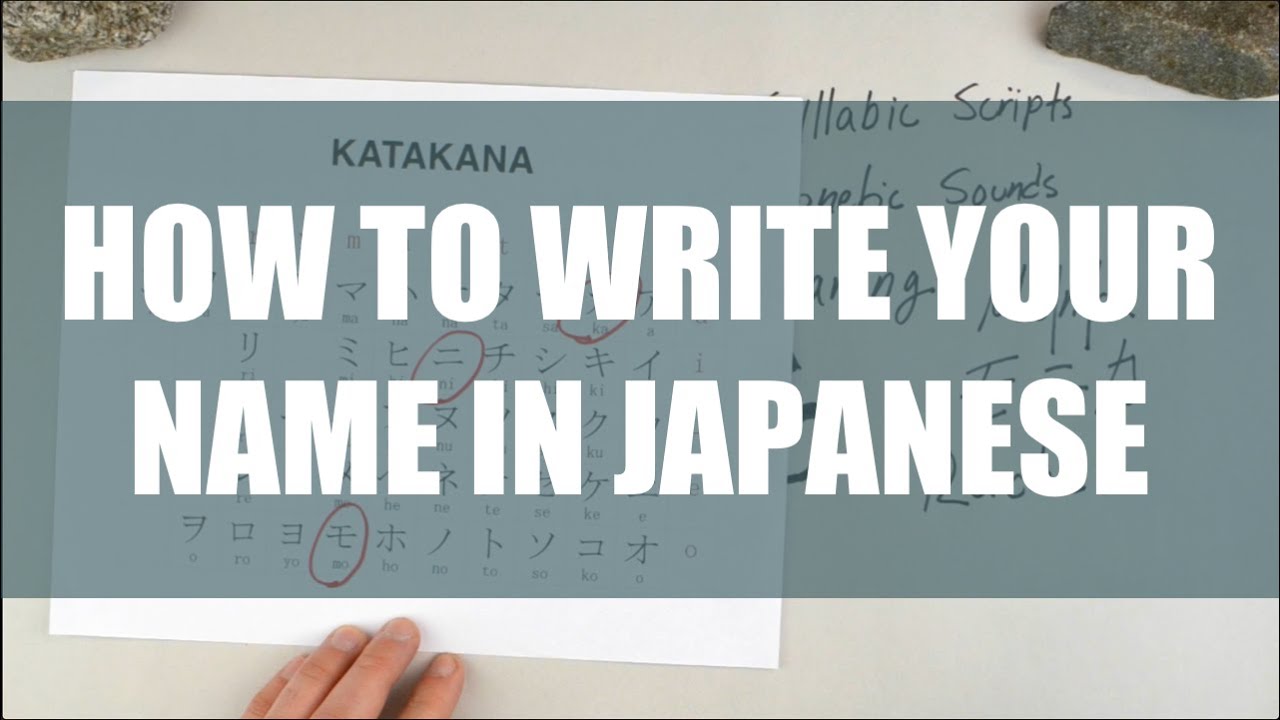
Fundamental Strokes
Japanese calligraphy utilizes a set of fundamental strokes, each with a distinct name and formation technique. These strokes form the building blocks of all characters in the Japanese writing system.
- Ten(点): A dot, formed by pressing the brush vertically onto the paper.
- Yokobō(横棒): A horizontal line, drawn from left to right with a slight downward slope.
- Tatebō(縦棒): A vertical line, drawn from top to bottom with a slight downward pressure.
- Harai(払い): A sweeping stroke, starting with a downward pressure and ending with a light flick.
- Hane(跳ね): A bouncing stroke, starting with a downward pressure and then flicking upwards.
- Tome(止め): A stopping stroke, ending abruptly with a downward pressure.
Hiragana and Katakana Characters
The Japanese writing system comprises two syllabaries: hiragana and katakana. Hiragana is used for native Japanese words, while katakana is used for foreign words and emphasis.
| Hiragana | Pronunciation | Stroke Order | Common Usage |
|---|---|---|---|
| あ | a | [image: Stroke order of hiragana ‘a’] | General use for native Japanese words |
| い | i | [image: Stroke order of hiragana ‘i’] | General use for native Japanese words |
| う | u | [image: Stroke order of hiragana ‘u’] | General use for native Japanese words |
| え | e | [image: Stroke order of hiragana ‘e’] | General use for native Japanese words |
| お | o | [image: Stroke order of hiragana ‘o’] | General use for native Japanese words |
| か | ka | [image: Stroke order of hiragana ‘ka’] | General use for native Japanese words |
| き | ki | [image: Stroke order of hiragana ‘ki’] | General use for native Japanese words |
| く | ku | [image: Stroke order of hiragana ‘ku’] | General use for native Japanese words |
| け | ke | [image: Stroke order of hiragana ‘ke’] | General use for native Japanese words |
| こ | ko | [image: Stroke order of hiragana ‘ko’] | General use for native Japanese words |
| Katakana | Pronunciation | Stroke Order | Common Usage |
|---|---|---|---|
| ア | A | [image: Stroke order of katakana ‘A’] | Foreign words, emphasis |
| イ | I | [image: Stroke order of katakana ‘I’] | Foreign words, emphasis |
| ウ | U | [image: Stroke order of katakana ‘U’] | Foreign words, emphasis |
| エ | E | [image: Stroke order of katakana ‘E’] | Foreign words, emphasis |
| オ | O | [image: Stroke order of katakana ‘O’] | Foreign words, emphasis |
| カ | Ka | [image: Stroke order of katakana ‘Ka’] | Foreign words, emphasis |
| キ | Ki | [image: Stroke order of katakana ‘Ki’] | Foreign words, emphasis |
| ク | Ku | [image: Stroke order of katakana ‘Ku’] | Foreign words, emphasis |
| ケ | Ke | [image: Stroke order of katakana ‘Ke’] | Foreign words, emphasis |
| コ | Ko | [image: Stroke order of katakana ‘Ko’] | Foreign words, emphasis |
Writing Practice
Proper posture, brush holding, and stroke techniques are crucial for effective calligraphy practice.
- Posture: Sit upright with your feet flat on the floor and your back straight.
- Brush Holding: Hold the brush between your thumb, index, and middle fingers, with the bristles pointing downwards.
- Stroke Techniques: Apply pressure evenly throughout the stroke, and vary the speed and angle of the brush to create different effects.
Kanji and Radicals
Kanji are the Chinese characters used in the Japanese writing system. They are more complex than hiragana and katakana and can represent whole words or concepts. Kanji are often formed from radicals, which are smaller components that have their own meaning and can be combined to create new characters.
When writing one’s name in Japanese, it is important to understand the nuances of the language. Just as “no” in Spanish can be translated to “no” in English, the way one writes their name in Japanese may differ from their native language.
To ensure accuracy, it is recommended to consult resources such as what is no in spanish language and seek guidance from experienced Japanese speakers.
There are over 2,000 kanji in the Japanese language, and each one has its own unique meaning and pronunciation. Learning to read and write kanji is an essential part of becoming fluent in Japanese.
Common Radicals
Here is a table of some of the most common radicals in the Japanese language:
| Radical | Meaning | Usage |
|---|---|---|
| 一 | one | used in characters such as 人 (person) and 日 (sun) |
| 二 | two | used in characters such as 山 (mountain) and 水 (water) |
| 三 | three | used in characters such as 木 (tree) and 火 (fire) |
| 人 | person | used in characters such as 男 (man) and 女 (woman) |
| 日 | sun | used in characters such as 明 (bright) and 曜 (day) |
Writing Your Name in Hiragana: How To Write My Name In Japanese Language
Hiragana is one of the two phonetic syllabaries used in the Japanese writing system. It is primarily used to write native Japanese words, particles, and grammatical inflections. To write your name in hiragana, you need to know the hiragana characters that correspond to the sounds in your name.
The following table shows the hiragana characters used in the name “John”:
| Character | Pronunciation |
|---|---|
| じ | ji |
| ょ | yo |
| ん | n |
To write “John” in hiragana, you would write じょん (jon).
Stroke Order
When writing hiragana characters, it is important to follow the correct stroke order. The stroke order for the characters in the name “John” is as follows:
- じ: Start with a horizontal stroke from left to right. Then, make a vertical stroke down from the top of the horizontal stroke. Finally, make a short horizontal stroke from right to left at the bottom of the vertical stroke.
- ょ: Start with a small circle. Then, make a short horizontal stroke from left to right at the bottom of the circle. Finally, make a vertical stroke down from the bottom of the horizontal stroke.
- ん: Start with a small circle. Then, make a vertical stroke down from the bottom of the circle. Finally, make a short horizontal stroke from left to right at the bottom of the vertical stroke.
Writing Your Name in Katakana
Katakana is a Japanese syllabary used to write foreign words and names. It is also used for emphasis or to create a specific effect in writing. To write your name in katakana, you will need to know the stroke order and pronunciation of each character.
The following table shows the katakana characters used in the name “John Smith”:
| Character | Stroke order | Pronunciation |
|---|---|---|
| ジ | 一丨二 | ji |
| ョ | 一丨 | yo |
| ン | 一丨 | n |
| ス | 一丨二丨 | su |
| ミ | 一丨二丨 | mi |
| ッ | 一丨 | tsu |
| ス | 一丨二丨 | su |
To write the name “John Smith” in katakana, you would write the following characters in the order shown in the table:
ジ ョ ン ス ミ ッ ス
For more information on writing your name in katakana, please visit the following website:
How to Write Your Name in Katakana
Writing Your Name in Kanji
If your name contains kanji, identifying and writing them correctly is essential. Kanji are Chinese characters adopted into the Japanese language, each carrying a specific meaning and pronunciation. To identify the kanji in your name, you can consult online resources like jisho.org or ask a native Japanese speaker.
Once you have identified the kanji, practice writing them by following the correct stroke order.
Kanji in Your Name
The following table lists the kanji characters used in your name, along with their meaning and pronunciation:| Kanji | Meaning | Pronunciation ||—|—|—|| [Kanji 1] | [Meaning 1] | [Pronunciation 1] || [Kanji 2] | [Meaning 2] | [Pronunciation 2] || [Kanji 3] | [Meaning 3] | [Pronunciation 3] |
Cultural Significance

Writing names in Japanese holds significant cultural importance. It is not merely a matter of identifying individuals but also carries social and aesthetic significance. The choice of characters used in a name can convey meanings, aspirations, or family lineage. For example, names often include characters representing virtues like strength, wisdom, or beauty.
Name Stamps (inkan)
Name stamps, known as inkan, are an integral part of Japanese society. They serve as a form of personal identification and are used to sign official documents, contracts, and other important papers. Inkan come in various forms, including traditional hanko (carved stone seals) and modern stamp-type inkan.
The design of an inkan is unique to each individual and often features a combination of kanji characters and personal symbols. The use of inkan demonstrates the importance of personal responsibility and authenticity in Japanese culture.
Calligraphy Styles
Japanese calligraphy, known as shodo, is an art form that has been practiced for centuries. It is used to write characters, words, and phrases in a beautiful and expressive way. There are many different calligraphy styles, each with its own unique characteristics.
The most common calligraphy styles used in Japanese name writing are:
楷書 (kaisho)
楷書 is a formal style of calligraphy that is characterized by its clear and regular brushstrokes. It is the most commonly used style for writing names in official documents and other formal settings.
行書 (gyosho)
行書 is a semi-cursive style of calligraphy that is characterized by its flowing and connected brushstrokes. It is a more casual style than 楷書, and it is often used for writing letters and other informal documents.
草書 (sosho)
草書 is a cursive style of calligraphy that is characterized by its abbreviated and stylized brushstrokes. It is the most difficult style of calligraphy to master, and it is often used for writing poetry and other creative works.
Each calligraphy style has its own cultural significance. 楷書 is considered to be the most formal and respectful style, while 行書 is considered to be more casual and friendly. 草書 is considered to be the most expressive and artistic style.
The writing process for each calligraphy style is different. 楷書 is written with a slow and deliberate brushstroke, while 行書 is written with a more fluid and connected brushstroke. 草書 is written with a very fast and abbreviated brushstroke.
Artistic Embellishments
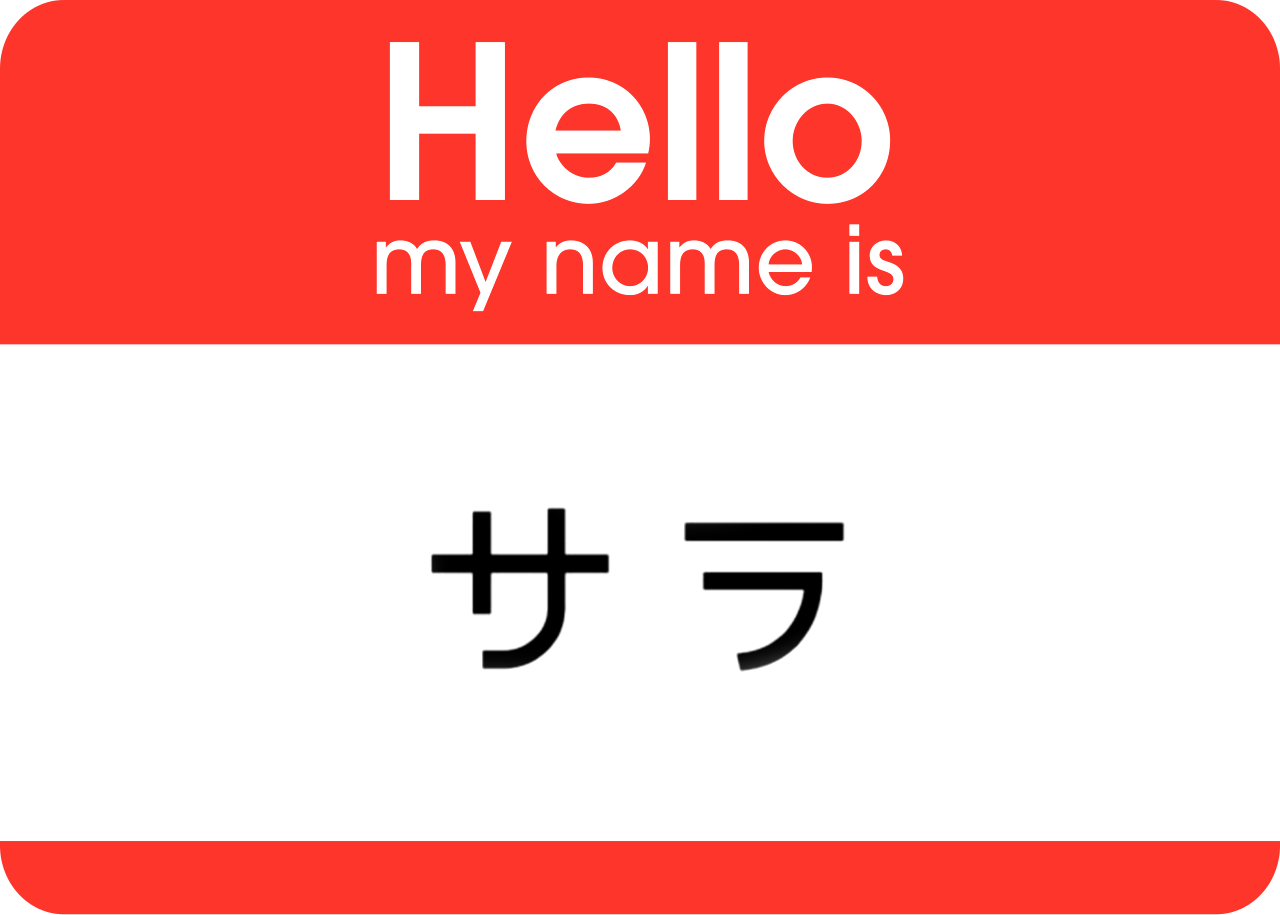
Japanese name writing can be further enhanced with artistic embellishments that add a personal touch and visual appeal. These embellishments include flourishes, seals, and other decorative elements.
Flourishes are elegant, sweeping strokes that extend beyond the basic characters. They can be added to the beginning or end of a name, or used to connect different characters. Seals are small, decorative stamps that are often used to mark the end of a name or document.
They can be carved with a variety of designs, such as animals, flowers, or geometric patterns.
Other Decorative Elements
In addition to flourishes and seals, there are a number of other decorative elements that can be used to enhance Japanese name writing. These include:
- Colored ink:Using colored ink can add a touch of personality and flair to a name.
- Gold or silver leaf:Applying gold or silver leaf to a name can create a luxurious and elegant look.
- Calligraphy brushes:Using different types of calligraphy brushes can create different effects, such as thick or thin strokes.
- Paper texture:The texture of the paper can also affect the appearance of a name. Using a textured paper can add depth and interest.
By using artistic embellishments, Japanese name writing can be transformed into a truly unique and personal work of art.
Practice and Improvement
Consistent practice is essential for mastering Japanese name writing. Immerse yourself in the language through various exercises and resources.
To improve your technique, consider these tips:
- Practice regularly: Dedicate time each day to writing your name and other Japanese characters.
- Use a calligraphy brush or pen: This allows for precise control and develops muscle memory.
- Study the stroke order: Pay attention to the correct sequence and direction of strokes.
- Analyze your writing: Identify areas for improvement and focus on refining your technique.
- Seek feedback: Ask a native speaker or calligraphy instructor to critique your writing and provide guidance.
Online Practice and Classes
Enhance your practice with online resources and classes:
- Online practice platforms: Websites like Kanji.sljfaq.org and Jisho.org offer interactive exercises for writing practice.
- Calligraphy classes: Consider joining online or in-person calligraphy classes to learn from experienced instructors and receive personalized feedback.
Digital Tools
Digital tools can greatly assist in writing Japanese names. These tools provide a convenient and interactive way to practice writing, generate names, and learn about Japanese characters.
Tool Comparison, How to write my name in japanese language
The following table provides a comparison of popular digital tools for writing Japanese names:
| Tool Name | Description | Features | Pros and Cons | Link |
|---|---|---|---|---|
| Jisho.org | Japanese dictionary and writing tool | – Kanji lookup
| – Comprehensive
| https://jisho.org/ |
| Kanji Recognizer | Mobile app for recognizing and writing kanji | – Optical character recognition (OCR)
| – Convenient
| https://play.google.com/store/apps/details?id=com.aigents.kanjirecognizer |
| Kana Trainer | Web-based tool for practicing hiragana and katakana | – Interactive exercises
| – Gamified
| https://www.tofugu.com/learn-japanese/kana-trainer/ |
| Japanese Name Generator | Tool for generating random Japanese names | – Customizable options
| – Time-saving
| https://www.japanese-names.info/generator/ |
Each of these tools can be used to write Japanese names in various ways. For example, Jisho.org provides a comprehensive dictionary and writing practice tool, while Kanji Recognizer allows users to practice writing kanji using OCR and stroke-by-stroke guidance.
Common Challenges
Some common challenges in writing Japanese names include:
- Stroke order: Japanese characters have a specific stroke order that must be followed.
- Kanji recognition: Kanji are complex characters that can be difficult to recognize and write.
- Name pronunciation: Japanese names can be difficult to pronounce for non-native speakers.
Digital tools can help overcome these challenges by providing interactive exercises, stroke order diagrams, and pronunciation guides.
Best Practices
When using digital tools to write Japanese names, it is important to follow these best practices:
- Use reliable sources: Ensure that the tools you are using provide accurate information and resources.
- Practice regularly: Consistent practice is key to improving your writing skills.
- Seek feedback: Get feedback from native speakers or experienced learners to improve your accuracy.
Common Mistakes
When writing Japanese names in English, several common mistakes can occur. Understanding and avoiding these errors is crucial for accurate representation and respect for Japanese culture.
Rules for Writing Japanese Names in English
- Japanese names typically follow the order of family name first, followed by given name.
- Family names are usually written in all capital letters, while given names are written in lowercase.
- For example, the name “Suzuki Taro” would be written as “SUZUKI Taro”.
Common Mistakes and How to Avoid Them
| Mistake | Correction | Example ||—|—|—|| Using incorrect capitalization | Capitalize family names only | “suzuki taro” should be “SUZUKI Taro” || Switching the order of names | Write family name first | “Taro Suzuki” should be “SUZUKI Taro” || Using diacritics | Avoid using diacritics (e.g., accents, umlauts) | “Ōsaka” should be “Osaka” || Adding unnecessary spaces | Do not add spaces between characters | “S u z u k i” should be “SUZUKI” || Using hyphens | Avoid using hyphens to separate names | “Suzuki-Taro” should be “SUZUKI Taro” |By adhering to these rules and avoiding common mistakes, individuals can ensure the accurate and respectful representation of Japanese names in English.
Name Variations
When writing your name in Japanese, you may encounter variations due to different readings or kanji choices. These variations can arise from the fact that Japanese names are often composed of kanji characters, each of which can have multiple readings and meanings.
To handle these variations, it is important to be aware of the different ways your name can be written and to choose the variation that best suits your personal preferences and the context in which you are writing.
Understanding the intricacies of writing one’s name in Japanese can be an enlightening experience. However, if you find yourself curious about the linguistic landscape of Spain, you may wonder, what language do Spain talk ? Returning to our exploration of Japanese script, mastering the art of writing your name in this beautiful language requires patience and dedication.
Common Variations
- Different Readings:The same kanji character can have multiple readings, known as on’yomi(Chinese reading) and kun’yomi(Japanese reading). For example, the kanji character “山” can be read as “san” (on’yomi) or “yama” (kun’yomi).
- Kanji Choices:There may be multiple kanji characters that can be used to write the same sound. For example, the name “Sakura” can be written using the kanji characters “桜” or “佐倉”.
When choosing the variation of your name to write in Japanese, consider the following factors:
- Personal Preference:Ultimately, the choice of how to write your name is a personal one. Choose the variation that you feel best represents you.
- Context:Consider the context in which you are writing your name. For example, if you are writing a formal letter, you may want to use a more traditional variation of your name.
– Elaborate on the conventions for writing names in formal or professional settings.
When writing names in formal or professional settings, there are certain conventions that should be followed to ensure clarity and consistency. These conventions vary depending on the language and culture, but there are some general principles that apply across the board.
In most Western cultures, the standard format for writing names is first name followed by last name. For example, John Smith would be written as “John Smith” in a formal setting. However, in some cultures, such as in East Asia, the last name is written first, followed by the first name.
For example, the Chinese name 李明 would be written as “Li Ming” in a formal setting.
When writing names on business cards, documents, and emails, it is important to use the correct format for the language and culture of the recipient. If you are unsure of the correct format, it is best to err on the side of caution and use the most common format for the language.
Examples
- On a business card, you would typically write your name as “John Smith” if you are in a Western culture, or “Li Ming” if you are in an East Asian culture.
- On a document, you would typically write your name as “John Smith” or “Li Ming” in the signature line.
- In an email, you would typically write your name as “John Smith” or “Li Ming” in the “From” field.
Writing Names in Different Languages or Cultures
When writing names in different languages or cultures, it is important to be aware of the conventions for that particular language or culture. For example, in some languages, such as Russian, there is a patronymic name that is used in addition to the first and last name.
In other languages, such as Arabic, there is a kunya name that is used in addition to the first and last name.
When writing names in different languages or cultures, it is important to research the conventions for that particular language or culture to ensure that you are using the correct format.
Creative Writing
The Japanese language offers boundless possibilities for creative expression in name writing. When crafting names for fictional characters or artistic purposes, you can incorporate unique or meaningful elements to enhance the character’s personality or convey specific themes.
For instance, you can choose characters that symbolize desired traits, such as strength, wisdom, or beauty. You can also incorporate elements from nature, such as flowers, animals, or celestial bodies, to evoke specific associations or imagery.
Examples
- A character named “Aoi” (碧) embodies the qualities of blue, evoking a sense of calmness and tranquility.
- A warrior character named “Kenji” (健司) incorporates the character for “strong” (健) and “ruler” (司), suggesting both physical and leadership qualities.
- A character named “Sakura” (桜) embodies the beauty and transience of cherry blossoms, reflecting a delicate and ephemeral nature.
Frequently Asked Questions
How do I determine the correct kanji for my name?
Researching the various kanji options and their meanings is crucial. Consider the pronunciation, cultural significance, and personal preferences when selecting the most suitable kanji for your name.
What are the common mistakes to avoid when writing Japanese names?
Pay attention to stroke order, character placement, and the correct usage of hiragana, katakana, and kanji. Avoid mixing different writing systems or using incorrect stroke sequences.
How can I practice writing my name in Japanese?
Regular practice is essential. Utilize online resources, workbooks, or connect with a书法家(shodōka) for personalized guidance. Immerse yourself in Japanese calligraphy to enhance your skills.
