What is concrete language? It is a powerful tool that brings writing to life, creating vivid imagery that captivates readers and enhances their understanding. Concrete language employs specific and sensory details, appealing to the senses and emotions to paint a clear picture in the reader’s mind.
By using concrete language, writers can craft writing that resonates deeply, leaving a lasting impact on the reader.
Throughout this presentation, we will delve into the characteristics, benefits, and applications of concrete language, exploring its transformative power in various contexts. We will uncover strategies for incorporating concrete language into writing, examining its impact on reader engagement and comprehension.
By the end of this journey, you will have a comprehensive understanding of concrete language and its potential to elevate your writing to new heights.
Definition of Concrete Language
Concrete language is a type of language that uses specific, sensory details to create a vivid and engaging writing style. It is often contrasted with abstract language, which uses more general and conceptual terms.
Concrete language can be used to create a more vivid and engaging writing style by appealing to the reader’s senses and emotions. It can help readers to visualize the events and characters in a story, and to connect with the writer on a more personal level.
Examples of Concrete Language
Here are some examples of concrete language:
- The dog barked loudly.
- The sun shone brightly.
- The wind howled through the trees.
- The flowers smelled sweet.
- The food tasted delicious.
Contrast with Abstract Language
Here are some examples of abstract language:
- The dog was angry.
- The sun was hot.
- The wind was strong.
- The flowers were beautiful.
- The food was good.
As you can see, concrete language is more specific and descriptive than abstract language. It uses sensory details to create a more vivid and engaging writing style.
Table Summarizing Key Differences
| Concrete Language | Abstract Language |
|---|---|
| Specific | General |
| Descriptive | Conceptual |
| Appeals to the senses | Appeals to the intellect |
| Creates a vivid and engaging writing style | Creates a more general and conceptual writing style |
Characteristics of Concrete Language
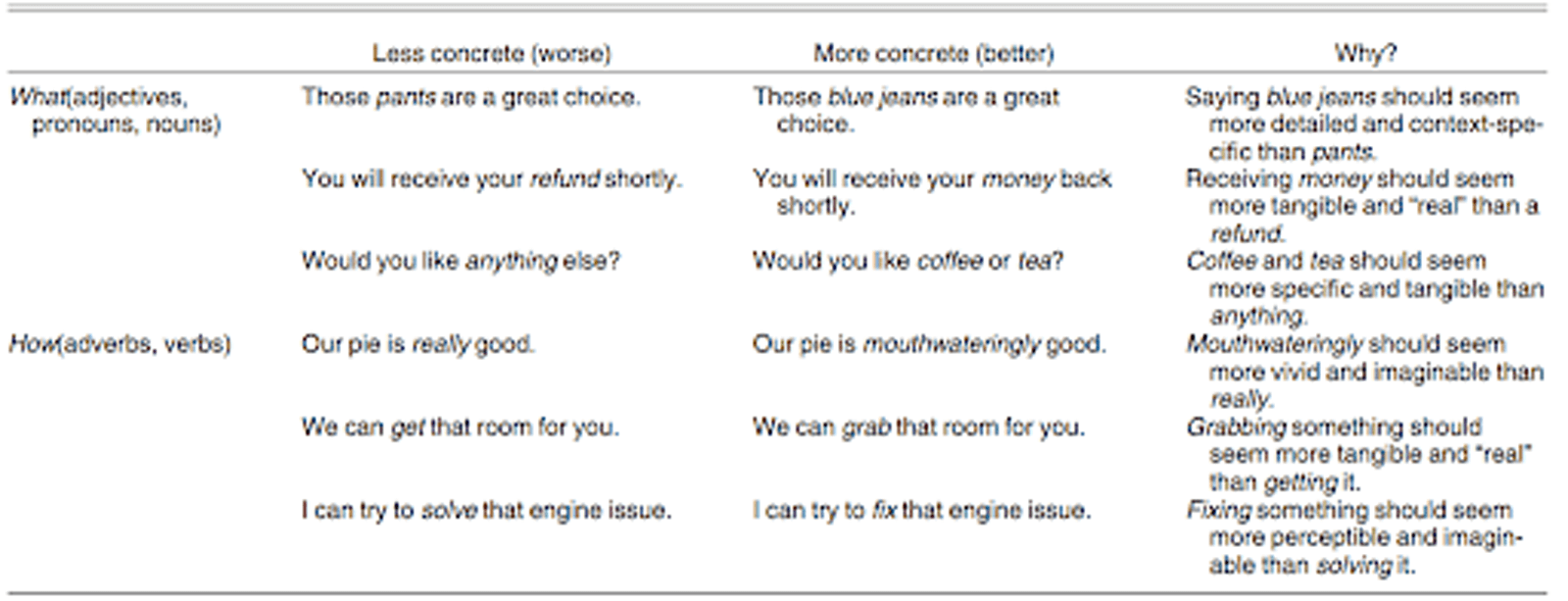
Concrete language is a type of language that uses specific, sensory, and vivid words to create a clear and vivid image in the reader’s mind. It appeals to the five senses and helps the reader to experience the events and emotions of the story as if they were there.
Specificity
Concrete language is specific and precise. It uses nouns, verbs, and adjectives that clearly identify the subject and its qualities. For example, instead of saying “The car was fast,” you could say “The red Ferrari sped down the highway.”
Sensory Appeal
Concrete language appeals to the senses by using sensory details and imagery. It describes the sights, sounds, smells, tastes, and textures of the experience. For example, instead of saying “The food was good,” you could say “The aroma of roasted chicken filled the air, tantalizing my taste buds.”
Vividness
Concrete language is vivid and creates a clear image in the reader’s mind. It uses strong verbs, descriptive adjectives, and similes and metaphors to create a vivid and memorable experience. For example, instead of saying “The storm was strong,” you could say “The wind howled like a banshee, tearing at the trees and sending debris flying through the air.”
Impact of Concrete Language on Writing
Concrete language has a powerful impact on writing. It can create vivid imagery, evoke emotions, and enhance comprehension. When readers can experience the events and emotions of the story through their senses, they are more likely to be engaged and to remember the story.
Examples of Concrete Language
Concrete language can be found in all types of writing, including poetry, fiction, and journalism. Here are a few examples:
- Poetry:“The world is too much with us; late and soon, / Getting and spending, we lay waste our powers” (William Wordsworth, “The World Is Too Much with Us”)
- Fiction:“The old man’s face was a roadmap of wrinkles, each line telling a story of a life well-lived” (Ernest Hemingway, “The Old Man and the Sea”)
- Journalism:“The air was thick with the smell of smoke and the sound of sirens” (The New York Times, “Fire Breaks Out in Brooklyn Warehouse”)
How to Incorporate Concrete Language into Your Writing
You can incorporate concrete language into your own writing by using the following tips:
- Use specific and precise nouns, verbs, and adjectives.
- Appeal to the senses by using sensory details and imagery.
- Use strong verbs, descriptive adjectives, and similes and metaphors to create a vivid and memorable experience.
Table: Key Characteristics and Benefits of Concrete Language
| Characteristic | Benefit |
|---|---|
| Specificity | Creates a clear and vivid image in the reader’s mind |
| Sensory Appeal | Appeals to the senses and helps the reader to experience the events and emotions of the story |
| Vividness | Creates a vivid and memorable experience for the reader |
Resources for Further Exploration
- The Elements of Style by William Strunk Jr. and E.B. White
- On Writing Well by William Zinsser
- Concrete Language by Donald Murray
Practice Exercise, What is concrete language
Write a short paragraph using concrete language to describe a specific experience or object. Here is an example:
The sun hung low in the sky, casting a golden glow over the meadow. The air was still and warm, and the only sound was the gentle buzzing of bees. I sat down on a patch of wildflowers and closed my eyes, savoring the moment.
Types of Concrete Language: What Is Concrete Language
Concrete language can be classified into various types, each with its own distinct characteristics, strengths, and weaknesses. These types include sensory language, figurative language, and technical language.
Sensory language engages the senses by using words that evoke vivid images, sounds, smells, tastes, and textures. For example, “The ripe strawberries burst with sweetness in my mouth” uses sensory language to create a vivid impression of the taste and texture of the strawberries.
Figurative Language
Figurative language uses words in a non-literal way to create a vivid or imaginative effect. Examples of figurative language include similes, metaphors, personification, and hyperbole. For example, “Her eyes sparkled like diamonds” uses a simile to compare the woman’s eyes to diamonds, creating a vivid image of their brilliance.
Concrete language is characterized by its use of specific and observable terms, avoiding abstract or metaphorical expressions. It conveys information directly and clearly, enabling precise understanding. A similar concept can be observed in the field of linguistics, where the question of whether American Sign Language (ASL) is a language has been debated.
Is ASL a language ? advocates argue that it meets the criteria of a natural language, possessing its own grammar, vocabulary, and expressive capabilities. This debate highlights the importance of concrete language in conveying complex ideas, whether through spoken or signed communication.
Technical Language
Technical language uses specialized words and phrases that are specific to a particular field or profession. For example, “The physician prescribed a course of antibiotics to treat the patient’s infection” uses technical language to describe the medical treatment prescribed for the patient.
Benefits of Using Concrete Language
Concrete language offers a plethora of advantages in writing, making it a valuable tool for effective communication. Its clarity and specificity enhance comprehension, leaving no room for misinterpretation. Concrete language paints a vivid picture in the reader’s mind, creating a tangible and relatable experience.
Improved Comprehension and Clarity
Concrete language simplifies complex ideas, making them accessible to a broader audience. It breaks down abstract concepts into tangible and relatable terms, ensuring that readers grasp the intended message accurately. By using concrete nouns, verbs, and adjectives, writers can evoke vivid imagery and establish a clear mental picture in the reader’s mind.
Increased Engagement and Interest
Concrete language captivates readers by appealing to their senses and emotions. It transports them into the narrative, creating an immersive and engaging experience. When readers can visualize and connect with the content, they are more likely to stay invested and follow the narrative with interest.
Concrete language breathes life into stories, making them relatable and memorable.
Concrete language is a form of language that uses specific and tangible words to convey ideas. Unlike abstract language, which uses more general and intangible terms, concrete language paints a vivid picture in the reader’s mind. For instance, the sentence “The boy ran quickly” is an example of concrete language, as it uses the specific verb “ran” and the adverb “quickly” to create a clear image in the reader’s mind.
In contrast, the sentence “The boy moved swiftly” is an example of abstract language, as it uses the more general verb “moved” and the adverb “swiftly,” which do not create as clear a picture in the reader’s mind. Concrete language is often used in writing and speaking to create a more engaging and memorable experience for the reader or listener.
It is also commonly used in journalism, technical writing, and other forms of writing where clarity and precision are important. For example, in the context of what language of indonesia , concrete language is used to describe the specific characteristics of the Indonesian language, such as its grammar, vocabulary, and pronunciation.
Enhanced Persuasiveness and Credibility
Concrete language adds credibility to arguments and persuades readers more effectively. By providing specific examples, statistics, and anecdotes, writers can support their claims with tangible evidence. Concrete language establishes a solid foundation for logical reasoning and makes it harder for readers to dismiss the writer’s perspective.
How to Incorporate Concrete Language
Incorporating concrete language into writing is a skill that can be honed with practice. Here are a few tips to help you get started:
- Use specific nouns, verbs, and adjectives instead of vague or general terms.
- Replace abstract concepts with concrete examples and illustrations.
- Avoid jargon and technical terms that may not be familiar to your audience.
- Use sensory details to evoke vivid imagery and engage the reader’s senses.
Examples of Transformation
Consider the following transformation of abstract language into concrete language:| Abstract Language | Concrete Language ||—|—|| “The company experienced a period of growth.” | “The company’s revenue increased by 25% in the last quarter.” || “The candidate has excellent communication skills.” | “The candidate effectively presented complex technical concepts to a non-technical audience.” || “The product has many benefits.” | “The product’s features include a user-friendly interface, extended battery life, and a sleek design.” |
Quotes on the Importance of Concrete Language
“The more concrete the language, the more vivid the picture.”
William Strunk Jr.
“Concrete language is the language of persuasion. It is the language that makes people believe.”
Dale Carnegie
Challenges of Using Concrete Language
Despite its benefits, using concrete language also poses some challenges:
Potential Challenges
- Oversimplification:Concrete language can lead to oversimplification of complex ideas, making them difficult to understand in depth.
- Lack of Nuance:It may fail to convey the subtleties and nuances of a concept, potentially resulting in a loss of meaning.
- Length:Concrete language often requires more words to convey an idea compared to abstract language, which can lead to lengthy and potentially tedious writing.
- Specificity:While specificity is generally an advantage, it can become a challenge when dealing with broad concepts or ideas that are not easily described in concrete terms.
Overcoming Challenges
To overcome these challenges, consider the following strategies:
- Balance:Use concrete and abstract language in combination to provide a comprehensive understanding of the topic.
- Precision:Choose specific and accurate concrete words to avoid oversimplification and convey nuances.
- Context:Provide sufficient context to support the concrete language and ensure clarity.
- Repetition:Repeat key concrete terms to reinforce their meaning and avoid confusion.
- Feedback:Seek feedback from readers to ensure that the concrete language is effective and not overly simplified.
Importance of Balance
It is crucial to strike a balance between concrete and abstract language. Excessive use of concrete language can result in a lack of depth and nuance, while excessive abstract language can make the writing inaccessible and confusing. By combining both types of language strategically, writers can effectively convey complex ideas with clarity and precision.
Applications of Concrete Language
Concrete language plays a pivotal role in various contexts, enhancing communication by providing clarity, precision, and impact. Its applications span across diverse fields, including literature, journalism, and marketing.
Literature
In literature, concrete language brings characters and settings to life. By using specific details and sensory imagery, authors create vivid and immersive experiences for readers. For instance, in “The Great Gatsby,” F. Scott Fitzgerald describes the titular character’s mansion as “a colossal affair by any standard—it was a factual imitation of some Hôtel de Ville in Normandy, with a tower on one side, spanking new under a thin beard of raw ivy, and a marble swimming pool, and more than forty acres of lawn and garden.”
Journalism
Journalists rely on concrete language to convey facts and information accurately. By avoiding vague or abstract terms, they ensure that their reports are clear and easily understood. For example, instead of stating that “the economy is struggling,” a journalist might write, “The unemployment rate has risen to 8.5%, the highest level in a decade.”
Marketing
Marketers use concrete language to create compelling and persuasive messages. By using specific details and benefits, they highlight the value of their products or services. For instance, a car advertisement might emphasize the car’s “sleek design,” “spacious interior,” and “fuel-efficient engine.”
| Context | Example |
|---|---|
| Literature | “The Great Gatsby” by F. Scott Fitzgerald |
| Journalism | “The unemployment rate has risen to 8.5%” |
| Marketing | “Sleek design, spacious interior, and fuel-efficient engine” |
Concrete language enhances clarity by providing specific details that readers can easily understand. It promotes precision by eliminating ambiguity and ensuring that messages are conveyed accurately. Finally, it increases impact by making messages more vivid and memorable.
Limitations and Alternatives
While concrete language is powerful, it also has limitations. In some contexts, abstract language may be more appropriate. For instance, when discussing complex ideas or emotions, abstract terms can provide a more nuanced and comprehensive understanding. Additionally, concrete language can sometimes be limiting, as it may not fully capture the complexity of a situation.
When concrete language is not suitable, alternative language strategies can be employed. These strategies include using figurative language, such as metaphors and similes, to create vivid imagery and evoke emotions. Additionally, using general and abstract terms can provide a broader perspective and allow for more nuanced discussions.
Examples of Concrete Language
Concrete language is a type of language that uses specific, tangible, and sensory details to create a vivid and immersive experience for the reader or listener. It is often used in literature, poetry, and journalism to create a strong emotional connection and make the subject matter more relatable.
There are many different types of concrete language, including:
- Sensory details: These are words that describe what something looks like, sounds like, smells like, tastes like, or feels like. For example, “The grass was a lush green color” or “The air was filled with the sweet smell of honeysuckle.”
- Specific nouns: These are words that name a particular person, place, or thing. For example, “The dog was a golden retriever” or “The house was a Victorian mansion.”
- Action verbs: These are words that describe an action or movement. For example, “The boy ran down the street” or “The girl jumped over the fence.”
Concrete language can be used in a variety of genres and styles, including:
- Fiction: Concrete language is often used in fiction to create a vivid and immersive world for the reader. For example, in the novel “To Kill a Mockingbird,” Harper Lee uses concrete language to describe the small town of Maycomb, Alabama, and its inhabitants.
- Poetry: Concrete language is also often used in poetry to create a strong emotional connection with the reader. For example, in the poem “Ode to a Nightingale,” John Keats uses concrete language to describe the beauty of a nightingale’s song.
- Journalism: Concrete language is often used in journalism to make a story more relatable and engaging. For example, in the article “The Syrian Refugee Crisis,” The New York Times uses concrete language to describe the plight of Syrian refugees.
Concrete language is a powerful tool that can be used to create a strong emotional connection and make a subject matter more relatable. It is a valuable tool for writers of all genres and styles.
Historical Development of Concrete Language
Concrete language has a rich history in literature and writing, evolving over time and influenced by various literary movements. Its roots can be traced back to ancient Greek and Roman rhetoric, where vivid and sensory language was used to persuade and engage audiences.
During the Renaissance, concrete language flourished in the works of poets like William Shakespeare and John Milton, who used imagery and metaphors to create vivid and memorable descriptions. In the 19th century, Romanticism embraced concrete language as a way to express emotions and connect with nature.
Influence of Modernist Literature
Modernist literature, in the early 20th century, saw a renewed interest in concrete language. Writers like James Joyce and Virginia Woolf experimented with stream of consciousness and interior monologue, using concrete language to explore the complexities of human consciousness.
Postmodern Literature and Beyond
Postmodern literature continued the exploration of concrete language, often using it to subvert traditional narratives and challenge established norms. Contemporary writers like Salman Rushdie and Toni Morrison employ concrete language to create immersive and thought-provoking works that engage readers on multiple levels.
Techniques and Strategies
Writers use various techniques to create concrete language, including:
- Sensory imagery: Engaging the senses to create vivid and immersive experiences.
- Figurative language: Using metaphors, similes, and personification to make abstract concepts more tangible.
- Specific details: Providing specific and concrete details to ground the reader in the sensory world.
- Active voice: Using active verbs to create a sense of immediacy and engagement.
Impact on Reader Experience
Concrete language has a profound impact on the reader’s experience, enhancing their understanding and engagement with the text. It:
- Creates vivid and memorable images.
- Connects readers to the sensory world.
- Facilitates emotional connection and empathy.
- Challenges assumptions and encourages critical thinking.
Cognitive Effects of Concrete Language
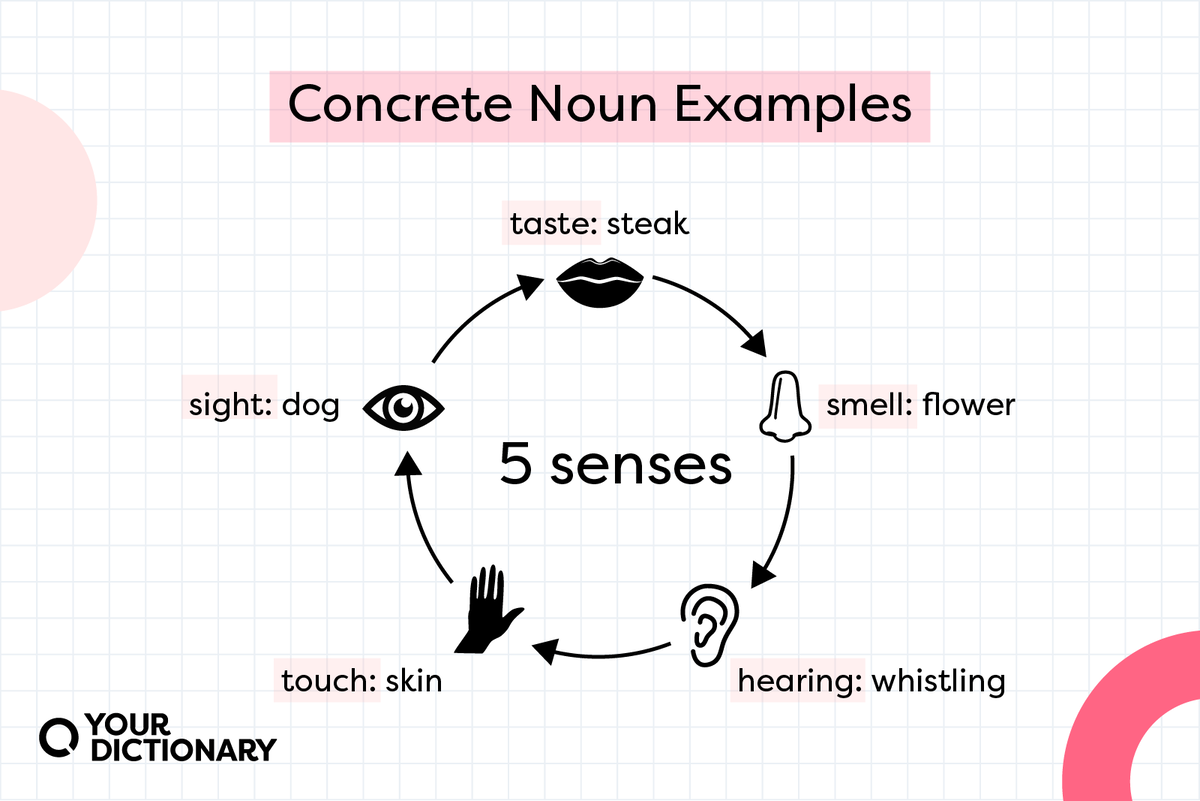
Concrete language, by its vivid and tangible nature, exerts profound cognitive effects on readers. It enhances understanding, aids memory, and shapes perceptions and beliefs.
Enhanced Understanding
Concrete language simplifies complex concepts, making them more accessible to readers. It provides specific and relatable examples that illustrate abstract ideas, fostering a deeper comprehension of the subject matter.
Improved Memory
Concrete language taps into sensory experiences, creating mental images that are easier to recall. When readers encounter concrete words, their brains form stronger neural connections, leading to better retention and retrieval of information.
Shaping Perceptions and Beliefs
Concrete language can influence how readers perceive the world around them. By presenting specific details and vivid descriptions, it can shape their beliefs and attitudes towards various issues or events.
– Cultural Differences in Concrete Language
Concrete language is a type of language that uses specific and tangible words to describe objects, actions, and experiences. It is often contrasted with abstract language, which uses more general and intangible words to describe concepts and ideas. Cultural differences in concrete language can be attributed to a variety of factors, including the way that people in different cultures perceive and interact with the world around them.
One of the most significant cultural differences in concrete language is the way that people in different cultures use metaphors. Metaphors are figures of speech that compare two unlike things in order to make a point. For example, in English, we might say that someone is “as happy as a clam.” This metaphor compares the person’s happiness to the happiness of a clam, which is a creature that is often associated with contentment.
However, in some other cultures, this metaphor might not make sense, because clams are not seen as being particularly happy creatures.
Another cultural difference in concrete language is the way that people in different cultures use similes. Similes are figures of speech that compare two unlike things using the words “like” or “as.” For example, in English, we might say that someone is “as strong as an ox.” This simile compares the person’s strength to the strength of an ox, which is a creature that is known for its strength.
However, in some other cultures, this simile might not make sense, because oxen are not seen as being particularly strong creatures.
The way that people in different cultures use concrete language can also be influenced by their cultural values. For example, in some cultures, it is considered to be impolite to speak directly about certain topics, such as death or sex.
As a result, people in these cultures might use more indirect language to discuss these topics. In other cultures, however, it is considered to be more direct and honest to speak directly about these topics. As a result, people in these cultures might use more concrete language to discuss these topics.
The cultural differences in concrete language can pose a challenge for people who are trying to communicate across cultures. For example, a person from a culture that uses more abstract language might not understand a person from a culture that uses more concrete language.
Similarly, a person from a culture that uses more direct language might not understand a person from a culture that uses more indirect language.
To avoid misunderstandings, it is important to be aware of the cultural differences in concrete language. When communicating with someone from a different culture, it is important to use language that is appropriate for that culture. It is also important to be patient and understanding, and to be willing to explain your meaning if necessary.
– Explain the pedagogical uses of concrete language in education.
Concrete language plays a crucial role in education as it helps learners understand abstract concepts by connecting them to tangible experiences. It provides a solid foundation for building knowledge and skills in various subject areas.
Concrete language is particularly effective in early childhood education, where it supports language development, cognitive growth, and social-emotional well-being. In elementary and secondary education, it strengthens foundational literacy and math skills, develops critical thinking abilities, and prepares students for higher-level learning.
Literacy
In literacy, concrete language enhances phonemic awareness, vocabulary development, and reading comprehension.
- Teaching phonemic awareness:Using concrete objects like letter blocks or sound cards helps students identify and manipulate individual sounds in words.
- Developing vocabulary:Exposing students to real-life objects and experiences provides a rich context for acquiring new words and understanding their meanings.
- Improving reading comprehension:Connecting text to students’ prior knowledge and experiences through concrete examples and visuals improves their understanding and retention.
Math
In math, concrete language aids in developing number sense, problem-solving skills, and computational fluency.
- Teaching number sense:Using manipulatives like counting blocks or number lines helps students grasp the concepts of quantity, number relationships, and operations.
- Developing problem-solving skills:Presenting word problems in concrete terms makes them more accessible and allows students to visualize the problem and apply their reasoning.
- Improving computational fluency:Practicing math operations with concrete materials like beads or blocks enhances students’ understanding of algorithms and improves their accuracy.
Science
In science, concrete language facilitates the understanding of scientific concepts, conducting experiments, and communicating findings.
- Teaching scientific concepts:Using concrete examples, demonstrations, and hands-on activities helps students grasp abstract scientific principles.
- Conducting experiments:Providing clear and concrete instructions ensures students understand the procedures and can follow them accurately.
- Communicating scientific findings:Encouraging students to use concrete language in their reports and presentations enhances the clarity and effectiveness of their communication.
Social studies
In social studies, concrete language supports the teaching of history, understanding geography, and analyzing current events.
- Teaching history:Using historical artifacts, timelines, and maps helps students connect with the past and understand historical events in a tangible way.
- Understanding geography:Incorporating globes, maps, and field trips provides students with a concrete understanding of geographical concepts and their impact on human societies.
- Analyzing current events:Relating current events to students’ own experiences and local communities makes them more relevant and easier to comprehend.
Concrete Language in Everyday Communication
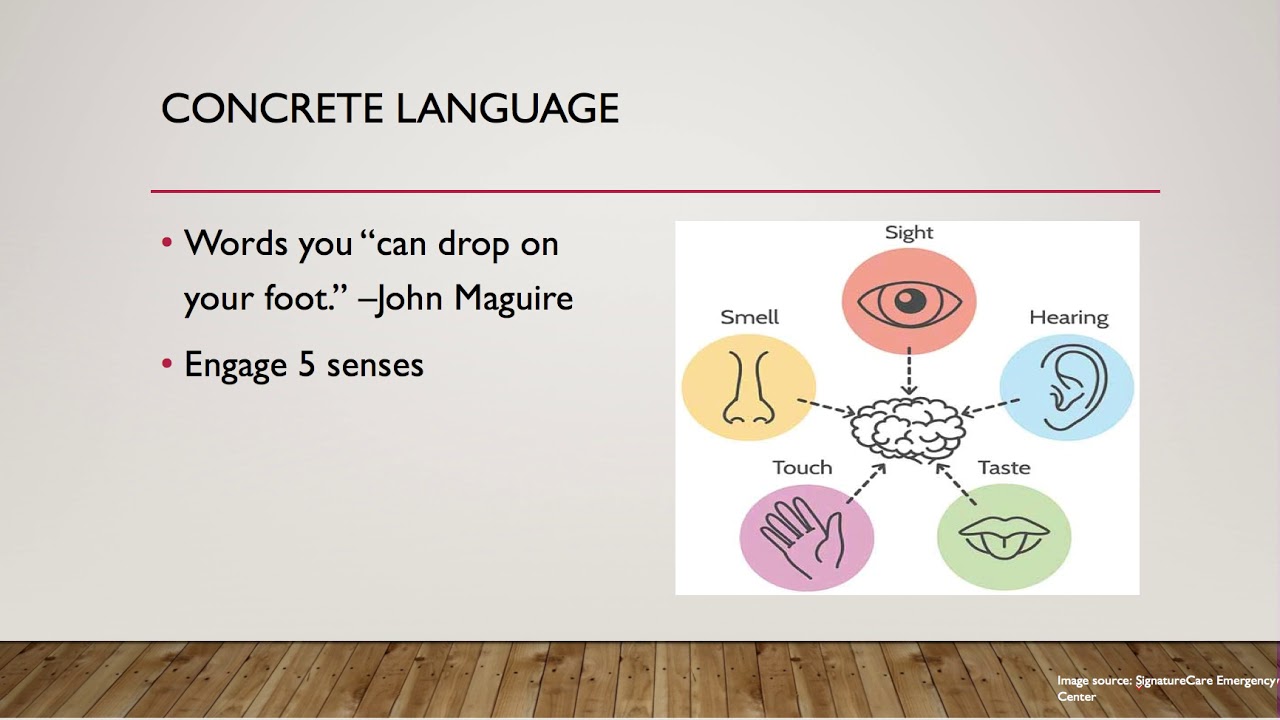
Concrete language plays a vital role in everyday communication, enhancing clarity and effectiveness in interpersonal interactions. By using specific, sensory-rich language, individuals can convey their thoughts and ideas more accurately and engage others in meaningful conversations.
Clarity in Conversations
In conversations, concrete language allows speakers to express their thoughts with precision. By avoiding vague or abstract terms, individuals can ensure that their message is easily understood by listeners. For instance, instead of saying “I’m feeling down,” one can use concrete language to say “I’m feeling sad because I lost my job.” This specific description provides a clear understanding of the speaker’s emotional state.
Effectiveness in Emails and Social Media
Concrete language is equally important in written communication, such as emails and social media posts. In emails, using concrete language can help convey complex ideas in a clear and concise manner. For example, instead of writing “We need to improve our performance,” one can write “We need to increase sales by 10% in the next quarter.” This specific goal provides a clear target for the team to work towards.On social media, concrete language can make posts more engaging and relatable.
By sharing specific experiences or using sensory-rich descriptions, individuals can connect with others on a deeper level. For instance, instead of posting “I’m having a great day,” one can write “I’m enjoying a warm cup of coffee on a sunny afternoon.” This concrete description creates a vivid image in the reader’s mind and evokes a positive emotional response.
Ethical Considerations of Concrete Language
Concrete language, with its vivid and specific nature, can be a powerful tool for communication. However, it is crucial to consider the ethical implications of using concrete language responsibly.Concrete language has the potential to be misleading or deceptive when used to make claims that lack supporting evidence.
By presenting information in a concrete and seemingly tangible manner, individuals can create a false sense of certainty and manipulate emotions, potentially leading to biased or inaccurate conclusions.Using concrete language ethically involves employing it to communicate clearly and accurately, avoiding misleading or deceiving others, and respecting their intelligence.
Concrete language should be employed to convey information supported by evidence, avoiding exaggeration or distortion.For instance, a politician using concrete language to make promises that are not supported by a realistic plan of action would be an example of unethical use.
Conversely, a scientist using concrete language to describe the results of a study, providing specific data and evidence, would be an example of ethical use.By considering the ethical implications of concrete language, individuals can harness its power for effective communication while maintaining integrity and avoiding potential harm or manipulation.
Advanced Techniques for Using Concrete Language
Harnessing the power of concrete language requires employing advanced techniques that elevate writing and communication. These techniques empower writers to craft vivid, impactful prose that resonates with readers.
Subtlety and Nuance
Concrete language transcends literal meanings, delving into the realm of subtlety and nuance. Writers can employ sensory details, metaphors, and similes to evoke emotions and paint vivid mental images. By avoiding abstract terms and generalizations, they can convey precise shades of meaning and create a rich tapestry of experiences for readers.
Precision and Specificity
Advanced use of concrete language demands precision and specificity. Writers must carefully select words that convey exact meanings and avoid ambiguity. This involves using specific nouns, verbs, and adjectives that evoke clear mental images and eliminate confusion.
Impact on Persuasion and Influence
Concrete language plays a pivotal role in persuasion and influence. By employing vivid imagery and sensory details, writers can appeal to readers’ emotions and establish a strong connection. Specific examples and real-world scenarios resonate with audiences, making arguments more persuasive and compelling.
Future Directions in Concrete Language Research

The research on concrete language is still in its early stages, and there are many potential directions for future research. One important area of investigation is the relationship between concrete language and cognition. Researchers can explore how concrete language affects our thinking, memory, and problem-solving abilities.
Another important area of research is the use of concrete language in education. Researchers can investigate how concrete language can be used to improve teaching and learning. Finally, researchers can explore the use of concrete language in different cultures. This research can help us to understand how concrete language is used in different contexts and how it affects communication.
Potential Future Directions
- The relationship between concrete language and cognition
- The use of concrete language in education
- The use of concrete language in different cultures
Potential Implications of New Research
New research on concrete language has the potential to have a significant impact on our understanding of language and cognition. This research can help us to develop new ways to teach and learn, and it can also help us to communicate more effectively with people from different cultures.
Clarifying Questions
What are the key characteristics of concrete language?
Concrete language is characterized by its specificity, sensory appeal, and vividness. It uses specific and sensory details to create a tangible experience for the reader, appealing to their senses and emotions.
How does concrete language benefit writing?
Concrete language enhances writing by making it more engaging, memorable, and impactful. It helps readers visualize the story, connect with the characters, and experience the emotions conveyed in the writing.
What are some examples of concrete language?
Examples of concrete language include: “The sun blazed like a fiery orb in the sky,” “The wind howled like a banshee through the trees,” and “The aroma of freshly baked bread wafted through the air.” These descriptions appeal to the senses and create a vivid image in the reader’s mind.
